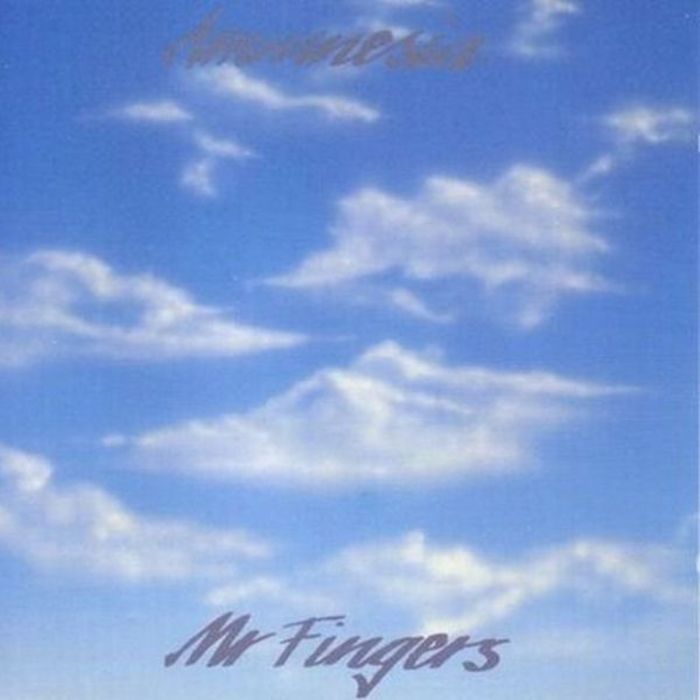
Es ist bezeichnend, dass Larry Heard von den zahlreichen Plagiatsvorwürfen ausgespart blieb, mit denen sich die Chicago House-Pioniere nach den ersten Erfolgen gegenseitig überhäuften. Seine Musik war und blieb einzigartig. Es war offensichtlich, dass hier kein DJ mit schnellem Enthusiasmus Tracks zusammensetzte, die möglichst nächstes Wochenende das Warehouse oder die Music Box befeuern sollten. Hier hatte jemand eine Vision, die über die hektische Betriebsamkeit und die Effizienzprioritäten der Gründertage von House weit hinausging. Und es ist ebenso bezeichnend, dass dieses Album nur eine Zusammenstellung von vorher auf Singles veröffentlichten Tracks ist, und trotzdem ein ewiger Meilenstein geblieben ist, der bis heute als endgültige Referenz fortschwingt. Die fragile und reine Schönheit von Deep House-Prototypen wie „Can You Feel It“ und „Beyond The Stars“ ist nie wieder erreicht worden, und die psychedelische Rhythmik von „Washing Machine“oder „The Juice“ war auch schon dort, wo die anstehenden Wellen in Detroit, Chicago und überall sonst auf der Welt noch hinrollen würden. Blaupausen-Alert!
In der House- und Technogeschichte gibt es reichlich Auswahl an Signaturklängen, die auch Dekaden nach ihrer Entstehung noch bestens funktionieren und deswegen auch weiter und weiter benutzt werden. Wenn Derrick May jedesmal Geld bekommen würde, wenn jemand die Bassline von “Nude Photo” verwendet, er hätte sich nicht nur die mit den Jahren immer unnachvollziehbareren Erklärungen sparen können, warum er keine Musik mehr produziert, er hätte nichtmal mehr auflegen müssen. Larry Heard hätte sich mit stetigen Tantiemen der Bassline von “Can You Feel It” nie mehr mit dem Musikbusiness rumärgern müssen, dito Kevin Saunderson, sei es mit seinem patentierten Bassgrummeln oder den Euphorieakkorden von “Good Life”. Der Flurschaden-Staubsauger von Joey Beltrams “Mentasm”, und so weiter und so fort. Es gibt diverse solche kanonisierten Großklassiker, welche die fortwährende Verehrung ihrer Urheber rechtfertigen, auch wenn ihnen mit den Jahren die Ideen ausgegangen sind. In Hinblick auf die eine geniale Idee hat die Clubkultur durchaus ein Elefantengedächtnis und man kann lange davon zehren. Und dann gibt es diese Platten, die fast aus Versehen zur Legende werden, ohne große Auswirkungen auf die Karriere des Produzenten. “I Like It” von Landlord ist dafür ein Paradebeispiel. Wer nach mehr Releases von Landlord sucht, wird nichts finden, es gibt nur dieses eine. Bereits 1989 auf dem klassischen kanadischen House-Label Big Shot erschienen, hatte der spätere Hi-Bias Hausproduzent Nick Fiorucci wohl nichts anderes im Sinn als eine amtliche House-Produktion. Er tat sich mit einem Sänger mit dem ziemlich unglaublichen Namen Dex Danclair zusammen (der außer auf “I Like It” nie wieder in Erscheinung trat), und machte das, was er desöfteren machte: Deep House mit Gefühl und leicht angedunkeltem Sanftmut, nicht zu kickend, nicht zu dramatisch, nicht zu tief schürfend. Aber selbst in den konventionelleren Versionen des Tracks schrauben sich an clever gesetzten Punkten diese Stabs hoch, die man, einmal gehört, einfach nie mehr aus dem Kopf bekommt. Fiorucci schien das Potential dieser Akkordfolge durchaus abgesehen zu haben, denn der “Blow Out Dub” besteht dann aus nicht anderem als einer Bassline, eher dezenten New York Freestyle-Breaks, und eben diesem Piano-Riff, immer und immer wieder. Und was sich auf Zimmerlautstärke schon beeindruckend effizient anhörte, richtete im Club ungeahnte Verheerungen an. Ein archetypisches Rave-Signal, aus einer so schönen wie unspektakulären Vocal-House-Platte geboren. Generationen von Produzenten konnten davon nicht mehr die Zitatfinger lassen, bis zum heutigen Tag. Natürlich kommt das nicht von ungefähr, man kann mit diesen wenigen Akkorden aus jedem unscheinbaren Track eine Stimmungsschleuder zusammenmixen, und aus jedem schon guten Track etwas, das wie ein außerordentlich guter Track wirkt. Wer das nicht glauben will, möge das gerne mit der aktuellen Preset-Produktion überprüfen, wo noch das gewisse je ne sais quoi fehlt. Aber bitte vorsichtig.
Je mehr unausgegorene Plugin-Plucker-Tracks mit Stoppuhrvorhersehbarkeit heutzutage die Vertriebswege blockieren, desto überlebensgrößer erscheint rückblickend die Phase Mitte der 90er Jahre bis ins nächste frühe Jahrtausend, als Playhouse mit fast jedem Release die Erwartungen vor sich her trieb. House bekam einen neuen Anstrich der bis heute nachwirkt, jedoch heute nur noch selten so gut klingt. Die Diskrepanz erscheint umso größer, je mehr Produzenten gerade meinen, sich mit einer halbgaren Deepness abmühen zu müssen, weil es der Konsens gerade vorgibt. Es scheint nur zu oft, als würden viele stereotype Flächen, viele spießig getaktete Rhythmen, viele pseudoversonnene Brüche und viele Frickelversuche von etlichen Ideen ausgezählt werden, die etwa Isolée oder Roman Flügel schon vor langen Jahren hatten. Und eben LoSoul. Peter Kremeier war der cool ruler. Er setzte das Hypnoseträchtige von Wild Pitch, die Tiefe von Prescription, die Discodekonstruktionen von Cajual und die reine Lehre von Larry Heard in einen völlig originären Sound um, der nur noch Spuren seiner Vorgänger aufwies, aber zu gleich wirkenden Resultaten kam. Seine Hypnoseträchtigkeit kam von einer fast stoischen Beharrlichkeit, nicht von einer gen Höhepunkt gesteuerten Dramaturgie, seine Tiefe kam vom Gesamteindruck der Einzelteile, über lange Hörminuten verinnerlicht, seine Discoreminiszenzen waren bis zur Unkenntlichkeit dekonstruiert, aber massiv und funky, und seine Lehre war selbst rein genug um fortzubestehen. Ähnlich wie bei Isolées Debütalbum vom gleichen Jahr konnte auch „Belong“ nicht auf volle Länge den hohen Erwartungen der vorherigen 12“s entsprechen, da fehlte ein wenig das durchgehend Zwingende und die Kohärenz, die das Format nun mal erfordert, aber zumindest eine Hälfte der Tracks ist nach wie vor gut. Und zwar so gut, dass der Rest überhaupt nicht ins Gewicht fällt. „Taste Not Waste“ oder „Depth Control“ sind zeitlose, dunkle Anschauungsbeispiele dafür, wie man Reduktion mit Druck verbinden kann, ohne auch nur einen Moment an Intensität zu verlieren. „Overland“ ist gleichzeitig das Naheliegendste und das Entfernteste, was man mit „Billie Jean“ anstellen konnte. „You Can Do“ zieht Kreise um seinen Loop bis nur noch Schönheit übrig bleibt, und „Sunbeams And The Rain“ setzt dieser Schönheit ein Denkmal im Maßstab einer himmelhohen Statue, ebenso überraschend pur traditionalistisch wie erwartet konsequent weitergehend. „Belong“, in der Tat.
The first one is by Rinder and Lewis – “Lust”, which is kind of a space disco prototype so to say. For 1977 it was kind of a landmark record I guess.
For 1977, yes. I suppose Rinder and Lewis were a very prolific production team in the 70s and 80s. They made an awful lot of records, a lot of albums. That’s probably one of their most moody tracks. A lot of their stuff has got a 1920s, big band, Charleston influence to it. But I like a lot of their stuff. But some of it is unusual in its arrangement. That one’s got a slightly more mystical vibe to it.
Would you say they tried to explore their field a bit further with this record? You mentioned that a few of the other productions had certain influences, like the latin stuff for example. But this one is really something different, almost science fiction.
Yes, but that’s quite different from the rest of the “Seven Deadly Sins” album. I reckon it wasn’t a track that was made to be a hit. It was probably considered an album track. But with that weird bit in the middle with the glockenspiel, it goes into a sort of devil bit about two thirds of the way through. Which is very out of character with the rest of the record. But what I think is interesting about that is that you don’t get those sort of unexpected bits in records now. I guess when musicians are making records, it’s very different to when DJs are making records. Now, when DJs make records they just tend to have the same stuff going throughout the track, it just loops round and round. Maybe there might be some changes, but there’s nothing drastic coming in really loud. A bad DJ produced record might just be a bit boring, whereas a bad record from the 70s might have a great verse and a really terrible chorus. Or you might have something really cheesy. A lot of records now are just rhythm tracks made by DJs for mixing and whatever, whereas then you might have records that have got loads in them, maybe too much. But the reason that they’re not great is maybe because they’ve got too much in them. They might have some great musical parts, but the vocals are crap. I think I’m digressing a little bit. A lot of Rinder and Lewis stuff – have you got that album “Discognosis”?
No, I know the THP Orchestra stuff which I found really good.
Yeah, and there’s El Coco and Le Pamplemousse. I like that track. It’s always very well orchestrated, they always had a bit of money to make the records. It wasn’t done on a shoestring budget, they must have sold pretty well. I think El Coco’s “Cocomotion” is one of my favourites by them as well. Obviously a lot of the stuff on AVI was produced by them, they were putting out a lot of music. They must have lived in the studio in 76, 77, 78, 79.
This is also a really good example for what you can do if you’re a good arranger – the arrangements they did are really complex and beautiful. Is that something you miss? You talked of modern rhythm tracks and functionality – I think it’s hard to pull off these days because you don’t have budgets for studio work…
Yeah of course. I suppose you have to think, this is now and that was then. Record sales were much higher, I suppose disco was like r’n’b was 5 years ago in terms of its worldwide popularity. So there was a lot more money, obviously there weren’t downloads or people copying CDs. I don’t know what the sales figures were like of something like Rinder and Lewis, but it probably sold half a million or something like that. It’s a completely different time, in terms of being able to get a string section in for your record. I’ve paid for string sections before, but to be honest with you what I’ve found is a string section with 30-40 people is so different to a string section with 7 or 8 people. I’ve only been able to afford 6 or 7 people. It isn’t really a string section! Nowadays, with CD-ROMs and whatever you can make something that sounds pretty good – not the same – but pretty good with just samples. To really make it sound a lot better, you need a 30-40 piece, big room orchestra. People at Salsoul and a lot of them classic disco records had that big proper string arrangement. Also, paying someone to do the arrangement isn’t cheap if you get someone good. Very difficult to do that now. So yeah, I do miss it. But there’s no point missing something, it’s like saying “Oh, I wish they were still making Starsky and Hutch”.
As long as a glimpse of an orchestra won’t do, it doesn’t make sense?
I think the only it could make sense is if George Michael decides to make a disco album, or someone like that. He could afford it. Or Beyonce. Some big star. But your average dance record – I suppose Jamiroquai had some live strings on some of his stuff. But then again, he was selling a lot of records.
Doobie Brothers – What A Fool Believes (Warner Bros. Inc., 1979)
“What a Fool Believes” by the Doobie Brothers, which is a merger of rock and disco.
There’s other tracks, like the Alessi Brothers “Ghostdancer”… I suppose that just shows how popular disco music must have been at the time when people like The Doobie Brothers and Carly Simon were actually making disco records. I suppose it’s the same as nowadays people making a record with a more r’n’b type beat. Or at the beginning of house music, there were lots of pop acts making house records. I was listening to a best of ABBA a few years ago. It started off sort of glam-rock, sort of sweet, like Gary Glitter, that sort of production. And by the late seventies their stuff had got pretty disco-ey. And by 82 it was folky. So I think the disco beat was just featuring on a lot of productions by acts who just wanted to make a contemporary sounding record. That’s probably why a lot of the American rock establishment hated disco so much. It wasn’t just that it was there: their favourite acts were making disco records! They hated the fact the Rolling Stones made disco records, it just wasn’t allowed.
But the thing is, that when the disco boom ended, a lot of the rock acts who made disco records acted like they never did! They deserted it pretty quickly.
Yeah, once it became uncool they pretended they never liked it, it wasn’t their idea and all that. I tried to once do a compilation album of that sort of stuff. But it’s too difficult to license it all. They’re all on major labels, they’re all big acts, and it’s very hard to license that stuff. In fact I’d go as far as to say it’s impossible: just too difficult and expensive.
Was it just because of budget reasons, or because the acts didn’t want to be reminded of what they did in that area?
I think often those big acts have to approve every compilation album license. A lot of the time, for the people who work in the compilation album license department, it’s easier for them to say no than to write to the management of Supertramp or Queen. And often, if they do see a title that has disco in it, they will say no. And a lot of them won’t license the Rolling Stones to a comp that’s got a projected sales figure of less than half a million. There’s so many reasons why it’s problematic. You could do it, but you’d have to leave off so many tracks, there would hardly be any point doing it. I did have a chat with a major label about doing it and that was one that owned quite a lot of them. But it’s just so difficult. They want to see a big marketing budget, they want to see you spend a hundred grand on television adverts. Otherwise they just go, why are we on this compilation album?
I think it’s a shame really, there were so many good disco records done by major artists…
Yeah. I like a lot of those things. I’m doing this compilation for BBE which is maybe a similar thing, just it’s not all well known acts. People like Fleetwood Mac, they did that track “Keep On Going”, those sort of things. I guess it’s blue-eyed rocky soul. Quite danceable… it’s not all disco, but it’s not really rock either. More black music based. I always think, if you look at the back of a rock album and it’s got someone playing bongos on it, it’s worth checking out. Read the rest of this entry »
I discovered this track in one of your live sets, and I was really surprised by it. How did you get to this?
I actually heard this being played by Ron Hardy at the Music Box.
Ah, so it was Ron Hardy who inspired you then?
The people that have inspired me musically where I am now is Ron Hardy, Larry Levan, Larry Heard and fortunately but unfortunately Ian Curtis and Kurt Cobain. Those are pretty much some of my strongest influences. Later on it became people like Farley Jack Master Funk when he was really bringing it to the table musically on the radio, and from that point on it’s like my whole world expanded, it expanded to unparalleled paradox.
In regards of “Diskomo,” though, when I heard Ron Hardy play it, it didn’t make sense to me because I wasn’t on drugs. But a lot of people that were in the party scene at that time were experimenting with drugs. Ron would spin records faster, because he was under the influence. So the thing is I probably heard “Diskomo” at a faster speed. You never knew what Ron was doing at this time, so when you hear “Diskomo” and you hear these sort of patterns and tone pads and kind of modular effects like wind and stuff in this manner, it was hard to tell what was what. If you were in that time period, would you think that was Ron Hardy, or would you think that was a record?
It has a really eerie atmosphere…
It’s the same thing with Ian Curtis, and what Joy Division did. The producer behind them gave that whole thing atmosphere, that sort of specialness. And that’s what “Discomo” did for me when I heard it.
This new wave post punk music is not necessarily something you would associate with early house, which is kind of peculiar, but you seem to be attracted to this kind of music…
This is house music. That’s the thing that nobody—and let’s make this clear, I am nobody to tell you what is and what isn’t the truth—but I can tell you what I know and what I saw. And it was the innovation that Larry and Ron undertook, and it’s the innovation that I have personally taken on myself. I am singlehandedly the ambassador of truth right now. I feel like I have singlehandedly taken on the roles of these artists in the way that they described their music and the way that they played their music, and I feel that I’m someone that can say that this music that has somehow been forgotten has a greater significance than people can imagine.
New Order – Video 5-8-6 (1982)
Let’s talk about New Order. This has a kind of long-jam approach to recording, but it is also kind of a blueprint, not only for later electronic developments, but also for their own developments. There are already shadings of “Blue Monday” in it, but it is much earlier, 1982.
I play “Video 586” in my sessions. I play every type of sound known, and I am probably the world’s biggest risk taker. There are probably three other people that I could say right now that are as risky as I am.
Who are they?
Mick Wills, from Stuttgart, Germany, James T. Cotton and myself. And, actually, someone who is on another level to also give full etiquette and education and experience is Jamal Moss. In my eyes, even though he doesn’t DJ, musically what he does with IBM and these other projects… it’s not the sort of stuff that you would usually hear.
But he does DJ, doesn’t he?
Jamal is one of my guys, and I have never seen him play wax. But what I have of him, the material that I have gotten from him, is still sick. It’s like another level of Ron Hardy through Jamal Moss. Without a doubt.
You seem to be quite like-minded in your approach…
Well, “Video 586” is an idea that I didn’t realize that was important until later, Jamal didn’t realize until later, that JTC didn’t realize was important later. It’s the idea of not following the law of 4/4 music, or the law of what it should be. This is what made music risky, and this is what made New Order risky.
Why do so few DJ’s take risks that way do you think?
Because they are scared. They’re scared to lose the crowd, they are scared to be risky, to do something that they have never done. That’s why you have something called the social chain, and it’s what everybody else follows. I am not on the social chain. Those people that I have mentioned, Mick Wills, James T. Cotton, Jamal are guys that I know do not play by the rules.
So is that your main agenda? To change the set of rules?
My main agenda is to change the rules to the way that they should be. The way that everybody is crying, “Why can’t it be like the days when I was growing up.” Because this is the point, think about it: Why do people play records from the old days? Because they wanna remember. Why do you always have to remember the past? Why can’t you deal with now? Read the rest of this entry »
This is a 70’s reggae track by Jackie Mittoo. It’s almost Minimal, very basic.
True. It’s got some Techno appeal, it’s just rhythm. That’s what I like about this Dub stuff, there are so many things you can recognize that were used later on in electronic music like House and Techno. Dub was so important for that.
So these ancient production techniques are still valid? There seems to be a direct line from Jamaica to today’s productions.
Yeah, I listen to Dub. I don’t listen to a lot, but I like some of it. But I like to use the state of mind of Dub in my music. It’s more a musician thing. I like to use the techniques of it. I’m getting more into the music, too. It’s amazing, the way they were mixing the bass and the drums in the 70’s. Really crazy.
They also put some emphasis on just doing tracks, not songs.
It really is the basis of what came afterwards, from Hip Hop to House to Techno. Drum and Bass also, of course. They all took elements from Dub, that’s really interesting.
> Yukihiro Takahashi – Walking To The Beat (Pick Up Records)
The next one is by Yellow Magic Orchestra’s Yukihiro Takahashi. A Synthpop track.
It is interesting. It has this kind of proto-House feeling. What I really liked was this crazy soprano sax solo at the end. It is almost like Free Jazz, for 30 or 40 seconds, and then it stops. That was quite bold.
I think he actually wanted to do some kind of pop hit though. The singer on this record is the one from the 80’s pop group Icehouse for example. But for a pop hit it is probably too weird.
I think the harmonies are built up quite traditionally, but this solo part really surprised me. It is almost like New York ‘s Post Punk era. Trying some new crazy stuff.
Maybe you should use some sax solo in a House track.
Well, I used to play sax in the past.
Really?
Yeah, for a long time. But I kind of really got tired of the sound and I don’t think I’m going to use it. But you never know. I started playing Alto Saxophone when I was 13 years old. I had tried piano a few years ago, but I wasn’t so much into it. I don’t remember why I chose saxophone, but I remember I wanted to do a wind instrument. With the saxophone, I learned to play jazz and I absolutely loved it! I began rehearsing with a few bands, mostly Jazz or Funk groups. When I discovered DJing, I was instantly hooked and I started playing less and less saxophone, until I quit around 2001. DJing, collecting and discovering music became more important for me. I dabbled into production around 1996, but got a home studio setup two years later. I remember that my main reason for producing was that I found that certain records were lacking something or were arranged in a way that I thought was not so effective. I was thinking “Hmm, the producer should have put this part first” or “the chord there doesn’t sound nice although the beat is dope”. After a while I just thought I should make my own tracks.
I remember that a lot of the early Deep House tracks used the same sax sound. Really flat and synthetic. They seldom used a real saxophone, always this cheap sound effect.
This is from an old French movie soundtrack, „Le Casse“. I picked this for the string arrangement, because it puts a lot of emphasis on build-up, thus linking to the way Disco producers arranged strings for climactic dancefloor moments.
To be honest, I muss confess I don’t know Morricone’s works so well. I don’t think I have been a really big fan, partially because I don’t know it so well. My first impression of this track, which I didn’t know, was that it’s a formal composition. In my head I make a distinction between pop music, which has almost very definite rules, and people following it like Abba. It’s not formulaic, but there are very basic chord progressions that are based on Blues and Jazz that you can do in pop music and that have their own logic and their own progression. Many pop songs are actually the same song. “Good Times” by Chic is one kind of groove and twenty other songs sound exactly like it. It could be “Rapture” by Blondie or something. That’s pop music writing. And then you have soundtrack music writing and it has a different logic. It doesn’t have to follow a certain progression like in pop music, which has a reason and an impulse that keeps on pushing the song forward. When I heard this I thought it is a very good example of soundtrack music writing where you don’t really have to explain the logic of the chord progression, it just sets a mood. It makes an ambience. I think this is probably from 1967 to 71.
Good guess, it’s from 1971.
Because from 1972 on you start getting the big multi-track stuff, like Philly Disco and the more sophisticated pop, and this still sounds relatively simple. My first impression was it’s like a slightly cheaper copy of Burt Bacharach’s “Raindrops Keep Fallin’ On My Head”, but with more drama. It has some very formal devices, like it’s basically a minor key. But at some points he plays the same theme but he opens it up with a major key.
Lately all this beautifully orchestrated obscure library music back is popping up again and people scan back catalogues for songs groovy enough to suit a Disco context.
Yeah, that’s interesting, and I think there is a good reason for that. There is such a thing as real music, in the sense that there were people who did music for films, like Ennio Morricone, or Giorgio Moroder, with a more naïve use of the rules, or the very sophisticated Henry Mancini, or Alec Constandinos, or Vangelis, or Jean-Michel Jarre. All these people were obviously classically trained and they followed the rules. It doesn’t really matter if it’s a Bossa Nova, 60’s GoGo or a Disco beat, the rules of the music don’t change. I think that is why everybody is going back now to find real music. When people like Masters At Work appeared in the 90’s, people who didn’t know anything about the basic rules of music started making music. That’s why it sounds so awful, haha. A lot of the DJ produced music doesn’t have its own intrinsic logic and sense. And chords, progression and melodies have that intrinsic logic. That’s what’s been missing. So everyone of this generation who wants to find out what is really musical has to go back to the 60’s and 70’s, and there you find it everywhere actually.
> Carter Burwell – Blood Simple
This is from the soundtrack of the Coen Brothers debut film “Blood Simple”.
It’s from the 80’s I suppose.
Yes, it’s from 1987. It’s a mood piece with a synthetic feel to it.
I found the orchestration is simpler, but it’s similar to the previous song. Again, it’s not a pop song with intrinsic deep logic. Like Bach’s “Air On The G-String”, that is also some kind of pop music because it has a very definite logic. This one has a formal piano theme that sounds a bit like Erik Satie. Simple chord, simple melody, a little bit like Mozart’s “Eine kleine Nachtmusik”. It is not original, it is a formal piece, it follows a form that other people have created.
You could maybe alter its logic by just putting a beat under it, and by not adding much you would have a really moody dance track.
Yeah, actually this is the thing. To be honest, and many people are going to hate me for saying this, I’m not a big fan of Portishead. It’s very easy to make a mood piece. Anybody can do it. All you have to do is take a minor key and play some stuff over it, doesn’t really matter what. I think Portishead never even use a major key (laughs).
They don’t have to, really.
Yes. I think anybody writing good music should move between major and minor keys, that’s part of the magic. Since we now accept that some people make mood music, you can have a whole album of just melancholy. Personally, that doesn’t move me at all and I don’t find it very interesting. I think a lot of people in this generation think that this is a valid way to do music, for me it’s not enough. Salsoul records only have two or three keys but they do it so well, there are so many nuances.
I think the problem is that many people think they can only sound deep by using minor keys.
Yes, you’re right. That’s very true. If it’s not melancholy and it’s not moody then it’s not deep. Which is not true. That’s very profound what you just said. Read the rest of this entry »
Da muss schon etwas Gewichtigeres in die Speichen geworfen werden als die Bestreikung fast aller öffentlichen Verkehrsmittel, um die goldene Nacht der diesjährigen Transmediale ins Wanken zu bringen. Das Aufgebot war einfach zu opulent. Dementsprechend füllten sich die grieseligen Hallen der Maria sehr zusehends und früh schon kam Bewegung auf. Thematisch war die Nacht in zwei Teile gefaltet. Hüben Techno in Dub, drüben House. Für Ersteres zeichnete die Modern Love-Posse verantwortlich, die in voller Mannschaftsstärke erschienen war. Angefangen mit einem schönen Set vom wie immer fulminanten DJ Miles, später Pendle Coven, Andy Stott und Claro Intelecto an den Laptops. Es ist auffällig, dass sich alle Beteiligten so unisono in diesen raureifigen, aufgeräumten Labelsound einfügen. Das wird wirklich konsequent durchgezogen und mittlerweile auch deutlich ansteckender dargeboten als beim letzten Berliner Gastspiel in der Panoramabar. Der rechtmäßige Star auf diesem Floor war aber natürlich Moritz von Oswald, der, in Begleitung von Max Loderbauer an einem wunderschönen Modularungetüm und Vladislav Delay an sämtlicher Perkussion, wieder einmal vorführte, wie man diesen Sound wirklich intensiv macht. Es war beeindruckend, und eher im Stil seiner aktuelleren Remixe und Produktionen als an Basic Channel-Traditionsverwaltung. Da kommt hoffentlich noch mehr. Auf dem anderen Floor brachte Kalabrese mit seinem mitunter wirklich etwas rumpeligen Orchester das Unternehmen in Gang. Nicht so bewegend wie auf Tonträger aber mit reichlich Charme ausgeführt, und als der Grime-Look der Sängerin dann auch unverhofft auf Grime-Bass traf, gab es kein Halten mehr. Leider wurde der Zug mit einer nervtötend langen Umbauphase aufs Spiel angehalten, doch dann kam Larry Heard. Und man merkt, dass er sich jetzt auch immer mehr als DJ wohl fühlt. Anfangs noch sichtlich nervös begann er wie eine etwas wackelige Ausgabe einer guten Inner City-Nacht und wurde dann immer doller. Clivillés & Cole, der Percolator, sogar Plastic Dreams. Herrlich. Zum Abschluss dann „Can You Feel It“, mit einer improvisierten, wundervollen Darbietung des Gesangsparts von Robert Owens. Alle sind zu Tränen gerührt, Heard eingeschlossen. In diese Stimmung passen anschließend Prosumer, Murat Tepeli und Elif Bicer perfekt, da wird fürwahr ein Kreis geschlossen. Das kann alles immer noch sehr viel Spaß machen.
You’ve been around for over twenty years and you were one of the first voices of House. Now you release your first artist album since quite a while.
Yes, for quite a while. I’m like an old relic, still there, haha. I’m lucky and feel like I’ve evolved with what’s happening in the music world. House people tend to stay stagnant or stay stately within their zone. I feel fortunate that I’ve been able to travel around globally and constantly meet new cultures and stay impressed of what they’re doing. With innovation you have to be aware of what is in order to take it another level and hopefully with this new album I’ve achieved and accomplished that. Taking things into another direction and stating to the world that I’m aware of now and what’s happening. There are still elements of my origins and past, it’s all about a fusion. Being aware of the world opposed to just an area.
You’ve made a lot of collaborations, as a featured vocalist with other producers. Now you worked with other producers again but what made you decide to release under your own name? Did you feel the need to make a step in that direction again?
Definitely, because management and a lot of people were like: “You are just featuring on other people’s album and it’s about them. They are getting the profile and you’re just a feature singer. Why don’t you put out an album?” And I was like, let me turn this around and do it back to front. I’m going to get producers to guest on my album. Read the rest of this entry »
Well, it was about time for another round, wasn’t it? In fact, we’ve been promised red hot sessions by wonderful people, but apparently those recordings are so complex and uncleared that they are still in production hell.
In the meantime, the Druffalo Hit Squad sat down, took some sips, pondered and went selecting. This time we decided to drop the tempo and go all epic. Monolithic beats, sweetest tunes and late night to early morning street cred, rhyming and scheming, with a pinch of stardust. We even went busy with the crossfader at some point, if only on one record. It’s a new technique we call “The Absorber Scratch” that will wreck competition worldwide and can only be used sparsely. The first one to locate it in the show gets a free round of kisses, hugs and Anchovy Bellinis at Berlin’s Roses pub on Oranienstr, next time we crawl there.
We are a problem that no one can fix, with Druffmix 6!
Alain Delon – Comme Au Cinema (Extended Version) Chaz Jankel – I Can Get Over It (If You Can Get Over Here) Bomb The Bass – Winter In July (Cosmic Jammer Club Mix) Digital Underground – Freaks Of The Industry Adina Howard – Freak Like Me (Remix Without Rap) Destiny’s Child – Girl (Single Version) Fresh 4 – Smoke Filled Thoughts MC 900 Ft Jesus – The City Sleeps (Album Mix) Young MC – I Come Off (Southern Comfort Mix) Leta Davis – Joey’s Groove Robert Palmer – Every Kinda People (Reproduction Extended) The Pasadenas – Reeling (Extended Version) Malcolm McLaren – Waltz Darling (Extended Version) The World’s Famous Supreme Team – Hey D.J. (Instrumental Version) Summer Slams – Mellow Moment Massive Attack – Daydreaming (Brixton Bass Mix) People Under The Stairs – Tuxedo Rap Pizzicato Five – Baby Love Child The Cover Girls – Wishing On A Star (Jeep 12”) Saint Etienne – Spring Grace Jones – Slave To The Rhythm (Blooded) Martine Girault – Revival Lalomie Washburn – Try My Love (Radio Mix Extended Vinyl Version) Richie Rich – Coming From London Dungeon Family – Trans DF Express (Club Mix) Maxi Priest – Peace Throughout The World (The Video Remix) Bobby Konders & Massive Sounds – Unity Banderas – This Is Your Life (Less Stress Mix) Massive Attack – Any Love (Larry Heard Mix) The Style Council – It Didn’t Matter Rufus & Chaka Khan – Ain’t Nobody (Hallucinogenic Version) Caron Wheeler – Livin’ In The Light (Brixton Bass Mix) The Sindecut – Tell Me Why (Part 2 – The Exchange) Saint Etienne – Only Love Can Break Your Heart (Kenlou B-Boy Beats) Eric B & Rakim – I Know You Got Soul (Vocal) Tony, Toni, Toné – Oakland Stroke (Brixton Club Mix) Intime – Second Sight Danny Tenaglia – World Of Plenty Chapter & The Verse – Which Way Is Up? Pressure Drop – You’re Mine (Album Version) Stereo MC’s – Two Horse Town Jesus Loves You – Love’s Gonna Get You Down Mr Fingers – What About This Love (Even Deeper Mix) Mica Paris – Young Soul Rebels (Original Version) Julia & Co – I’m So Happy Inner City – Hallelujah (Leftfield Glory Mix)


Recent Comments