Posted: October 7th, 2015 | Author: Finn | Filed under: Interviews English | Tags: Electronic Beats, Radio, Rewind, Roual Galloway, The Clash, The Sex Pistols, Underdog | 1 Comment »
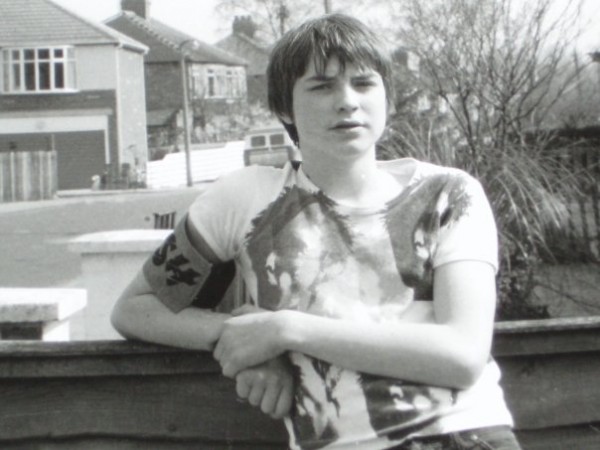
In discussion with Roual Galloway on “Garageland” by the Clash (1977)
So what was your first encounter with ‚Garageland‘? Listening to the radio as a teenager?
I got a copy of the first Clash album in 1979 from a record shop in Edinburgh called GI Records, aged 11. My dad had done some work for the owner and payment was made to him in vinyl. Which meant that my sisters and I all had three records each to choose from the stock. I can’t remember what my sisters chose, but the three I selected were The Ramones “It’s Alive,“ The Skids „Scared To Dance,“ and the self titled Clash album. At the time we lived in a Scottish newtown called Livingston. In later life you realise that all newtowns are built in three stages, which are in the following order of building houses, attracting people and offering jobs. We moved there in ‘78 in between stage 1 and stage 2. This meant that unemployment was high and the youth were left disenfranchised. Like most newtowns it was badly designed and architecturally awash with concrete grey. Punk seemed like a natural rebellion against the injustices imposed on the youth of Livingston and had a massive following there. A local punk band called On Parole used to cover it and I suppose it became ingrained in my consciousness from that. I saw them live for the first time in 1979. I’ve always liked the sentiments of the lyrics, of standing up against selling out and of doing things for yourself.
Have you ever heard something like it before, or was this your first experience with Punk?
I was aware of punk in 1977, but I was too busy kicking a football about and chasing girls at the time. One of the first records I bought in 1978 was „Denis“ by Blondie, unfortunately the other two were „The Smurf Song“ and the Official Scottish World Cup Song of 1978. I bought these whilst I was living in Nottinghamshire just before we moved to Livingston, Scotland. There was no escaping punk in Livingston.
I have to ask this question. Why The Clash, and not The Sex Pistols?
The Sex Pistols released one proper studio album in 1977 and then Rotten left. They were never the same after that, although the cash-in albums were hugely influential at the time of release. The Clash on the other hand released six studio albums in their existence. They matured with each album, apart from „Cut The Crap“. The one regret that I have is that I didn’t see them at the time. If I had to choose between the Pistols and the Clash it would have to be the Clash every day of the week.
„Garageland“ was published as last song of their debut album. Did you like the album as a whole, or is this their standout track?
The first album is filled with classic song after classic song. From the opening with „Janie Jones“ to „Garageland“ it’s all thrillers with no fillers. How can you not like an album that’s as strong as this! Read the rest of this entry »
Posted: September 7th, 2015 | Author: Finn | Filed under: Interviews English | Tags: Electronic Beats, L'estasi Dell'oro, Philip Glass, Ravi Shankar, Rewind | No Comments »
In discussion with L’estasi Dell’oro on “Passages” by Ravi Shankar and Philip Glass (1990).
Do you remember when you first got a hold of „Passages“?
I would have to say approximately 8 years ago. I believe that I first became aware of this album through familiarity with Ravi’s work, as opposed to the more likely channel of Philip’s. It was just the well-worn process of hearing a great musician’s work for the first time and then digging through as much of the rest of their discography as time allows.
What makes this album so important for you?
The simple answer is that this is the best collection of modern music that I’ve ever heard in my life so far. There’s other individual songs that I feel reach higher than any single piece from „Passages“, Jimi’s „1983, A Merman…“ for example, but taken as a whole, the variety and almost unwavering quality across the 55 minutes are very impressive to me.
Are you generally interested in either the Minimalism school Glass is a part of, and the heritage Ravi Shankar represents, or are there preferences?
Both traditions are of interest, for both similar and differing reasons. The Western minimalism side’s long form accuracy of performance is astounding. Of course many pieces utilize synthesizers or machines for part or all of the sound, but there are many examples of highly trained musicians playing these very fast and demanding arrangements in sizable groups with amazing accuracy. Hearing a quartet of woodwinds or vocalists arpeggiate 32nd notes for 20 minutes in synchronization is certainly impressive, especially when each player is playing in the pocket of another’s notes and one weak link could lose the all-important groove.
I feel that the general Hindustani music I’ve been able to discover, not too much beyond key names are readily available to foreigners like myself unfortunately, is an amazing marriage of musical rules and improvisations. Other cultures undoubtedly have similar structures, but the long form interplay between a sitar and tabla create a sound that appears loose and informal at first, but one where the performers are very highly trained and aware of their actions as a group. I’m certainly not deeply aware of the compositional rules of ragas & talas, etc. but familiar enough to appreciate what those musicians know themselves. Even in the related vocal styles of Nusrat Fateh Ali Khan and Pakistani performers, the communal aspect of group support for the soloist is wonderful.
In common, the two traditions place emphasis on extended songs beyond the popular format, which when done correctly, can leave a profound impact on the listener. Also, the aforementioned backing of smaller choral support often features drawn-out vocal melodies that really appeal to my ear, especially with the female voice. I’ve enjoyed working with a couple vocalists in this style, which can even sound great just floating over a groove alone without the usual emphasis on a soloist drawing the main focus. Read the rest of this entry »
Posted: August 7th, 2015 | Author: Finn | Filed under: Interviews English | Tags: Electronic Beats, Jazz Hip Trio, Rewind, The Maghreban | No Comments »

In discussion with The Maghreban on “Spell Of Three by Jazz Hip Trio (1967)
How did you become aware of „Spell Of Three“? A chance encounter?
I went to a car boot sale in Bath early one Sunday morning with my Dad and my Brother. I was looking for records, there weren’t many private sellers but there was a man who had a record stall. Normally I wouldn’t buy from a record dealer at a car boot sale, but there weren’t many records around so I had a look. He had this LP out for £12 or something. It looked interesting, just looking at the sleeve. It was the English Pressing on Major Minor. I took a chance on it for £10, which is not normally something I would do on a record costing that much.
Why did you pick this song, and not the whole album „Jazz En Relief“? What makes „Spell Of Three“ so significant?
When we got back I listened to the LP and was transported by that track in particular. Other tracks were nice, but none really moved me like that one did. Just the depth of emotion it conveys, kind of hopeful and sombre at the same time, it gave me goose bumps.
Is the late 60s your favourite period of time for Jazz, and is this style a personal preference?
I guess it is, yes, although not just the late 60s. There is a particular type of Jazz tune that I like, and most of them are from that time. Or some were recorded later but are in the 60s style. Tubby Hayes “Sasa Hivi”, “Pedro’s Walk”, Cannonball Adderley Quintet Plus “New Delhi”, Alto Summit “Native Land”, Ray Bryant Trio “Cubano Chant”, those kind of tunes. Some are a little Eastern sounding.
Would you say that Jazz-hip Trio have a typically French take on playing Jazz or does origin not matter?
I think they do actually. There is something there that reminds me of some Claude Bolling, Jacques Louissier. Or maybe its because it is a small band and it was recorded at that time. Something in the sound of the ride cymbals.
Their music sure has a cinematic quality, as exemplified in a lot of Jazz-based scores for films of that era, and they even interpret the seminal French film composer Michel Legrand. Is this just a cliché or did this film and music in that aspect just work well together at that time?
There is definitely something cool there, something cinematic. I could see this tune in a French New Wave film. Anna Karina smoking a cigarette. If it’s a cliché it is one that I like. I think the combination did work very well. Read the rest of this entry »
Posted: July 3rd, 2015 | Author: Finn | Filed under: Interviews English | Tags: Depeche Mode, Electronic Beats, Flemming Dalum, I-F, Interview, Klapto, Rewind, Soft Cell | No Comments »
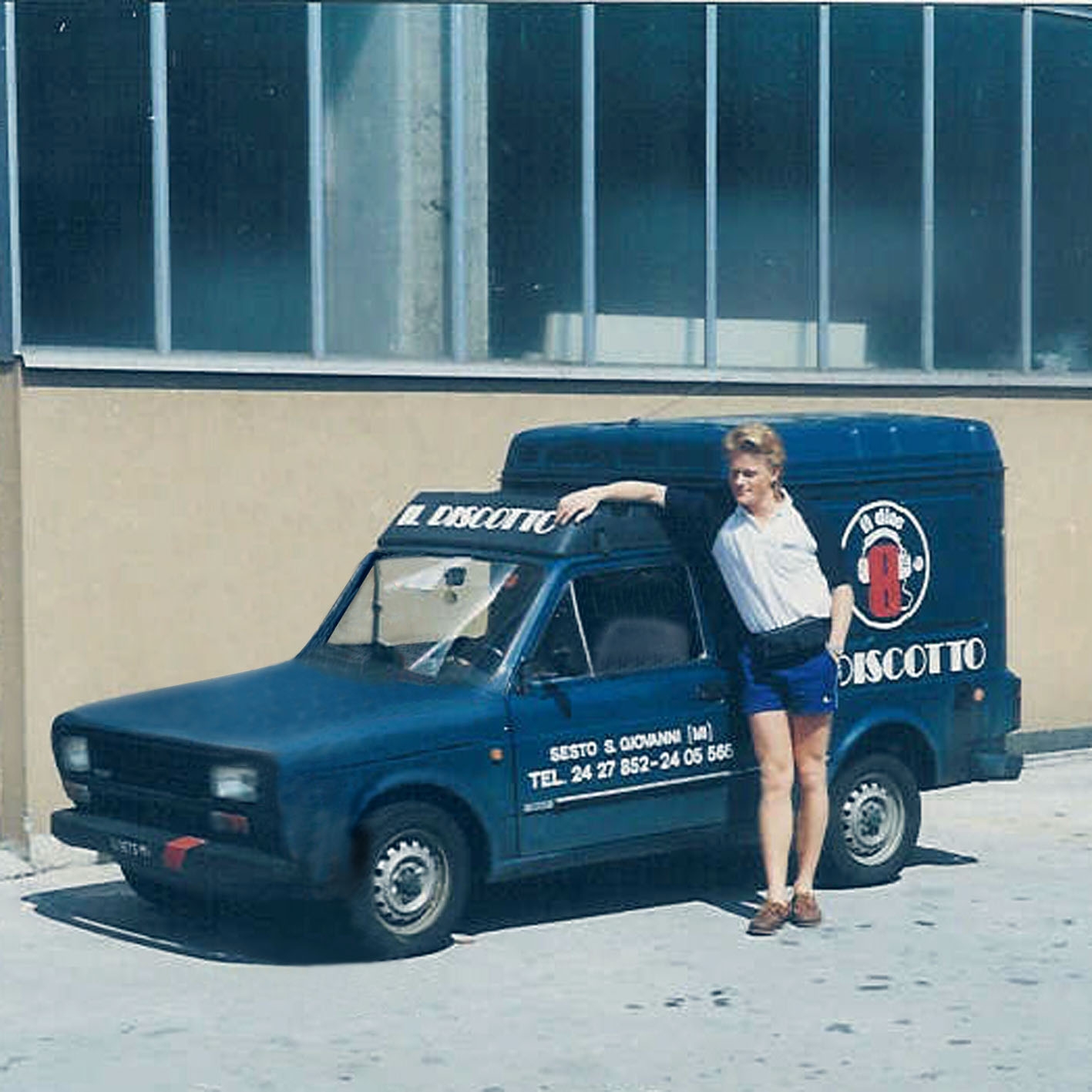
In discussion with Flemming Dalum on “Mr. Game” by Klapto (1983).
Of all the options in that field, why did you choose „Mr. Game“ for this interview? Was it the record that had the most impact on you? And is it maybe genre-defining as well?
It was very hard for me to choose one single record for this interview. I have approximately 100 personal Italo top favourites which all did it for me back then, and now over 30 years later they still mean so much to me. I guess I chose „Mr. Game“ because it‘s really so Italo all the way. To me it contains all the classic Italo elements and I really thinks it captures the essence and pure vibe of Italo. At the same time I also think this record defines the genre very well. Personally I love the early sound of Italo the most, particularly the sound around 1983. Another record could have been Koto’s „Chinese Revenge“, which also blew me away back then. Pure synths all the way.
Did your instant love for Italo Disco connect with a taste in music you had before, like electronic Post Punk, Disco and later Synthpop?
Yes. I actually discovered synth music from UK around 1980. Artists like Depeche Mode, Yazoo, Human League, Soft Cell etc. I was simply very fascinated by the new sound universe of synths becoming a bigger part of dance music. I even bought some synths and played in a band for some years. Digging deeper into this synth music led me to discovering Italo, which had an even bolder and more spacey attitude. I was instantly totally blown away. It seems to me that they somehow tweaked the synths a bit more, maybe due to shorter production time and maybe less producer experience, I don’t know. But I think they came up with a very unique result. A sound and style never heard before, or even since. Later the Italo became more well produced, MIDI controlled and so on. Italo actually ended up too well produced and became more commercial. By then the magic was gone for me, around 1986.
There were Disco productions in Italy from the late 70’s on, but usually Italo Disco is associated with a sound that surfaced in the early 80’s. Why do you think it could be so unique and popular at the same time? Was it a novelty effect, or just good Pop merits?
I think the Italians where outstanding in capturing the vibe of the music trends in electronic dance music in the early 80s. They where clearly inspired by the UK scene and of course other musical subcultures around. But they added that charming unique Italian twist to it, which made it so very special. Actually I can hear if a track is Italian or not in a split second. Over 30 years of listening experience has had a huge impact on me. I’m sure other lifelong Italo freaks are also able to instantly tell if a track is from Italy or not.
In my youth in Northern Germany, Italo Disco was mostly cherished by people who would else rather listen to Hard Rock and charts music. The clubs it was being played at usually had a program that tried to cater to low and common denominators. It was certainly not hip. Was it the same in Denmark at that time?
Only few Italo records were played in the Danish clubs in the early 80s. US and UK music was clearly dominating, no doubt. But some clubs played the most commercial and popular Italo records like Gazebo’s „I Like Chopin“, Ryan Paris’ „Dolce Vita“, Fun Fun’s „Happy Station“, and Raff’s „Self Control“.
Instead of browsing local record shops for Italo Disco, you went straight to the source on trips to Italy, visiting distributors and labels. Which is quite similar to the efforts European Rare Soul collectors in the 70s made on US soil. Did you purchase the core of your collection that way, at that time?
Yes, it was impossible to get all the Italo records here in Denmark with no internet back then, so I had to get them by travelling all the way to Italy. So mainly I got them from the famous distributors and labels like Il Discotto, Disco Magic, Non-Stop, and famous shops like Merak and Disco Service. I took eleven trips in the years from 1983 and 1986, and inbetween the trips I was in close contact with Il Discotto and Disco Magic and also a great record shop in Firenze, called Disco Mastelloni. Basically I managed to find all the records I wanted and got a 100 % complete collection back then. Read the rest of this entry »
Posted: June 4th, 2015 | Author: Finn | Filed under: Interviews English | Tags: Abacus, Call Super, Charley's Vault, Chicago, Derrick Carter, Electronic Beats, Glasgow, London, Luke Solomon, Paris, Rewind | No Comments »
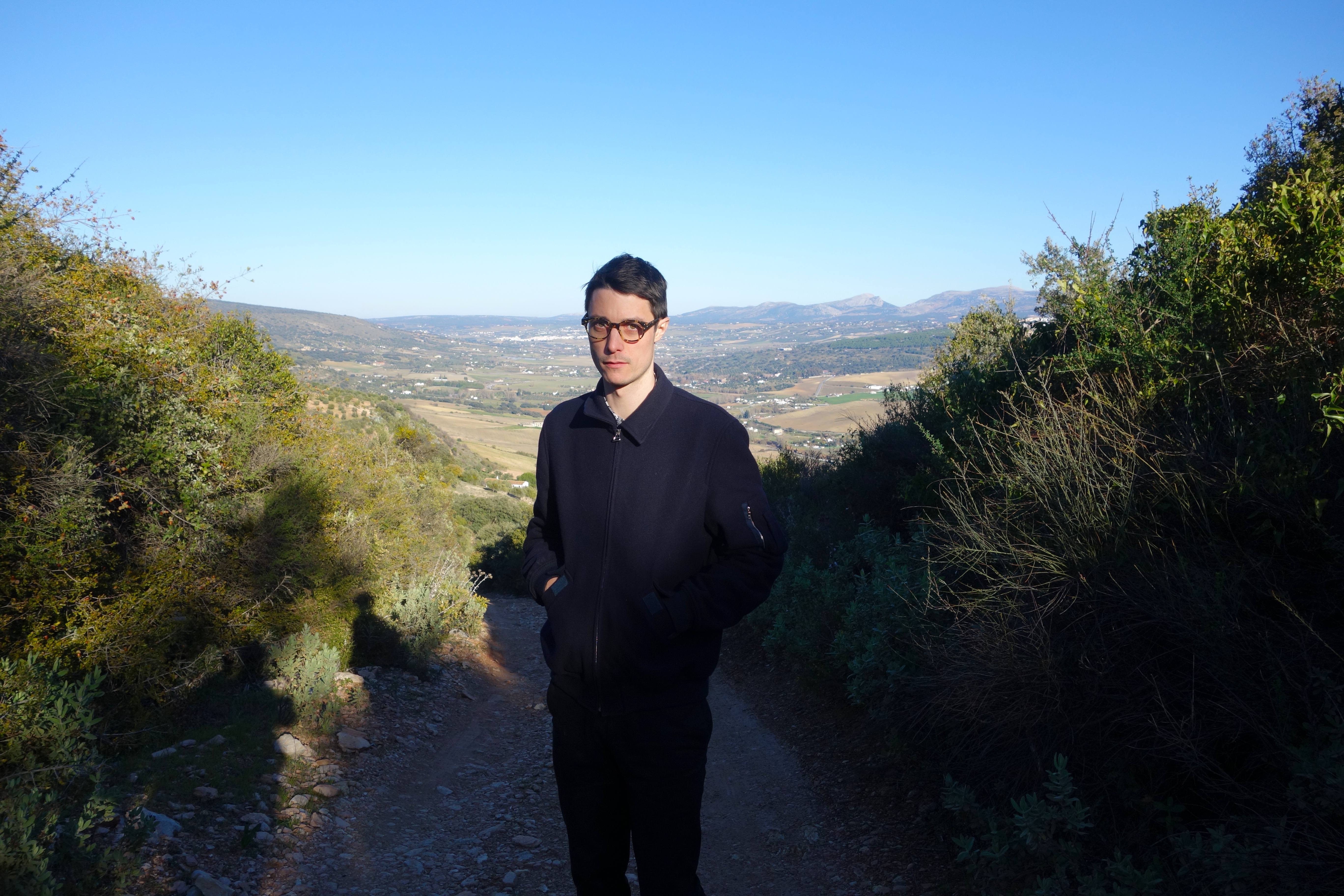
In discussion with Call Super on “My Answer” by Charley’s Vault (2000).
How did you come across „My Answer“? Was it in a record store, or in a club?
A club. The End in London.
Why does this record mean so much to you? Is this a time capsule of a certain kind? What is its appeal?
It very much is. Although it is of its time in certain ways I don’t really feel it has dated. It was a record that I heard quite a few times before I had any idea who it was. I was usually too shy to ask DJs back then and there were lots of tracks that you would hear and just know because you’d heard them before and maybe one day you’d actually turn it up in a store, or meet someone in the club who could tell you, or it got used on a mix. Which is how I found out what this one was.
The thing I love so much about it is it creates a mood that is perfect at any time of the night or morning. It has the exact balance of menace, tension, joy and release that the perfect DJ tool needs. The mixdown is really nicely done, the way it ebbs, flows and kicks at certain points. I have a distinction between what often gets called ‘tools’ which to my ear are usually just drum tracks with a stab or a pad or something and the really useful stuff which usually has a fair bit more going on and can always take you up, down, reset, roll out, maintain… anything that you ask of it. This is one of those tracks.
I guess most people stay true to their formative years in the clubs of their youth. What made The End so special?
It was a club that was very well designed. Loosely based upon The Tunnel in New York but with a crucial difference of placing the booth in the middle of the floor so the DJ was cocooned by the crowd, who were in turn were cocooned by the sound system. The fact that this set up existed in a tunnel created two opportunities. The first was that it was very easy to lose yourself at the back by the system without feeling any disconnection from the place. The second was that this architecture created a particular atmosphere that I think must have meant certain DJs would have fun in a way that more disconnected settings don’t encourage. Its obviously a truism to say that good DJs play to the setting they are in, whilst bad DJs do the same thing no matter where they are. Well, this was a space that I feel coaxed the best from people.
I went maybe twice a month on average for about two years, then less frequently for the next few years because I had relocated to Glasgow, but in that time almost every night held surprises at what had been played, or how it had been played. The video of Mills covers a little of that ground. You cannot understate the importance of having these experiences to draw on when you end up doing this for a living, your own constellation of places and people that inspired you. That’s what gives you your distinct voice and I feel massively grateful to have had that club incubating me. Read the rest of this entry »
Posted: January 30th, 2011 | Author: Finn | Filed under: Mixes | Tags: 2011, Berlin, D*ruffalo Hit Squad, de:bug, Druffmix, Elektro Guzzi, Friedrich Goldmann, Groove, Interview, Jan Joswig, Kiel, Marco Bernardi, Playing Favourites, Radio, Resident Advisor, Rewind, Soju Bar, Stefan Goldmann, Sweatlodge | 4 Comments »

Mix recorded for Artist of the Week-feature @ Sweatlodgeradio.com
Interview (by Elie Eidelman)
You are a well respected music writer writing for publications like De:Bug, RA and your own blog (among others). Has music writing always been part of what you do, and what came first? The writing or the djing?
I write about music in public since the mid-90’s, and I started playing out in the late 80’s, so definitely DJing came first. My output as a writer has also been not as prolific as it turned out to be after I moved to Berlin in 2003. I knew Jan Joswig, the fashion editor at de:bug at that time, from former days in my hometown Kiel and he asked me to contribute. I started out writing reviews and then turned to features and especially interviews, some of which got quite some attention. So that eventually led to writing for other print and web publications too, like doing the “Playing Favourites” series for Resident Advisor, my “Rewind” series for sounds-like-me.com, Groove Magazine, and a lot of other media. The Website you’re referring to is not a blog in the sense that I write about everything that goes through my head, it is more like fragmentary online archive of my activities from the 90’s until now. Writings, Mixes, Gigs, the label, and a plethora of other things. It is not that I’m that vain to want everybody to know what I do and did, it is kind of a reminder for myself that others can follow if they like. Excuse the irregular updates at this point, but I slowed down all said activities a bit to have more time for my lovely wife and daughter, and I took up working at Hard Wax, too. Consider me well busy.
Can you please tell our readers what is D*ruffalo and who stands behind it?
I can’t possibly tell, at least not anymore. When D*ruffalo was unleashed 4 years ago, it was some sort of a media experiment initiated by a semi-anonymous collective of writers, producers and DJs based in several German cities, intended to be a platform to share love for what should be loved, free of any conventional restrictions. Soon some lack of love for what was deemed not as loveable showed up as well, but basically it was conceived to be the Fort Alamo of sincerity. Decidedly non-ironical, accidentally post-cool and fiercely anti-hype. At some point The D*ruffalo Hit Squad and the according Druffmix series was brought to life, to shine a light on music no light shined upon. But it totally spiralled out of control. I don’t know what it is right now, or if I am still a part of it even. But apparently D*ruffalo celebrates its sheer existence and the 50th Druffmix with a party at Berlin’s Soju Bar on February 11, and there are negotiations about a regular residency there. If the unpredictability and confusion of the D*ruffalo members allows. Which is probably unlikely, maybe. I can’t possibly tell.
You are running Macro Records together with Stefan Goldmann. How’s the process been running a label and what can we expect from Macro in 2011?
When we founded Macro we decided to only release music we find worth releasing, at the potential risk of longer stretches with no releases at all. But then the label took up so much momentum that we now have more releases lined up for this year than in the years before. March will see a new EP by the rather sensational Elektro Guzzi and Stefan’s magnificent “The Grand Hemiola” 2×12″, you can hear excerpts of both in the mix I recorded for you. We will follow that up in April with a live album by Elektro Guzzi and a compilation of the late works of the composer and conductor Friedrich Goldmann, Stefan’s father, who sadly and much too early passed away in 2009. We are also in the process of preparing several other projects for later this year, which are not yet ready to be unveiled, but well worth waiting for. We worked very hard to achieve a position in which we can do whatever we want, and as long as this strong support will stay with us, we will do just that. Expect the unexpected.
You’re known for your eclectic dj sets. What can you tell us about this set you prepared?
My sets, be it in a club or radio context, can be quite diverse, that’s true. But I don’t believe in eclecticism per se. Meaning, I don’t want to attract opposites just for the sake of it. If you neglect a certain coherence, structure and narrative you will end up sounding like a jukebox, however interesting it might be musically equipped. I like thinking of a concept when doing a mix, as subliminal or not it might be. With this one, I just intended to combine an experimental streak with a dancefloor functionality, while providing a glimpse of unreleased Macro material and tracks of artists I consistently admire, and tracks I still find as interesting as the day I first heard them. Which in the case of this playlist, was not too long ago. At any other time the set would probably have sounded differently, but this was what I then had in mind for this purpose and I hope it makes as much sense to the listeners as it made to me when I recorded it.

Stefan Goldmann – Mining The Vein / The Grand Hemiola
Raime – This Foundry (Regis Version)
Shackleton Vs. Kasai Allstars – Mukuba Special
Theo Parrish Ft. IG Culture – Traffic
Elektro Guzzi – Boom Room
Margaret Dygas – Hidden (NSI Mix)
Farben – Kursbuch 1&2
Son Of Sam – Nature Makes A Mistake (Âme Mix)
Marco Bernardi – Klinsfrar Melode (Sprinkles Deeperama)
WK7 – Higher Power (Hardcore PCK Mix)
Pinch – Croydon House
Posted: November 29th, 2010 | Author: Finn | Filed under: Interviews Deutsch | Tags: Frankie Knuckles, Front, Interview, Klaus Stockhausen, Patrick Cowley, Radio, Rewind, Tom Moulton | No Comments »

Im Gespräch mit Klaus Stockhausen über “Party Boys” von Foxy (1980).
Wie bist Du auf „Party Boys“ gekommen? Beim Plattenkaufen für DJ-Gigs? Du hattest ja 1980 schon mit Auflegen angefangen, als die Platte rauskam.
Die Platte ist, denke ich, von 1979, aber es war wohl 1980. Angefangen habe ich drei Jahre vorher. Ehrlich gesagt war ich in Amsterdam in einem Plattenladen, Rhythm Import, und es war der Nachfolger von „Get Off“, und „Get Off“ ging relativ gut ab. Ich habe in drei Clubs gearbeitet zu dieser Zeit. Donnerstags/Freitags in Frankfurt in so einem Armee-Schwuchtelladen, der hieß No Name. Da waren nur stationierte Soldaten, sehr amerikanisch. Samstag/Sonntag Coconut in Köln, und Montag in Amsterdam im Flora Palace, was hundert Jahre später zum It-Club wurde. Und du hattest drei verschiedene Musikrichtungen. In Köln war es diese Hi-NRG-Nummer mit sonntags Schwuchtel-Tea-Dance, Poppers etc., bei den Amis hattest du funky to Disco, und Amsterdam war britisch angehaucht. Diese Fusion war ganz gut.
Wie hat sich denn das Britische in der Musik in Amsterdam manifestiert?
Es war soulig, Hi-NRG, aber später auch so etwas wie Loose Ends. Es waren Elemente von Rare Groove drin. Und bei „Party Boys“ fand ich einfach diesen Hook so toll, der eben wesentlich eleganter war als zum Beispiel „Cruisin’ The Streets“ von der Boystown Gang. Eigentlich könnte man diese beiden Platten übereinander legen, es funktioniert perfekt. Und diese schrägen Stimmen. Ich mag Stimmen gerne, und wenn sie slightly off sind, mag ich sie noch viel viel lieber. Read the rest of this entry »
Posted: November 22nd, 2010 | Author: Finn | Filed under: Interviews English | Tags: Eric D. Clark, Funkadelic, Interview, Justus Köhncke, Motown, Paris, Radio, Rewind, Romanthony, Talking Heads, Thomas Dolby, Whirlpool Productions | 3 Comments »
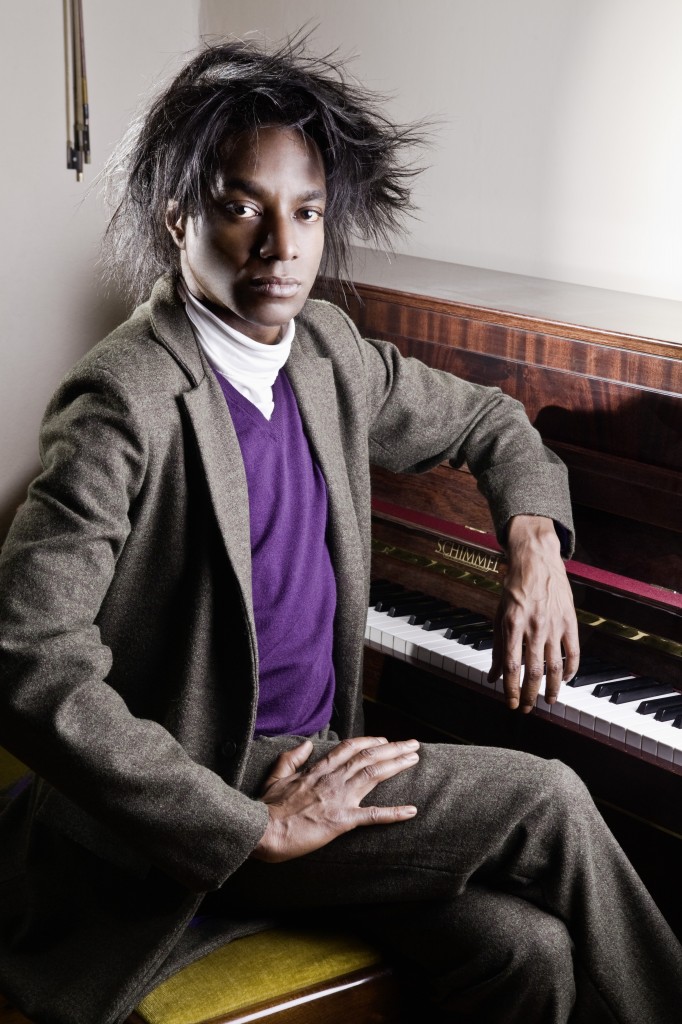
In discussion with Eric D. Clark on “Atmosphere” by Funkadelic (1975).
How were you initiated to the Funkadelic world?
That’s rather hard to say; I believe I first heard Funkadelic… early 70’s? Seems as though I remember hearing “Maggot Brain” as my introduction to their music? And it would most probably have been at a party; maybe a cousin’s house or on a military base at a function? Don’t really know. However I seem to remember that piece first: I certainly had no idea what or who it was? At the time I thought the label art was somehow the band’s responsibility, therefore I would buy records according to the artwork; if I was at a friend’s house and they had something I liked I would go to the record store, usually with my father, and look for the same artwork and buy the record (we’re talking 7″ singles here). Needless to say it was often not what I was looking for. However, rarely did I return anything! This is how I ended up finding out about Led Zeppelin at age 5 or 6. I was looking for Rare Earth. When I finally witnessed Funkadelic’s artwork first-hand it cemented my high regard for their overall “thang”!
Was it a part of your childhood and youth in California?
There was a very strong and rich musical culture in our house. Every morning before school we were allowed to listen to music (no TV, only on Saturday mornings) that we selected from an extensive record collection procurred over previous decades and life in Kansas, Philadelphia, St. Louis and Poplar Bluff Missouri, Osaka, and wherever else our parents had been on their journeys with the military. This included 78 rpm shellac discs and 7″ children’s records recorded at 16 rpm. Father always loved Jazz and has an extensive collection of Blue Note recordings from the label’s inception until around 1970 something. Errol Garner was a big favourite, Booker T. & the MG’s. I did not really get into Jazz though until much later, though I liked Errol Garner! The rest was boring to me then. “Shotgun” and “Green Onions” I liked a lot but until this day I can’t stand James Brown for example?! Only one song that I can’t remember the title of, from around 1958. Mother was into Gospel and female vocal performers such as Morgana King, Dinah Washington, Mahalia Jackson, Dakota Stanton, Aretha of course, also some guys like Major Lance and Joe Simon both of whom I still love today. This collection still exists, excerpts of which you can hear in a set I uploaded to soundcloud.com/eric-d-clark under the moniker “The OZ Effect”. When I’d go looking for what I liked and tried to share it with them it was not met well. They tried to form me with classical which I found to be very little of a challenge, especially as I could trick the teachers by learning pieces twice or even three times as fast by listening to them on vinyl (my component stereo system was right on top of the piano next to my father’s AKAI reel-to-reel, which he bought in Osaka three years before I was born and I adopted; when I am at our house in Sacramento I still use this machine!). Funkadelic were strictly off-limits (very enticing) but I kept the records anyway, even though they were considered to be devil music by Mom and Dad. I was still under ten? Read the rest of this entry »
Posted: November 15th, 2010 | Author: Finn | Filed under: Interviews English | Tags: Depeche Mode, Front, Hardrock Striker, Interview, Marc Almond, New Order, Panorama Bar, Paris, Radio, Rewind, Suicide, Terre Thaemlitz | No Comments »
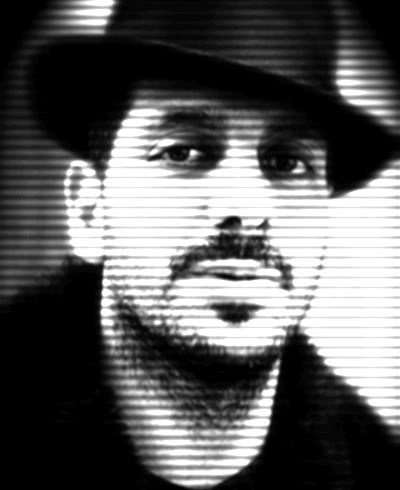
In discussion with Hardrock Striker on “I’m A Cult Hero” (1989).
Do you have a past acquainted with this music? Is this the compilation that nailed down musical preferences you already had, or did you have a different background and were you just looking for something in that direction?
This is clearly the music I was listening to as a kid. Back then, my biggest dream was to be in a rock’n’roll band, no way I wanted to become a DJ (“what a joke I could have thought”) as this meant nothing to me, imagine playing guitar and being on stage screaming in front of a crazy crowd or mixing records, even a monkey could do it! Obviously, it’s only when I started DJing that I understood the power of it and realized my immaturity.
I chose this compilation because even if it looks like a pure rock record, many of the bands inside are using electronic, though I had no clue about it while I was listening to them. I discovered house in Los Angeles in the late 90’s, I went there to form a heavy rock band but I ended up going out with some friends who were doing house, especially Peter Black who introduced me to Doc Martin, the Wax connection, DJ Harvey. We started being friends, speaking about art, music and I discovered that he was also into New Order, Front 242, Ministry, Echo and the Bunnymen, Joy Division and that he was doing house too, so I thought this music finally wasn’t that bad! I started digging, to sum it up, New Order leads me to italo, italo to chicago, chicago to techno. We did a record company called Parisonic / Square Roots where I was doing reissues (already in 2003) of obscure stuff such as It Ain’t Chicago’s “Ride The Rhythm”, Mickey Oliver “In-Ten-Si-t”, Ralphi Rosario “In The Night” etc. I educated myself through the records I was putting out.
“I’m A Cult Hero” is a bootleg compilation with 80’s dark synth pop music, originally released in 1989. Why do you think such a record was released at a time when acid house ruled the clubs? Was this a reminder to what was going on a few years before, or even a counter-reaction to what followed? What might have been the motivation of the label to do this record?
I think that even if house and acid were blowing up at that time, dark synth-pop and minimal wave were still huge. Remember in 1989, Depeche Mode was also on the verge of getting the biggest rock stars in the world with the 101 Rose Bowl concert and the release of one of the best trio of singles of the 80’s: “Strangelove”, “Behind The Wheel” (Mmmh, the Shep Pettibone Mix!) and “Personal Jesus” which was a combination of rock guitars and electronic so it makes totally sense.
The motivation of these guys was primarily cash I guess but I honestly think they did an amazing job! There are two categories of bootleggers: the creative ones and the thieves, I guess they belong to the first one. Read the rest of this entry »
Posted: November 8th, 2010 | Author: Finn | Filed under: Interviews English | Tags: Arthur Russell, Bob Blank, Dinosaur L, Francois Kevorkian, Interview, Joe Claussell, Rewind, Tim Lawrence, ZE Records | No Comments »

In discussion with Tim Lawrence on “Go Bang #5″ by Dinosaur L (1982).
The work on your book on Arthur Russell, “Hold On To Your Dreams”, has probably made you quite an expert on his works, but when was actually the first time you heard “Go Bang! #5″? Was it the song as a single, or did you hear it in the context of the whole “24 – 24 Music” album?
I first heard François Kevorkian’s remix of “Go Bang! #5” when I bought the “Spaced Out: Ten Original Disco Funk Grooves” back in 1997. I was living in New York at the time, and being a bit of a house head, had been quite resistant to buying so-called “disco classics”. By then I had already heard Todd Terry’s sampling of Lola Blank’s crazed-girl-on-helium rendition of the “Go Bang” lyric, which appeared on “Bango (To The Batmobile),” a 1988 house track. I only got to hear the version that appears on the “24 → 24 Music” album – which is titled “#5 Go Bang!” – later on.
Arthur Russell was responsible for a whole lot of outstanding music. Why did you choose “Go Bang! #5″ over other of his songs? What makes it so important for you?
The first thing I should probably say is that “#5 Go Bang!” appeared on an album by Dinosaur L, not an album by Arthur Russell. Of course Arthur (if I can call him by his first name; at times I feel as though I know him, even though we never met) was the key figure behind Dinosaur L, and pulled all of the appearing musicians together. But Arthur was dead-set on the idea of collaboration, and believed that the relationships he formed with other musicians were meaningful, so he introduced different names for the different line-ups he formed.
Why is “Go Bang” so important? That’s the record that I’ve always thought his most complete, inasmuch as it seemed to capture Arthur’s utopian desire to combine the various sounds of downtown New York – disco, punk/new wave, loft jazz, and the post-minimalist form of compositional music known as new music – in a single piece of music. The record also combines complexity and simplicity; it contains scores of ideas, yet never relinquishes the centrality of the groove. I like all sorts of music, but I particularly like music that manages to combine these elements. I could have also opted instead for “Kiss Me Again”, “Platform On The Ocean”, the “World of Echo” album, “This Is How We Walk On the Moon”. “World of Echo” is an extraordinary piece of work, “Kiss Me Again” gets better by the listen. But “Go Bang” is the one that stands out, especially in terms of dance floor dynamics, plus Arthur was happy with the “Go Bang” turned out, whereas he hated the final mix of “Kiss Me Again” and seemed to feel awkward about the obscure quality of “World of Echo”. Read the rest of this entry »


Recent Comments