Posted: July 4th, 2016 | Author: Finn | Filed under: Interviews English | Tags: Daft Punk, Electronic Beats, Front, Paris, Radio, Rewind, Theo Parrish, Trus'me | No Comments »
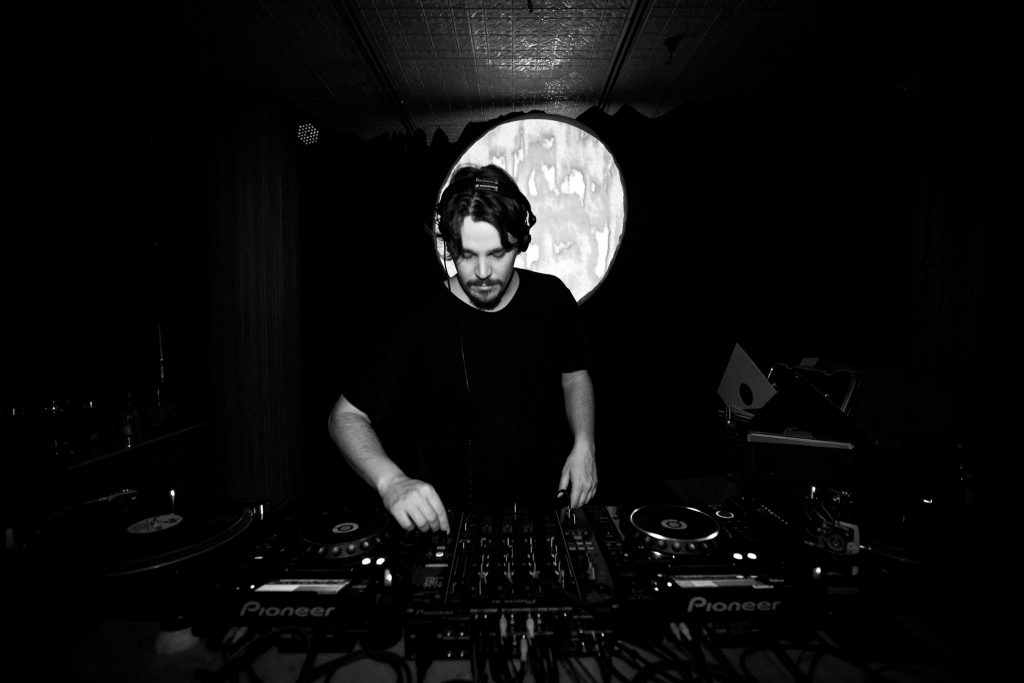
In discussion with Trusme on “Forevernevermore” by Moodymann (2000).
I doubt that „Forevernevermore“ was your first encounter with Moodymann. Did you eagerly await his third album, and how did it grab you?
100% I didn’t know who Kenny was till I found a copy of “Forevernevermore” in my friend’s record bag. He had left his records at my house and I was doing the usual noseying though the records when I found this CD. I was completely into Slum Village, MadLib and Jaydee collecting the samples from Jazz to Disco. When I first played this CD, everything just became clear in my mind. This is the sound I was looking for, from Hip Hop, House, Jazz, Soul and Disco all rolled into one. I became obsessed, wanting to understand the production techniques and went on to discover the whole world of Detroit right after this. Three years on, Moodymann was playing my first LP launch in a pub on Oldham street, home to where I had been buying his records for the past few years. KDJ and Theo were just No.1 at that time in Manchester and I couldn’t help but be influenced by the whole sound.
It seems that Moodymann matured up to the release „Forevernevermore“ in terms of the album format. „Silent Introduction“ felt like an anthology of 12“ material, even though it worked as an album. But with „Mahogany Brown“ he already aimed at a listening experience more true to the format. Would you say he topped this with „Forevernevermore“?
Yes, for sure. The whole LP worked as a cohesive hour of music yet there was something at every turn that was unique and compelling to me as a listener. I related to this LP in more ways than one, due to it’s almost Hip Hop nature with intros and outros connecting the tracks and glueing the whole piece together. There are so many seminal tracks on the LP that are still played out in the clubs today, yet they are tracks that remain LP cuts and for home listening only. This ideology is what I have embraced in all four LPs that I have produced over the last 8-9 years, with something for the dancefloor, something for the car and wherever else that one listens to LPs these days.
You told me that you wanted to talk about the CD version of „Forevernevermore“, which has lots of interludes and skits, and hidden tracks. Do they form an alliance with the music that almost works like a radio play? What is the special appeal of it?
When I think of an LP, I think of A Tribe Called Quest, Marvin Gaye or The Verve even. All these LPs are constructed to be a continuous piece of music, in which the listener is taken on a journey from the beginning to the end. With the CD format, there is extra playtime in which intros and outros can give a context to the background and making of the LP. On the “Forevernevermore” CD you are taken into the home of KDJ, as he sits playing with ideas on the piano with his child, to the studio discussions and even to listening to his local radio for inspiration. Hidden right at the end of the CD is a live recording of three hard-to-find cuts from the KDJ label, mixed together after 2 mins of silence. In many ways the CD provides the platform for further expression as an artist in the format of an LP.
I think the sound of „Forevernevermore“ was a step forward in terms of his distinctive sound. It was still dense and immersive, but also more refined. Do you think Moodymann’s sound evolved on „Forevernevermore“ in comparison to earlier works? And was it for the better?
This was for sure in an LP sense his best work. It is what most people say as their favourite work, when talking about Moodymann. He carved a sound out all for himself and also derived a unique long player format that until then was not seen in the dance scene. Most underground dance LPs were merely a collection of 12” tracks but this felt more like a well thought-out process, something like Daft Punk would execute. I believe Peacefrog Records also helped in this process and pushed KDJ, as they did all their artists to reach even further. In many ways, earlier LPs were a collection of his previous works but “Forevernevermore” was an LP made from beginning to end with a single LP idea and it feels very much that way.
Tracks like the Disco led „Don’t You Want My Love“ display a confidence to transcend mere club credentials for traditional songwriting, a path he followed ever since. Is there a side to Moodymann the producer you prefer to others, or is it not necessary to differentiate his persona as an artist?
The marriage between your typical MPC studio production and live instrumentation was what set out Kenny on his own. Working with local artists like the percussionist Andres, bass with Paul Randolph and keyboards by Amp Fiddler, on top of that raw production sound was just so unique. The juxtaposition of quantised groove and loose musicianship created a genre of its own and is still being replicated today. This LP was the beginning of that sound and Kenny is still using this formula very much in his productions today.
How do you rate the albums Moodymann released since „Forevernevermore“? Were they up to par with your expectations?
“Black Mahogani” is on par for me if not more refined than “Forevernevermore” but maybe it’s the rawness of the LP that better relates to me. With the following LPs I have enjoyed the productions but felt slightly less connection to the music I listen to and make today. Not that it’s not great music, but I started to feel that the tracks in the EP releases didn’t have that Peacefrog touch of which I’m such an admirer. The LP process began to evolve towards the creation of a new sound where he begins to sing and perform more as an artist and less in the background as a producer. Read the rest of this entry »
Posted: May 30th, 2016 | Author: Finn | Filed under: Interviews English | Tags: Batucada, Electronic Beats, Jeff Mills, Rewind, Tyler Pope | No Comments »

Photo by Annette Kelm.
In discussion with Tyler Pope on “Batucada Capoeira” (1998).
So how did you come across „Batucada Capoeira“? What triggered your curiosity?
A friend and band mate of mine! I had bought this compilation when it came out in the late 90’s and I was introduced to it that way. At that stage we were always looking for stuff that was rhythmic, and raw, and had energy. Stuff that wasn’t punk rock that had the same energy and essence of punk, and I think that is in Batucada. There were a some other great reggae and latin compilations on Soul Jazz we liked, and so I’m pretty sure thats why he bought this one. We dubbed the vinyl onto cassette and listened to it a lot on our first tour of the states in ’98. It grew on me the more we listened to it on the long van rides during that tour, and I was eventually totally hooked.
What attracted you to a sound that is so predominantly rhythmic?
I’ve always been drawn to rhythmic music, my dad was a drummer and there was always a drum set up in the house so it started with that. As a youngster I was into Primus, Red Hot Chilli Peppers, and that whole funk rock thing. That music primed me for getting into soul and funk music and all other kinds of tribal rhythmic music. This Batucada compilation was probably the first stuff I really enjoyed that was only drums and thats why it’s special to me and why I chose it for this article.
The sound of a Bateria can be quite a complex wall of sound. What is the difference between that and percissive music from other countries, like Mbalax for example, or other African styles? Or are they even not that different?
There are different drums, instruments and rhythms in Bateria then in Mbalax and other African percussion music, and I guess that is to do with the European influence in Brazil. There are no snare drums in African drum music like Sabar or Mbalax, and the snare drum comes from Europe. Also I’ve never heard such a large group of drummers playing in such an organized way in African drumming. But the frantic energy of the drum music of both countries is certainly similar.
Not every track featured here is as frantic as the drum workouts usually associated with it. What do you prefer?
I like this compilation because it has some of more frantic workouts and mixes them up with the more minimal tracks. It makes for a more enjoyable listen from beginning to end in my opinion. Some of the other Batucada records that I have, that are just the big frantic drum workouts are fun to listen to for a track or so, but maybe not as a whole record
Was the compilation a first glimpse, and you investigated further from there? The tradition of Batucada and Capoeira in Brazil is rich and sure offers a lot to listen to.
I checked it out because it was on Soul Jazz, and at the time it came out other Tropicalia records were being reissued like Tom Ze, and Os Mutantes other real arty weird quality music, so I was wanting to hear more stuff from Brazil. I haven’t really gone too deep, or at least deep by my standards with Batucada actually, this comp never really gets old either so if I want to hear something like this I just listen to this record.
Capoeira is a form of martial arts developed by slaves. I always found music interesting that transfers otherwise potentially critical encounters between rival groups of people into a battle of dance moves, be it breaking, vogueing, or Brazil’s current Funk Balls. Yet the music of „Batucada Capoeira“ is comparably more dynamic than its counterparts. Are such aspects important for percussive music?
Yeah, I hadn’t thought about that but I also like music made for these types of encounters, or battles. I love a lot of the new Vogue/ballroom club music, and recently have been really digging some of the Jersey Club battle tracks. The records for dance battles are more beat driven, there is more focus on the rhythms, and of course they have to be super funky since they have to inspire the dancers. The tracks for battles also cut away at anything that wouldn’t be just for the purpose of the dancing. That focused rhythm track energy I really like. As far as the dynamic nature of this music it is because it’s actually people there playing the drums while the battles are happening, so the drummers are feeding of the energy of the battles and vice versa. Read the rest of this entry »
Posted: May 3rd, 2016 | Author: Finn | Filed under: Interviews English | Tags: djrum, Electronic Beats, Rewind, Susumu Yokota | No Comments »

In discussion with djrum about “Grinning Cat” by Susumu Yokota (2001)
What was your first encounter with „Grinning Cat“?
I just saw the CD in a shop when it first came out. I hadn’t heard of Susumu Yokota at all, but I knew the Leaf label. I was just attracted by the exquisite cover design, and it had a sticker with some rave reviews. I took it to the counter to have a listen and was instantly captivated.
Although Susuma Yokota was a very productive artist, „Grinning Cat“ is acknowledged to be one of the best of his career. What makes it so special to you personally?
I haven’t even listened to all of Susumu Yokota’s releases. There are quite a few. To be honest I find his output to be quite hit and miss. There are a few of his albums that I only like one or two tracks from, and some that I just can’t get into at all. “Grinning Cat” is the only one that has no tracks I want to skip.
Is this best listened to as a whole, or are there highlights?
I tend to listen to it as a whole. Like I said, there’s nothing worth skipping. Everything flows really nicely from track to track. There are definitely highlights. For me one of them is the beginning of the first track so I often go to listen to that and end up listening to the whole thing.
It is interesting how many different musical directions Yokota achieves on one single album. Every single tracks seem to move in different directions as they proceed. How does he manage to make this still sound so coherent?
Yes, this is one the things I find most inspiring about this album. I think the coherence comes from the specific sound palette he works from. Most tracks centre around piano samples from French Romantic composers. Then there are a few from American Minimalist composers, and a few other sources such as jazz. But it’s a really narrow pool actually. I think this consistency allows him to structure his compositions in really exciting and surprising ways without sounding all over the place. The structures make the music very dream-like. Listening to “Fearful Dream” or “So Red” is like being led from scene to scene in a dream. There’s an over arching narrative, but it’s told through different scenes each with a distinct sound. Sometimes when you change scene in a dream it’s almost imperceivable: you can flow from one location to the next without even really noticing the change. Different locations and characters can overlap and merge. Other times the change can be quite abrupt. I’ve never heard anyone capture this as well as Yokota on “Grinning Cat”. You can hear something like it in film music sometimes, but it’s never so psychedelic. I think that the fluidity between different sections is helped by ensuring that the individual elements don’t blend too well. He separates sounds with a very unique use of stereo, and he is very loose with pulse, with different elements often going out of phase with each other. Read the rest of this entry »
Posted: April 4th, 2016 | Author: Finn | Filed under: Interviews English | Tags: Electronic Beats, Interview, Motown, Rewind, Sassy J, Stevie Wonder | No Comments »

In discussion with Sassy J on “Songs In The Key Of Life” by Stevie Wonder (1976).
I found „Songs In The Key Of Life“ in the record collection of my mother in the 70s and secretly transferred it to my own after listening to it. How did the album find you?
I grew up listening, dancing and singing to this album as a little girl. It was one of the rather few soul records amongst my parents Jazz collection. I made my babysitter put it on. I was singing along the lyrics using my skipping rope as a mic. Oh well… That’s why I picked this record for this interview. I think next to all the Jazz at home “Songs In The Key Of Life” built the firm roots of musical tree of life.
Were interested your parents’ Jazz collection as well, or did the album offered an alternative to what you were used to hearing around the house?
The Jazz records that were playing and Jazz tunes my dad played on the piano was just the music that was mainly there. I remember being scared when Duke Ellington’s „Caravan“ would play, or that I loved to fall asleep to Sarah Vaughn’s voice. The funky clothing or jewelry and style of the musicians that stayed with us stuck with me. I also remember artists performing in our living room on house parties. So I was interested in those other aspects of Jazz at home. When I started getting into Hip-Hop later on, finding out about the samples & originals, I got more interested in their Jazz collection again – up to now. I am still pulling out things.
Some childhood memories are very formative and lasting. Was it important that you were introduced to the album at a young age?
I guess so. It reached out to the little girl in that living room. It triggered the attention of her ears and eventually made me choose it for this particular interview.
Why did you think the album had such on impact on you, and what kind of impact was that?
I liked it and I wanted to hear it over and over again, because it made me feel good. The sound, the groove, the melodies, the moods and of course his voice. Next to all the other music at home, this record surely made me fall in love with music. Music is the love of my life. I couldn’t live without it. That’s a hell of an impact!
I remember that even the format of the album was very special to my fledgling music enthusiast self. There was a lot of music spread over two discs, plus a bonus 7“ and a fat booklet. Even at a time when I did not spend too many thoughts on an album’s background that seemed extraordinary. Does the album justify this grand scope, could it not have been any other way?
Yes, the format added an extra attraction to it. I used to love to sit down, open it, take out the booklet and look at it while the record was playing out and out: the cover art, his signature and fingerprint, all the content of it. The older I got, the more I would discover. Singing along to the lyrics, finding out who was featured on there or who was listed in his thank you’s.
What are the highlights of „Songs In The Key Of Life“ for you? And is it mandatory to swallow it as a whole, or can you skip parts that do not hold up to others?
To me the highlight is the journey you go on, listening the whole record. The cover artwork and title reflect it: Mr. Wonder’s Songs In The Key Of Life. Genius. Timeless. So much to hear and discover. So rich.
Most critics heralded „Songs In The Key Of Life“ as a masterpiece ever since, fewer noted that it is patchy in parts. Not only in terms of songwriting, but also in terms of stylistic diversity. The latter I always found very unfair, as the diversity was always one of the aspects I found most fascinating about the album. Would you agree that this ambitious palette is a pro rather than a con?
I groove, feel, get inspired, sing, dance … to music. I don’t approach it that way. To me the record is genius. It is ONE. No drawers or palettes needed.
It is quite astonishing that Stevie Wonder was only 26 years old when he released „Songs In The Key Of Life“. Yet he signed to Motown when he was 11, and before he started work on the album he even considered quitting the music business for good. So he had a long career going on already. Does this inform the music contained on „Songs In The Key Of Life“? Is this a statement bursting out he could not deliver before? How much artistic freedom is needed for an epic like this?
It is a beautiful thing in life to learn, grow and get better and more experienced in all you do.
I think the beauty in this album lies in the journey he made up to then. On “Songs In The Key Of Life” you can hear his experience, all of his brilliance and essence. It feels so complete, strikingly timeless. A flower, fruit, expression of the genius he is. I believe delivering a record, an epic like this, you need to be yourself to the fullest and complete artistic freedom is needed – else it wouldn’t be that complete. Read the rest of this entry »
Posted: February 29th, 2016 | Author: Finn | Filed under: Interviews English | Tags: Electronic Beats, Mixtape, Rewind, The Art Of Noise, Trevor Jackson | No Comments »

In discussion with Trevor Jackson on “Illmatic” by Nas (1994).
Can you remember the way you were introduced to “Illmatic”? Was it love at first sight?
Hip-hop was the main music I listened to in the early ‘90s. I devoured every new hip-hop release that came out. I’d been aware of Nas since 1991 when he guest-starred on a Main Source track called “Live at the Barbecue”, which was produced by Large Professor, one of my favorite producers. He was incredible on that. It was a great time for hip-hop. So many incredible hip-hop albums came out between ’91 and ’94. In 1992, Nas put out a single on Ruffhouse called “Halftime”, which was a track from the soundtrack of Zebrahead. That single totally blew me away. It still is one of my favorite hip-hop singles of all time. By that time, people in the hip-hop world were really aware of Nas, so when the album dropped in 1994, it wasn’t love at first sight, to be honest. It was a surprise.
You were expecting something big?
Yeah. All the real hip-hop heads were, not only because he was an incredible MC, but also because of the producers on the album, which were the cream of the crop at the time.
How were all the luminaries who played a part in the process apparent on the album? How would you characterize their input?
The thing about hip-hop at that time—which was very different than it is now—everyone strove to have their own sound. Nobody wanted to sound like anybody else. Probably more than any other music, people who were into hip-hop bought a lot of records because of the producer rather than the artist or the MC. It was quite unique.
On Illmatic, Nas worked with DJ Premier, Pete Rock, Large Professor and Q-Tip. Even though they were all from New York, they all had their own distinctive sound. Premier usually only took one loop, but he could do something incredible and really simple with one or two bars. Pete Rock was more complex and slightly more soulful. Large Professor had really amazing basslines, and Q-Tip was still deep, dark and street, but slightly more abstract. It was almost like The Avengers: Hulk, Thor, Captain America and Iron Man all coming together on one team. I don’t want to take anything away from Nas, who’s an amazing MC in his own right, but he always needed a great beat behind him. And they were the best at the time.
It’s kind of astonishing that there were so many different people involved, yet the album is pretty coherent.
The thing is, all these guys are from New York, and New York rap was all sample-based. It was pretty raw, and so even though these guys all had their own distinctive sound, they all hung out together; they were all friends.
That’s true. As you said, you go a long way back with hip-hop, and you probably heard a lot of classic albums. What makes “Illmatic” so special?
All I know is that I never get tired of it. A week doesn’t go by when I don’t listen to the whole album. It’s a short, too—it’s only got ten tracks on it, which was not typical, as a lot of albums used to hold 20 or 30 tracks. In contrast, Illmatic is really tight and focused. I love every track apart from one. I just think there’s something about Nas’ hunger to succeed on that record—I felt like you can hear that he came off the street into a vocal booth and just rhymed. It really has that immediacy and that hunger; you can hear it in his lyrics and you can hear it in his voice, and for me, it’s 1000 percent believable. I understand every word of it he says. Maybe it sounds silly, but it feels like he’s talking to me directly. His voice is just so direct. There’s something about that album. It was a point in time. So many different things combined to make it a special record.
It was his debut album, and it’s still hailed as one of the most important hip-hop albums of all time. That’s obviously quite a burden as well, but it’s really fascinating that he achieved this as his first album.
When it first came out, it wasn’t a success, though. It had critical success, but it didn’t sell. It took a bit of time to catch on. Looking at it now, for me, it’s always been a thing about Jay-Z or Nas. If you ask me, Nas would wipe the floor with Jay-Z in terms of rap skills. But Jay-Z is the superstar today, not Nas. Nas is still the rapper’s rapper. Also, sadly, he probably hasn’t made a record quite as good as Illmatic—not a whole album, anyway. So, if you want to talk about the greatest record of all time, many people today won’t say Illmatic. People will say it’s Dr. Dre’s The Chronic, or they’ll say Kanye’s it’s 808s & Heartbreak. For me, Illmatic is a benchmark, but I’m the older generation. I don’t know if the new generation really understands. What they perceive as being “good rap music” now is totally different, as is rap music itself.
Just in terms of the production, hip-hop—especially from the East Coast—was much more sample-based. I think that kind of vanished over the years.
The other thing is, in a weird way, that album marked a beginning, too. Before, you’d have one producer producing the whole thing. From what I remember, Illmatic was the first time so many esteemed producers all produced on the same album. That kind of changed things, because after that, people started getting loads of different producers to do an album. It’s not like they said, “Let’s get Premier or Pete Rock because they’ll sell millions of records.” They got those people because they really worked with Nas and they sounded right. But the hip-hop environment changed after that; people lost their unique sound. Everyone started to sound the same. Read the rest of this entry »
Posted: February 1st, 2016 | Author: Finn | Filed under: Interviews English | Tags: Colonel Abrams, Electronic Beats, Garage House, Omar-S, Rewind, Shanti Celeste, Vocals | No Comments »

In discussion with Shanti Celeste about “Set It Out” by Omar-S (2003).
So what was the first time you heard this track?
I wish I could say it was in a club where I had a life changing experience bla bla bla, but it was actually a much more ordinary scenario. I was buying some birthday records on Juno just after it was repressed in 2009. I didn’t know much about Omar-S at that point, had heard the name once or twice, but that was about it. So the answer to that question is – the first time I heard this song was on the mighty Juno player.
What drew you to it? The simplicity of the groove? The addictive synth line? How it erupts into a heartfelt song? Or something else? Or all of it?
All of it! The vocal and the beautiful rolling pad in particular though, then the nice toms and the clap, too! I just think it’s a beautiful track, it can make you feel so happy and grateful. I love singing so I just start belting out along with it as soon as I hear it or even when I play it in a club. It is just so simple but so powerful.
For me this is foremost a prime example of a very fine Vocal House record. Lyrics, singing and sound work perfectly with each other. It seems nothing is missing, and there is nothing to improve. But is it really as simple as it sounds?
Yes and no, there isn’t that many elements which I guess is what makes it simple, but it is cleverly constructed. I always think that spreading a synth line across four bars creates more interest because it gives room for all the other elements to play without sounding too loopy and repetitive, even if it is that way. Also let’s not forget what a great vocal can do to a track, in some cases it can completely transform it.
I think his track „Who Wrote The Rules of Love“ with Colonel Abrams also comes close to what Omar-S achieved with „Set It Out“. Are you a fan of his in general? Are there other tracks you like nearly as much?
I agree, that’s also really good and again a perfect example of a good Vocal House track, if I’m putting it down to just a feeling though, I prefer „Set It Out“ but they are so close! These are probably my two favourites. I do like a lot of his others as well, he has done soooo much! One of my other favourites is him and Kai Alcé’s „Not Phazed“.
I like that Omar-S is absolutely not very fussy about either producing or marketing what he produces. He is not very concerned about other opinions on what he does either. Is this the way out of modern PR obligations, just delivering the tunes?
I think part of it is a way of delivering tunes! Imagine if he did the whole PR thing every time he released a record, especially at the start when he was releasing lots, it would be a PR overload! And now people trust him and will probably buy his records anyway.
There is whole lot of discourse about Detroit in club culture. But does the origin of Omar-S really matter with „Set It Out“?
To be honest, I’m not sure. To me it just sounds like Omar-S!
UK also has a healthy tradition with Garage House, even if it evolved into something different. But to my ears the production of this track is not too dissimilar to UK club styles, or am I wrong?
I actually think there are other more garage-y tracks from Omar-S that sound more similar to UK styles. „Set It Out“ is quite straight and I always think of UK Garage House as a lot more swong. But I guess that“s the beauty of music, eh? Everyone hears it in they’re own way.
What is important if you infuse a dance track with vocals?
Tricky, I will always notice a good vocal track if I like the vocal and the way that it’s been placed on the track. It’s very important that it’s effortless and soulful but not trying to be too gimmicky and „classic house vocal’. Also sometimes it helps if they use the whole accapella, like in „Set It Out“, or if it’s a vocalist that they arrange with more of a song structure. I like the way it sounds when it’s chopped as well but it has to be done right. Basically, it has to to work great and not just for the sake of it.
I must admit that I much prefer this kind of vocals in a dance track to the majority of tracks of recent years that include a singing style usually more associated with indie records. But I would not go as far as to maintain you cannot create a good club song without a Soul aspect. But what does a good club song actually require?
For me it requires a physical and an emotional aspect. So a really good groove that you just can’t help but dance to and a melodic aspect of some kind. I’m not saying it has to be super melodic with noodly bits everywhere, although that’s the route I tend to take because I just can’t help myself. But something to go along with the groove that’s making you dance your ass off.
Is there a way that „Set It Out“ is reflected in your own productions?
Maybe yes, it’s probably influenced me in more ways than I know considering that I have listened to it so many times over the years!
The defunct Face magazine used to have these little messages at the bottom of their last page. I always have this one particular issue in the back of my mind where it read „Vocals matter“. But do they still?
They do to me!
Electronic Beats 02/16
Posted: January 6th, 2016 | Author: Finn | Filed under: Interviews English | Tags: Electronic Beats, I-F, Interview, Prefab Sprout, Radio, Rewind, The Blue Nile, Truly-Madly | No Comments »

In discussion with truly-madly on “Hats” by The Blue Nile (1989).
How did you come across this album for the first time?
In my early teens I was quite nerdily into hi-fi – it didn’t stop there to be honest – so there would always be a copy of „What Hi-Fi“ knocking about, covered in drooled saliva at the valve amp page. The magazine had a small music review section – I don’t recall usually paying much attention to this but for some reason I read the entry for „Hats“. I don’t remember what it said but something in it must have appealed to my inner angst – nor did that stop there either – at that time. Surely the word ‘melancholy’ was used. So I bought it blindly (the cassette). At that time I was listening to bits of everything, early House, Synth Pop, Indie, and I was buying vinyl but had this odd mental divide that meant I would buy albums on cassette and singles on 12”. And actually I only finally bought „Hats“ on vinyl fairly recently – random find at Rough Trade Portobello in London.
Why did you choose „Hats“ for this interview? What are its special credentials for you?
It would probably be too difficult to choose a House or Techno album, which might be the natural thing to do, and this was the first that came to mind otherwise. I still think it’s quite obscure in a way, despite being part of the mainstream, and seemingly more popular than I realised.
My first encounter with The Blue Nile was probably hearing „Tinseltown In The Rain“ on the radio, from their first album „A Walk Across The Rooftops“, released in 1983. Do you like that as well?
I like all their stuff but don’t remember anything pre-“Hats“. I now know Tinseltown was some kind of hit but don’t directly recall it from the radio, etc. But occasionally I’ll hear it, in a cab or something, and think there is more to it than simply having listened to it from the album, that maybe I did hear it around the time it came out. That first album, and „Hats“, they are the best ones for me.
For me it is a topic worthy of thorough academic research how the electronic music of the Synthpop era and beyond is so often pared with very charismatic lead voices. Is this only for contrast, or is there more to it?
Erm, is it too late to change my album? Read the rest of this entry »
Posted: December 7th, 2015 | Author: Finn | Filed under: Interviews English | Tags: Chez Damier, DJ Pierre, Radio, Rewind, Ron Trent, rRoxymore | No Comments »

In discussion with rRoxymore on “KMS 049 B1” by Chez Damier (1993).
What was the first time you heard this track?
I think I heard that track on a recorded DJ mix that was often played in a local radio where I grew up. It was a mix by Darren Emerson, if I remember correctly, recorded during one of these epic raves at that time. Eventually I had that mix recorded on a tape myself, and I was playing it from time to time in my teenage bedroom after school or on weekends. This was in the mid 90’s I think. I never knew who was the producer of the track at that time, I discovered it years after.
Why does it stand out for you? What makes it so special?
It brings me right back to my raving teenage years, just listening to that tape in my bedroom. I think what has always caught me in that track is that gimmick, the weeping sound of the chords, it sounds almost like breathing, and also it is difficult to identify how that sound has been made. Is it the sound of a keyboard chords, or strings, or voices mixed with strings and something else? It has always been a mystery for me and and it still is. That sound, which is obviously the signature of the track, has an unusual character. It is almost some sound design. Even though I guess it is a just preset on a synth, haha. It has always stood out from the dance music production of that time and still is. Maybe because it makes it more difficult to categorize it. Just compare it to the A side which is obviously a House music track. The B side is much more ambiguous stylistically in terms of aesthetics. Is it House music or is it Techno music? That is why I like it so much.
The A-side of this record is probably as legendary. Do you like it as well?
Yes I like it too, but for me it sounds definitely more like a classic House track. Even though, as you said, it became legendary. Read the rest of this entry »
Posted: December 3rd, 2015 | Author: Finn | Filed under: Interviews English | Tags: Daft Punk, Dimitri From Paris, DJ Fett Burger, DJ Sneak, Interview, Masters At Work, Radio, Rewind, Romanthony | 1 Comment »

In discussion with DJ Fett Burger on “Homework” by Daft Punk (1996).
How did „”Homework”“ found its way to your years? Was it by coincidence, or did you seek it out on some recommendation?
It was totally by a coincidence. I think it was back in the fall or winter of 1996 or something, I can’t really remember. My brother and me were listening to the radio one evening in the kitchen. Back then, we always listened to the radio when we were eating or hanging out, usually making drawings. In Norway around the time it was a channel called NRK P3. It’s still around, and it was one of the main National broadcasting channels. There were three of them. NRK P1 the original, NRK P2 mostly for culture, and NRK P3 for the younger generation. This station was aiming for a younger audience – but in a very different way than today. They used to have a broad selection of different programs. My favorite was the programs in the morning and afternoon because they had a lot of intelligent humor and also sometimes pushed things a bit further in terms of what was socially acceptable, at least back then. In the evenings, six days a week, they had different shows dedicated to music belonging to a certain scene or niche. Tuesday, Wednesday and Thursday it was Roxrevyen, which later became Karlsens Kabin, and Hal 9000. Karlsens Kabin mainly covered indie music, but also electronic music. Hal 9000 with Harald Are Lund was a broad selection of rock, electronic and experimental music with a very open minded approach. A lot of older things got played as well. Friday, it was National Rap Show with Tommy Tee, Hip Hop concentration mostly on early nineties East Coast Hip Hop. And then, Saturday, it was DJ Dust with Funk and Disco, DJ Strangefruit with his eclectic selections, and later in the evening DJ Abstract with mostly House and Techno. On Sunday it was Chill Out with DJ Friendly in the morning and Ambolt on Sunday evening, which was dedicated to Metal and harder Rock. Overall, NPK P3 had a pretty broad selection of music from different scenes. It provided a great musical education for when you are young and from a small Norwegian town. These programs were so dedicated to their scene, they always played a lot of demos or unreleased music. Karlsens Kabin and Hal 9000 played some of our oldest music, even things only made on CD-R, so it was a very supportive scene on the radio back then. You can just imagine how crazy it was for us back then being played on national radio!
OK, now back to the question. First time I heard something from Daft Punk was through Karlsens Kabin or Roxrevyen as it was called then. It was a mid-week evening, and suddenly “Around The World” was on the radio. This was before it was a big hit, and before people knew what Daft Punk was. It was probably a radio promo that was played or something like that.
It just blew my mind at the time. Back then it was so cool, different, even strange. Right after they played the song, they said the name and title of the song. And one second later I forgot it all, except the song. But a few months later, Daft Punk was everywhere with “Da Funk” and “Around The World” on MTV all day long.
Do you like the album as a whole, or are there personal highlights, or even tracks you do not like as much?
I like the album as a whole. Before when it was new, you could hear the hits everywhere, so I was pretty familiar with them. I remember when my brother and I got the album. It was an interesting listening experience, since most of the tracks were actually not hits or mainstream material. For instance, “Rollin’ & Scratchin’, “High Fidelity”, “Rock’n Roll”, “Indo Silver Club”, “Alive” or the intro “Wdpk837 Fm.” But, since everything was on the album, it just became associated with something mainstream.
Now it’s a classic of course, but back then, it was the combination of making something catchy, a bit more demanding, and for a scene. In this case, obviously House and Techno. You can hardly say that something is demanding or edgy on the album anymore, because of its place in music history. I think there still are some tracks that are edgy. Back then, for a 15-year-old kid without any experience, this was a big and new thing. Just imagine what influence this had. I remember even in the beginning, I didn’t like “Rollin’ & Scratchin.’ However, it changed after I gained more of an understanding for where the song and its influences came from.
For me, the whole album is a personal highlight. There are different vibes to the tracks and your mood shifts. Some songs are more uplifting, some more mellow, and some noisy or slow. But everything is a favorite of mine in different ways. They all have different elements of influences for me in terms of musical education. The whole album is a favorite of mine. Everything, from how the sound is mixed, the way Daft Punk samples, the artwork aesthetic, the music videos and Daft Punk’s anonymity at the time. It’s a whole package, and I embraced it all. I loved it all and still do! Read the rest of this entry »
Posted: November 6th, 2015 | Author: Finn | Filed under: Interviews English | Tags: Aiden D'Araujo, Chez Damier, Discogs, Interview, Joey Negro, Larry Heard, Move D, Radio, Rewind, Timmy Regisford | No Comments »

In discussion with Aiden d’Araujo on “Rhythm Zone Vol. 1” (1989).
You chose the cassette compilation “Rhythm Zone Vol. 1“. A format that in the 80s was probably still more common for discovering new music than its according CD counterparts. Were you taping radio at a young age, and was this your first foray into purchasing what already had caught your interest?
Yeah taping radio shows was a ritual when I was a kid – got that off my Mum who would tape mixes religiously. In the early nineties around ’92/’93 we had a studio in the loft with loads of gear like Junos and Rolands. The two guys who had the studio (you may have heard one of them under his Deadly Avenger alias who released the ‘Deep Red’ LP and now scores Hollywood films) lodged with us and I remember like it was just yesterday all the trippy, ambient electronica comin’ outta the studio – I would say reminiscent of acts like the Future Sound Of London. No doubt this influenced my Mum and she amassed a series of tapes that had early electronic auteurs on then such as Pete Namlook, Move D and Biosphere (she’s still got ’em!) whose nocturnal opus ‘Novelty Waves’ never fails to transport me straight to my childhood – you remember that iconic Levi’s advert featuring the steam train with that track on it right? Anyway, all these deep as the ocean odysseys would be the soundtrack to when I went to sleep. Warp’s ‘Artificial Intellgience’ comp was another fave, and I’d always be messin’ around with the FM dial to try scope out some more otherworldly obscurities…
Another interesting development was one of my Mum’s mates who when not spraying murals (he was and still is a revered graffitti artist who very kindly sprayed the House Hunting mural for me) would host shows on Birmingham-based pirate radio station Mix FM which he would sometimes transmit from our attic. This would be my introduction to Hip Hop – whether the Britcore of Gunshot and London Posse, West Coast flavour of Snoop Dogg and Souls Of Mischief or the politically-charged Public Enemy and ghetto rap of Biggie and Wu-Tang. GZA’s ‘Liquid Swords’ and Souls Of Mischief’s ’93 Til Infinity’ always on rotation must have proper wore those tapes out on my Walkman. As well as Hip Hop on Mix FM there would be some Soul, Funk, Disco, Electro and House – which when you’re 8 years old listening to all this was a pure mind trip…
So I didn’t really need to buy tapes as there were so many avenues where I was exposed to it. Another influence was my Dad who was split from my Mum so I would stay at his on weekends 10 mile up the road in Leicester. He was in a band that covered a lot of Rock and Blues classics who were a bit of a hit in the mid-nineties with loads of bookings all over The Midlands. Anyway Leicester has a big Afro-Caribbean community and every year hosts the Leicester carnival (second only to Notting Hill in size and scope) with Aba-Shanti representing so Dub and Reggae was also the sound of my Dad’s household – he loves all the Rhythm & Sound albums I’ve got him!
Did you try several compilations and this was the one you liked best, or was this the only one at first, and by coincidence it was also the best choice to get introduced to the US import dance music styles it showcased?
This was the first I bought and I remember clocking the naff early 90s trippy artwork complete with the tag line “A galaxy of imports for under a fiver”. It was a quid so had to be copped – I thought it may be like the deep trips on my Mum’s armada of ambient tapes. It was pure coincidence that the first one I got was the best introduction to Chicago House, Detroit Techno and New York Garage. Not long after I bought ‘The Rave Gener8tor II’ tape where again the cover art enticed me and had some choice cuts on it like the Underground Resistance remix of ‘The Colour Of Love’ by The Reese Project and some Murk flavour via Liberty City’s ‘Some Lovin’. There were only a few decent tracks on this one though as was on a more hardcore tip which I weren’t feelin’ as much. Always went back to ‘Rhythm Zone Vol. 1’. Read the rest of this entry »

Recent Comments