@ Digger’s Delight
Posted: August 31st, 2015 | Author: Finn | Filed under: Gigs | Tags: Another Pixel, Kondo Mane, Paris, Underclub | No Comments »

In discussion with Call Super on “My Answer” by Charley’s Vault (2000).
How did you come across „My Answer“? Was it in a record store, or in a club?
A club. The End in London.
Why does this record mean so much to you? Is this a time capsule of a certain kind? What is its appeal?
It very much is. Although it is of its time in certain ways I don’t really feel it has dated. It was a record that I heard quite a few times before I had any idea who it was. I was usually too shy to ask DJs back then and there were lots of tracks that you would hear and just know because you’d heard them before and maybe one day you’d actually turn it up in a store, or meet someone in the club who could tell you, or it got used on a mix. Which is how I found out what this one was.
The thing I love so much about it is it creates a mood that is perfect at any time of the night or morning. It has the exact balance of menace, tension, joy and release that the perfect DJ tool needs. The mixdown is really nicely done, the way it ebbs, flows and kicks at certain points. I have a distinction between what often gets called ‘tools’ which to my ear are usually just drum tracks with a stab or a pad or something and the really useful stuff which usually has a fair bit more going on and can always take you up, down, reset, roll out, maintain… anything that you ask of it. This is one of those tracks.
I guess most people stay true to their formative years in the clubs of their youth. What made The End so special?
It was a club that was very well designed. Loosely based upon The Tunnel in New York but with a crucial difference of placing the booth in the middle of the floor so the DJ was cocooned by the crowd, who were in turn were cocooned by the sound system. The fact that this set up existed in a tunnel created two opportunities. The first was that it was very easy to lose yourself at the back by the system without feeling any disconnection from the place. The second was that this architecture created a particular atmosphere that I think must have meant certain DJs would have fun in a way that more disconnected settings don’t encourage. Its obviously a truism to say that good DJs play to the setting they are in, whilst bad DJs do the same thing no matter where they are. Well, this was a space that I feel coaxed the best from people.
I went maybe twice a month on average for about two years, then less frequently for the next few years because I had relocated to Glasgow, but in that time almost every night held surprises at what had been played, or how it had been played. The video of Mills covers a little of that ground. You cannot understate the importance of having these experiences to draw on when you end up doing this for a living, your own constellation of places and people that inspired you. That’s what gives you your distinct voice and I feel massively grateful to have had that club incubating me. Read the rest of this entry »
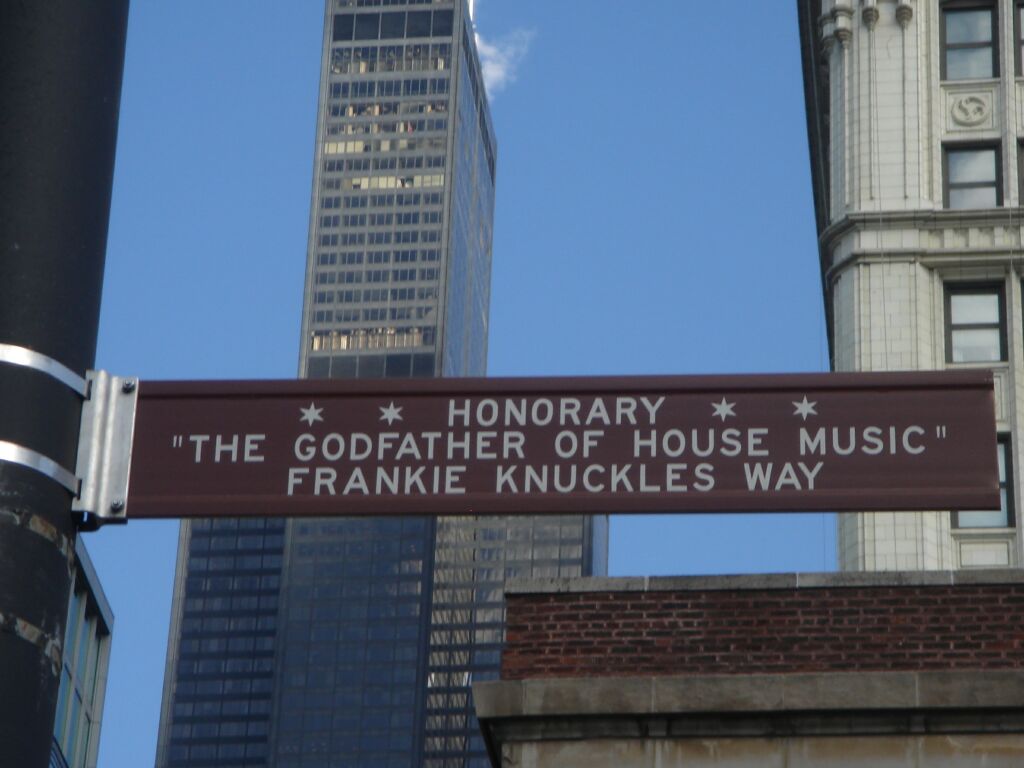
Joanna Law – Love Is Not Enough (Mix D’Ambience)
Dusty Springfield – Nothing Has Been Proved (Dance Mix)
Dusty Springfield – Nothing Has Been Proved (Instrumental Version) 82
Carlene Davis – Dial My Number (Morales Club Mix)
Nikki – Summer Breeze (Club Mix)
Adeva – Beautiful Love (Instru-Mental)
Adeva – Beautiful Love (Classic Club Mix)
Carlton – Love And Pain (Drum & Bass Mix)
Luther Vandross – The Rush (Morales 12″ Mix)
The Cover Girls – Wishing On A Star (12“ Mix)
The Chimes – Stronger Together (Red Zone Mix)
Pet Shop Boys – How Can You Expect To Be Taken Seriously? (Mo Mo Remix)
The Pasadenas – Reeling (Daytime Dance Mix)
Soul Family Sensation – I Don’t Even Know If I Should Call You Marshall Jefferson (Piano)
Soul Family Sensation – I Don’t Even Know If I Should Call You Marshall Jefferson (Symphony)
Azizi – Don’t Say That It’s Over (The Classic Club Version)
Banderas – This Is Your Life (Less Stress Mix)
Mica Paris – Contribution (Peace Out Mix)
Drizabone – Brightest Star (David Morales Classic Club Mix)
Victoria Wilson-James – Through (Classic Club Mix)
The Family Stand – Ghetto Heaven (Remix)
Saint Etienne – Only Love Can Break Your Heart (Kenlou B-Boy Mix)
Loose Ends – Hangin’ On A String (Frankie Knuckles Club Mix)
The Sounds Of Blackness – Optimistic (12″ Never Say Die Mix)
Swing Out Sister – Notgonnachange (Classic Club Mix)
Alexander O’Neal – All True Man (Classic Club Mix)
Richard Rogers – Can’t Stop Loving You (Morales Sleaze Mix)
Frankie Knuckles – It’s Hard Sometime (D.M Red Zone)
Frankie Knuckles – It’s Hard Sometime (F.K. Classic Club Mix)
Rufus & Chaka Khan – Ain’t Nobody (Hallucinogenic Version)

Edvard Graham Lewis – The Eel Wheeled
Pinch – Search Party
Akkord – Continuum
DJ Spider – Northern Abyss
Hound Scales – Thinner
Loric – Under Sharer
Floorplan – Never Grow Old
Call Super – Acephale II
Anno Stam – That Kid From Newport
Population One – The Jazz Student
Rhythmic Theory – 003 A
Bluntman Deejay – Astat (Real)
Mandingo – Another Dub On Earth
Moiré – Bboy 202
Isoke – Aliyah
Doubt – Five Minutes
The Other People Place – Eye Contact
RT – Realtered States
Paris Gray – Don’t Lead Me
Sw. – Sued 008 B2
Liaisons Dangereuses – Avant-Mars (Qu Rework)
The Normalmen – No Limits
Aardvarck – Plus Det
Appian – Won’t You
Syracuse – Giant Mirrors
Motor City Drum Ensemble – Raw Cuts (Recloose Mix)
Jovonn – Ruff
Cool Peepl – Free Pt. 1
Daniel Jacques – End Of My World
Wyndell Long – Dying Days
Geena – How Sensitive
D.K. – We Ride
Edvard Graham Lewis – The Eel Wheeled
Mix for Keep It Deep podcast. Not defunct!

Travis Nelson – Travis’ Theme (Attitude Mix)
Freedom Authority – Expressions (Rub-A-Groove)
Foremost Poets – Reasons To Be Dismal? (City College Mixes)
Paris Grey – Don’t Lead Me (2001 Version)
Robot D.J.’s – Remote Control
Lovechild – Sweet Ambience (Club Mix)
Mystique – Passion (Extended Instrumental)
The Sound Vandals – On Your Way (Deep Mix)
Doctor Mixx – The Spirit In Me
Incog-Needle – Can U Feel It (DJ Bonus Beats Mix)
Matt Warren – Bang The Box (Bang The House Mix)
New-Ro – Music Trance
Keith, Kat & Blondie – Gotta Get Some Money (Eerie Instrumental)
Vincent Floyd – I’m So Deep
Infra-Red – The Verge
4th Measure Men – The Need (Henry Street Dreams Mix)
Johnick – Tales Of Jerry Morbid
Unknown Artist – Untitled
North Avenue – Solutions (Instrumental)
Tommye – I Need To Go Away (Principle Theory Version)
Dark Side Rhythm Tracks Vol. 1 – The Real Garage
Voices – You And Me
Mondeé Oliver – Make Me Want You (Club Mix)
Gallifré – House Rhythm
Mark rogers – Twilight For Some
Mix I recorded for a Russian podcast. Which might explain the intro. Well, it did not help in the end.
Pet Shop Boys – My October Symphony
DJ Sprinkles + Mark Fell – Say It Slowly (N.U.M. Mix)
Robert Hood – Torque One
DJ Qu – Times Like This
King Felix – Spring 02
Schizolectric – Traveller Circuit
Paranoid London feat. Paris Brightledge – Paris Dub 1
Cheap And Deep – Words, Breaths & Pauses (Jonsson/Alter Remix)
Frak – Untitled (DJ Sotofett Remix)
SVN Feat. Paleo – Track 1
Velvet Season & The Hearts Of Gold – The Special Place
Theo Parrish – Black Mist
Funkinevil – Night
Heatsick – Benelux
Innerspace Halflife – Wind
Four Tet – Percussions
Bookworms – Love Triangles
Aardvarck – Nubian
Joy Orbison, Pearson & Boddika – Faint
Mark Fell – Side 3 Track 5
Stefan Goldmann – Rigid Chain
Secret Mixes Vol. 14 – I’m Warning You
Pépé Bradock – Katoucha?
Trance Yo Lie – Cosa C’e Sotto?
KiNK feat. Rachel Row – Hand Made (Main Mix)
Soundstream – Disco Crash
Da Sampla – Over
Unfinished Business – Out Of My Hands (Love’s Taken Over)
Dez-Andrés – Seasons So Long
Lil Louis – Fable (Frankie Knuckles’ Directors Cut Classic Club Mix)

(printed on a Front T-shirt)
The typical club coordinates in Hamburg in the mid-1980s moved somewhere between mod culture and northern soul or post-punk and wave – in locations such as Kir – and disco preppydom at Trinity, Voilà and Stairways. The port of call was usually chosen by whether the evening plans focused on music and dancing, women or drinking. Some locations would satisfactorily cover all these needs, but in Hamburg it’s always been customary to frequent new locations as soon as an imbalance of these factors becomes too apparent. DJs usually didn’t do any mixing in those days and the music was often quite a wild potpourri of styles, so the nightlife crowd was used to only dancing to a couple of tracks and spending the rest of the night doing other things.
However, a little off the beaten track, near Berliner Tor, there was Front, a club Willi Prange opened in 1983. In 1984, Klaus Stockhausen from Cologne became the resident DJ and like his fellow DJs in others parts of town, he played a mixture of boogie, synthpop, electro, hi-energy and Italo. However, in the eyes of the rest of the city, Front soon had a special status. The main reason for that was probably that most of the guests were gay, that is if one can believe hearsay, who didn’t mind partying the weekend away so far-off from the usual Reeperbahn and Alster area haunts. On the other hand, what was perhaps even more deciding was Stockhausen, who was miles ahead of his colleagues in many ways. I first heard about his amazing DJ skills from one of my best friends, who was a few years older than me and had been frequenting Front since 1984. One evening he’d persuaded Stockhausen to sell him a set of live recordings on tape, for quite a lofty sum – well, the man certainly knew what he was worth.
When I heard the tapes for the first time, I was pretty stunned. I’d always had a weakness for all kinds of danceable music, but what you could do with it when you mix it was totally new to me then. I spotted certain parts of my record collection, but somehow it all sounded different, more energetic and more exciting. There were many instrumental versions, laced with sound effects, scratching and a cappella vocals. You could hear different records playing at the same time, sometimes for several minutes on end, or certain parts for just a few seconds. Most of the time I couldn’t even tell the tracks apart anymore, and I didn’t have a clue how he did it. Moreover, the choice of music was always both very stylish and adventurous. Must be mind-blowing to hear him perform live, I thought.
The nights at Front were already quite a steamy affair at that time, but things really took off at the end of 1985, when Tractor and later Rocco and Container Records started stocking the first house imports. In fact, I only really noticed house when “Jack Your Body” and “Love Can’t Turn Around” suddenly became hits in 1986, but I took an instant liking to it. It seemed like the perfect synthesis of all sorts of club styles, and yet it was also really basic and direct. A promising variation in the chronology of disco music, so to speak. And according to ear witnesses, house was monopolized as of day one at Front, even though there weren’t that many records you could buy, but whatever was available, you could hear it at Front. The European club landscape is admittedly too diverse and extensive to pinpoint where things were actually sparked off exactly, but if you take a look at the musical history books of other countries, Hamburg was in there damn early, without even making a big fuss about it. The regular weekend guests from England certainly seemed to have set out to the touristic wasteland on Heidenkampsweg with full intent to dance and were not there by chance.

The first time I was actually part of the bizarre queue that lined up in good time in front of the stairs leading down to the club was in early 1987. I was almost of age and a little tense. It seemed as if the cool guys around me could hardly wait to be let in by the grumpy moustached geezer who was in charge of the cellar door. The proud majority of the audience consisted of pretty boys in glamorous outfits and half-naked muscle-packed leather types, and there were plenty of them, later to be found on the dance floor, dancing and screaming their hearts out in delight. The club itself was anything but glamorous – “bare” would be putting it mildly. There was nothing on the walls apart from a few emergency exit signs on which the word “danger” blinked from time to time and intermittent slide projections of meaningless phrases like “I mean… is he…” or “…and suddenly…”. The dance floor was surrounded by low platforms with railings which – owing to the low ceiling – meant you were even closer to the nasty tweeter loudspeakers of the sound system that wasn’t exactly good, but it was very effective and, what’s more, very loud. The light-show merely consisted of different-coloured fluorescent tubes, sporadically lighting up the dark dance floor at incomprehensible intervals. And in contrast to other clubs in Hamburg at the time, it was very dark, not to mention the incredible fug of more or less naked bodies that was dripping from the ceiling or channelled back onto the street by the ventilation system, pouring out right next to the entrance as a thick cloud of steam, as if announcing to the outside world like the smoke at a papal conclave what levels of excess had been mutually reached that weekend.

Front was a place that you’d go to in order to dance, rather than to pose, although you could of course also do both if necessary, and wander from left to right, spellbound by the booming splendour. The atmosphere was extremely physical and highly sexed: the Front kids had designed their temple, paying reverence to hedonism with unconditional allegiance. In fact, nothing mattered as long as it was fun. If you left the dance floor, not that anyone would ever want to, the only distraction was a bar with a few benches, one floor down, whose drinks taps were tipped to the beat accompanied by the sounds of partying bar staff – often dressed in torero outfits. Other distractions included the notorious toilets, which were extraordinarily highly frequented and snubbed any notions of segregation of the sexes, as well as a pinball machine that never worked. The exuberance was deliberate, controlled from a DJ area which was very different to those in any other clubs in one respect: you couldn’t see the DJ. It was an elevated dark booth that you accessed through a door from the dance floor, and the DJ – whom you could only catch glimpses of – could look out through two tiny crenels. That had the effect that you concentrated on the music and sometimes it seemed as if it was coming from another world, although you were fully aware, of course, that the master of ceremonies responsible was something special, applauded with screams of delight on the dance floor. Clearly a renunciation of the elsewhere increasingly popular trend of hero-worshipping specific DJs – a trend that was ultimately the reason why Stockhausen laid down his headphones forever in 1991 to pursue an equally successful career as a fashion editor for well-known lifestyle magazines. I only found out many years later what he actually looked like, thanks to a series of photos in a city magazine, though it didn’t really matter anyway. The same went for his highly talented successor Boris Dlugosch, who became Stockhausen’s protégé as of 1986 and took over the baton after he left, directing the next era of the club just as stylishly – as did other DJs such as Michael Braune, Michi Lange, Sören Schnakenberg and Merve Japes. In time, more and more celebrities came, but were hardly taken any notice of.
These conditions didn’t change much in the years that followed. There were rituals like the quadraphonic test record that crackled away with the lights turned off, usually heralding in the final phase with a review of disco classics, though the Front’s sound system made even those sound like they’d been reborn in a ball of lightning. There were various wild and special events plus the annual birthday bash where, believe it or not, everything was turned one notch higher. Unforgotten is also the performance of an innocent busker who, on the outbreak of the first Gulf War, was engaged ad hoc on the high street and nervously played “Give Peace A Chance” on his guitar to an ecstatic audience.

In the developments of house music and all the various different styles emerging from it, Front served as a tough yardstick in the following years. First came the acid phase, which also conquered the rest of Hamburg in other new locations such as Opera House, Shag and Shangri-La, and the first wave of Detroit techno was welcomed with open arms. In those days, trips to clubs in other cities were often rather disappointing by comparison, and you soon looked forward to the next night out at home. In 1989 the New York hybrids of techno and house from Nu Groove and Strictly Rhythm followed, and the post-acid developments from Britain, such as Bleeps or Shut Up And Dance and 4hero, generally referred to as breakbeat techno back then, were also received to some acclaim. When techno started to increasingly define itself in terms of hardness as of ‘91, Front returned to its groove roots, leaving the speed-freaks to get on with it at locations like the first Unit. Overnight, garage and deep house were virtually mixed to new heights under the aegis of Dlugosch, without losing any of the easygoing dynamics on the dance floor: the delirious frenzy just happened to sound a little different now. Front embodied thrust and style and had brought its followers up on house to its best ability, which is why Hamburg never became much of a techno city compared to other metropolises. The club featured in Face, I-D and Tempo magazine as a world-class location and, with Dlugosch, was at least on a par with purely house and garage clubs in the USA and England, and was practically unrivalled on the continent for many years, which was underpinned by the fact that Front soon started to book big names from abroad. DJ Pierre slipped up on Wild Pitch and made up for it with acid meets garage; Mike Hitman Wilson botched up completely; Frankie Knuckles put a towel round his shoulders, placed a bottle of cognac and a desk fan in front of him and then set out to communicate just that; the Murk Boys were mutual love at first sight; and Derrick May didn’t want to stop.
But the first guests also offered insights into other scenes, which got more and more club-goers interested, and competition in Hamburg soared, generally using Front as the benchmark. The gay crowd felt increasingly more corned by prying eyes, and eventually the faces of the first generation gradually stopped coming and started going elsewhere. Not only the spirit of the pioneering age was waning but also the music began to lose its intensity. Even the 24-hour petrol station round the corner suddenly shut down. Nevertheless, like many others I felt privileged to have witnessed the emergence of house, happening live at such a special place that we all still carry in our hearts. At some point the show ran by itself and at other venues – as of ’94, I went there far less frequently, until I got a wake-up call in ‘97 when I suddenly heard about the farewell party. I preferred to remember it as it was in its heyday and decided not to go. Befitting for a truly legendary club, the deco was later auctioned like relics to the highest bidders. But I already had the perfect souvenir and it still adorns my door: the sign of the ladies’ toilets, mysteriously stuck to my T-shirt one Sunday afternoon when I woke up on the floor at a friend’s place still in my outfit from the night before. Those were the days. Klaus Stockhausen is still the best DJ I’ve ever heard and for me the club’s intensity is still unparalleled, minus a bit of sentimental glorification. It left a deep impression on me. Whenever I drive into Hamburg coming from Berlin, I always steal a glance at the Leder-Schüler building and hear music in my head. This used to be my playground.

Many thanks to Walter Fasshauer, Patrick Lazhar and Frank Ilgener.
R.I.P. Willi Prange and Phillip Clarke
Text translated by Carol Christine Stichel for the accompanying newspaper to the book Come On In My Kitchen – The Robert Johnson Book. Original German text here.
01. Morphosis: What Have We Learned (M>O>S)
Although Rabih Beaini sure likes to improvise (check him performing live with his analogue setup whenever you can), he has managed to develop a puzzling signature sound that is as rough and ready as it is beautifully textured and detailed. In comparison to this album, most of 2011’s other productions in electronic music sound like wringing a handful of mediocre ideas to death with a considerable array of gadgets, but no result. Truly individual music from a true individual.
02. Reel By Real: Surkit Chamber – The Melding (Artless)
Considering how long Martin Bonds was an active part of Detroit Techno’s history books, the actual released output was irritatingly scarce. Listening to 2010’s retrospective on the same label, I had the feeling that he was perfectly fine with keeping his back catalogue slim but impressive. And then this came along, a collection of more recent tracks, and I just felt grateful that this lovingly curated album made public what could have been missed so easily, yet again. Employing a much wider set of references, this is the sound of Motor City transcending the paralysis of its own tradition and then some.
03. Jeff Mills: Star Chronicles – Orion (Axis)
Admittedly some of the most determined space traveller’s recent output is not without flaws, but never enough so as to get me tired of his ongoing mission to refine his sound. Still, every single one of his releases seems to be more unique and consequent than the majority of Techno productions some are ready to dismiss him for. He has created his own universe, and he roams in it. His music has surpassed club credentials, and even if some of his concepts may be pretentious, I would never blame him for pursuing his interests and painting them with his increasingly more spaced-out sounds that are so obviously his own. Let others try to reach the point where they become their own reference. Most will be forgotten when Jeff Mills will be heading for yet another galaxy.
04. Virgo Four: Resurrection (Rush Hour Recordings)
So many tales about the ruthless business tactics of the early Chicago House labels, and unfortunately most of them are true. I don’t even want to know how many gems have never seen the light of day because not every artist was willing and able to take a stand against that. I’m just grateful that sometimes things turn out how they should have, no matter how long it takes. This box set has not a track on it without the power to name and shame legions of clueless copycats. It is a testimony to musicians doing music because they just have to, even without anybody even having the chance to notice it. For every House afficionado still admiring the sheer beauty of their original Trax releases, they did more, in more styles, and now, at last, it can be heard.
05. Surgeon: Breaking The Frame (Dynamic Tension)
It is almost ridiculous that Surgeon is regularly drawn into the debate about what will become of Dubstep since it embraced Techno. For certain, he does not have to worry to deliver less in a genre newly discovered than in a genre left behind. Both Dubstep and Techno owe a lot to his work as DJ and producer, and this album does not even stress that, it just shows how he keeps getting better and better with what he does, and how he will thus be ever important to what is going on.
06. Pinch & Shackleton: Pinch & Shackleton (Honest Jon’s)
It seemed that as soon as rumour spread about the two collaborating in a session, the album was about to be released. But it certainly does not sound like a quickfire result. It is impressively accomplished, and already after a short while in, you begin to care less about who contributed what to the proceedings. It is just what modern electronic music should sound like when two major talents get together and nothing less. Keep the continuum and post-whatever talk for those who artistically vanish trying.
07. Container: LP (Spectrum Spools)
And suddenly, among all the good ole warehouse days mimicry, be it by means of analogue equipment or software replica, appeared this album. And it blew most of the competition to bits. I still do not know much about the artist nor do I care. I just hope he continues with this considerably psychotic and no less gripping take on the sounds of way back when and transforming it into something way ahead. A fine example for that it is always better to deconstruct than to reconstruct your references. It just lasts longer.
08. Drums Off Chaos + Jens Uwe Beyer: Drums Off Chaos + Jens Uwe Beyer (Magazine)
One of the most interesting German labels around. All their releases so far do not only look great, they sound great as well. I do not have the slightest doubt that it will be this way for quite some time to come. I’m not particularly knowledgeable in the Krautrock area but enough to maintain that the label’s initial agenda to fuse the modern sound of Cologne with the vintage sound of the German experimental ‘70s is so well-executed that it not only matters but becomes something else entirely. And I trust those people to come up with surprises as well. This project is of course already convincing by the names of the people involved. Jaki Liebezeit is not one to rely on past laurels, and his drumming is as tight and complex as ever, plus it mingles perfectly with the sounds of Beyer’s synths. The generation gap is hereby closed.
09. Ekoplekz: Intrusive Incidentalz Vol. 1 (Punch Drunk)
I can quite understand some people having their doubts about the music of Ekoplekz. To the passing listener it might seem chaotic, unstructured, aimless even. Retrofuturism drawer opens, Ekoplekz disappears. I, however, am old enough to vividly remember the vast output of the ‘80s tape circuit and all the wonderful ideas that came with it. And the ideas of Ekoplekz are so wonderful that they merit whatever release he has in mind. Kudos to Punch Drunk for featuring someone not afraid to merge the UK progress in bass and beats with sounds lifted from a romantic take on all the library musicians and electronic sound experimentalists who never had their say. Keep soldering that DIY gear and make me happy!
10. Kid Creole & The Coconuts: I Wake Up Screaming (Strut)
Of course the Kid’s comeback could not compare to the masterpieces of his past. The Coconuts are not the same, nor is his band. But as with his cohort Coati Mundi’s recent album, the lyricist wit is still there, as are some of the songs. As if I would mind. For me August Darnell is a genius and forever will be, and just to know that he keeps on doing what he is doing is well enough for me.

In discussion with Eric D. Clark on “Atmosphere” by Funkadelic (1975).
How were you initiated to the Funkadelic world?
That’s rather hard to say; I believe I first heard Funkadelic… early 70’s? Seems as though I remember hearing “Maggot Brain” as my introduction to their music? And it would most probably have been at a party; maybe a cousin’s house or on a military base at a function? Don’t really know. However I seem to remember that piece first: I certainly had no idea what or who it was? At the time I thought the label art was somehow the band’s responsibility, therefore I would buy records according to the artwork; if I was at a friend’s house and they had something I liked I would go to the record store, usually with my father, and look for the same artwork and buy the record (we’re talking 7″ singles here). Needless to say it was often not what I was looking for. However, rarely did I return anything! This is how I ended up finding out about Led Zeppelin at age 5 or 6. I was looking for Rare Earth. When I finally witnessed Funkadelic’s artwork first-hand it cemented my high regard for their overall “thang”!
Was it a part of your childhood and youth in California?
There was a very strong and rich musical culture in our house. Every morning before school we were allowed to listen to music (no TV, only on Saturday mornings) that we selected from an extensive record collection procurred over previous decades and life in Kansas, Philadelphia, St. Louis and Poplar Bluff Missouri, Osaka, and wherever else our parents had been on their journeys with the military. This included 78 rpm shellac discs and 7″ children’s records recorded at 16 rpm. Father always loved Jazz and has an extensive collection of Blue Note recordings from the label’s inception until around 1970 something. Errol Garner was a big favourite, Booker T. & the MG’s. I did not really get into Jazz though until much later, though I liked Errol Garner! The rest was boring to me then. “Shotgun” and “Green Onions” I liked a lot but until this day I can’t stand James Brown for example?! Only one song that I can’t remember the title of, from around 1958. Mother was into Gospel and female vocal performers such as Morgana King, Dinah Washington, Mahalia Jackson, Dakota Stanton, Aretha of course, also some guys like Major Lance and Joe Simon both of whom I still love today. This collection still exists, excerpts of which you can hear in a set I uploaded to soundcloud.com/eric-d-clark under the moniker “The OZ Effect”. When I’d go looking for what I liked and tried to share it with them it was not met well. They tried to form me with classical which I found to be very little of a challenge, especially as I could trick the teachers by learning pieces twice or even three times as fast by listening to them on vinyl (my component stereo system was right on top of the piano next to my father’s AKAI reel-to-reel, which he bought in Osaka three years before I was born and I adopted; when I am at our house in Sacramento I still use this machine!). Funkadelic were strictly off-limits (very enticing) but I kept the records anyway, even though they were considered to be devil music by Mom and Dad. I was still under ten? Read the rest of this entry »
In discussion with Hardrock Striker on “I’m A Cult Hero” (1989).
Do you have a past acquainted with this music? Is this the compilation that nailed down musical preferences you already had, or did you have a different background and were you just looking for something in that direction?
This is clearly the music I was listening to as a kid. Back then, my biggest dream was to be in a rock’n’roll band, no way I wanted to become a DJ (“what a joke I could have thought”) as this meant nothing to me, imagine playing guitar and being on stage screaming in front of a crazy crowd or mixing records, even a monkey could do it! Obviously, it’s only when I started DJing that I understood the power of it and realized my immaturity.
I chose this compilation because even if it looks like a pure rock record, many of the bands inside are using electronic, though I had no clue about it while I was listening to them. I discovered house in Los Angeles in the late 90’s, I went there to form a heavy rock band but I ended up going out with some friends who were doing house, especially Peter Black who introduced me to Doc Martin, the Wax connection, DJ Harvey. We started being friends, speaking about art, music and I discovered that he was also into New Order, Front 242, Ministry, Echo and the Bunnymen, Joy Division and that he was doing house too, so I thought this music finally wasn’t that bad! I started digging, to sum it up, New Order leads me to italo, italo to chicago, chicago to techno. We did a record company called Parisonic / Square Roots where I was doing reissues (already in 2003) of obscure stuff such as It Ain’t Chicago’s “Ride The Rhythm”, Mickey Oliver “In-Ten-Si-t”, Ralphi Rosario “In The Night” etc. I educated myself through the records I was putting out.
“I’m A Cult Hero” is a bootleg compilation with 80’s dark synth pop music, originally released in 1989. Why do you think such a record was released at a time when acid house ruled the clubs? Was this a reminder to what was going on a few years before, or even a counter-reaction to what followed? What might have been the motivation of the label to do this record?
I think that even if house and acid were blowing up at that time, dark synth-pop and minimal wave were still huge. Remember in 1989, Depeche Mode was also on the verge of getting the biggest rock stars in the world with the 101 Rose Bowl concert and the release of one of the best trio of singles of the 80’s: “Strangelove”, “Behind The Wheel” (Mmmh, the Shep Pettibone Mix!) and “Personal Jesus” which was a combination of rock guitars and electronic so it makes totally sense.
The motivation of these guys was primarily cash I guess but I honestly think they did an amazing job! There are two categories of bootleggers: the creative ones and the thieves, I guess they belong to the first one. Read the rest of this entry »
Recent Comments