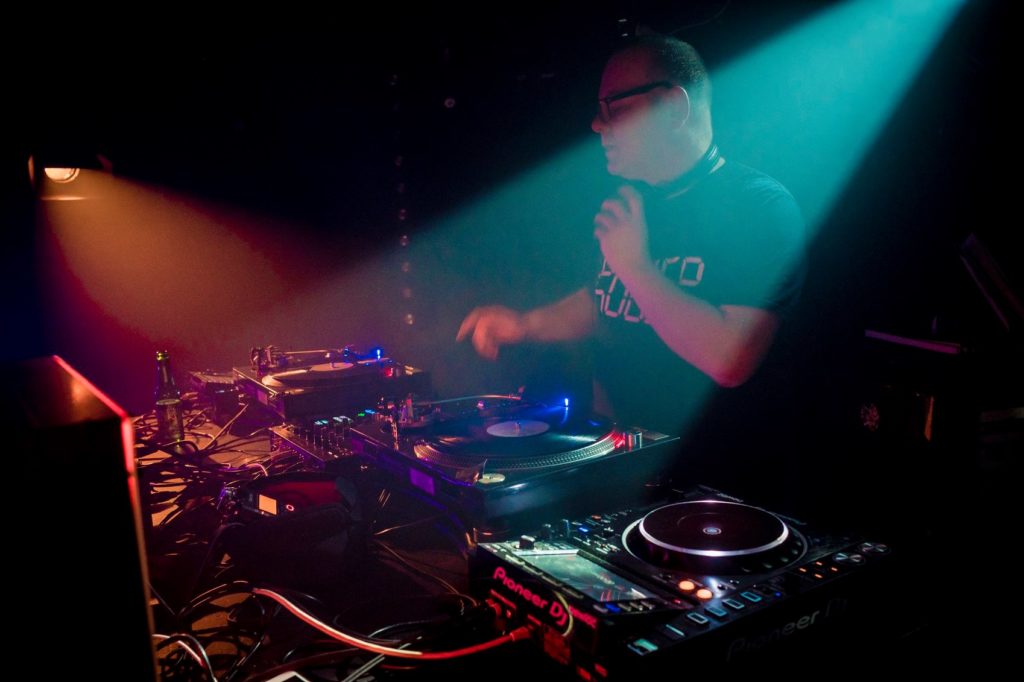
2022-07-01 Live At Power House, Le Sacré, Paris (Soundstream, DJ Pete, Finn Johannsen)
Posted: July 2nd, 2022 | Author: Finn | Filed under: Mixes | Tags: DJ Pete, Le Sacré, Paris, Power House, Sacré, Soundstream | No Comments »


Odyssey – Inside Out (Remix By Al Kent)
Million Dollar Orchestra – The Loneliest One
Jeff Mills & The Zanza – When The Time Is Right
Kenny Lynch – Half The Day’s Gone (KL Tribute Dub)
Ultra High Frequency – We’re On The Right Track (Organic Disco LIRR Remix)
Unknown Artist – 45566 BPM
Norma Jean Bell – Libre Comme Un Oiseau
Sami Reza – I’m Drowning
Unknown Artist – Last Time We Danced
Flaunt Edwards – Planets Of Life (Kon & Flaunt’s Scorpio Groove)
East Coast Love Affair – Shake
Michael McDonald – Sweet Freedom (The Reflex Revision)
Julio Cruz – Inside Your Luv
Disco Dandies – Inside Your Love
Dimitri From Paris x Fiorious – Music Saved My Life (The Extended Discomix)
Never Dull – Want My Love
Lee Pearson Jr. Collective – Start Today
Vick Lavender – Beautiful Lie
East Coast Love Affair – Without You
Pal Joey – What Can We Do Now
Hauke – Desire
Mistura feat. Kendra Cash – Smile (Joey Negro Club Mix)
Matt Early & Lee Jeffries – Love Is Growing Deeper (Matt Early Main Mix)
STR4TA – After The Rain (Dave Lee Alternative II Mix & Dub)
The Patchouli Brothers – Can’t Get You Down
AC Soul Symphony – Manhattan Skyline (JN Spirit of 77 Mix)
Belcampo – Your Kissing
Carl Bean – I Was Born This Way (Moplen Dub #1)
Dimitri From Paris – Can’t Get Enough (Dubstrumental)
The Shapeshifters Feat. Billy Porter – Finally Ready (Extended Monologue Mix)
Michael Gray Feat. Kelli Sae – MacArthur Park (Michael Gray Dub)
Unknown Artist – Across 110th Street
Jkriv – Souvenirs
Saint Paul – Soul Secrets
LoveHrtz – Classic Case
A/P – Make Them Move
Javi Frias – Universal Sound
Julio Cruz – Feelin’ Tipsy
Austin Ato – Heat
Brooklyn Funk Essentials – Watcha Want From Me (Mochi Men Remix)
Julio Cruz – Midas Touch
Unknown Artist – Involved
Paris Brightledge – For Love (Eric Kupper Mix)
Interstate – Mind Games
Byron Stingily & Teddy Douglas – We Belong Together (Maurice Fulton Remix)
Queen & Disco – No Goodbyes
Lord & Dego – Mandarin Delight
Los Hermanos – Another Day
DOS – Work That
Amy Dabbs – A Girl Like Me
Virna Lindt – Once
Axel Bauer – Cargo (House-Mix)
T’n’I – Disco Beams
Heinz Rudolf Kunze – Held Der Arbeit (Club Dub)
Billy Mackenzie – Opal Krusch
Altered States – Could This Be Love?
U96 – Come Together (Subtle Dub Mix)
Emojonal – Mantral Xtension
The Bionaut – Thrills
Subtle Houzze – Hot Hot (Give It All You Got)
Seventyseventyseven – Movin’ 77
T’n’I – Paris (Foucault Mix)
Emojonal – Replay
Whirlpool Feat. M.T. – Fly High


The La Mona collective from Paris do incredible things, pairing wonderful music and nights with dance classes and real community work. Go check them out whereever you can.


There were several reasons for the popularity of minimal techno and house in the late 90s and early 00s. For one, a lot of electronic club music of the preceding years was quite boisterous. Its ingredients and purpose was often not exactly subtle, satisfying clubbers and listeners that emerged from the acid house and rave days with direct signals and relentless dancefloor dynamics. And as soon as a sound becomes too dominant in the club scene, there is a reaction, and alternatives develop, and as it happened with the minimal approach they might even take over what was happening before and become dominant as well. And a freshly initiated influx of dancers and listeners had also come with different musical requirements. While the big room and big festival acts like Prodigy and the Chemical Brothers converted a rock clientele to the dance floor, a lot of people who earlier preferred less heavier independent rock music fell in love with the early Detroit minimal techno prototypes by Robert Hood , Jeff Mills, Richie Hawtin and Daniel Bell, and its more dubbed out counterparts around the Berlin conglomerate of Basic Channel and its affiliated labels, or Wolfgang Voigt with his Profan and Studio 1 imprints in Cologne, or Force Inc. and later Perlon in Frankfurt or Säkhö in Finland, or Peter Ford‘s Ifach and Trelik labels. Furthermore the club scene itself went through changes. Budget airlines stormed the market and made travelling to parties affordable, new open air venues and festivals entered the circuit but they had to make concessions to surrounding areas and embraced a sound that was efficient without significantly loud and low end sound systems. Also drugs like ketamine or GHB became popular and their users liked a sound that was more reduced, hypnotic and subtle. And soon enough minimal techno crossed over to house as well, and was out to conquer.
Right in the centre of these developments was the Frankfurt imprint Playhouse founded by Ata and Heiko M/S/O, which began as the housier end of parent label Ongaku Musik, along with its fellow sub label Klang Elektronik. It put artists like Ricardo Villalobos on the map, as well as Isolée or Roman Flügel with his Roman IV or Soylent Green aliases, and they reinterpreted house music with a lot of attention to details, abstraction, reduction and repetition. Peter Kremaier aka Losoul was arguably the most defining artist in the label‘s early stages, and his productions had a signature sound that is still unique. He probably was inspired by the layering experiments of DJ Pierre‘s wild pitch sound or the immersive deep house of Ron Trent and Chez Damier, but his own tracks soon took off into their own creative zone. Beginning with 1996‘s „Open Door“ the following 12“ releases „Mandu“, „Don Disco De Super Bleep“, and „Synchro“ were masterclasses in dancefloor mesmerism. Over beats more pumping than those of his label peers, subliminal percussion and chopped chords, he worked with deconstructed disco and funk loops and occasional vocal samples that were so perfectly captivating that he could ride them over extended tracks that gradually introduced element after element with logical patience, resulting in trips you felt should never stop. But by the end of the 90s the structure of his tracks became less strict, and he also explored different sounds on dark, bass heavy tracks like „Ex.or.zis.mus“ or „Brother In Love“, to fine effect. It seemed what was still needed was an album to round up this artistic phase of his, before he would potentially venture into something new, or different.
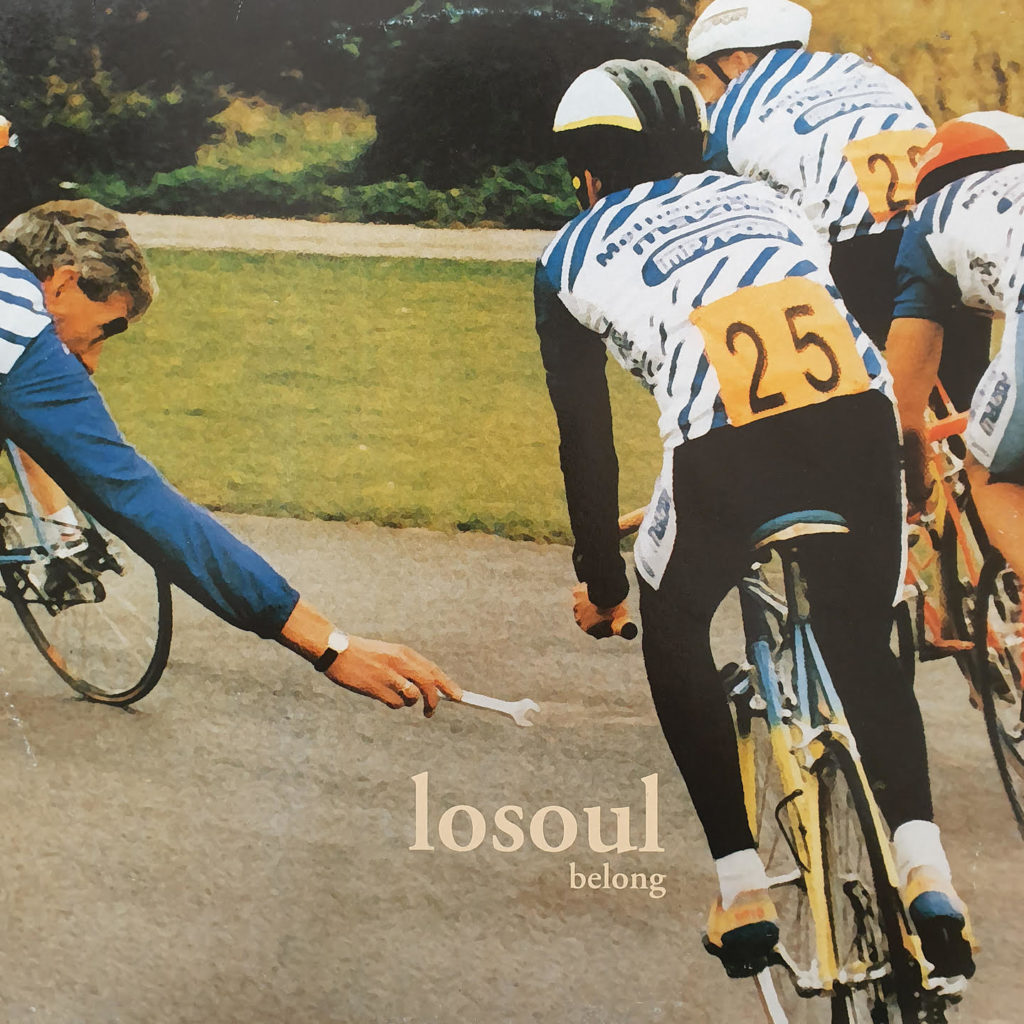
When said album „Belong“ was then released in 2000, it came as surprise to many of his followers. The opener „Taste Not Waste“ is deceiving, as it is a brooding punchy excursion that would not have been out of place on the preceding 12“s, but already the following track „Late Play“ is a weird off-centre sounding sketch in comparison, hinting at the fact that the artist would not give away the chance to represent more of his repertoire than his trademark club stylings. „Resisting Curare“ takes up on the quirkiness, albeit speedier, while „Overland“ is an eccentric and playful take on the ever reliable Billie Jean groove, coming across like a cross between the original groove and „Kaw-Liga“ by The Residents, with extra weirdness. Then things take another unexpected turn with „Sunbeams And The Rain“, which in my humble opinion is one of the most astonishingly beautiful and sublime tracks ever to merge deep house and techno. Only slightly erratic, this majectic masterpiece is followed by the chunky slow groover „Position“, which dubs down the proceedings before the sparsely tripping yet funky „Depth Control“, another demonstration how much you can achieve with just a few thought-out, gripping elements. Next is „You Can Do“, which contains the sunniest loop Kremeier produced up to that point, a spiralling, almost balearic melody which does not let go for most of the track, thus resulting in another track you can completely lose yourself in, although it achieves that typically intense Losoul sensation with an untypical joyful mood. The last track „Trust“ is a warped and chopped hip hop version of Bill Withers‘ „Use Me“ that would grace any tape of later L.A. beatmakers, and it makes you wonder what whole other sounds the artist might have left in the vaults.
Although Losoul has continued to drop releases of consistent quality, I think „Belong“ marks the end of a certain era, in which he acted as a true solitaire, even among likeminded and similarly talented cohorts. To me it seems that only shortly after the imaginative ideas of the minimal techno and house of those years time soon were often forsaken for a sound that was already looming, more eager to please, and less interesting to listen and dance to, however exceptions might prove the rule. But it is undeniable that here lies the foundation for many backlashes and resurgences to come.
Resident Advisor September 2019

Hanna – Fading Into
Dam-Funk – In The City
Benedek – Earlyman Dance (Canyon Version)
SW. & SVN – LA-400x
Jitwam – Stronger
Big Zen – Buddons
The Maghreban – Broken
Pépé Bradock – Grandgousier
K15 – Communion
Paris Cesvette Feat. Darryl Walker – Need You In My Life
Amp Fiddler – So Sweet (Louie Vega Remix Only Amp Mix)
Floppy Life – Dat Thang
Isoul8 Ft. Paul Randolph – On My Heart (KZR Blazed Vocal)
Shinichi Atobe – Heat 1
Ajukaja – Stranger
Hamatsuki – You As Ronnie
Glance – Great White
Pacific Coliseum – Ocean City
Larry Heard – Spy
Joan Biblioni Band – The Boogie (DJ Sotofett‘s Ultra Vibes Dubtour)

As it was a continuation in the timeline of club music it is quite natural that via sampling the early years of house were already littered with references to what happened before: disco. Pioneering Chicago house records used vocal snippets of the classic repertoire of disco and replayed its basslines and arrangements. Just take Isaac Hayes’ „I Can’t Turn Around“ for example, which was not only used in Farley Jackmaster Funk’s „Love Can’t Turn Around“, but also numerous other house tracks at that time. And acapellas from the back catalogue of classic disco labels like Salsoul, Prelude or West End never stopped being used for giving a track that extra imperative on the floor. But as well as disco always remained an integral of house music’s matrix, particularly lesser productions means led to different approaches of utilizing it. From the mid 80s on, nearly no house producer could afford to set up an orchestra in a studio, also many were not trained to write and arrange music as many protagonists of the classic disco era were. Still, the desire to reference or recreate the disco legacy with a house groove was always there until today, and the ways with which disco and house connected were manfifold and innovative. We take a look at some prime examples.
Mitch Winthrop – Everybody’s Going Disco Crazy (Everybody’s Much Crazy Records, 1991)

I first heard this record at Hamburg’s Front club, where it was a total anthem. At the time most people were actually not disco crazy anymore, but this was a perfect reminder to never forget where it was all coming from.
Reese Project – Direct Me (Joey Negro Disco Blend Mix) (Network, 1991)

Dave Lee aka Joey Negro was one of the first house producers that were not content with only sampling disco elements, but who aimed for a production that came as close as possible to disco’s original production and arrangement values. His remix for Kevin Saunderson’s garage house project went all the way. Joey Negro had the knowledge and had paid close attention, and obviously his directive was to achieve anthemic euphoria, and as all was done with loving detail, straight to the syndrum pew pew pews, he proved himself to be a trustworthy ambassador of the disco heritage, and remained ever since.
Nature Boy – Tobago (Black Label, 1992)

Milo from Bristol’s legendary Wild Bunch soundsystem deconstructing disco source material down to dark and gritty netherworld. None of the glitz of the sample references survived the process, and the music seemed to rather kick you out into the back alley through the back door than sway you in through the velvet rope on the other side of the building. I found „Ruff Disco Volume One“ in a bargain bin in the early 90s and I think it still sounds totally visionary and unique.
Romanthony – In The Mix (Azuli Records, 1994)

A tribute to Tony Humphries and the whole New Jersey legacy by Romanthony, one of house music’s greatest producers ever. If there ever was a more convincing argument to never deny your roots and keep them alive in what you are doing, I would like to hear it.
Jump Cutz – House Luck (Luxury Service Records, 1995)

One of many highlights from the Jump Cutz series, produced by Rob Mello and Zaki Dee. This really shows that often a good disco house track is no rocket science. Deconstruct source material into several parts. Reconstruct said parts as you please. Watch them go.
The Morning Kids – Free Lovin’ (Housedream) (Balihu Records, 1996)

As a true disco lover and dancer, Daniel Wang knew that it is the early morning hours when the magic of a good night out really unfolds. A rather simplistic meditation based on just a few samples compared to his later vintage syntheziser led output, but it still works a treat if the DJ decides it is finally the right time to switch gear. When it was released, the balearic revival was just a few sunrises away.
Los Jugaderos – What You Doing To This Girl? (Jus’ Trax, 1996)

A rework of Dazzle’s „You Dazzle Me“ which is indeed dazzling. The well-proven disco evangelists Ashely Beedle and Phil Asher concentrate on building up the tension mesmerizingly and release the strings at exactly the right moment. A masterclass in structure.
Turntable Brothers – Get Ready (Music Plant, 1996)

There once was a seminal live recording archived on deephousepage.com that captured Ron Hardy whipping his floor into a frenzy with an extended reel-to-reel edit of Patti Labelle’s „Get Ready“. This Chicago label already carrries the legacy of two legendary windy city clubs in its name: the Muzic Box and the Warehouse (later Power Plant). So it should come as no suprise that most records on Music Plant are a straight homage, albeit with banging beats and the freewheelin’ demanour with the use of samples so typical for Chicago. „Get Ready“ skips the traditional verse part of the original and heads straight to the climactic chorus, then rides it far into ecstacy.
Read the rest of this entry »
Recent Comments