Posted: February 29th, 2016 | Author: Finn | Filed under: Interviews English | Tags: Electronic Beats, Mixtape, Rewind, The Art Of Noise, Trevor Jackson | No Comments »

In discussion with Trevor Jackson on “Illmatic” by Nas (1994).
Can you remember the way you were introduced to “Illmatic”? Was it love at first sight?
Hip-hop was the main music I listened to in the early ‘90s. I devoured every new hip-hop release that came out. I’d been aware of Nas since 1991 when he guest-starred on a Main Source track called “Live at the Barbecue”, which was produced by Large Professor, one of my favorite producers. He was incredible on that. It was a great time for hip-hop. So many incredible hip-hop albums came out between ’91 and ’94. In 1992, Nas put out a single on Ruffhouse called “Halftime”, which was a track from the soundtrack of Zebrahead. That single totally blew me away. It still is one of my favorite hip-hop singles of all time. By that time, people in the hip-hop world were really aware of Nas, so when the album dropped in 1994, it wasn’t love at first sight, to be honest. It was a surprise.
You were expecting something big?
Yeah. All the real hip-hop heads were, not only because he was an incredible MC, but also because of the producers on the album, which were the cream of the crop at the time.
How were all the luminaries who played a part in the process apparent on the album? How would you characterize their input?
The thing about hip-hop at that time—which was very different than it is now—everyone strove to have their own sound. Nobody wanted to sound like anybody else. Probably more than any other music, people who were into hip-hop bought a lot of records because of the producer rather than the artist or the MC. It was quite unique.
On Illmatic, Nas worked with DJ Premier, Pete Rock, Large Professor and Q-Tip. Even though they were all from New York, they all had their own distinctive sound. Premier usually only took one loop, but he could do something incredible and really simple with one or two bars. Pete Rock was more complex and slightly more soulful. Large Professor had really amazing basslines, and Q-Tip was still deep, dark and street, but slightly more abstract. It was almost like The Avengers: Hulk, Thor, Captain America and Iron Man all coming together on one team. I don’t want to take anything away from Nas, who’s an amazing MC in his own right, but he always needed a great beat behind him. And they were the best at the time.
It’s kind of astonishing that there were so many different people involved, yet the album is pretty coherent.
The thing is, all these guys are from New York, and New York rap was all sample-based. It was pretty raw, and so even though these guys all had their own distinctive sound, they all hung out together; they were all friends.
That’s true. As you said, you go a long way back with hip-hop, and you probably heard a lot of classic albums. What makes “Illmatic” so special?
All I know is that I never get tired of it. A week doesn’t go by when I don’t listen to the whole album. It’s a short, too—it’s only got ten tracks on it, which was not typical, as a lot of albums used to hold 20 or 30 tracks. In contrast, Illmatic is really tight and focused. I love every track apart from one. I just think there’s something about Nas’ hunger to succeed on that record—I felt like you can hear that he came off the street into a vocal booth and just rhymed. It really has that immediacy and that hunger; you can hear it in his lyrics and you can hear it in his voice, and for me, it’s 1000 percent believable. I understand every word of it he says. Maybe it sounds silly, but it feels like he’s talking to me directly. His voice is just so direct. There’s something about that album. It was a point in time. So many different things combined to make it a special record.
It was his debut album, and it’s still hailed as one of the most important hip-hop albums of all time. That’s obviously quite a burden as well, but it’s really fascinating that he achieved this as his first album.
When it first came out, it wasn’t a success, though. It had critical success, but it didn’t sell. It took a bit of time to catch on. Looking at it now, for me, it’s always been a thing about Jay-Z or Nas. If you ask me, Nas would wipe the floor with Jay-Z in terms of rap skills. But Jay-Z is the superstar today, not Nas. Nas is still the rapper’s rapper. Also, sadly, he probably hasn’t made a record quite as good as Illmatic—not a whole album, anyway. So, if you want to talk about the greatest record of all time, many people today won’t say Illmatic. People will say it’s Dr. Dre’s The Chronic, or they’ll say Kanye’s it’s 808s & Heartbreak. For me, Illmatic is a benchmark, but I’m the older generation. I don’t know if the new generation really understands. What they perceive as being “good rap music” now is totally different, as is rap music itself.
Just in terms of the production, hip-hop—especially from the East Coast—was much more sample-based. I think that kind of vanished over the years.
The other thing is, in a weird way, that album marked a beginning, too. Before, you’d have one producer producing the whole thing. From what I remember, Illmatic was the first time so many esteemed producers all produced on the same album. That kind of changed things, because after that, people started getting loads of different producers to do an album. It’s not like they said, “Let’s get Premier or Pete Rock because they’ll sell millions of records.” They got those people because they really worked with Nas and they sounded right. But the hip-hop environment changed after that; people lost their unique sound. Everyone started to sound the same. Read the rest of this entry »
Posted: February 1st, 2016 | Author: Finn | Filed under: Interviews English | Tags: Colonel Abrams, Electronic Beats, Garage House, Omar-S, Rewind, Shanti Celeste, Vocals | No Comments »

In discussion with Shanti Celeste about “Set It Out” by Omar-S (2003).
So what was the first time you heard this track?
I wish I could say it was in a club where I had a life changing experience bla bla bla, but it was actually a much more ordinary scenario. I was buying some birthday records on Juno just after it was repressed in 2009. I didn’t know much about Omar-S at that point, had heard the name once or twice, but that was about it. So the answer to that question is – the first time I heard this song was on the mighty Juno player.
What drew you to it? The simplicity of the groove? The addictive synth line? How it erupts into a heartfelt song? Or something else? Or all of it?
All of it! The vocal and the beautiful rolling pad in particular though, then the nice toms and the clap, too! I just think it’s a beautiful track, it can make you feel so happy and grateful. I love singing so I just start belting out along with it as soon as I hear it or even when I play it in a club. It is just so simple but so powerful.
For me this is foremost a prime example of a very fine Vocal House record. Lyrics, singing and sound work perfectly with each other. It seems nothing is missing, and there is nothing to improve. But is it really as simple as it sounds?
Yes and no, there isn’t that many elements which I guess is what makes it simple, but it is cleverly constructed. I always think that spreading a synth line across four bars creates more interest because it gives room for all the other elements to play without sounding too loopy and repetitive, even if it is that way. Also let’s not forget what a great vocal can do to a track, in some cases it can completely transform it.
I think his track „Who Wrote The Rules of Love“ with Colonel Abrams also comes close to what Omar-S achieved with „Set It Out“. Are you a fan of his in general? Are there other tracks you like nearly as much?
I agree, that’s also really good and again a perfect example of a good Vocal House track, if I’m putting it down to just a feeling though, I prefer „Set It Out“ but they are so close! These are probably my two favourites. I do like a lot of his others as well, he has done soooo much! One of my other favourites is him and Kai Alcé’s „Not Phazed“.
I like that Omar-S is absolutely not very fussy about either producing or marketing what he produces. He is not very concerned about other opinions on what he does either. Is this the way out of modern PR obligations, just delivering the tunes?
I think part of it is a way of delivering tunes! Imagine if he did the whole PR thing every time he released a record, especially at the start when he was releasing lots, it would be a PR overload! And now people trust him and will probably buy his records anyway.
There is whole lot of discourse about Detroit in club culture. But does the origin of Omar-S really matter with „Set It Out“?
To be honest, I’m not sure. To me it just sounds like Omar-S!
UK also has a healthy tradition with Garage House, even if it evolved into something different. But to my ears the production of this track is not too dissimilar to UK club styles, or am I wrong?
I actually think there are other more garage-y tracks from Omar-S that sound more similar to UK styles. „Set It Out“ is quite straight and I always think of UK Garage House as a lot more swong. But I guess that“s the beauty of music, eh? Everyone hears it in they’re own way.
What is important if you infuse a dance track with vocals?
Tricky, I will always notice a good vocal track if I like the vocal and the way that it’s been placed on the track. It’s very important that it’s effortless and soulful but not trying to be too gimmicky and „classic house vocal’. Also sometimes it helps if they use the whole accapella, like in „Set It Out“, or if it’s a vocalist that they arrange with more of a song structure. I like the way it sounds when it’s chopped as well but it has to be done right. Basically, it has to to work great and not just for the sake of it.
I must admit that I much prefer this kind of vocals in a dance track to the majority of tracks of recent years that include a singing style usually more associated with indie records. But I would not go as far as to maintain you cannot create a good club song without a Soul aspect. But what does a good club song actually require?
For me it requires a physical and an emotional aspect. So a really good groove that you just can’t help but dance to and a melodic aspect of some kind. I’m not saying it has to be super melodic with noodly bits everywhere, although that’s the route I tend to take because I just can’t help myself. But something to go along with the groove that’s making you dance your ass off.
Is there a way that „Set It Out“ is reflected in your own productions?
Maybe yes, it’s probably influenced me in more ways than I know considering that I have listened to it so many times over the years!
The defunct Face magazine used to have these little messages at the bottom of their last page. I always have this one particular issue in the back of my mind where it read „Vocals matter“. But do they still?
They do to me!
Electronic Beats 02/16
Posted: January 6th, 2016 | Author: Finn | Filed under: Interviews English | Tags: Electronic Beats, I-F, Interview, Prefab Sprout, Radio, Rewind, The Blue Nile, Truly-Madly | No Comments »

In discussion with truly-madly on “Hats” by The Blue Nile (1989).
How did you come across this album for the first time?
In my early teens I was quite nerdily into hi-fi – it didn’t stop there to be honest – so there would always be a copy of „What Hi-Fi“ knocking about, covered in drooled saliva at the valve amp page. The magazine had a small music review section – I don’t recall usually paying much attention to this but for some reason I read the entry for „Hats“. I don’t remember what it said but something in it must have appealed to my inner angst – nor did that stop there either – at that time. Surely the word ‘melancholy’ was used. So I bought it blindly (the cassette). At that time I was listening to bits of everything, early House, Synth Pop, Indie, and I was buying vinyl but had this odd mental divide that meant I would buy albums on cassette and singles on 12”. And actually I only finally bought „Hats“ on vinyl fairly recently – random find at Rough Trade Portobello in London.
Why did you choose „Hats“ for this interview? What are its special credentials for you?
It would probably be too difficult to choose a House or Techno album, which might be the natural thing to do, and this was the first that came to mind otherwise. I still think it’s quite obscure in a way, despite being part of the mainstream, and seemingly more popular than I realised.
My first encounter with The Blue Nile was probably hearing „Tinseltown In The Rain“ on the radio, from their first album „A Walk Across The Rooftops“, released in 1983. Do you like that as well?
I like all their stuff but don’t remember anything pre-“Hats“. I now know Tinseltown was some kind of hit but don’t directly recall it from the radio, etc. But occasionally I’ll hear it, in a cab or something, and think there is more to it than simply having listened to it from the album, that maybe I did hear it around the time it came out. That first album, and „Hats“, they are the best ones for me.
For me it is a topic worthy of thorough academic research how the electronic music of the Synthpop era and beyond is so often pared with very charismatic lead voices. Is this only for contrast, or is there more to it?
Erm, is it too late to change my album? Read the rest of this entry »
Posted: December 7th, 2015 | Author: Finn | Filed under: Interviews English | Tags: Chez Damier, DJ Pierre, Radio, Rewind, Ron Trent, rRoxymore | No Comments »

In discussion with rRoxymore on “KMS 049 B1” by Chez Damier (1993).
What was the first time you heard this track?
I think I heard that track on a recorded DJ mix that was often played in a local radio where I grew up. It was a mix by Darren Emerson, if I remember correctly, recorded during one of these epic raves at that time. Eventually I had that mix recorded on a tape myself, and I was playing it from time to time in my teenage bedroom after school or on weekends. This was in the mid 90’s I think. I never knew who was the producer of the track at that time, I discovered it years after.
Why does it stand out for you? What makes it so special?
It brings me right back to my raving teenage years, just listening to that tape in my bedroom. I think what has always caught me in that track is that gimmick, the weeping sound of the chords, it sounds almost like breathing, and also it is difficult to identify how that sound has been made. Is it the sound of a keyboard chords, or strings, or voices mixed with strings and something else? It has always been a mystery for me and and it still is. That sound, which is obviously the signature of the track, has an unusual character. It is almost some sound design. Even though I guess it is a just preset on a synth, haha. It has always stood out from the dance music production of that time and still is. Maybe because it makes it more difficult to categorize it. Just compare it to the A side which is obviously a House music track. The B side is much more ambiguous stylistically in terms of aesthetics. Is it House music or is it Techno music? That is why I like it so much.
The A-side of this record is probably as legendary. Do you like it as well?
Yes I like it too, but for me it sounds definitely more like a classic House track. Even though, as you said, it became legendary. Read the rest of this entry »
Posted: December 3rd, 2015 | Author: Finn | Filed under: Interviews English | Tags: Daft Punk, Dimitri From Paris, DJ Fett Burger, DJ Sneak, Interview, Masters At Work, Radio, Rewind, Romanthony | 1 Comment »

In discussion with DJ Fett Burger on “Homework” by Daft Punk (1996).
How did „”Homework”“ found its way to your years? Was it by coincidence, or did you seek it out on some recommendation?
It was totally by a coincidence. I think it was back in the fall or winter of 1996 or something, I can’t really remember. My brother and me were listening to the radio one evening in the kitchen. Back then, we always listened to the radio when we were eating or hanging out, usually making drawings. In Norway around the time it was a channel called NRK P3. It’s still around, and it was one of the main National broadcasting channels. There were three of them. NRK P1 the original, NRK P2 mostly for culture, and NRK P3 for the younger generation. This station was aiming for a younger audience – but in a very different way than today. They used to have a broad selection of different programs. My favorite was the programs in the morning and afternoon because they had a lot of intelligent humor and also sometimes pushed things a bit further in terms of what was socially acceptable, at least back then. In the evenings, six days a week, they had different shows dedicated to music belonging to a certain scene or niche. Tuesday, Wednesday and Thursday it was Roxrevyen, which later became Karlsens Kabin, and Hal 9000. Karlsens Kabin mainly covered indie music, but also electronic music. Hal 9000 with Harald Are Lund was a broad selection of rock, electronic and experimental music with a very open minded approach. A lot of older things got played as well. Friday, it was National Rap Show with Tommy Tee, Hip Hop concentration mostly on early nineties East Coast Hip Hop. And then, Saturday, it was DJ Dust with Funk and Disco, DJ Strangefruit with his eclectic selections, and later in the evening DJ Abstract with mostly House and Techno. On Sunday it was Chill Out with DJ Friendly in the morning and Ambolt on Sunday evening, which was dedicated to Metal and harder Rock. Overall, NPK P3 had a pretty broad selection of music from different scenes. It provided a great musical education for when you are young and from a small Norwegian town. These programs were so dedicated to their scene, they always played a lot of demos or unreleased music. Karlsens Kabin and Hal 9000 played some of our oldest music, even things only made on CD-R, so it was a very supportive scene on the radio back then. You can just imagine how crazy it was for us back then being played on national radio!
OK, now back to the question. First time I heard something from Daft Punk was through Karlsens Kabin or Roxrevyen as it was called then. It was a mid-week evening, and suddenly “Around The World” was on the radio. This was before it was a big hit, and before people knew what Daft Punk was. It was probably a radio promo that was played or something like that.
It just blew my mind at the time. Back then it was so cool, different, even strange. Right after they played the song, they said the name and title of the song. And one second later I forgot it all, except the song. But a few months later, Daft Punk was everywhere with “Da Funk” and “Around The World” on MTV all day long.
Do you like the album as a whole, or are there personal highlights, or even tracks you do not like as much?
I like the album as a whole. Before when it was new, you could hear the hits everywhere, so I was pretty familiar with them. I remember when my brother and I got the album. It was an interesting listening experience, since most of the tracks were actually not hits or mainstream material. For instance, “Rollin’ & Scratchin’, “High Fidelity”, “Rock’n Roll”, “Indo Silver Club”, “Alive” or the intro “Wdpk837 Fm.” But, since everything was on the album, it just became associated with something mainstream.
Now it’s a classic of course, but back then, it was the combination of making something catchy, a bit more demanding, and for a scene. In this case, obviously House and Techno. You can hardly say that something is demanding or edgy on the album anymore, because of its place in music history. I think there still are some tracks that are edgy. Back then, for a 15-year-old kid without any experience, this was a big and new thing. Just imagine what influence this had. I remember even in the beginning, I didn’t like “Rollin’ & Scratchin.’ However, it changed after I gained more of an understanding for where the song and its influences came from.
For me, the whole album is a personal highlight. There are different vibes to the tracks and your mood shifts. Some songs are more uplifting, some more mellow, and some noisy or slow. But everything is a favorite of mine in different ways. They all have different elements of influences for me in terms of musical education. The whole album is a favorite of mine. Everything, from how the sound is mixed, the way Daft Punk samples, the artwork aesthetic, the music videos and Daft Punk’s anonymity at the time. It’s a whole package, and I embraced it all. I loved it all and still do! Read the rest of this entry »
Posted: November 6th, 2015 | Author: Finn | Filed under: Interviews English | Tags: Aiden D'Araujo, Chez Damier, Discogs, Interview, Joey Negro, Larry Heard, Move D, Radio, Rewind, Timmy Regisford | No Comments »

In discussion with Aiden d’Araujo on “Rhythm Zone Vol. 1” (1989).
You chose the cassette compilation “Rhythm Zone Vol. 1“. A format that in the 80s was probably still more common for discovering new music than its according CD counterparts. Were you taping radio at a young age, and was this your first foray into purchasing what already had caught your interest?
Yeah taping radio shows was a ritual when I was a kid – got that off my Mum who would tape mixes religiously. In the early nineties around ’92/’93 we had a studio in the loft with loads of gear like Junos and Rolands. The two guys who had the studio (you may have heard one of them under his Deadly Avenger alias who released the ‘Deep Red’ LP and now scores Hollywood films) lodged with us and I remember like it was just yesterday all the trippy, ambient electronica comin’ outta the studio – I would say reminiscent of acts like the Future Sound Of London. No doubt this influenced my Mum and she amassed a series of tapes that had early electronic auteurs on then such as Pete Namlook, Move D and Biosphere (she’s still got ’em!) whose nocturnal opus ‘Novelty Waves’ never fails to transport me straight to my childhood – you remember that iconic Levi’s advert featuring the steam train with that track on it right? Anyway, all these deep as the ocean odysseys would be the soundtrack to when I went to sleep. Warp’s ‘Artificial Intellgience’ comp was another fave, and I’d always be messin’ around with the FM dial to try scope out some more otherworldly obscurities…
Another interesting development was one of my Mum’s mates who when not spraying murals (he was and still is a revered graffitti artist who very kindly sprayed the House Hunting mural for me) would host shows on Birmingham-based pirate radio station Mix FM which he would sometimes transmit from our attic. This would be my introduction to Hip Hop – whether the Britcore of Gunshot and London Posse, West Coast flavour of Snoop Dogg and Souls Of Mischief or the politically-charged Public Enemy and ghetto rap of Biggie and Wu-Tang. GZA’s ‘Liquid Swords’ and Souls Of Mischief’s ’93 Til Infinity’ always on rotation must have proper wore those tapes out on my Walkman. As well as Hip Hop on Mix FM there would be some Soul, Funk, Disco, Electro and House – which when you’re 8 years old listening to all this was a pure mind trip…
So I didn’t really need to buy tapes as there were so many avenues where I was exposed to it. Another influence was my Dad who was split from my Mum so I would stay at his on weekends 10 mile up the road in Leicester. He was in a band that covered a lot of Rock and Blues classics who were a bit of a hit in the mid-nineties with loads of bookings all over The Midlands. Anyway Leicester has a big Afro-Caribbean community and every year hosts the Leicester carnival (second only to Notting Hill in size and scope) with Aba-Shanti representing so Dub and Reggae was also the sound of my Dad’s household – he loves all the Rhythm & Sound albums I’ve got him!
Did you try several compilations and this was the one you liked best, or was this the only one at first, and by coincidence it was also the best choice to get introduced to the US import dance music styles it showcased?
This was the first I bought and I remember clocking the naff early 90s trippy artwork complete with the tag line “A galaxy of imports for under a fiver”. It was a quid so had to be copped – I thought it may be like the deep trips on my Mum’s armada of ambient tapes. It was pure coincidence that the first one I got was the best introduction to Chicago House, Detroit Techno and New York Garage. Not long after I bought ‘The Rave Gener8tor II’ tape where again the cover art enticed me and had some choice cuts on it like the Underground Resistance remix of ‘The Colour Of Love’ by The Reese Project and some Murk flavour via Liberty City’s ‘Some Lovin’. There were only a few decent tracks on this one though as was on a more hardcore tip which I weren’t feelin’ as much. Always went back to ‘Rhythm Zone Vol. 1’. Read the rest of this entry »
Posted: October 7th, 2015 | Author: Finn | Filed under: Interviews English | Tags: Electronic Beats, Radio, Rewind, Roual Galloway, The Clash, The Sex Pistols, Underdog | 1 Comment »
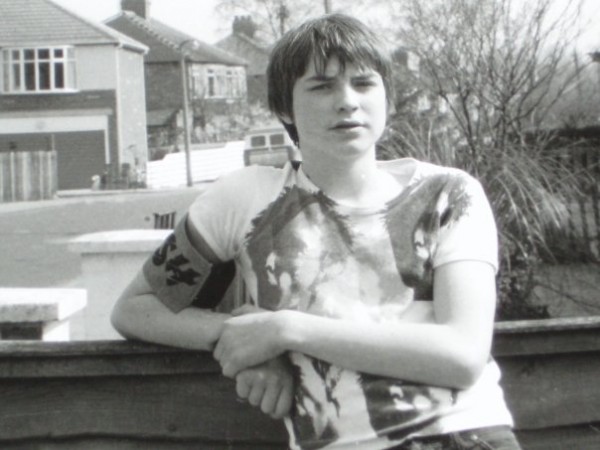
In discussion with Roual Galloway on “Garageland” by the Clash (1977)
So what was your first encounter with ‚Garageland‘? Listening to the radio as a teenager?
I got a copy of the first Clash album in 1979 from a record shop in Edinburgh called GI Records, aged 11. My dad had done some work for the owner and payment was made to him in vinyl. Which meant that my sisters and I all had three records each to choose from the stock. I can’t remember what my sisters chose, but the three I selected were The Ramones “It’s Alive,“ The Skids „Scared To Dance,“ and the self titled Clash album. At the time we lived in a Scottish newtown called Livingston. In later life you realise that all newtowns are built in three stages, which are in the following order of building houses, attracting people and offering jobs. We moved there in ‘78 in between stage 1 and stage 2. This meant that unemployment was high and the youth were left disenfranchised. Like most newtowns it was badly designed and architecturally awash with concrete grey. Punk seemed like a natural rebellion against the injustices imposed on the youth of Livingston and had a massive following there. A local punk band called On Parole used to cover it and I suppose it became ingrained in my consciousness from that. I saw them live for the first time in 1979. I’ve always liked the sentiments of the lyrics, of standing up against selling out and of doing things for yourself.
Have you ever heard something like it before, or was this your first experience with Punk?
I was aware of punk in 1977, but I was too busy kicking a football about and chasing girls at the time. One of the first records I bought in 1978 was „Denis“ by Blondie, unfortunately the other two were „The Smurf Song“ and the Official Scottish World Cup Song of 1978. I bought these whilst I was living in Nottinghamshire just before we moved to Livingston, Scotland. There was no escaping punk in Livingston.
I have to ask this question. Why The Clash, and not The Sex Pistols?
The Sex Pistols released one proper studio album in 1977 and then Rotten left. They were never the same after that, although the cash-in albums were hugely influential at the time of release. The Clash on the other hand released six studio albums in their existence. They matured with each album, apart from „Cut The Crap“. The one regret that I have is that I didn’t see them at the time. If I had to choose between the Pistols and the Clash it would have to be the Clash every day of the week.
„Garageland“ was published as last song of their debut album. Did you like the album as a whole, or is this their standout track?
The first album is filled with classic song after classic song. From the opening with „Janie Jones“ to „Garageland“ it’s all thrillers with no fillers. How can you not like an album that’s as strong as this! Read the rest of this entry »
Posted: September 7th, 2015 | Author: Finn | Filed under: Interviews English | Tags: Electronic Beats, L'estasi Dell'oro, Philip Glass, Ravi Shankar, Rewind | No Comments »
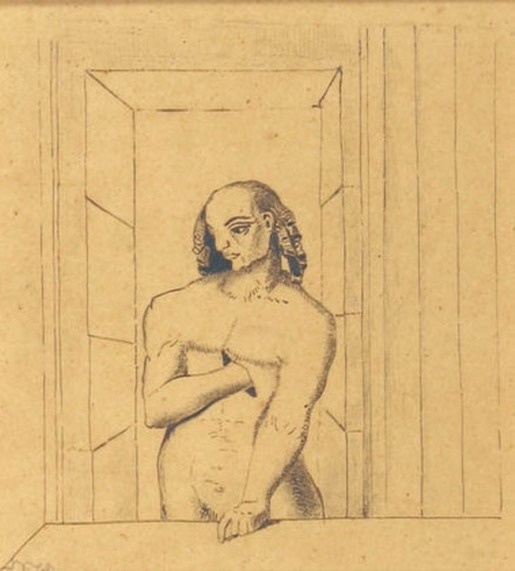
In discussion with L’estasi Dell’oro on “Passages” by Ravi Shankar and Philip Glass (1990).
Do you remember when you first got a hold of „Passages“?
I would have to say approximately 8 years ago. I believe that I first became aware of this album through familiarity with Ravi’s work, as opposed to the more likely channel of Philip’s. It was just the well-worn process of hearing a great musician’s work for the first time and then digging through as much of the rest of their discography as time allows.
What makes this album so important for you?
The simple answer is that this is the best collection of modern music that I’ve ever heard in my life so far. There’s other individual songs that I feel reach higher than any single piece from „Passages“, Jimi’s „1983, A Merman…“ for example, but taken as a whole, the variety and almost unwavering quality across the 55 minutes are very impressive to me.
Are you generally interested in either the Minimalism school Glass is a part of, and the heritage Ravi Shankar represents, or are there preferences?
Both traditions are of interest, for both similar and differing reasons. The Western minimalism side’s long form accuracy of performance is astounding. Of course many pieces utilize synthesizers or machines for part or all of the sound, but there are many examples of highly trained musicians playing these very fast and demanding arrangements in sizable groups with amazing accuracy. Hearing a quartet of woodwinds or vocalists arpeggiate 32nd notes for 20 minutes in synchronization is certainly impressive, especially when each player is playing in the pocket of another’s notes and one weak link could lose the all-important groove.
I feel that the general Hindustani music I’ve been able to discover, not too much beyond key names are readily available to foreigners like myself unfortunately, is an amazing marriage of musical rules and improvisations. Other cultures undoubtedly have similar structures, but the long form interplay between a sitar and tabla create a sound that appears loose and informal at first, but one where the performers are very highly trained and aware of their actions as a group. I’m certainly not deeply aware of the compositional rules of ragas & talas, etc. but familiar enough to appreciate what those musicians know themselves. Even in the related vocal styles of Nusrat Fateh Ali Khan and Pakistani performers, the communal aspect of group support for the soloist is wonderful.
In common, the two traditions place emphasis on extended songs beyond the popular format, which when done correctly, can leave a profound impact on the listener. Also, the aforementioned backing of smaller choral support often features drawn-out vocal melodies that really appeal to my ear, especially with the female voice. I’ve enjoyed working with a couple vocalists in this style, which can even sound great just floating over a groove alone without the usual emphasis on a soloist drawing the main focus. Read the rest of this entry »
Posted: August 7th, 2015 | Author: Finn | Filed under: Interviews English | Tags: Electronic Beats, Jazz Hip Trio, Rewind, The Maghreban | No Comments »

In discussion with The Maghreban on “Spell Of Three by Jazz Hip Trio (1967)
How did you become aware of „Spell Of Three“? A chance encounter?
I went to a car boot sale in Bath early one Sunday morning with my Dad and my Brother. I was looking for records, there weren’t many private sellers but there was a man who had a record stall. Normally I wouldn’t buy from a record dealer at a car boot sale, but there weren’t many records around so I had a look. He had this LP out for £12 or something. It looked interesting, just looking at the sleeve. It was the English Pressing on Major Minor. I took a chance on it for £10, which is not normally something I would do on a record costing that much.
Why did you pick this song, and not the whole album „Jazz En Relief“? What makes „Spell Of Three“ so significant?
When we got back I listened to the LP and was transported by that track in particular. Other tracks were nice, but none really moved me like that one did. Just the depth of emotion it conveys, kind of hopeful and sombre at the same time, it gave me goose bumps.
Is the late 60s your favourite period of time for Jazz, and is this style a personal preference?
I guess it is, yes, although not just the late 60s. There is a particular type of Jazz tune that I like, and most of them are from that time. Or some were recorded later but are in the 60s style. Tubby Hayes “Sasa Hivi”, “Pedro’s Walk”, Cannonball Adderley Quintet Plus “New Delhi”, Alto Summit “Native Land”, Ray Bryant Trio “Cubano Chant”, those kind of tunes. Some are a little Eastern sounding.
Would you say that Jazz-hip Trio have a typically French take on playing Jazz or does origin not matter?
I think they do actually. There is something there that reminds me of some Claude Bolling, Jacques Louissier. Or maybe its because it is a small band and it was recorded at that time. Something in the sound of the ride cymbals.
Their music sure has a cinematic quality, as exemplified in a lot of Jazz-based scores for films of that era, and they even interpret the seminal French film composer Michel Legrand. Is this just a cliché or did this film and music in that aspect just work well together at that time?
There is definitely something cool there, something cinematic. I could see this tune in a French New Wave film. Anna Karina smoking a cigarette. If it’s a cliché it is one that I like. I think the combination did work very well. Read the rest of this entry »
Posted: July 15th, 2015 | Author: Finn | Filed under: Interviews English | Tags: Discogs, Front, Interview, Jorge Socarras, Klaus Stockhausen, Patrick Cowley, Radio, Roof.FM, Stefan Goldmann, Suicide, Todd Burns | No Comments »
Moral – Trees In November
Ajukaja & Andrevski – Mesilind
Walt J – Horns Of Plenty
KB Project – Feel It
Universo – Yebo
Lowtec – Man On Wire (Reconstruction)
K.A. Posse – Shake (Joe Smooth Mix)
Geena – Tone Loc
Mosey – Live A Little
Luca Lozano – DJ Fett Burger – Telegronn
PLO Man – Type Damascus
Shanti Celeste – Moods
Chaperone – All Your Emergencies
Boo Williams – Freaky
Donnie Tempo – Tazmanian Virus (Sims JFF Edit)
Harmonious Thelonious – Industrielle Muziek
Minor Science – Closing Acts
DJ Stingray 313 – Acetylcholine
KiNK – Vodolaz (Elektro Guzzi Version)
MD Jr. – Survival Of The Richest
Unspecified Enemies – Ms. 45
Merle – Mimi Likes 2 Dance
House Of Doors – Starcave
Superpanzer – Die Tollen, die nicht so Tollen, und die Häßlichen
Finn, what memories do you have of your first DJ set?
It was mostly playing records at school and private parties from the mid 80s on, playing a variety of Disco, Soul, Synthpop and Post Punk. I’d like to remember that as eclectic, but probably chaotic would be the more apt description. Actually my memories of my first forays into playing out in public are bit hazy by now. After all, that was nearly 30 years ago. What I vividly remember was a Soul allnighter in a basement club of my hometown of Kiel, in ’86 or ’87. Actually it was a whole Mod Weekender, with several events all across town. My friend Ralf Mehnert, who became a well respected Rare Soul collector and DJ, and me took over the Soul part of the proceedings, playing records for a crowd that consisted of mods and other hip folks, but predominatly drunk scooter boys. Somebody saw them standing outside, mistook them for skinheads, and alerted the most notorious local Turkish street gang. They arrived not much later, crashing the door and storming down the stairs, only to face quite a crowd of completely unimpressed heavy parka-clad folks. Ralf and me ducked away in the DJ booth and things got really messy. About 30 minutes later there was no intruder left and the party continued as if absolutely nothing had happened. There were numerous other similar experiences. Kiel was quite a tough city, probably still is.
Can you re-engineer what influence being a small town boy – born and raised in Kiel, in Northern Germany – had on your musical education?
I did not really feel limitations. There were record stores as Tutti Frutti or Blitz which were very well selected with electronic music of the 80s, Punk, and experimental stuff. And quite a number of second hand stores to choose from, where I mostly bought Soul, Disco and obscure 60s and 70s records. Some of those acquired bigger record collections from Danish libraries and sold each record for 2 Deutschmarks, regardless of format. I purchased the bulk of my Disco collection in those years, for example. You did not have to spend much, so you would explore what you would have otherwise not listened to. I had a lot of friends who were very interested in music, and there was a constant exchange of knowledge, good and bad finds. It was all very social. I made regular record shopping trips to Hamburg, too. There were plenty of excellent record shops there, for everything of interest to me. I always looked for dance music of any kind, and Hamburg had stores that were importing records since the Disco era. They had the contacts and the knowledge.
And as for the clubs?
I did not mind being in a smaller town either. There were quite a few. The DJs mostly did not mix much and played all over the board stylistically. There was a tendency to play music in topical blocks. A 30-minutes block of Disco, followed by a 30-minutes block of New Wave, then Hip Hop, then some Rock, then Soul, then slow songs, then everything all over again. Once a few tunes worked together and on the floor, the DJs tended to rely on the according selection and did not change it for what seemed to be years. That drove me mad, but in retrospect I could hear lots of different music in one single night, and that left a mark on me. You learn about the contexts of what you hear, and how they relate to each other. I still make use of that. I travelled a lot, and I have been to a great number of clubs in my life, but when I moved to Berlin I was already in my early 30s. I spent my formative years up North. I did not move because I had to get out either, I left because the job situation was difficult for me. If I would had found an interesting job at that time, I probably would have stayed. I still go back regularly, I have family and friends there, and I still miss the sea.
You were born into club life by the sets of Klaus Stockhausen at Front Club in Hamburg, when you were dancing the nights away at the age of 18. What made this experience so fundamentally alluring to you?
I started going to clubs in Kiel in the early 80s, 12 or 13 years old, then to Hamburg clubs only a few years later. Most clubs in Hamburg were not as different to Kiel as they maintained to be, but the people had arguably more style and the music was more specialized. You went to certain clubs for a certain kind of music. I had been to some gay clubs in Kiel before, but they seemed to be stuck with a soundtrack that had been tried and tested for years, classic Disco anthems and the occasional Schlager drama excursion, and the scene was not that open. You often felt like the stranger entering the saloon, and the crowd often was more made up by people with a common taste in music and fashion that just happened to be gay. A lot of 80s fops and some sugar daddies. It could be fun, but more often it was not. These people had to live with other prejudices and repressions than just getting beaten up for the style of the subculture you had chosen for yourself, like I did, and you did not belong.
And Front Club was different?
Absolutely. When a friend took me to the Front Club in early 1987 that was dramatically different. The crowd was predominantly gay, but if you were not, like me, nobody seemed to care. I was aware of the major role gay subculture played in the evolution of dance music, mostly by reading features about legendary Disco clubs in magazines, but they were about Bianca on that horse for instance, and not about what was booming from the speakers as she rode in, which was exactly what interested me most. Front was the first club where I could actually experience it, and even be a part of it. And Klaus Stockhausen was the first DJ I ever heard who did not only play records, he mixed them. Like no other I heard ever since. It was not that I did not know any of the music before, but he was transforming the records into something else. And the club itself was incredibly intense, I have never witnessed something like that again either. A dark, gritty basement filled to the brim with extravagant people who completely lost their minds on the floor. And my first visits were coincidentally a good timing, because it was the transitional period between the music played there from 83 on, and House. House was introduced there much earlier, but it still was not ruling the playlist. It was brilliant to hear Stockhausen play favourites I loved from the years before, and more often records I never heard, and then the added early Chicago House sounds that seemed to have swallowed decades of dance music history only to spit them out as this raw, primitive version of it. It fit the club perfectly, and soon I was heading over to Hamburg on weekends as much as I could, because I simply could not get enough of the experience. That lasted until around 1995, and then I took up a residency in Kiel for almost ten years, and it kept me well occupied. But just think of all the incredible music released between 1987 and 1995. It really were the blink and miss years of what we still hear today, and I could be witnessing all crucial developments right on the floor, played by the best DJs, and dancing to it in the best club with the best crowd. Good times.
When did you start collecting records? During those blink and miss years?
No, much earlier. The little money I had I spent on records since I was about 6 years old. My parents gave me a record player, and the Forever Elvis compilation, plus radio and cassette recorder and they were my favourite toys by then. Especially the radio was very important. I spent endless hours recording music from the radio, cursing presenters for talking too much over songs I liked. And the hit music played on the radio in the mid 70s was just great. Chic and Roxy Music were probably my favourite bands. And all those weird and wonderful Glam Rock acts. But luckily enough I had also a chance to catch the music from early on that was not deemed fit for airplay. I had an uncle who had the idea to buy record collections at judicial sales, and he often gave me the records he did not like. Thus I could become the proud owner of Can’s Monster Movie or the first Suicide album and several obscure Soul albums when most of my classmates were still just listening to the charts. I know this sounds terribly made up, but it is the truth. And at a very young age you tend to play your favourite records over and over and over, your relationship to music is very intimate and deep. Soon I felt quite confident in my taste, and I was spending more and more time and money on music. But I actually had not the faintest idea how much great music there really was out there to discover, and I had yet to meet the right people to share my passion for it. That changed as soon as I could sneak my way into clubs. Read the rest of this entry »

Recent Comments