Posted: October 3rd, 2016 | Author: Finn | Filed under: Interviews English | Tags: Electronic Beats, Interview, Kraftwerk, Lerosa, LFO, Radio, Rewind, The Art Of Noise | No Comments »

In discussion with Lerosa on “Electric Café” by Kraftwerk (1986).
There was „Computer World“, then the „Tour de France“ single, then a silence of several years. I was impatiently waiting for their next move, and it kept getting renamed and postponed. Then the first thing I heard at last was „Boing Boom Tschak“. I thought that was pure genius. I suppose you were already a fan before, too. How did you experience that comeback and what did you think of it?
My first encounter with Kraftwerk was when I was 14, the video for „”Musique Non Stop”“ premiered on MTV Italy, with its groundbreaking CGI it was unique at the time. The only similar music I might have had come across then was probably Art Of Noise’s „Close To The Edit“ and Herbie Hancock’s „Rock It“. I didn’t have access to a lot of music as I had no older clued-in sibling nor were my parents into music, perhaps bar my mom who loves her Charles Aznavour and Lucio Dalla, so to be honest I had no idea who these guys were but I was blown away. To me this was new music from a new band! Sometime later I made friends with a guy from Bolzano who told me to check out the „Breakdance“ movie to see Turbo do a routine to „Tour De France“, a freaky song with electric pulses that sounded like a bike chain. After a few months of looking for it I watched the movie, and heard that, too. A year later on holiday in Rimini I shoplifted „Autobahn“ and „Radio Activity“ and I loved both but also not understood them very well as they packed a lot of references to more experimental music I wasn’t quite well versed as a 16 year old. It wasn’t until much, much later that I finally heard „Computer World“. I don’t think I have heard the first two albums yet. I think for a lot of kids back then “Musique Non Stop” was their first meeting with Kraftwerk. Like a lot of people I was a bit disappointed with „Electric Café“ at first. I thought the A-Side was a wonderful statement, but the B-Side lacked the same consequence. I liked the sounds, but I was not that impressed with the tunes. But it has grown on me immensely, starting only shortly after.
Is this album perfectly flawed, a good example for an album that does not lose its impact due to shortcomings?
I think after getting the 12“ for “Musique Non Stop” and eventually finding the LP I too might have been not very enamoured with B-side with its cringey songs (in English, that’s the version I had). It was too much like the music on Italian commercial day time radio and I was being drawn to these new sounds, Hip Hop and early House, that were starting to seep in through the late night radio stations and occasional afternoon clubs we had in Italy for 14 to 17 year olds. I wanted to hear this new Rap music and these new weird electronic House beats, I had no time for the „Telephone Call“ etc. Nevertheless I was charmed by them as the melodies and arrangement were very catchy.I am not sure if I ever thought of it as flawed; it felt like a cohesive whole, just one where I failed to connect the dots, which is how I normally felt whenever I heard something new that really alienated me, say Peter Gabriel „IV“. I just always thought I didn’t know enough to understand it rather than thinking, „oh this is a bit shit“. I think it is insecurity that made me look at it with respect rather than try to judge it as an album. I don’t think I owned many albums back then at all.Whichever way it is, the B-side songs eventually have become the ones I play most often, especially „Telephone Call“, which I love very much. And likewise I love a lot strange pop albums like Peter Gabriel’s „IV“, or Frankie Goes To Hollywood’s debut album or indeed „Who’s Afraid Of The Art Of Noise“.
Ralf Hütter had a severe cycling accident that slowed the work on „Electric Café“ down considerably. Do you think the flaws of the album are there because they rushed proceedings to not lose more momentum?
Who knows. I’d like to think that this was delivered the way it is quite intentionally to showcase the connection between the new sounds and beats of the A-side and the more traditional songs on the B-side, all held together by the electronic sounds. I think I always looked at this record like that; as a sort bridge between the old and the new.
The working title of the album was „Techno Pop“, and they even renamed the album later on. But isn’t the B-Side more Techno Pop than the A-Side? Could’t they have made one album that was pop, and one that was pure rhythm?
Well, I am sure that back then I probably wished the same, I would have loved more of the A-side but in hindsight maybe that would have really made it too niche and austere an album to their ears, coming as they were from a mixed background of musicality and experimentation, I suppose they were trying to find a balance on one record rather than being too pragmatic and split it into two separate entities.
I once imagined that „Sex Object“ was actually a first glimpse of a whole other concept album that was neglected, just for the lack of a better explanation why it was included. Especially the lyrics seemed to clash with their usual man machine infatuation, they are very human. As are the lyrics of „The Telephone Call“. How human are Kraftwerk?
I think they are very human and that’s why they are so popular to this day. Their appeal goes way beyond the mere “electronic music” tag, it doesn’t rest on the laurels of introducing a lot of complex machinery to music. They articulated the new relationship between humans and the technological world with sounds that managed to be extremely human and extremely non-human. Quite the trick. Read the rest of this entry »
Posted: September 26th, 2016 | Author: Finn | Filed under: Interviews English | Tags: Chicago, Front, Hamilton Bohannon, Patrick Cowley, Pet Shop Boys, Rewind, Steve Fabus, The Doors | No Comments »

In discussion with Steve Fabus on “Let’s Start The Dance” by Hamilton Bohannon (1978).
How did you discover „Let’s Start The Dance“? Was it in a record store, or in a club?
I discovered “Let’s Start the Dance” in my slot at my record pool, BADDA (Bay Area Disco DJ Association) in San Francisco in 1978. It was the album „Summertime Groove“, where „Let’s Start the Dance“ is the first track on side A. When I first heard it I was blown away by it and couldn’t wait to play it at the club that night. When I played it the crowd went crazy and it was the peak record of the night, not surprisingly.
When the record came out, you had already started your career as a DJ in San Francisco. What makes this record so special for you? And was „Let’s Start The Dance“ a defining record for the sound you played back then?
I was playing loft parties and underground clubs and at two of the major clubs in San Francisco, the I-Beam and Trocadero Transfer. I know one of the reasons I was brought into the scene was because I incorporated a lot of the R&B, Groove, Funk and soulful sounds from Chicago and New York and mixed it with the NRG and Electronic sounds already being made in San Francisco, and coming in from Europe. „Let’s Start the Dance“ was and still is a defining record for me because it is such a fusion of so many of these sounds but most importantly — it’s a jam. Its many elements, Jazz, Blues, Rock, Funk, Electronic, Boogie, take you on a trip in a whole movement building up to a crescendo of orgasmic release. It relates to other fusion sounds like the Isley Brothers’ „Live It Up“, Crown Heights Affair’s „Dancin“ and many of James Brown’s tracks.
Hamilton Bohannon was a drummer originally, and he started releasing records that were very focussed on rhythm and very distinctive from the early 70s on. What was his role in the history books of Disco music?
I first heard Bohannon in Chicago in 1975 at Dugan’s Bistro, a major downtown gay club. The track I heard was „Bohannon’s Beat“ which is on one of the early albums on the Dakar label. It stood out to me because it didn’t follow any of the commercial rules of the day. It presented itself as a unique sound — experimental and minimal, a mantra to hook into. It inspired and encouraged DJs to take Disco underground. It was like a loop, a tool to use to improvise, phase or use as a bridge. Mantra is a major theme for Bohannon and he carries it forward with „Let’s Start the Dance“, which is just the opposite of minimal. He turns it up with the full on jam that puts dancers in an intense trance that they have no choice but to ride to its conclusion. It is very rich with a number of instruments played including guitar and keyboard with Carolyn Crawford’s couldn’t-get-any-better-voice. What this record represents to every generation is that this is the real deal musically.
Are there other Bohannon records you rate nearly as much?
My other all time favorite is „The Groove Machine“ – as intense as “Let’s Start the Dance” but trippier with its phased out psychedelic break and its total fusion hard funk rock electronic groove. When I hear this it makes sense that Bohannon early on drummed with Jimi Hendrix. Both “Groove Machine” and “Let’s Start the Dance” feature guitar riffs prominently.
1977 saw the peak of the classic Disco era. Was „Let’s Start The Dance“ an early sign that Disco could live well past the end of that boom? That the sound could move on and still matter?
“Let’s Start the Dance” is timeless because as I had mentioned before it’s a whole movement and jam where you’re hearing real instruments. It always ignites a dancefloor and from the first note you want to pay attention. The lyrics come fast with “Everybody get up and dance – Ain’t ya tired of sitting down?” This could be cheesy but it’s not, and you know it’s not and surrender completely to it right away. There is no way you couldn’t let yourself be seduced by it and every generation experiences this seduction. It still matters because it’s a prime example of the authenticity of Disco of that time period and that’s what lives on. Read the rest of this entry »
Posted: August 15th, 2016 | Author: Finn | Filed under: Interviews English | Tags: Cristina, David Morales, Frankie Knuckles, Front, Groove, Interview, Masters At Work, Pet Shop Boys, Radio, The Temptations, Tony Humphries | 6 Comments »
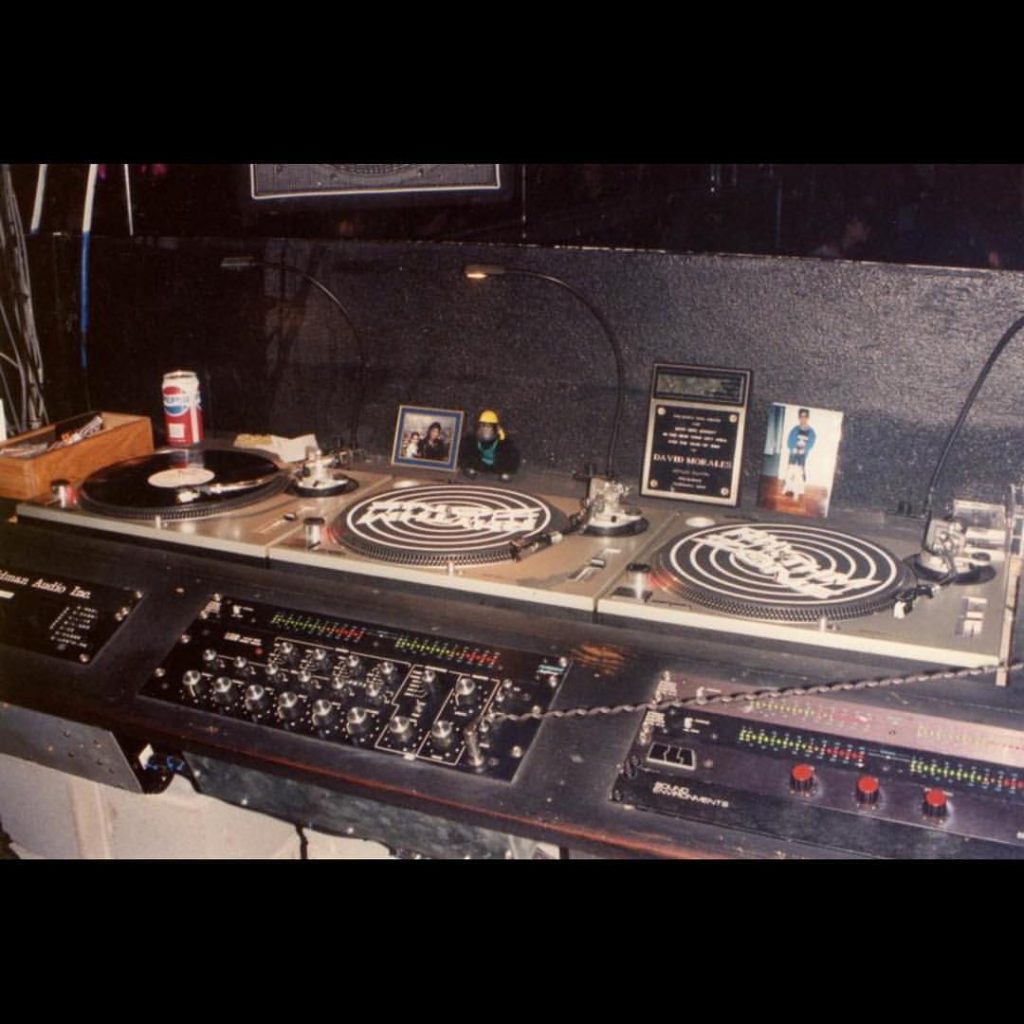
We should probably start at the very beginning. What were your baby steps as a DJ, what led you to being a DJ in the first place?
I think in the first place was the love for music. And I can remember when I was really, really young, with a babysitter, and we’re talking about the days of 45s. The first record that I actually remember and I was spinning was „Spinning Wheel“ by Blood, Sweat & Tears.
Good choice.
You know my family was from Puerto Rico and there was no American music in my house.
It was mostly Latin music?
Only Latin music. And we’re talking about Merengue, Salsa. Folk music from Puerto Rico. And I didn’t like it. And it’s funny because today I appreciate Latin music. Since I became a producer, now I appreciate Latin music for the production, the instrumentation, the musicians, because Latin music is not machine-made, not at all. So the first 45 that was in my house was “Jungle Fever” by Chakachas. My parents had this fucking 45 that was this erotic fucking record. And we’re talking about these stereos that were like these big fucking wooden consoles with the big tuner for the radio and the thing with the record where you put some records in the thing and it dropped one at a time and when it ended the thing drops. It must’ve been when I was about six or seven there was an illegal social club. You know I was living in the ghetto. So there were illegal social clubs that were like a black room, with day-glo spray paint, fluorescent lights to make the paint glow and they had a jukebox. And they’d play the music back then. „Mr. Big Stuff, who do you think you are“. It was all about the O’Jays and that kind of music. And I liked that. I used to sneak downstairs and such.
So when was that?
It was like the late sixties. Because I was born in ’62 so by ’70 that makes I was 8 years old. So it was before that because then I moved. Anyway, so fast forward the first 45 that I liked was the O’Jays. The first 45 I actually bought. And I remember playing that record I a hundred times a day. Putting the bullshit speaker we had in the house outside the window, we lived on the first floor. I played the record to death.
So you played it to the whole neighborhood?
The whole neighborhood. The only record I had really. So then when I graduated elementary school, I used to be into dancing, like the Jackson 5 they had “Dancing Machine”, there were The Temptations and Gladys Knight & The Pips and I liked that music. So then when we got into Junior High School – when I was like 13 years old, I had a girlfriend and we went out when the first DJs came on in the neighborhood, which was like the black DJs. I saw the first two Technics set up and a mixer in someone’s house. I was like “Wow! That’s interesting.” I saw somebody doing this non-stop disco mix and I never knew what that was all about. So, I used to hang out with all my friends. I was a dancer, we used to do all this what we now call breakdancing. We would do battles. So, I had one turntable and my friend would say “David, we hangin’ at my place” and I would play some music for us. So I just was a kid that sat by the stereo with the records and put on the tunes, one at a time. Because back then that’s what it was, you’d play one tune at a time. If it ended, the people clapped and you’d play the next tune. And it was all songs.
How did you proceed from there?
I was one of those kids that used to go to the record store even though I had no money. Just to look at the records. To walk by a store that sold turntables and a mixer and be like “one day, one day…” And I’m not working so I can’t afford to buy anything. My first mixer was a Mic mixer. 1977 there was a blackout in New York and there was a lot of stealing so I came across a radio shack little Mic mixer that I set up to make it work with two turntables. You had to turn two knobs at the same time and it was like mixing braille because there was no cueing. My one turntable had pitch control, the other one had none. I was too young to go to clubs, so I never saw a proper DJ mixing. I only saw people outside, we would have block parties and people would be mixing. And I was one of those kids that was just standing there, watching. The first time I went to a club I was 15 years old, it was Starship Discovery One. It was on 42nd street in Times Square, and we got in. We shouldn’t have got in, but you know it was the end of the club, I was 15 and I got in. The DJ had three Technics, the original 1200s, and a Bozak mixer. The booth was a bubble, and I had my nose at the fucking bubble and I was just mesmerized. The first time I actually played on a real mixer I went to a house party at my friend’s brothers apartment. And in those days, most of the DJs who were really playing were gay DJs. “San Francisco” by the Village People was the big record. But I was into The Trammps, I was into James Brown, I was into Eddie Kendricks, Jimmy Castor Bunch, “The Mexican”, Sam Records and of course Donna Summer and all this kind of stuff. So I went to this house party and he was the DJ, the first proper mixer I saw – this was before I went to that club. And it was a black mixer, it had two faders and it had cueing. So I see the DJ there, he’s using headphones to cue. So my friend says “D, you wanna play some music?” and I’m like “Yeah, sure.” I grabbed the headphones, put them on and I hit the cueing, because I was watching the guy, and I’m hearing some music and and I was like “Oh shit…” When I played at that party, I’d still play how I know how to play, which was braille. Intro, outro. And it wasn’t about mixing. All the new bars at that time were advertising nonstop disco mixes.
It was even mentioned on the record sleeves.
Yes. And all that meant was that the music never stopped. Because before the music used to stop before the next record came in. So now it was continuous. That worked, so here came the name nonstop disco mix. And then at that time all these records started coming out. The disco 45 record. At my junior high school prom “Doctor Love” by First Choice was big. And I remember the guy playing it about four times. So my first 12″ of course was “Ten Percent” by Double Exposure, on Salsoul. Another record that I played to death out the window.
You were still doing that?
I was still doing that. I used to live to just play music. I loved it. I would leave in the morning to go to school because my parents would go to work. I would buy a bag of weed, buy a quart of beer and I would go home. And you know in the old days we had all those buildings where you could really play loud music and I had these stupid double 18 boxes in my fucking bedroom. Before I’d take a piss, I turned my system up. My mother used to be like “turn that music down, turn that music down, turn that music down!”
Did you begin to play out around that time?
Yes, and playing at parties in those days meant you carried your records. Because you didn’t play for two hours, you played the whole party. And the thing is, if you owned 5000 records, you took 5000 records to the party. And in those days we carried milk crates. So here I am carrying eight to ten milk crates to a party. Getting in a car, getting a cab, you have all your friends who would help you going there, but when you’re leaving there is nobody to help. And you had to take the stereo system with you. So you carry the sound system and you carried your records. You took everything. It wasn’t like going somewhere and you just bring your records and they have everything. You had to take everything. I did parties for 15 dollars, for 25 dollars and you had to chase people down for your money.
What kind of events were you doing?
I played in clubs, I did Sweet Sixteens, I did weddings, I did corporate events. I did anything. I also did parties in high school. I would advertise a party, we would bring the sound system to some kid’s house, the parents left to go to work, we’d bring the sound system fast, and I would advertise free beer and free joints. Even 50 people is a lot of people in somebody’s apartment. Imagine we’d take over the apartment and it’s like 10 in the morning and we’d be fucking banging it, banging it, banging it — and we’d get out by 3 in the afternoon before the person’s parents come home. God knows the mess, whatever the case, baby. And in those days the sound system was in the living room, the DJ booth in the bedroom. No monitors, it was just bang bang bang. As I started doing parties at an apartment I used to charge a dollar to get in, decorate the apartment, put up balloons, and it just started with friends. Obviously still free beers, free joints, the whole thing. And like I said, I just loved the music, it was just everything for me. I wanted to play every single day. Even when I didn’t have the equipment, I knew friends that bought decks and a mixer and a small sound system for their house and they weren’t DJs and they used to say “David, come to my house and play music for me.” And I would just die to play, it was just everything for me. Read the rest of this entry »
Posted: August 1st, 2016 | Author: Finn | Filed under: Interviews English | Tags: Anno Stamm, Anstam, Electronic Beats, Rewind | No Comments »

In discussion with Anno Stamm on “Complexification” by T Power (1996)
I assume you were familiar with Drum & Bass artists before this record came out. How did you first encounter „Complexification“?
It was a vinyl that my older brother had bought. At that time I was not going to the record stores by myself, so my older brother was basically my record store. When I came home earlier from school, I would go through his record collection and then record the vinyls that I liked the most to a cassette with the Hi-Fi tower from my father. This was always very “James Bond” like, because touching my brothers vinyls and touching the Hi-Fi tower from my father were two major offenses, which would turn out really ugly if one of them would have caught me.
Why did you choose this particular track, the b-side to „Symbiosis“, and not another classic of that era, or even a different track by T Power, like his much better known „Mutant Jazz“ for example?
For me this song stands out in many ways and I think even for T Power this song is outstanding and unique. You are rather out of your mind when you produce such a song, or you are in an extremely clear state of mind. It is a song which breaks so many rules but still manages to be simply breathtakingly beautiful. That is a goal that I admire very much in making art.
Is Marc Royal aka T Power a producer you rate particularly high in Drum & Bass history?
I must admit that I reduce T Power pretty much to that one song. I like his general sense for sound and chords but I am not really an expert on his complete musical back catalogue.
„Complexification“ is not necessarily a typical Drum & Bass track. It is much slower, and it is working with Jazz leanings in the synth and bass sounds, while the beats and groove are hinting more to the sound West London’s Broken Beat scene. But does „Complexification“ transcend musical folder categorization, or does it even have to belong to a certain context?
I chose this track because for me it is a good example for “beyond genre”. This song is perfect in every way. It is idiosyncratic and lives in its own cosmos. There are no genres in that cosmos. Sometimes that is the problem with genres. You get into a routine because there are rules, schemes, patterns and templates you work in. You get lazy in terms of decision making. This song is not lazy at all. Every note is in its exact right place but it feels like it really started out with a tabula rasa thinking – everything can happen.
Do you like both, Drum & Bass and Broken Beats, and do you treat them differently, or do they come from the same origin?
In terms of “Drum & Bass” I started with the “Jungle” phase, because as you might know I am a big sucker for the drums, especially if there are played by the devil himself. That is why I really was into that fast, wild, raw and breaky material. Actually when it was called “Drum & Bass”, that whole thing was nearly over for me. Because all the wildness basically turned into one sterile
drum-loop… with saxophone samples. There was a big shift from the rhythmic energy to a generally more chilled background music approach. So, I think they may come from the same origin – but I would treat them very differently.
There are other fine examples where Jazz elements were integrated to the sound palette of Drum & Bass. Are you interested in Jazz, and how it can be worked into other music?
When there was the trend to just sample something smooth and jazzy over a fast drum loop, that was not very interesting for me. Sampling some “blue notes” doesn’t make you a “jazz cat”. For me and most of the people Jazz is about expressing yourself through playing an instrument, and also pushing the boundaries of that instrument. So, you have to have a plan if you want to achieve that purely with software. Squarepusher’s “Hard Normal Daddy” is a good example from that time, how an electronic version of Jazz may work. He brought the real instrument into the software world in a very smart and respectful way. But in terms of Jazz is about pushing boundaries of an instrument, then one must say that in that days there were a lot of other electronic composers who would
deserve it much more to be called “Jazz Cats”. Read the rest of this entry »
Posted: July 4th, 2016 | Author: Finn | Filed under: Interviews English | Tags: Daft Punk, Electronic Beats, Front, Paris, Radio, Rewind, Theo Parrish, Trus'me | No Comments »
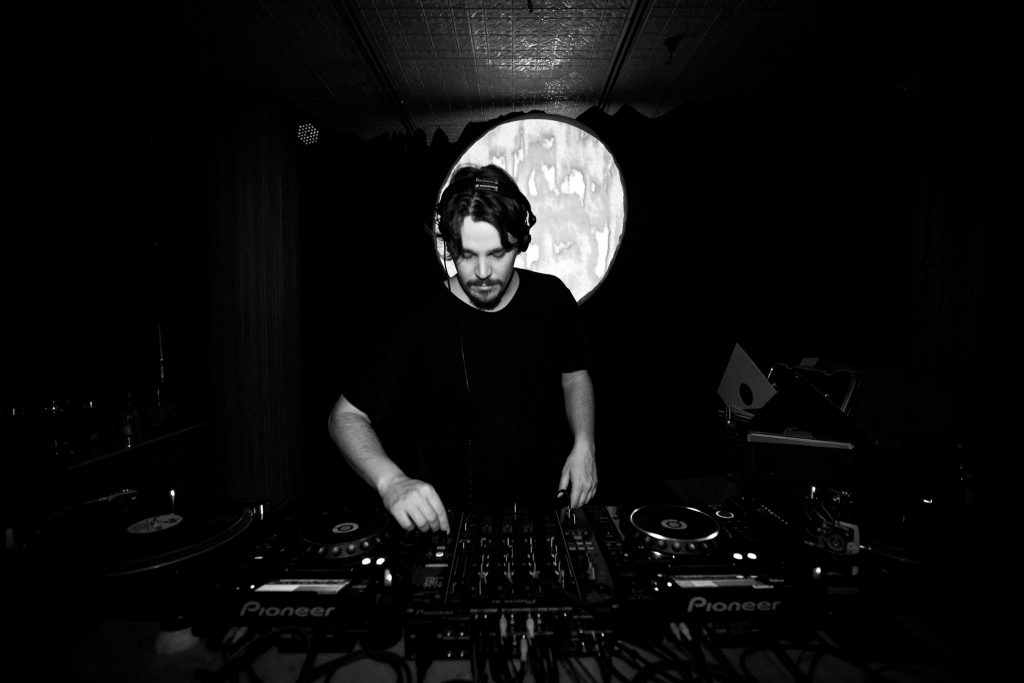
In discussion with Trusme on “Forevernevermore” by Moodymann (2000).
I doubt that „Forevernevermore“ was your first encounter with Moodymann. Did you eagerly await his third album, and how did it grab you?
100% I didn’t know who Kenny was till I found a copy of “Forevernevermore” in my friend’s record bag. He had left his records at my house and I was doing the usual noseying though the records when I found this CD. I was completely into Slum Village, MadLib and Jaydee collecting the samples from Jazz to Disco. When I first played this CD, everything just became clear in my mind. This is the sound I was looking for, from Hip Hop, House, Jazz, Soul and Disco all rolled into one. I became obsessed, wanting to understand the production techniques and went on to discover the whole world of Detroit right after this. Three years on, Moodymann was playing my first LP launch in a pub on Oldham street, home to where I had been buying his records for the past few years. KDJ and Theo were just No.1 at that time in Manchester and I couldn’t help but be influenced by the whole sound.
It seems that Moodymann matured up to the release „Forevernevermore“ in terms of the album format. „Silent Introduction“ felt like an anthology of 12“ material, even though it worked as an album. But with „Mahogany Brown“ he already aimed at a listening experience more true to the format. Would you say he topped this with „Forevernevermore“?
Yes, for sure. The whole LP worked as a cohesive hour of music yet there was something at every turn that was unique and compelling to me as a listener. I related to this LP in more ways than one, due to it’s almost Hip Hop nature with intros and outros connecting the tracks and glueing the whole piece together. There are so many seminal tracks on the LP that are still played out in the clubs today, yet they are tracks that remain LP cuts and for home listening only. This ideology is what I have embraced in all four LPs that I have produced over the last 8-9 years, with something for the dancefloor, something for the car and wherever else that one listens to LPs these days.
You told me that you wanted to talk about the CD version of „Forevernevermore“, which has lots of interludes and skits, and hidden tracks. Do they form an alliance with the music that almost works like a radio play? What is the special appeal of it?
When I think of an LP, I think of A Tribe Called Quest, Marvin Gaye or The Verve even. All these LPs are constructed to be a continuous piece of music, in which the listener is taken on a journey from the beginning to the end. With the CD format, there is extra playtime in which intros and outros can give a context to the background and making of the LP. On the “Forevernevermore” CD you are taken into the home of KDJ, as he sits playing with ideas on the piano with his child, to the studio discussions and even to listening to his local radio for inspiration. Hidden right at the end of the CD is a live recording of three hard-to-find cuts from the KDJ label, mixed together after 2 mins of silence. In many ways the CD provides the platform for further expression as an artist in the format of an LP.
I think the sound of „Forevernevermore“ was a step forward in terms of his distinctive sound. It was still dense and immersive, but also more refined. Do you think Moodymann’s sound evolved on „Forevernevermore“ in comparison to earlier works? And was it for the better?
This was for sure in an LP sense his best work. It is what most people say as their favourite work, when talking about Moodymann. He carved a sound out all for himself and also derived a unique long player format that until then was not seen in the dance scene. Most underground dance LPs were merely a collection of 12” tracks but this felt more like a well thought-out process, something like Daft Punk would execute. I believe Peacefrog Records also helped in this process and pushed KDJ, as they did all their artists to reach even further. In many ways, earlier LPs were a collection of his previous works but “Forevernevermore” was an LP made from beginning to end with a single LP idea and it feels very much that way.
Tracks like the Disco led „Don’t You Want My Love“ display a confidence to transcend mere club credentials for traditional songwriting, a path he followed ever since. Is there a side to Moodymann the producer you prefer to others, or is it not necessary to differentiate his persona as an artist?
The marriage between your typical MPC studio production and live instrumentation was what set out Kenny on his own. Working with local artists like the percussionist Andres, bass with Paul Randolph and keyboards by Amp Fiddler, on top of that raw production sound was just so unique. The juxtaposition of quantised groove and loose musicianship created a genre of its own and is still being replicated today. This LP was the beginning of that sound and Kenny is still using this formula very much in his productions today.
How do you rate the albums Moodymann released since „Forevernevermore“? Were they up to par with your expectations?
“Black Mahogani” is on par for me if not more refined than “Forevernevermore” but maybe it’s the rawness of the LP that better relates to me. With the following LPs I have enjoyed the productions but felt slightly less connection to the music I listen to and make today. Not that it’s not great music, but I started to feel that the tracks in the EP releases didn’t have that Peacefrog touch of which I’m such an admirer. The LP process began to evolve towards the creation of a new sound where he begins to sing and perform more as an artist and less in the background as a producer. Read the rest of this entry »
Posted: May 30th, 2016 | Author: Finn | Filed under: Interviews English | Tags: Batucada, Electronic Beats, Jeff Mills, Rewind, Tyler Pope | No Comments »

Photo by Annette Kelm.
In discussion with Tyler Pope on “Batucada Capoeira” (1998).
So how did you come across „Batucada Capoeira“? What triggered your curiosity?
A friend and band mate of mine! I had bought this compilation when it came out in the late 90’s and I was introduced to it that way. At that stage we were always looking for stuff that was rhythmic, and raw, and had energy. Stuff that wasn’t punk rock that had the same energy and essence of punk, and I think that is in Batucada. There were a some other great reggae and latin compilations on Soul Jazz we liked, and so I’m pretty sure thats why he bought this one. We dubbed the vinyl onto cassette and listened to it a lot on our first tour of the states in ’98. It grew on me the more we listened to it on the long van rides during that tour, and I was eventually totally hooked.
What attracted you to a sound that is so predominantly rhythmic?
I’ve always been drawn to rhythmic music, my dad was a drummer and there was always a drum set up in the house so it started with that. As a youngster I was into Primus, Red Hot Chilli Peppers, and that whole funk rock thing. That music primed me for getting into soul and funk music and all other kinds of tribal rhythmic music. This Batucada compilation was probably the first stuff I really enjoyed that was only drums and thats why it’s special to me and why I chose it for this article.
The sound of a Bateria can be quite a complex wall of sound. What is the difference between that and percissive music from other countries, like Mbalax for example, or other African styles? Or are they even not that different?
There are different drums, instruments and rhythms in Bateria then in Mbalax and other African percussion music, and I guess that is to do with the European influence in Brazil. There are no snare drums in African drum music like Sabar or Mbalax, and the snare drum comes from Europe. Also I’ve never heard such a large group of drummers playing in such an organized way in African drumming. But the frantic energy of the drum music of both countries is certainly similar.
Not every track featured here is as frantic as the drum workouts usually associated with it. What do you prefer?
I like this compilation because it has some of more frantic workouts and mixes them up with the more minimal tracks. It makes for a more enjoyable listen from beginning to end in my opinion. Some of the other Batucada records that I have, that are just the big frantic drum workouts are fun to listen to for a track or so, but maybe not as a whole record
Was the compilation a first glimpse, and you investigated further from there? The tradition of Batucada and Capoeira in Brazil is rich and sure offers a lot to listen to.
I checked it out because it was on Soul Jazz, and at the time it came out other Tropicalia records were being reissued like Tom Ze, and Os Mutantes other real arty weird quality music, so I was wanting to hear more stuff from Brazil. I haven’t really gone too deep, or at least deep by my standards with Batucada actually, this comp never really gets old either so if I want to hear something like this I just listen to this record.
Capoeira is a form of martial arts developed by slaves. I always found music interesting that transfers otherwise potentially critical encounters between rival groups of people into a battle of dance moves, be it breaking, vogueing, or Brazil’s current Funk Balls. Yet the music of „Batucada Capoeira“ is comparably more dynamic than its counterparts. Are such aspects important for percussive music?
Yeah, I hadn’t thought about that but I also like music made for these types of encounters, or battles. I love a lot of the new Vogue/ballroom club music, and recently have been really digging some of the Jersey Club battle tracks. The records for dance battles are more beat driven, there is more focus on the rhythms, and of course they have to be super funky since they have to inspire the dancers. The tracks for battles also cut away at anything that wouldn’t be just for the purpose of the dancing. That focused rhythm track energy I really like. As far as the dynamic nature of this music it is because it’s actually people there playing the drums while the battles are happening, so the drummers are feeding of the energy of the battles and vice versa. Read the rest of this entry »
Posted: May 16th, 2016 | Author: Finn | Filed under: Interviews English | Tags: de:bug, Interview, Mark E, Prosumer, Radio, Stefan Goldmann, Wire Club | No Comments »

The next instalment of Acetate will once again exhibit selectors of world class calibre. David Kennedy aka Pearson Sound, who organises the night, errs towards the DJs who dedicate their time to collecting music, infrequently booking those who attempt to spin plates and produce music at the same time. The DJs’ heightened awareness of the vinyl record landscape seems to breed a uniquely rich atmosphere during the club night.
Alongside long time dubstep colleague, and one of the world’s most sought after selectors, Ben UFO, Kennedy has invited a bona fide head out to play in the Wire basement: music critic and Hard Wax staff member, Finn Johannsen. The German also runs Macro Recordings, Stefan Goldmann’s primary production outlet.
Finn is rarely seen by Brits out of his natural habitat of the Berlin record shop, and is normally only spotted in the by-line of an online electronic music article. So we thought we’d do a bit of investigative work and reverse roles. Here’s our interview with him:
What is the application like for a job at Hard Wax? How did you come to work there?
We get a lot of mails every week by people looking for a job at the store, but all current staff members were already regular customers or otherwise affiliated with Hard Wax before they started working there. Same with me. Six years ago I became father of a wonderful girl, and I realized that all the deadlines involved with freelance work did not work well with that. So I was thinking about adding some steadier work to my weekly schedule, and my wife suggested Hard Wax as an option. I tested ground and what I did not know at the time was that Prosumer was quitting the job, and they were looking for a replacement anyway. So I had a meeting with Michael Hain, the store manager, and Mark Ernestus, the owner, and started working there, all within a very short time.
It’s every young DJs dream to work in a record shop. Did you always know you’d work in one? What would you be doing if you weren’t there?
I worked in a second hand vinyl store when I was studying in the early 90s, but that was more to fund my own vinyl purchases. When I started DJing in the 80s I was not trying to get a job in a record shop, I only liked visiting them and it was that way for years. My focus at university was actually on film history, not music. But apart from a brief stint reviewing movies for De:bug magazine I never really did anything with that, nor did I really intend to. I also worked as an editor for art books a few years ago. But at some point I realized that it always fell back to activities connected to music, because it probably is what I know and do best. So I stuck with it. If I would not be there I would be doing something else, but it probably would have something to do with music as well.
What do you look for in a record when buying for Hard Wax?
Something new, or at least different. A personal signature. Ideas. Integrity. Attitude. When the record is referential I check if the references are used in a smart way, and if aspects are added that were not there before. I also take a good look at the proportion of value and money. I adjust my level of support for a release according to the level of how these criteria are met.
What led you to buy your first vinyl record? And what was it?
I started taping radio shows in the mid 70s, but I did not have enough pocket money to afford buying records then. But I already had a record player and I used to play records from my parents’ collection. When I was 9 years old, in 1978, I recorded Blondie’s Heart Of Glass and decided to buy it on 7“. When I entered the record store I just knew that I loved the song and her voice in particular, but I did not even know what she looked like. I was probably assuming that she had blonde hair, but not really that she looked that fabulous on the cover, and what she really was about. I probably learnt quite a few lessons about pop culture at once with that purchase, and soon I started spending nearly all the money I had on records.
We’ve just had record store day in the UK. Do you have any comment on it? Do you see it as a celebration or capitalisation of record buying culture?
It is the same in Germany, and I think it is the same all over the world. Which is why the recent negative implications of the event weigh in so heavily. Hard Wax decidedly never took part. We stated from early on that for us every day is a record store day, and that is basically it. But we feel the fallout from RSD as anybody else in the business nonetheless, especially the delays with the pressing plants, which affect our distribution as well, for example, and the releases we buy from other distributors. That has improved a bit lately, but it is still a tremendously hypocritical event, and that does not seem to improve. Nearly everybody’s trying to cash in now on a format that was willfully pronounced dead before, and nearly everything is blocked by back catalogue you can find around every corner, just in different layouts and for a much lesser price. Old wine in new skins. And the new grapes cannot be harvested because of it. It is totally absurd. There may have been some respectable thought implied with it once, but as soon as the major labels entered it predictably withered away into nothing. They want to gentrify vinyl into pricier artifacts instead, for customers that care more about the item itself than the music it contains. Read the rest of this entry »
Posted: May 3rd, 2016 | Author: Finn | Filed under: Interviews English | Tags: djrum, Electronic Beats, Rewind, Susumu Yokota | No Comments »

In discussion with djrum about “Grinning Cat” by Susumu Yokota (2001)
What was your first encounter with „Grinning Cat“?
I just saw the CD in a shop when it first came out. I hadn’t heard of Susumu Yokota at all, but I knew the Leaf label. I was just attracted by the exquisite cover design, and it had a sticker with some rave reviews. I took it to the counter to have a listen and was instantly captivated.
Although Susuma Yokota was a very productive artist, „Grinning Cat“ is acknowledged to be one of the best of his career. What makes it so special to you personally?
I haven’t even listened to all of Susumu Yokota’s releases. There are quite a few. To be honest I find his output to be quite hit and miss. There are a few of his albums that I only like one or two tracks from, and some that I just can’t get into at all. “Grinning Cat” is the only one that has no tracks I want to skip.
Is this best listened to as a whole, or are there highlights?
I tend to listen to it as a whole. Like I said, there’s nothing worth skipping. Everything flows really nicely from track to track. There are definitely highlights. For me one of them is the beginning of the first track so I often go to listen to that and end up listening to the whole thing.
It is interesting how many different musical directions Yokota achieves on one single album. Every single tracks seem to move in different directions as they proceed. How does he manage to make this still sound so coherent?
Yes, this is one the things I find most inspiring about this album. I think the coherence comes from the specific sound palette he works from. Most tracks centre around piano samples from French Romantic composers. Then there are a few from American Minimalist composers, and a few other sources such as jazz. But it’s a really narrow pool actually. I think this consistency allows him to structure his compositions in really exciting and surprising ways without sounding all over the place. The structures make the music very dream-like. Listening to “Fearful Dream” or “So Red” is like being led from scene to scene in a dream. There’s an over arching narrative, but it’s told through different scenes each with a distinct sound. Sometimes when you change scene in a dream it’s almost imperceivable: you can flow from one location to the next without even really noticing the change. Different locations and characters can overlap and merge. Other times the change can be quite abrupt. I’ve never heard anyone capture this as well as Yokota on “Grinning Cat”. You can hear something like it in film music sometimes, but it’s never so psychedelic. I think that the fluidity between different sections is helped by ensuring that the individual elements don’t blend too well. He separates sounds with a very unique use of stereo, and he is very loose with pulse, with different elements often going out of phase with each other. Read the rest of this entry »
Posted: April 4th, 2016 | Author: Finn | Filed under: Interviews English | Tags: Electronic Beats, Interview, Motown, Rewind, Sassy J, Stevie Wonder | No Comments »

In discussion with Sassy J on “Songs In The Key Of Life” by Stevie Wonder (1976).
I found „Songs In The Key Of Life“ in the record collection of my mother in the 70s and secretly transferred it to my own after listening to it. How did the album find you?
I grew up listening, dancing and singing to this album as a little girl. It was one of the rather few soul records amongst my parents Jazz collection. I made my babysitter put it on. I was singing along the lyrics using my skipping rope as a mic. Oh well… That’s why I picked this record for this interview. I think next to all the Jazz at home “Songs In The Key Of Life” built the firm roots of musical tree of life.
Were interested your parents’ Jazz collection as well, or did the album offered an alternative to what you were used to hearing around the house?
The Jazz records that were playing and Jazz tunes my dad played on the piano was just the music that was mainly there. I remember being scared when Duke Ellington’s „Caravan“ would play, or that I loved to fall asleep to Sarah Vaughn’s voice. The funky clothing or jewelry and style of the musicians that stayed with us stuck with me. I also remember artists performing in our living room on house parties. So I was interested in those other aspects of Jazz at home. When I started getting into Hip-Hop later on, finding out about the samples & originals, I got more interested in their Jazz collection again – up to now. I am still pulling out things.
Some childhood memories are very formative and lasting. Was it important that you were introduced to the album at a young age?
I guess so. It reached out to the little girl in that living room. It triggered the attention of her ears and eventually made me choose it for this particular interview.
Why did you think the album had such on impact on you, and what kind of impact was that?
I liked it and I wanted to hear it over and over again, because it made me feel good. The sound, the groove, the melodies, the moods and of course his voice. Next to all the other music at home, this record surely made me fall in love with music. Music is the love of my life. I couldn’t live without it. That’s a hell of an impact!
I remember that even the format of the album was very special to my fledgling music enthusiast self. There was a lot of music spread over two discs, plus a bonus 7“ and a fat booklet. Even at a time when I did not spend too many thoughts on an album’s background that seemed extraordinary. Does the album justify this grand scope, could it not have been any other way?
Yes, the format added an extra attraction to it. I used to love to sit down, open it, take out the booklet and look at it while the record was playing out and out: the cover art, his signature and fingerprint, all the content of it. The older I got, the more I would discover. Singing along to the lyrics, finding out who was featured on there or who was listed in his thank you’s.
What are the highlights of „Songs In The Key Of Life“ for you? And is it mandatory to swallow it as a whole, or can you skip parts that do not hold up to others?
To me the highlight is the journey you go on, listening the whole record. The cover artwork and title reflect it: Mr. Wonder’s Songs In The Key Of Life. Genius. Timeless. So much to hear and discover. So rich.
Most critics heralded „Songs In The Key Of Life“ as a masterpiece ever since, fewer noted that it is patchy in parts. Not only in terms of songwriting, but also in terms of stylistic diversity. The latter I always found very unfair, as the diversity was always one of the aspects I found most fascinating about the album. Would you agree that this ambitious palette is a pro rather than a con?
I groove, feel, get inspired, sing, dance … to music. I don’t approach it that way. To me the record is genius. It is ONE. No drawers or palettes needed.
It is quite astonishing that Stevie Wonder was only 26 years old when he released „Songs In The Key Of Life“. Yet he signed to Motown when he was 11, and before he started work on the album he even considered quitting the music business for good. So he had a long career going on already. Does this inform the music contained on „Songs In The Key Of Life“? Is this a statement bursting out he could not deliver before? How much artistic freedom is needed for an epic like this?
It is a beautiful thing in life to learn, grow and get better and more experienced in all you do.
I think the beauty in this album lies in the journey he made up to then. On “Songs In The Key Of Life” you can hear his experience, all of his brilliance and essence. It feels so complete, strikingly timeless. A flower, fruit, expression of the genius he is. I believe delivering a record, an epic like this, you need to be yourself to the fullest and complete artistic freedom is needed – else it wouldn’t be that complete. Read the rest of this entry »
Posted: March 26th, 2016 | Author: Finn | Filed under: Interviews English | Tags: de:bug, Elektro Guzzi, Front, Hamburg, Modyfier, Radio, Stefan Goldmann, Uncanny Valley | No Comments »

How come you did 3 mixes for our podcast series?
The original idea was to record mixes for my wife to listen to in the car on her way to work. She loves anything UK and bass & breakbeats related, but I have not made a mix for her before with the styles contained here. It was meant to be one longer mix at first, but then I found too many tracks in the shelves I just had to include. It was the same with a 90s Deep House retrospective I did for Modyfier early last year. I’m afraid I cannot portion myself anymore. And I hope it does not become a habit, it really messed up my weekly schedule.
Can you tell us something about the concept behind every mix?
The concept is really simple. Mix 1 starts with 80 BPM, Mix 3 ends with 150 BPM, halftime though. The pace gradually increases in between, and the mixes are more sequenced then mixed. Predominantly for listening purposes, but feel free to move if you want to move. The music is a diverse mix of Grime, Hip Hop, R&B, Dubstep and affiliated sounds. As mentioned, the reason I chose these sounds were mainly motivated by my wife’s preferences, but recently I was also getting really fed up with the current high level of pretentiousness in club music. Every day I hear House and Techno music and I see designs and read track titles or concepts that are desperately pretending something but there is actually not much going on beneath the surface. There is some longing for intellectual weight and diffuse deeper meanings, but there is a considerable discrepancy between creative intention and creative result, and a disappointing display of conservative ideas in the process. I think a lot of the music you can hear in these mixes is not afraid to use commercial elements and turn them into something that is innovative and more forward-looking than other club music styles that want to be advanced, but in fact just vary traditional formulas. You may argue that lot of the tracks I have chosen sound similar to each other as well, but I would like to think of the listening experience as a whole, and that for me presents a much appreciated alternative. I do not think it is better than other music I am more associated with as a DJ, but for me it helps to look elsewhere as soon as routine creeps in. I usually regain patience with the sounds I am normally occupied with if I do so. But apart from a regular change of perspective, I also cannot listen to 4/4 club music more than I do for all my work commitments. That is more than enough. I like to reserve my little leisure time for music I do not know as well.
You’ve been heavily influenced by Hamburg’s legendary club Front. Do you think that a club nowadays can have such massive impact on local and even nationwide music scenes like back in the days when dance music was born?
I don’t think so. At least not until you can present a sound that is new. In that aspect Front is a good example. It existed from 1983 to 1997. Just think of all the new club music styles that occurred in that period of time, and then compare that to the last few years. Apart from Grime and Dubstep most new music played in clubs now is a variation of the music that came into being in said period. I am very grateful that I belong to the generation that could witness that directly on the floor. Pioneering days are always easier. Of course the combination of extraordinary DJs, a dedicated crowd and a unique location and interior will always work, but I think that in recent years a lot of clubs did not become widely known for paving the way for crucial musical developments. They became widely known for good bookings that make a difference and for being an outstanding attraction as a club itself. Clubs and DJs can still inspire new ideas and even change lives, but I doubt this now happens on more than an individual scale. I welcome the next lasting musical revolution in club culture though, it is overdue.
Macro has always been a very versatile sounding label covering new and almost forgotten releases. Who does what at Macro?
Stefan Goldmann concentrates on the manufacturing, mastering and administrative side of the label, I concentrate on how we communicate what we do to the outside world and the digital and virtual part of our catalogue. But we both decide what we want to release and with what artwork. And we are in constant touch with each other about every aspect running a label requires. There is no other way, at least not for us.
What are the future plans for the label?
We are constantly looking for new talents that we feel can add something other to the canon. Thus we signed the band KUF, whose first single is out while you are reading this. They are also working on their debut album, due later this year. And then we always appreciate new material by artists we already worked with. Elektro Guzzi for example are also working on a new album, others to be confirmed will follow suit. There will be new material from Stefan as well, which will probably draw from recent commissioned works. And there will be another album with compositions by Stefan’s father, the late Friedrich Goldmann. For the rest of the future, we just try to keep going as long as we enjoy to keep going.
You’ve written for the highly acclaimed but now gone German print magazine De:Bug. Do you miss it? What do you think of today’s dance music journalism?
I actually do miss it, yes. De:Bug offered content that other German music magazines do not offer, or do not want to offer. Every defunct print magazine takes away something that is not necessarily replaced. Not by other magazines, and also not by web media. And there are not enough websites in Germany that reach a wider readership. I can remember a lot of people sneering at the demise of De:Bug, they felt a print magazine was outdated anyway. But every media outlet passing away also diminishes the reach you can have with what you do. And in times when it is quite a struggle to make a living from whatever profession within the music industry, this is a problem. Unfortunately this struggle also changed today’s music journalism. For the worse, in my opinion. There is more clickbait controversy than well researched discourse. Occasional thinkpieces are presented as something exceptional, when they should be the norm. I notice a worrying increase in factual mistakes when I read print or web media these days. There probably is not enough budget for sufficient editing, but even if the small budget only allows freelancers and interns and only a few journalists on a monthly payroll, thorough supervision should be a must. Otherwise you can hardly justify that people should still buy a print magazine for example. And too much online music journalism is just a newsfeed. I get a lot of PR mails on a daily basis, and a lot of them I will find on websites only shortly later, too often without any own words added. Music journalism should offer individual perspectives and opinions, based on individual research. Else there is not enough to learn from it. I think it is a bit sad that a lot of interesting debates about music happen on social media, and they are not even sparked by interesting features in other media. A good music journalist should try to lead the way, and not vice versa. And in any case the traffic obligations should not lead the way either.
Back then journalists were always one step ahead and everyone relied on their reviews. Now you can stream everything via Soundcloud or preview via the shop websites. From your record shop buyer perspective: are record reviews still relevant for you?
Not really. I mostly order releases for Hard Wax weeks in advance before the according reviews are published. Web is usually quicker than print, but still most reviews are connected to actual release dates. The rest of the texts sent my way want to sell their product, they are not reviews per definition. But I always choose to remain as neutral as possible. I listen to the music first, and then I may read the accompanying text about it. In my experience as a buyer it is very advisable to follow your own instincts. I register the opinions of distributors, labels and early adopters, particularly if I think they are reliable. But they do not really influence my decisions what to buy, and in what quantity. That is a different reality.
Lowtec told us that they were calling Hard Wax from their telephone booth back in the 90s and that one of the sellers previewed them the tracks via phone. When and where did you started buying music and how did that change over the time?
I bought my first records in the mid 70s, when I was about six years old. And then I never stopped. You only learnt about new music from friends, record stores, magazines, books and radio. Sometimes it took me quite a while to figure out certain tracks I liked in clubs, sometimes I never succeeded. The internet of course changed all that dramatically. You can learn about anything in a short time, and then you can purchase it a few clicks further. I also called up Hard Wax to buy records in the early 90s, holding up the newsletter leaflet with highlighted picks. That always felt a bit awkward, compared to just browsing through the crates of a well selected record store. But however convenient it is nowadays to gather knowledge about music and then acquire it, it is not necessarily more exciting to do so. The process almost completely neglected the element of surprise and there is a linear way to what you want. Still, whenever I find a record in a store I was not aware of before, it feels much more satisfying than finding music online. Store finds beat web finds, and I like surprises. And I do not want anything to fall into my hands, I do not want to feel lazy. And I will probably never value an audio file in the same way I value a record. I think you lose the respect for the music you are listening to if you do. But all that is a generational thing, even if a lot of people way younger than me are getting into vinyl. It is the privilege and imperative of youth to question the habits of the previous generations. I certainly did the same. But now I gladly act my age.
We’re always wondering how do you manage the flood of new releases as Hard Wax buyer?
You have to organize yourself cleverly and you have to know what you can ignore and when. And you have to develop ways to keep being interested. If you lose your curiosity, you have a problem. Personally, the minority of records that I find interesting outweighs the majority of records I do not find interesting.
Will there ever be a book about those famous one-liners?
We are aware of the cult status our comments have, but for us they are more a means to an end than anything else. But if someone rises to occasion, I hope it is highly recommendable to the point of being killer, and not just writer tool literature.
Finally, what do your children think about what you do?
I have a wonderful five year old daughter, and she knows exactly what I do. She likes to listen to music, either on her little cassette or CD players, or when I play records to her. She thinks I have too many records, but she also likes them. Especially since she brought some of her Kindergarten friends to my room and none of them had ever seen a record, or a turntable, and jaws dropped. She copes with me being away on weekends or working at night by thinking I am at least a little bit famous, and that what I do makes some people happy. She might even be a bit proud of me when she hears or sees me play on the web, or when she sees photos of me somewhere, or flyers and posters, or articles I wrote. But it is not too important for her and she does not want to do my job later on either, because she likes to sleep at night, and have her weekends off. Her favourite tracks are “Die Roboter” and “I Like To Move It”.
Finn Johannsen – Uncanny Valley Podcast 40.1 by Finn Johannsen on hearthis.at
Info
D The Koreatown Oddity – Title Sequence
Jhené Aiko – To Love & Die
Kid A – BB Bleu (Original Demo)
Nosaj Thing – Let You
Mr. Mitch – Dru
S-Type – Lost Girls
Banks – F**k Em Only We Know
Lil Silva – Don’t You Love
Hudson Mohawke – Ryderz
Jam City – Crisis (Special Mix)
Cassie – About Time
Cid Rim – Red Ocean
Jhené Aiko – Lyin King
Morgan Zarate – SP
KUF – Odyssee
Dolor – Our Number
Cassie – Just One Nite
Hudson Mohawke – All Your Love
Mr. Mitch – Padded
NxxxxxS – Ice Cold Ocean
Shriekin – Red Beach (Strict Face’s Starfall Edition)
Silk Road Assassins – T
Morgan Zarate – Pusher Taker
KUF – Wildlife
Blood Orange – You’re Not Good Enough
Fhloston Paradigm – Chasing Rainbows
Carby – Speechless
Rosie Lowe – Right Thing
Gent Mason – Eden
Kuedo – Memory Rain
Throwing Shade – Mystic Places
Plata & Glot – Ghosted
Cooly G – He Said I Said
Snoop Dogg – Sensual Eruption (Instrumental)
Blood Orange – High Street
Tala – On My Own In Hua Hin
Kingdom – Goodies Remix
Hudson Mohawke – Indian Steps
LHF Vs The Ragga Twins – Street Wise
Dizzee Rascal – Strings Hoe (Wen Refix)
Kuedo – Whisper Fate
The Range – Two
Kuedo – Vectoral
Epoch – Windmill


Recent Comments