In discussion with Flemming Dalum on “Mr. Game” by Klapto (1983).
Of all the options in that field, why did you choose „Mr. Game“ for this interview? Was it the record that had the most impact on you? And is it maybe genre-defining as well?
It was very hard for me to choose one single record for this interview. I have approximately 100 personal Italo top favourites which all did it for me back then, and now over 30 years later they still mean so much to me. I guess I chose „Mr. Game“ because it‘s really so Italo all the way. To me it contains all the classic Italo elements and I really thinks it captures the essence and pure vibe of Italo. At the same time I also think this record defines the genre very well. Personally I love the early sound of Italo the most, particularly the sound around 1983. Another record could have been Koto’s „Chinese Revenge“, which also blew me away back then. Pure synths all the way.
Did your instant love for Italo Disco connect with a taste in music you had before, like electronic Post Punk, Disco and later Synthpop?
Yes. I actually discovered synth music from UK around 1980. Artists like Depeche Mode, Yazoo, Human League, Soft Cell etc. I was simply very fascinated by the new sound universe of synths becoming a bigger part of dance music. I even bought some synths and played in a band for some years. Digging deeper into this synth music led me to discovering Italo, which had an even bolder and more spacey attitude. I was instantly totally blown away. It seems to me that they somehow tweaked the synths a bit more, maybe due to shorter production time and maybe less producer experience, I don’t know. But I think they came up with a very unique result. A sound and style never heard before, or even since. Later the Italo became more well produced, MIDI controlled and so on. Italo actually ended up too well produced and became more commercial. By then the magic was gone for me, around 1986.
There were Disco productions in Italy from the late 70’s on, but usually Italo Disco is associated with a sound that surfaced in the early 80’s. Why do you think it could be so unique and popular at the same time? Was it a novelty effect, or just good Pop merits?
I think the Italians where outstanding in capturing the vibe of the music trends in electronic dance music in the early 80s. They where clearly inspired by the UK scene and of course other musical subcultures around. But they added that charming unique Italian twist to it, which made it so very special. Actually I can hear if a track is Italian or not in a split second. Over 30 years of listening experience has had a huge impact on me. I’m sure other lifelong Italo freaks are also able to instantly tell if a track is from Italy or not.
In my youth in Northern Germany, Italo Disco was mostly cherished by people who would else rather listen to Hard Rock and charts music. The clubs it was being played at usually had a program that tried to cater to low and common denominators. It was certainly not hip. Was it the same in Denmark at that time?
Only few Italo records were played in the Danish clubs in the early 80s. US and UK music was clearly dominating, no doubt. But some clubs played the most commercial and popular Italo records like Gazebo’s „I Like Chopin“, Ryan Paris’ „Dolce Vita“, Fun Fun’s „Happy Station“, and Raff’s „Self Control“.
Instead of browsing local record shops for Italo Disco, you went straight to the source on trips to Italy, visiting distributors and labels. Which is quite similar to the efforts European Rare Soul collectors in the 70s made on US soil. Did you purchase the core of your collection that way, at that time?
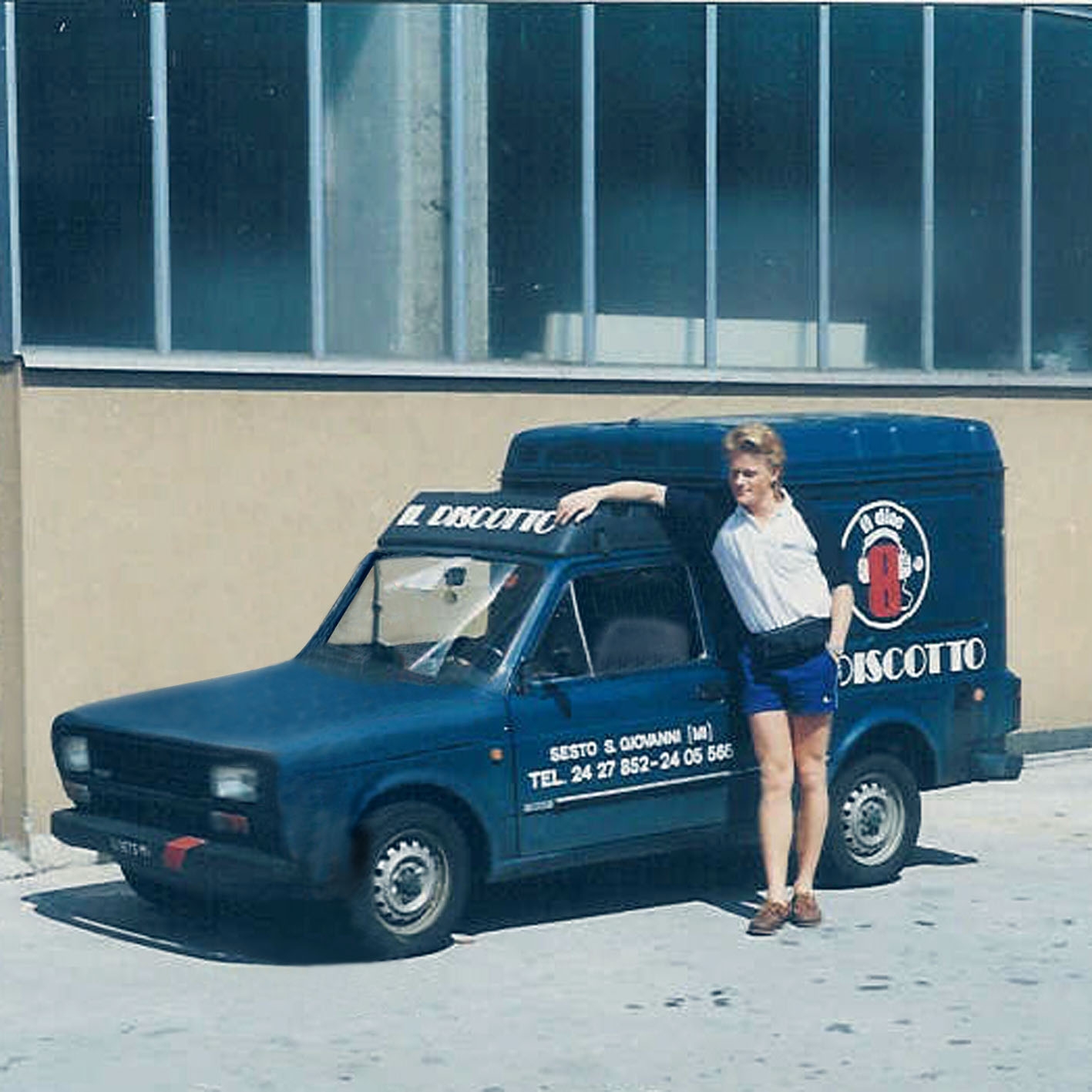
Yes, it was impossible to get all the Italo records here in Denmark with no internet back then, so Ihadto get them by travelling all the way to Italy. So mainly I got them from the famous distributors and labels like Il Discotto, Disco Magic, Non-Stop, and famous shops like Merak and Disco Service. I took eleven trips in the years from 1983 and 1986, and inbetween the trips I was in close contact with Il Discotto and Disco Magic and also a great record shop in Firenze, called Disco Mastelloni. Basically I managed to find all the records I wanted and got a 100 % complete collection back then. Read the rest of this entry »
It has been four years since the legendary German electronic music pioneer Conrad Schnitzler has passed away, and I am very sure that at this very moment a person, or more likely, several persons are wondering just where to start with the gargantuan archives he left behind. From the late 60s until his demise he pressed record more than others, and his vast officially released output is surpassed considerably by what has not been released as of yet.
Every music consumer nowadays can only struggle with the amount of music that is returning to attention, and then on top there are all the releases that never were before. Legions of thorough and not so thorough specialized labels handle this output, but they mostly deal with a manageable back catalogue. And then there is Conrad Schnitzler. In retrospect you can take a whole lot of what we are familiar today in terms of electronic music, trace it straight back to what he was doing decades ago, and inevitably put a proto tag on it. And he was doing LOTS of it in his studio, heaping up well deserved credentials in the process, from the very beginning until the very end, day in day out. So how do you approach such a legacy? You need time, for sure. You need dedication, definitely. You need expertise, of course. But you also need an idea how to comprehensibly legitimate all the effort. Probably only Schnitzler himself will remain the only person to ever have heard anything there is, but thankfully he was also helpful to others aiming to reach as far as they could. When m=minimal label head Jens Strüver was granted access to Schnitzler’s audio library in the early 00s he suggested the Con-Struct series, in which Schnitzler’s archive would be constructed into new compositions by other musicians, and Schnitzler agreed to it. The first installment was handled by Strüver and Christian Borngräber, followed by Kreidler’s Andreas Reihse after Schnitzler’s death.
It is important to note that the series is not meant to be a tribute to finished recordings by means of remixing. The history of electronic music is littered with unnecessary remix compilations. Don’t get me started. But of course there are rules to the exception, where the remix is as advanced as the landmark music it is remixing. On the top of my head I would like to mention LFO’s version of Yellow Magic Orchestra’s „La Femme Chinoise“. And the main reason I am thinking of this particular remix is that for me it is a fine example for the ideal combination of source material and the remixer’s own artistic signature. Both YMO and LFO have their merits, and with this pairing, they multiply (pun alert). More often than not reworks are disrespectful to the original, because they are too respectful, thus watering down the originality of what they are reworking, resulting in a mere convenience product. But as mentioned, free interpretations are not the main idea behind the Con-Struct series, let alone remixes, but Schnitzler sure would not have been content with just being flattered by other artists, however weighty his artistic persona.
Which directly leads me to the third Con-Struct album, curated and rearranged by none other than Kurt Dahlke, better known as Pyrolator and member of German electronic Post Punk miracle Der Plan. Though of a later generation than Schnitzler, for me Dahlke is another seminal pioneer of electronic music. He knew his Buchla and his numerous other synths and devices and what to do with it, and I am totally convinced that his impact should never be underestimated, and may later be con-structed itself. An inspired choice. In his own words, Dahlke wanted to „present a side of Conrad which I had always heard in his music but one which often goes unnoticed: a darker, technoid side. In my opinion, Conrad has always been one of the great pioneers of classic Berlin techno music.“ Well, upon hearing the album the proto can again be tagged, to techno this time. This may not be drone plus kick thunder usually associated with the city’s current according club soundtrack, it is more of the 90s kind, when a plethora of sounds permeated the scene, imported or locally grown, and folders were still closed. As that is what makes pioneering days so exciting, and so easy. Nothing is settled. It will be eventually, but not right now. Let’s explore every idea we have. Which makes this album so enthralling, as both Schnitzler and Dahlke supposedly went through such a phase several times throughout their career. So on the one hand you have Schnitzler’s lifelong love of musical adventure and his ability to anticipate represented with Dahlke’s selection, on the other hand you hear Dahlke’s musical preferences and signatures reflected. „I must admit, I could not resist the temptation to add one or two of my own ideas. The original tracks were so inspiring, I just had to.“, Dahlke measures his input. Frankly, I am more of a Dahlke than a Schnitzler scholar, but I sense understatement.
In discussion with Call Super on “My Answer” by Charley’s Vault (2000).
How did you come across „My Answer“? Was it in a record store, or in a club?
A club. The End in London.
Why does this record mean so much to you? Is this a time capsule of a certain kind? What is its appeal?
It very much is. Although it is of its time in certain ways I don’t really feel it has dated. It was a record that I heard quite a few times before I had any idea who it was. I was usually too shy to ask DJs back then and there were lots of tracks that you would hear and just know because you’d heard them before and maybe one day you’d actually turn it up in a store, or meet someone in the club who could tell you, or it got used on a mix. Which is how I found out what this one was.
The thing I love so much about it is it creates a mood that is perfect at any time of the night or morning. It has the exact balance of menace, tension, joy and release that the perfect DJ tool needs. The mixdown is really nicely done, the way it ebbs, flows and kicks at certain points. I have a distinction between what often gets called ‘tools’ which to my ear are usually just drum tracks with a stab or a pad or something and the really useful stuff which usually has a fair bit more going on and can always take you up, down, reset, roll out, maintain… anything that you ask of it. This is one of those tracks.
I guess most people stay true to their formative years in the clubs of their youth. What made The End so special?
It was a club that was very well designed. Loosely based upon The Tunnel in New York but with a crucial difference of placing the booth in the middle of the floor so the DJ was cocooned by the crowd, who were in turn were cocooned by the sound system. The fact that this set up existed in a tunnel created two opportunities. The first was that it was very easy to lose yourself at the back by the system without feeling any disconnection from the place. The second was that this architecture created a particular atmosphere that I think must have meant certain DJs would have fun in a way that more disconnected settings don’t encourage. Its obviously a truism to say that good DJs play to the setting they are in, whilst bad DJs do the same thing no matter where they are. Well, this was a space that I feel coaxed the best from people.
I went maybe twice a month on average for about two years, then less frequently for the next few years because I had relocated to Glasgow, but in that time almost every night held surprises at what had been played, or how it had been played. The video of Mills covers a little of that ground. You cannot understate the importance of having these experiences to draw on when you end up doing this for a living, your own constellation of places and people that inspired you. That’s what gives you your distinct voice and I feel massively grateful to have had that club incubating me. Read the rest of this entry »
Over the 80s and 90s I spent a lot of time per week digging through a tiny store called Plattenkiste in my hometown of Kiel, up North in Germany. The store was rammed with stacks of records, filthy paperbacks, VHS tapes and video games. It was all completely unsorted, and whenever they did their regular flea market stints, they just rearranged it all back randomly and you had to start all over again. The store was operated by a family business, a couple and their daughter, and neither of whom had even a vague interest in what they were selling, nor any knowledge. The only music playing was an oldie radio station, constantly. They bought record collections from local DJs, Danish libraries and any private person in need of money. Every record in the store then cost 2 Deutschmarks, regardless of format, and later 2 Euros. It was a total goldmine, where I found a good deal of my record collection, and even if it now has dried up compared to its former glory days, I still find bargains there whenever I go back to visit family and old friends.
One of the finds with the most impact on me has to be “Ruff Disco Volume One” by Nature Boy, which was released on NYC based Black Label in 1992, and which I discovered in the store a year later, probably left there by some local DJ in search of some funky House tunes for the rather commercial clubs of the town. Given that purpose, this particular record was really bound to fail. Apart from myself I never hear it played in clubs for years to come. Disco actually was the theme throughout, and its samples mainly shared the same heritage used in the freestyle based releases of early 90’s New York House labels. But that was it completely in terms of similarities. These tracks deconstructed Disco thoroughly, down to a primitive core that was just incredibly rugged and dark. It kicked determinedly, but all the glitz of its sample references were twisted to a muffled mess, and you were rather thrown out into the back alley through the back door than swayed through the velvet rope on the other side of the building. The record was and is totally visionary, and it preceded what the mid 90’s Chicago trackstyle or Detroit House producers would make of Disco, albeit arguably not this radical and daring.
This was pre-internet, so it took me some more years to find out the producer behind it was DJ Milo from Bristol’s legendary Wild Bunch sound system, and then I loved it even more. You could snatch up copies of it for little money for a really long time, but last I checked that changed dramatically, and these few words probably won’t help. Then again, it might help to get it reissued. Else, dig and you shall find.
Finn Johannsen is the kind of DJ we didn’t think existed anymore. He has an encylopediac knowledge of music and it’s apparent when watching him play that his understanding of music moves him while he’s moving the crowd. The Berlin based DJ has been a fixture in house music since he began spinning in clubs in the ’80s. His command of music has led him to branch out from DJ’ing, as a buyer for legendary Hard Wax in Berlin, where he curates a selection of sometimes very hard to find vinyl in different genres, like dub or acid techno. He’s a co-owner of Macro Records, a label which reps artists like KiNK and Morgan Geist. He’s also a writer, contributing to electronic bible Resident Advisor.
Our favorite thing about Finn, is his dedication to vinyl. He only plays vinyl during his sets, which is quite a feat, considering he tends to play marathon sets (we caught him during a three-hour feat). It’s easy to keep the crowd moving when you’ve preselected a surefire mix with whatever is trendy at the moment, but Finn chooses to keep an eye on the crowd and let that determine which record he ducks down to grab from the thick stack he’s brought with him (did we mention he doesn’t play the same set twice?).
We asked him to tell us a little bit about how he got started, the state of the music scene in Berlin and his advice for aspiring DJ’s. Catch the Q+A below.
What attracted you to house music?
When I first heard house records in clubs, internet was not an option. I learned where it came from from magazine articles, but later on. I liked that it condensed a lot of music I liked before into something new, which sounded primitive, fresh, and effective. For me it was just another step in the chronology of club music though, albeit one that surpassed early fad status very quickly.
How has house evolved since you first started spinning?
It absorbed a lot of music styles and got bigger and bigger. But it also fragmented into countless sub-genres. Nowadays the style is as detached from its origins as it is close to it. And that is not even a contradiction. It seems anything is house, and nothing.
How do you think social media has changed the way music is shared?
Social media has changed everything in terms of accessibility. You can be up to date with anything you are interested in, no matter where you are. The problem is that you are also up to date with anything you are not interested in, and there is not much you can do about it.
What is the Berlin scene like right now?
Berlin drains a lot of talent from anywhere else in the world with the promise of affordable everyday living, and lots of opportunities to earn money and reputation with what you do, particularly in the club scene. That may be true in comparison, but it also means a lot of competition with a lot of talent, and the affordability is waning. The influx of national and international artists have not yet led to a distinctive sound you can link to the city either. The sound of Berlin now is a plethora of sounds, with a huge network attached. But the city also has a plethora of distractions, which are not always helpful with a creative process.
You impressed us with your 3 hour set, and you’ve said that you don’t play the same set twice. How do you read a crowd and keep the party going?
To me it makes no sense to repeat certain sequences that people might have heard at other gigs or on online recordings of mine. I have enough records to try and avoid that. When I travel and I have to do a succession of gigs with the same record bag, I try to change the set as much as possible, in order to challenge myself and offer some surprises for the ones who came to see me. I am interested a lot of different kinds of music and I like to make use of that. Well, I get bored very easily, too. And I do not want anybody else to get bored either. When I’m about to play somewhere I’m the type trying to arrive in time to check out how the night is evolving. I only play vinyl, so I have to get along with the records I brought, and I select those records by doing some research about the place I’m due to play, and sometimes who else played there as well. But how much I can succeed with said selection is pretty much down to the experiences gained in nearly 30 years of playing out in clubs. It works well most of time, but there is never a guarantee. And there should be none. Routine is the enemy, and failure is as important as success.
You move seamlessly through different fields; is it easy for you to transition through each field? How do you balance?
It actually is not easy at all. Not only in terms of scheduling, but also because certain things I am involved with do not get along to well with others. I think it is obvious that running a label myself and buying and selling other labels at Hard Wax does not really blend well with writing about other labels, for example. So I stepped back from writing considerably, even if I am missing it quite a bit. I still do some interview or features about more general topics, but nowadays discourse is an almost totally neglected aspect of music journalism, both due to networking obligations between the music business and the media, and a lack of self-criticism on the side of the artists. This also applies to the other things I do. Mostly they benefit from each other, but there is also always a potential they might affect each other negatively. You have to keep a lot of things in mind, and often you do not want to, or even can.
We’re in the era of the “laptop DJ”. Do you think it’s important to learn to spin on vinyl?
I have not much respect for digital DJ’s who stress the layering aspects of their setup, and then just play track after track from a huge database. For me then, the only aspect is convenience. But the entertainment value of a DJ set is not dependent on the medium it is performed with. The music matters. Still, I prefer DJ’s who do the mixing by ear, and who rather watch the floor instead of a display. I do not think that you should start DJ’ing by learning your craft with vinyl. But you should learn your craft first.
Is dj’ing an art form?
No, it is the means to an end.
What advice could you give to dj’s who are just beginning?
There are legions of DJ’s. If you want to make a difference, be different.
There are not many DJs who can look back on such a long and successful career as the 54 year old New Yorker Danny Tenaglia. Towards the end of last year he confirmed his extraordinary status once again during a rare visit to Germany where he played at Berlin’s Panorama Bar and Berghain on the same weekend. His enduring popularity can certainly be attributed to his often several hours long sets which still are packed with the most relevant new records of the current day. After all these years, Tenaglia still has his eyes on the future instead of the past. For this interview, though, he made an exception and looks back to the beginnings of his career.
Apparently you got hooked on dance music at a very young age. What led you into it? Were you coming from a musical household, or did you learn by yourself, by listening to the radio for example?
Growing up in the 1960s and 70s, we (mom, dad and four brothers) had always been around all kinds of music especially during big family gatherings, which were quite often. It was mostly my mom’s side as she was one of nine children. My dad only had one sister and his side was very reserved. All of my mom’s siblings were married and they all had children except for one aunt. This brought me 20 cousins, ten boys and ten girls, and when we all gathered together it was like an army! (laughs) We also had many second relatives and we were all born and raised in Williamsburg, Brooklyn, which is extremely popular these days since it is very close to Manhattan. Back then, Williamsburg was like a big version of Little Italy. When I visit Naples, Italy, it always reminds me so much of my childhood since Naples still looks exactly the same as it did 50 years ago. I can relate so well to the people there and on the island of Ischia as well.
I truly consider that this all started for me when I was only just a tiny fetus inside of what I call: “The Boom Womb Room!“ I guess I was always paying attention to beats, rhythms and melodies long before I knew what they even were. There was always music in my childhood. My mom’s younger sister Nancy was unable to have children of her own. However, she wound up becoming the most influential person in our entire family and had a wonderfully gifted voice. She always had music on. She bought records very often as there was coincidentally a record store right on our block. She even taught herself how to play piano and guitar by ear and this was initially how I learned to play as well.
Our family often had good reason to celebrate events like birthdays, weddings, anniversaries, family picnics, local catholic church festivals from the schools we all attended. I grew up listening to a lot of typical music that elderly Italian people would listen and dance to. Besides the obvious traditional music for dancing like the Tarantellas and the big band Benny Goodman swing music, there was plenty of the 50’s Doo Wop music as that’s what was big for them during this era. So I had no choice but too hear it all. Frank Sinatra, Barbra Streisand, The Beatles, Bossanovas and lots of soul music as well, Motown records particularly. Sometimes I think maybe my family were the ones to have invented karaoke? (laughs) There were many relatives who would love to take turns and sing their hearts out. And to end this deep question, it was most definitely my very dear aunt and godmother Nancy who taught me (and many of us) how to fully appreciate God’s gift of music, how to “feel it deep down in your soul“ and how by the changing of one simple chord that could be played with „great emotion“, it could bring upon unexplainable goose-bumps and quite often – even tears!
Were you aware that the music of those years was extraordinarily important, or was it just what was around then?
I definitely knew in my soul that it was meaningful. But I don’t think I realized how important it all was for me until I passed the age of ten and was realizing what type of music I was loving the most and only wanted to hear music I liked, as I was becoming sick and tired of the Frank Sinatra music and I was not a big fan of ballads and slow music until I eventually got heavily into soul music. I knew that I had possessed an incredibly deep passion for music since birth as relatives and friends would always make it obvious to my parents by saying things like: „One way or another this kid is going to be in the music business when he grows up“, because it basically was the only thing I displayed interest in. I had all kinds of little instruments and child record players, even reel to reel tape machines for kids. However, it did not truly hit me until I was about eleven or twelve when I was quickly finished with some music lessons because I was very young and did not like the discipline and how strict they were with me. They first took me for piano and then guitar lessons. I even attempted saxophone in seventh grade.
I had a great ear for music and which melodies worked together and which ones did not. Unfortunately, I did not posses „the gift“ of mastering an instrument, but I guess that ultimately it was a DJ mixer that became my main instrument of choice that I am stilling playing with today nearly 40 years later.
When you were still a kid, you got to know the prolific DJ Paul Casella, who played a part in turning you onto the profession. Can you tell how that shaped your decision to pursue a career in DJing?
Well, this is where I had then realized instantly at the mere age of twelve years old upon hearing an eight-track tape mixed continuously by Paul that I was somewhat mesmerized by because when I expected a song would end, then another would blend in. Sometimes harmonically on key and sometimes so perfectly that I kept asking my cousin who made this tape and how did he do this and how did he do that? Long story short, I called the telephone number on the 8-Track tape and Paul Casella happened to be nearby and came to our families grocery store and he brought us more 8-Track tapes. He wanted to meet me as he was amazed some little “little kid” was so impressed with him and the art of DJ-ing. I guess it was right around then in 1973 that I never showed much interest in anything else, including sports. I was not interested in any subjects in school, I was only interested in music, becoming a DJ, getting professional DJ equipment and getting gigs in big nightclubs and eventually this obviously led to my second career by nature which was producing music of my own, collecting synths, drum machines and various studio gear.
As you loved the music and heard about what was going down in the seminal clubs of that era, I guess you could not wait until you were old enough to go there yourself. Was it like you had imagined it to be? What kind of clubs could you already go to?
I was barely a teenager, so nightclubs were still a long way for me. But I can recall the anxiety and being extremely envious of my two older brothers, because they would go out often. But their interest was mainly to drink with their friends, meet girls and do what most guys from Brooklyn were doing in 1975. It wasn’t much different than what you can see in the movie Saturday Night Fever, including the fighting! However, when I was about 16 or 17 my older brothers would sometimes sneak me in to a few places which I will remember forever, and then they and other mature relatives and friends would basically chaperone me when I got my first job in a corner bar called The Miami Lounge in Williamsburg, Brooklyn. It was just a few blocks away from our house and the nights were starting at 9 pm, but my parents wanted me home by 1 am. The lounge is still there and it’s walking distance from the new and already famous club Output. The lounge looks exactly the same as it did in the 1970s but it’s now also a restaurant as well. I’m not sure of it’s current name, though.
You then had the privilege to witness some of the most celebrated clubs and DJs in New York like the Loft and the Paradise Garage and numerous others. Are the first impressions of those nights still vivid? Was it every bit as outstanding as it is described up to this day?
Yes, yes and yes! The Paradise Garage, The Loft, Inferno, Better Days, Starship Discovery 1, The Saint, Crisco Disco and many, many more that had come but now are sadly all gone! It’s a shame we don’t have much footage or even great photos of so many of these nostalgic parties and venues. There were so many options back then from all the way in Downtown Manhattan up to 57th Street and from East to West, seven nights a week. We had big venues, small venues, raw underground parties with no decor at all and obvious mega places like Studio 54 and Xenon. Then as the 80s came around we saw lots of changes with all kinds of theme parties at places like The Limelight, Area, Roxy and others. Read the rest of this entry »
Mix and interview for Sound of Thought podcast, now defunct.
KWC 92 – Night Drive
D-Ribeiro – Down You Will Get (AM Mix By DJ Sotofett)
Corbie – Arktika (Sprinkles’ Deeperama)
Deetroit – Feeels
Ozka – MTRX
L’estasi Dell’oro – Reverse & Repair
MGUN – Mask
Joey Anderson – Sky’s Blessings
Jeff Mills – Human Dream Collectors
The Abstract Eye – Reflexes
Divvorce – Wander 7
Plastic Soul – I Got It
SSOL – SSOL 001
FaltyDL – Umi Says
The Fantasy – Glass Traps
Vaib-R – About Freedom
Ttam Renat – Merging (Hut Mix)
Roy Davis Jr. & Sean Smith – The Revival
Webster Wraight Ensemble – The Ruins Of Britain (Pépé Bradock’s ‘Robin’s Hot Barbershop’ Remix)
L’estasi Dell’oro – Iscariotic Lips
Kassem Mosse – Workshop 019
? – Aspect Music 6
Ob Ignitt – Celestial Salacious
Damon Bell – What
The Trash Company – Manchester Stomp
For our final podcast of 2013 – vinyl devotee, Hard Wax curator, part-time journalist, Macro co-boss, family man and a damn near impeccable selector, Finn Johannsen steps up.
Having been one of a select few at the helm of the Hard Wax institution since 2010, it comes as little surprise that they would turn to somebody such as the likes of Finn for the coveted position. Casting his net wide, Finn’s general philosophy when it comes to music echoes the sentiments – if you are no longer being stimulated by what you are hearing, then “look elsewhere, or look harder”. Though in his eyes a decidedly necessary standpoint for somebody that has been frequenting clubs since the 80s, Finn’s ability to keep his finger ahead of the pulse demonstrates a breadth of knowledge that shines through heavily both in his selections and writings.
A unique and highly refreshing figure, Finn turns in over two hours of fresh wax for us – with an extreme wealth of wisdom to back it up, take time with both facets of this episode, as there is much to take in.
So we come to you as 2013 draws to a close – as somebody that is so involved with new releases from far and wide through your position at Hard Wax, do you feel 2013 has been a good year for electronic music? Has your wide-ranging palette been mostly satisfied?
There was only one period where I was really bored with House and Techno, that was the mid 90’s. The wild creativity made way for bigger clubs and the according income boost possibilities, and innovations seemed to trickle in comparison to the years before. But then there were other styles emerging, especially in the UK, and as I dug deeper, I also found enough interesting music to keep me hooked. Which since then I had established as a rule for myself. If there is not enough happening in what you are used to, look elsewhere, or look harder. Since then I did not find any year in electronic music disappointing. I took home a lot of good new releases week in week out, year in year out. Discovering a lot of new names, new labels and lost or overlooked obscurities in the process. For me personally, there is still too much music released that tries to recreate something that has already been done, especially when you consider the fact that both the landmark originals and the according copycat records from the same period of time are easily accessible via second hand. But if I were 20 and just becoming aware of certain sounds, it would probably thrill me in the same way. And of course the overall interest in vintage blueprints brought a lot of interesting reissues as well, some of which I did not know before. But generally the amount of previously unreleased or longtime deleted material is not a particularly healthy sign for such a fast evolving culture like club music. And I could not help noticing that the producers and DJs moaning the most about retroesque phenomena were often a bit more seasoned, and also often the ones seemingly failing to deliver the same spark they felt was now lacking. If you have the feeling that things are developing for the worse, take a close look first at what you can do or actually do about it. In any case, what interests me most is what happens next.
In the Critic’s Round Table edition of RA’s Exchange in August, you state that personally, “surprises” when going out or listening to music are fewer and further between. Though you also state that this is to be the natural state of things when you have been engaged in both activities for as long as you have and those pioneering years have well and truly past.
We’re interested to know what some of these more recent surprises have been and what it takes to grab your attention when you have been steeped in this history and culture for such a significant period of time. And do these increasing lapses between ever cause you to lose some of your vigour for the scene?
I started collecting records in the mid 70’s, 6 years old, and sneaked my way into clubs in the early 80’s. And I still buy records and go out. So a certain degree of recurrences is just natural. Hype tends to move in circles. There are shoes I still like to wear that have been in and out of fashion so many times that I simply do not care anymore if they are fashionable or not, and the same applies to music or club nights. Music production is so standardized by software today that it is unlikely that someone comes up with a sound unheard of before, and using analogue gear does not guarantee an individual signature sound either. For some time now, a lot of interesting innovations in electronic music happen in the realm of recontextualization, deconstruction and interpretation of certain traditions. And if it is done with enough fresh ideas to add a new perspective, I do not mind that at all. I look out for artists who have their own sound. And I must add that in that aspect it does not matter if a producer able to do that is just surfacing or has been around for a longer time. I do not make a big difference between artists refining their own sound, or artists just establishing it. The main difficulty is trying to remain relevant, and I salute everybody trying and succeeding. Thus for example, I had the same pleasure with artists like Mark Pritchard, Soundstream, Pépé Bradock, Terrence Dixon, Kode9 or Terre Thaemlitz still doing their thing as it should be done, as with newer artists like Tapes, Call Super, DJ Richard, Gorgon Sound, Moon B, Aquarian Foundation or MGUN, who are just in the process of developing their own creative persona. There are many more fine examples for both camps, of course. For inconsiderate omissions, please consult what I charted and mixed in 2013. Read the rest of this entry »






Recent Comments