I am in this business for so long that I know what you have to do right now to get gigs. I am really fully aware of it, and I do not condemn it either. I am part of it myself, unfortunately. But of course all these reels, selfies and footage of crowded floors and beautiful sites do not tell the whole truth. Every DJ once had quiet, or weird gigs. And there really is no harm in that at all. If you learn the hard way, you will probably even have more lasting effects. I am happy that this category of gigs is an exception in my years as a DJ, and I would not tell you if it was otherwise, but let me list some gigs I played that were not turning out as I expected.
1996 Tanzdiele, Kiel
My then weekly residency at Tanzdiele Club in my hometown. The Saturday before was rammed, the one before as well, and so on. I entered the club ready to top it all, and then there were about 20 people the whole night. At some point I was told that there was a huge private party in some flat by some people notorious for huge private parties. We closed the club at 2 am and went there too, but we couldn’t get in because it was so crowded that not even the police there to shut down the party could get in. Told my ego one or two valuable things, and also about taking things for granted.
2006 Aston Villa Stadium, Birmingham
Me and Lars Bulnheim were very excited about the invitation to play some Modern Soul tunes at an allnighter in the stadium. We took selfies on the terraces, admired the trophies and the main floor looked like a cruise ship ballroom. It was wonderful. But when we came to our floor there were some seasoned soul DJs playing mediocre Garage House from CDs, and nearly nobody danced. There was a sizeable bunch of old soulies at the bar, and they were cheering and applauding our records. But we waved them over to dance, and they just laughed.
2007 103 Club, Berlin
Booked to play one of our then quite cherished disco b2b sets with Hunee. Hunee had suddenly decided that digital DJing was the future and so I was playing vinyl and he was playing with Traktor, or whatever. The difference in sound quality was really awkward, as Hunee’s files sounded really bad on the club’s PA. So even the 15 people who showed up left quite soon. Now his files sound better on most PAs than my records, but hey.
2011 Cabaret, Zürich
I entered the club and I was delighted by the sleazy and plush interior. Unfortunately that floor was reserved for a Hessle Audio night with all three of them. I said hi and then was directed to my floor, which turned out to be very small, and also served as the smokers lounge. You could say the smoking and according interaction mattered more than my set, let alone dancing.
2011 Tape, Berlin
Traxx celebrated his 40th birthday party on several floors. It was a great party, apart from the floor Trevor Jackson and I played. Which was the separate room upstairs where people went to have a chat, snog or take drugs, or to just have a quiet moment at last. And I was playing a rather advanced set of post punk favourites.
2013 Gipsy, Moscow
The club by the river looked like as if a spaceship had clashed into an ancient vessel and was half open air. One separate floor had walls of empty bottles. The Russian government had just introduced harsh anti gay laws and the crowd consisted mainly of rich kids more interested in showing off their wealth than in any of the music played, and handsome boys on the edge of the floor pretending to be just friends. I still feel dirty and ashamed when I think of that weekend.
2013, Berghain, Berlin
Me and Anstam were the support DJs for the showing of Murnau’s Nosferatu, soundtracked live by Shed. Anstam was great with setting the mood before, the film itself and Shed’s score was impressive too. When that was over, everybody left very quickly and I played maybe half an hour to the almost empty main room. But I ended with „Bela Lugosi’s Dead“, and the staff packing up and me agreed that it was quite a moment.
2014, Komm, Nürnberg
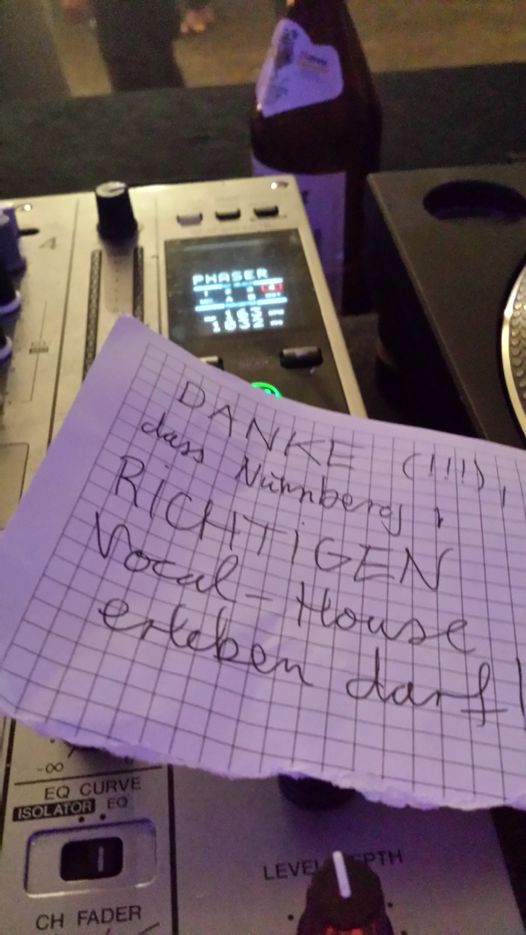
I had played the same club for the annual soul weekender many times, so I thought it would be a great idea ot play a garage house set. But none of the local soulies showed up, the few people on the floor were not that much into vocals, there was heavy bass feedback on the decks, and there was a huge sold out punk concert in the main room upstairs, and when that ended a bunch of charged up and quite aggressive punks entered the floor and if looks could kill. But I was stubborn, and ready to fight, and surprisingly enough they warmed up to the music very soon. I never had a floor with equally wasted and loved up punks pogoing to Ce Ce Rogers again, unfortunately.
2014 Plastic People, London
Mark Ernestus was telling me that the club had probably the best sound system he ever heard, the reputation of the place was astonishing anyway. What I did not know about the booking was that I was the only remaining member of a Hard Wax package, and that the gig was announced as such. It was also announced that I would be the only one playing of the former lineup, a day before. So I played a frenetic cut up disco set to a few dub techno fans. The club closed soon after.
2015 Humboldthain, Berlin
I played an amazing set, but it was a daytime open air party on the hottest day of the year, and the few people who came by were paralyzed. I also quickly realized that playing in a wooden shack without ventilation was even worse than lying around in front of it. And I played for four hours.
2015 Wax Treatment, Kiekebusch
A wonderful party actually, but all DJs got carried away and played way longer than scheduled. When Shed and me finally started it was already dawning and a lot people had already gone back to the city, and the remaining crowd was too wasted or tired to dance. It did not help that I brought a bag of my favourite Proto Jungle anthems.
2016 Acido, Salon zur Wilden Renate, Berlin
The new techno floor had just opened and I thought it was a great idea to play a set with my favourite acid house records. Unfortunately the other DJs had played a rather leftfield set that did not work, and by the time I arrived the floor was already dead. About five people were merciful enough to dance on, but they were gone pretty soon, and they did not leave to tell other people what was going on. They just left.
2018 Bewegungsfreiheit, About Blank, Berlin
When I arrived at the club I noticed that the lobby floor was sticky and drenched in sweat, but half empty. It was not brave Cinthie’s fault, who played before me, the reason was that the whole ventilation went bust right after the party started. In June. I played my set, but nearly everybody had escaped to the garden. And every drink I had to fight my frustration seemed to dissolve instantly in the heat.
2020 Colour, Melbourne
I had a marvellous time in Australia two years before, playing at the wonderful Inner Varnika festival and some accompanying gigs. When I returned in 2020, however, the pandemic had accelerated from being a distant rumour to undeniable realness very quickly, and while I was travelling down under Europe was locked down and upon arrival I had tons of messages and phone calls by panicking DJs, and I realized that the life I was happily living for over 30 years was basically falling apart in realtime. My first gig in Melbourne was a disaster, as people obviously decided to be reasonable and stay in, and apart from a few friends there hardly was anybody there. The gig in Sydney two days later was the total opposite, playing b2b in a sold out warehouse with DJ Sprinkles, but it had the vibe of the last night out possible, and it actually was. I managed to get one of the last flights back to Europe before most airports were shut down, and dear me I was confused.
In the early to mid-noughties, minimal techno and tech house were ruling most of Berlin’s dance floors, but there also was a vital scene dedicated to playing records that were not played at most other events in town. Seasoned disco and house DJ legends were invited, and often reactivated to display their experience and skills, and local and international DJs established a network dedicated to digging deep for the more obscure and leftfield sounds of club culture, and turning them into intense and vibing events with their finds of vintage house and disco, italo, post punk, afro, latin, balearic, yacht rock and even more specialized niches. The daring and knowledgeable eclecticism of this scene established an openness that inspired more current music productions and is still around in club and festival lineups, and even led to DJs like Hunee and Call Super becoming celebrated A-listers. From 2010 to 2013 the club Soju Bar was Berlin’s main spot for this context of night life. It was located in the backroom of the Korean street food bistro Angry Chicken, which belonged to the restaurant Kimchi Princess around the corner. The club’s sound system was way above average, and the room was decorated with loving attention to detail, an impressive replica of Korean bar culture that made the room appear puzzingly bigger than it actually was. Hyun Wanner, one of the Kimchi Princess owners who was on par with his DJs in terms of music enthusiasm, booked Soju Bar’s tasteful program until the club had to close and became a part the hotel that already took over most of the building. We asked him to revisit resident and regular guest DJs via music that he associated most with their nights.
Hunee: Shina Williams & His African Percussionists – Agboju Logun (Earthworks, 1984)
This record turned into a huge Soju Bar hit. It was just the time when more and more DJs started to flavor their sets with African influences. I think it is a trademark element of Hunee’s sound these days. Another regular Soju Bar DJ called Nomad, now of Africaine 808, went completely down that road. I love this record. I bought it years before Soju Bar, because my favorite Discogs dealer recommended it to me and offered me free shipping if I buy it. I was very pleased when Hunee played it the first time. I think he still plays it today.
Lovefingers/Lexx: Carrie Cleveland – Love Will Set You Free (Cleve/Den, 1980)
My girlfriend at the time was obsessed with that song. She knew that it was on Lovefingers’ blog and made him play it at least three times. I remember Andrew playing it two times in a row early in the morning and dancing on the floor with his eyes closed. Lexx had to do the same a couple of weeks later. This was one of these classic early morning magic moments. Sometimes there was only 15 people left in the place, but they had the time of their lives!
Joel Martin (Quiet Village, Velvet Season & The Hearts of Gold): House Of House – Rushing To Paradise (Walkin These Streets) (Whatever We Want Records, 2009)
When Soju Bar started everything was really disco and balearic. Then most DJs started to pick up more and more housey vibes again. It was almost a bit like going through the history of dance music in one and a half years, and a few subsequent decades. This record contains all this history. I have funny memories of this track. For example, it was an incredible hot night and it was really empty, but the few people were dancing for hours and didn’t want to leave. Joel was the only DJ and already played 6 hours for the same 15 people. When he was playing this track a random very young girl with a record bag came up and wanted to take over. She promised us to play the same kind of music: HOUSE! We were like, OK! Well, she had her very own definition of house music I reckon! Two records later Joel and me were in a Taxi home. She went on for a few more hours, and I have never seen her again. By the way, it was first hour Soju Bar resident DJ Filippo Moscatello who introduced me to this record.
I will change. I promise.: Ideal – Schöne Frau Mit Geld (Losoul Remix) (Live At Robert Johnson, 2010)
This was definitely the residency with the best name. “I will change. I promise”. I was promising this to myself pretty much every Monday morning! This party was hosted by our friend Alex van der Maarten and was musically on a slightly different trip, but very successful and always busy. It had guest DJs like Nu and Lee Jones. This was one one of the signature tracks.
JR Seaton (Call Super): Bunny Mack – Let Me Love You (Rokel, 1979)
Call Super, or JR Seaton as he still called himself back then, played at Soju Bar many times. I think the first time he was invited by Headman who did a monthly Relish Night at Soju Bar. Call Super finished the night together with Objekt and they both blew my mind. They were playing very obscure electronic stuff and then broke it up with songs like this. 100 % early morning magic. Nobody cared which genre, which time or which part of the world the music was from. Everything melted into one amazing vibe.
Druffalo Hit Squad: Nicolette – Lotta Love (Warner Bros., 1978)
Huge Soju Bar anthem! The Druffalo Hit Squad’s residency “Love Fools” was the night where anything was possible. From pop to shock to classics and not classics! Sometimes very ironic, sometimes iconic! Sometimes hard to follow, and sometimes pure magic. At the end of their nights there was a lotta love in the air indeed.
First thing Front club in Hamburg, what made the place magical and what made you follow Klaus Stockhausen, and his way of DJing?
There were different things falling into place then. I was always interested in club culture and music, but pre-internet you could mostly only read about legendary clubs and its resident DJs. When I first went to Front in 1987 I was 18 years old, and up to then I never heard a DJ who could really mix. Klaus Stockhausen played there since 1983, several times a week, and he had built up a very loyal crowd. The club itself was a raw basement, there was not much to distract from the music, apart from the hedonistic dancers. The place was very intense, and Stockhausen as well as his protegé and successor Boris Dlugosch were incredibly good. Of course you tend to be sentimental about times and places that intiated you into something, but I still have not experienced anything close, both in terms of clubs and DJing. Of course it also helped that those years saw very crucial developments in club music. When I started going there it was the end of that transitional period between Disco and House, which was extremely exciting. And in the following years I frequently went there that excitement persisted. Those were the blueprint years for everything we still dance to now, and I had the privilege to experience it right on the floor. And I learnt a lot of things that I still use.
How did you become part of Hard Wax, was it hard to get that job?
No. Seven years ago all my freelance activities and the according deadlines began to collide with being a father. My wife suggested some more steady work to complement and that I could ask for a job at the store, as I was a very regular customer anyway. Coincidentally Achim Brandenburg aka Prosumer quit working there at that time and they were thinking about asking me to replace him. So within a short time I sat down with the owner Mark Ernestus and the store manager Michael Hain and got the job.
I know you like to write about music, but why do you hate to write reviews?
I actually do not hate writing reviews at all. But after doing that for several years at de:bug magazine I felt I was increasingly running out of words to accurately describe the music I was given the task to review, and I think keeping a fresh perspective is mandatory in that aspect. But more importantly writing reviews does not work too well with running a label yourself, and working at Hard Wax. On the one hand I wanted to avoid allegations of being biased, on the other hand I had to keep potential implications of my writing commitments out of my other work. So I began to lay my focus on features and interviews, mostly from a historical perspective. I am not afraid of discourse and speaking my mind on certain topics if I feel it is necessary, but I am very cautious to remain objective.
Can you tell us what is Druffalo?
Druffalo is a semi-anonymous collective of six seasoned DJs and writers living in Berlin, Mannheim and Cologne, and was founded in 2007. It used to be a rather notorious web fanzine celebrating aspects of culture we felt were worth celebrating, and we were pretty merciless in pointing out aspects of culture we felt were not worth celebrating at all. The web magazine is defunct for a while now, as at some point the server we were running on mysteriously disconnected us and we thought it was a good statement to just disappear. The whole archive is backed up though, so nobody should feel too safe. Attached to it was a DJ collective called the Druffalo Hit Squad, consisting of the same six editors and likeminded guests. We did an influential mix series that is archived on Mixcloud, and we were constantly throwing parties that were pretty anarchic. Since the end of 2015 we took up a bi-monthly residency at the club Paloma Bar in Berlin, where we mostly define our idea of a modern Soul allnighter, using our vast archive of Disco, Soul and Garage House records. But there are also plans to return to the eclecticism of former years.
Do you think your Macro label is becoming a genre in itself, like RE-GRM, ECM, L.I.E.S., or Blackest Ever Black?
No, I do not think so, nor were Stefan Goldmann and me ever interested in establishing a certain trademark label sound that we have to fulfill with every release. We are more interested in working with producers that have developed their own signature sound, as long as it fits in with our own preferences. Our idea of running a label is very open, it is only determined by what we are interested in, and we are both very different individuals. We only release what we both agree on and that, combined with the consistent collaboration with our designer Hau, resulted in a certain coherence, although our back catalogue is rather diverse. We were also always aiming for the long run, and we both feel that you only can achieve that with a healthy amount of leeway and fresh ideas. Of course it is also important to have an identity, but we much prefer that to be based on reliable quality than sound aesthetics that create or reflect trends but are likely to end up as mere expectations. I do not think we are really comparable to the labels you mentioned, too. We had some archival releases, and we might have influenced some musical developments, but neither are essential to what we do.
The next instalment of Acetate will once again exhibit selectors of world class calibre. David Kennedy aka Pearson Sound, who organises the night, errs towards the DJs who dedicate their time to collecting music, infrequently booking those who attempt to spin plates and produce music at the same time. The DJs’ heightened awareness of the vinyl record landscape seems to breed a uniquely rich atmosphere during the club night.
Alongside long time dubstep colleague, and one of the world’s most sought after selectors, Ben UFO, Kennedy has invited a bona fide head out to play in the Wire basement: music critic and Hard Wax staff member, Finn Johannsen. The German also runs Macro Recordings, Stefan Goldmann’s primary production outlet.
Finn is rarely seen by Brits out of his natural habitat of the Berlin record shop, and is normally only spotted in the by-line of an online electronic music article. So we thought we’d do a bit of investigative work and reverse roles. Here’s our interview with him:
What is the application like for a job at Hard Wax? How did you come to work there?
We get a lot of mails every week by people looking for a job at the store, but all current staff members were already regular customers or otherwise affiliated with Hard Wax before they started working there. Same with me. Six years ago I became father of a wonderful girl, and I realized that all the deadlines involved with freelance work did not work well with that. So I was thinking about adding some steadier work to my weekly schedule, and my wife suggested Hard Wax as an option. I tested ground and what I did not know at the time was that Prosumer was quitting the job, and they were looking for a replacement anyway. So I had a meeting with Michael Hain, the store manager, and Mark Ernestus, the owner, and started working there, all within a very short time.
It’s every young DJs dream to work in a record shop. Did you always know you’d work in one? What would you be doing if you weren’t there?
I worked in a second hand vinyl store when I was studying in the early 90s, but that was more to fund my own vinyl purchases. When I started DJing in the 80s I was not trying to get a job in a record shop, I only liked visiting them and it was that way for years. My focus at university was actually on film history, not music. But apart from a brief stint reviewing movies for De:bug magazine I never really did anything with that, nor did I really intend to. I also worked as an editor for art books a few years ago. But at some point I realized that it always fell back to activities connected to music, because it probably is what I know and do best. So I stuck with it. If I would not be there I would be doing something else, but it probably would have something to do with music as well.
What do you look for in a record when buying for Hard Wax?
Something new, or at least different. A personal signature. Ideas. Integrity. Attitude. When the record is referential I check if the references are used in a smart way, and if aspects are added that were not there before. I also take a good look at the proportion of value and money. I adjust my level of support for a release according to the level of how these criteria are met.
What led you to buy your first vinyl record? And what was it?
I started taping radio shows in the mid 70s, but I did not have enough pocket money to afford buying records then. But I already had a record player and I used to play records from my parents’ collection. When I was 9 years old, in 1978, I recorded Blondie’s Heart Of Glass and decided to buy it on 7“. When I entered the record store I just knew that I loved the song and her voice in particular, but I did not even know what she looked like. I was probably assuming that she had blonde hair, but not really that she looked that fabulous on the cover, and what she really was about. I probably learnt quite a few lessons about pop culture at once with that purchase, and soon I started spending nearly all the money I had on records.
We’ve just had record store day in the UK. Do you have any comment on it? Do you see it as a celebration or capitalisation of record buying culture?
It is the same in Germany, and I think it is the same all over the world. Which is why the recent negative implications of the event weigh in so heavily. Hard Wax decidedly never took part. We stated from early on that for us every day is a record store day, and that is basically it. But we feel the fallout from RSD as anybody else in the business nonetheless, especially the delays with the pressing plants, which affect our distribution as well, for example, and the releases we buy from other distributors. That has improved a bit lately, but it is still a tremendously hypocritical event, and that does not seem to improve. Nearly everybody’s trying to cash in now on a format that was willfully pronounced dead before, and nearly everything is blocked by back catalogue you can find around every corner, just in different layouts and for a much lesser price. Old wine in new skins. And the new grapes cannot be harvested because of it. It is totally absurd. There may have been some respectable thought implied with it once, but as soon as the major labels entered it predictably withered away into nothing. They want to gentrify vinyl into pricier artifacts instead, for customers that care more about the item itself than the music it contains. Read the rest of this entry »
Ich interessiere mich schon seit Jahren nicht mehr sonderlich für Bands. Manchmal lese ich über irgendwelche Hoffnungsträger in irgendeiner dieser für Bands zuständigen Fachzeitschriften und mache einen unmotivierten YouTube-Test, und das führt dann fast immer dazu, dass ich mich weiterhin nicht mehr sonderlich für Bands interessiere. Als mir ein guter Freund vor einiger Zeit die Sleaford Mods als momentan beste Band der Welt empfahl, war ich dementsprechend skeptisch, lag aber komplett falsch. Die Sleaford Mods sind tatsächlich die momentan beste Band der Welt.
Jason Williamson, der das Projekt 2006 ins Leben rief, kann mit Bands prinzipiell auch nicht sonderlich viel anfangen. Wohl deswegen waren die Sleaford Mods eine Weile nur er selbst, dann traf er auf Andrew Fearn, und es wurde ein Duo. „I used to be in bands, fuckin hated it“, lautet die einzige Info auf der Bandcamp-Seite. Die ersten vier zwischen 2007 und 2011 nur auf Cdr erschienenen Alben waren dort bis vor kurzem noch als Download erhältlich, jetzt sind es nur noch die zwei Alben mit Fearn danach. Warum das so ist, liegt vorerst im Dunkeln. Vermutlich war Williamson erst mit den späteren Songs richtig zufrieden, es lungern offizielle Reissues auf ihren Einsatz, oder es gab die Erkenntnis, dass der rasch fortschreitende Bekanntheitsgrad mit heftigen Copyright-Klagen einhergehen könnte, denn aus der Not des Einzelkämpfers heraus bestand das Anfangswerk aus einem wilden Wust von Samples, querbeet der Northern Soul-, R&B, Beat-, Rocksteady-, Hip Hop- und Punkgeschichte wegzitiert, und das nicht in der obskuren Variante. „No samples cleared, bastards are loaded anyway“, lautete eine diesbezügliche Info zu einem vorerst verschwundenen Frühwerk, und mit diesem Duktus muss man schon klarkommen können, wenn man sich für die Sleaford Mods interessiert, denn er läuft quasi nonstop. Gerne werden Williamsons rotzige Schimpfkanonaden mit großen sozialrealistischen Grantlern der englischen Musikgeschichte wie John Cooper Clarke und Mark E Smith verglichen, noch kürzer gegriffen mit Mike Skinner, wohl auch wegen dessen entspanntem Verhältnis zur Musikalität von Beats, aber stets bleibt die Erkenntnis, dass Williamson seine eigene Liga ist. Der Mann hatte offensichtlich eine sehr lange Zeit viele Probleme, und man hofft fast, dass der aufgestaute Frust noch reicht, wenn er nicht mehr so viele hat. Bis dahin hasst er alles und jeden, und das mit Recht. Und sein Fluss von schmerzhaften Beobachtungen und wüsten Beschimpfungen ist so beeindruckend treffend, dass man ihm unbedingt zustimmen muss. Wahrscheinlich gibt es noch viel mehr Idioten und Idiotie da draußen, schon allein deswegen ist er unverzichtbar. Und die Musik ist es auch, ein Musterbeispiel an Kongenialität. Anfangs bestach der Sound der Sleaford Mods dadurch, dass nur die besten Elemente relevanter Meilensteine als Loops isoliert wurden, und dadurch fast noch relevanter klangen, und darunter durchweg primitive, aber immer passende Beats. Andrew Fearn hat diese Idee noch effizienter gemacht, außer einer mickrigen Beatbox, postpunkigen Basslines und ein paar ausgewählt beiläufigen, aber immer zwingenden Sound-Irrlichtern lenkt jetzt noch weniger von Williamson ab, und trotzdem könnte man sich keinen Song anders vorstellen als er geworden ist. Auf der Bühne setzen sie das ebenso konsequent um. Im Hintergrund Fearn, der einen Laptop vor sich hat, sich aber die meiste Zeit höchstens damit beschäftigt, wie der Kumpel auszusehen, den der Sänger damals auf dem Arbeitsamt kennengelernt hat, und seitdem immer auf die Konzerte mitnimmt. Der komplett referenzbefreite Billo-Fly Boy-Look, mit markenloser Jogginghose, albernen T-Shirts, schlechten Kappen und schlechter Rasur, und immer ein Dosenbier in der Kralle und eine Fluppe im Maul, verantwortlich für den authentischen wenig frische Luft-Teint, merkwürdige Gesichtsausdrücke und sehr ungelenke und unmotivierte Dance-Moves. Williamson auch ein Getränk am Mann, teils zum Schmieren der im Dauereinsatz geforderten Stimmbänder, teils weil es eben auch sein muss. Er ist respekteinflößend charismatisch und eine coole Sau, und niemand wird es je wagen, ihn zu unterbrechen. Sein Aussehen und seine Kleidung verraten den Mod-Part in der Zusammensetzung, aber in der sehr beiläufigen Ausprägung, ein paar Insignien reichen, man nennt sich schließlich nicht die Chelsea Mods, und man hat zu viel Verstand, zu wenig Kohle und immer noch genug Working Class-Stolz um The Face sein zu wollen. Es ist fast ein bisschen rätselhaft, wie die beiden es hinkriegen, so dermaßen gut so viele Subkulturen auf einmal zu sein, sowohl textlich, musikalisch und äußerlich, aber sie kriegen es hin.
Die vielen, nicht sonderlich interessanten Bands müssen die momentan beste Band der Welt so sehr hassen, wie diese den Rest der Welt.
Mix and interview for Sound of Thought podcast, now defunct.
KWC 92 – Night Drive
D-Ribeiro – Down You Will Get (AM Mix By DJ Sotofett)
Corbie – Arktika (Sprinkles’ Deeperama)
Deetroit – Feeels
Ozka – MTRX
L’estasi Dell’oro – Reverse & Repair
MGUN – Mask
Joey Anderson – Sky’s Blessings
Jeff Mills – Human Dream Collectors
The Abstract Eye – Reflexes
Divvorce – Wander 7
Plastic Soul – I Got It
SSOL – SSOL 001
FaltyDL – Umi Says
The Fantasy – Glass Traps
Vaib-R – About Freedom
Ttam Renat – Merging (Hut Mix)
Roy Davis Jr. & Sean Smith – The Revival
Webster Wraight Ensemble – The Ruins Of Britain (Pépé Bradock’s ‘Robin’s Hot Barbershop’ Remix)
L’estasi Dell’oro – Iscariotic Lips
Kassem Mosse – Workshop 019
? – Aspect Music 6
Ob Ignitt – Celestial Salacious
Damon Bell – What
The Trash Company – Manchester Stomp
For our final podcast of 2013 – vinyl devotee, Hard Wax curator, part-time journalist, Macro co-boss, family man and a damn near impeccable selector, Finn Johannsen steps up.
Having been one of a select few at the helm of the Hard Wax institution since 2010, it comes as little surprise that they would turn to somebody such as the likes of Finn for the coveted position. Casting his net wide, Finn’s general philosophy when it comes to music echoes the sentiments – if you are no longer being stimulated by what you are hearing, then “look elsewhere, or look harder”. Though in his eyes a decidedly necessary standpoint for somebody that has been frequenting clubs since the 80s, Finn’s ability to keep his finger ahead of the pulse demonstrates a breadth of knowledge that shines through heavily both in his selections and writings.
A unique and highly refreshing figure, Finn turns in over two hours of fresh wax for us – with an extreme wealth of wisdom to back it up, take time with both facets of this episode, as there is much to take in.
So we come to you as 2013 draws to a close – as somebody that is so involved with new releases from far and wide through your position at Hard Wax, do you feel 2013 has been a good year for electronic music? Has your wide-ranging palette been mostly satisfied?
There was only one period where I was really bored with House and Techno, that was the mid 90’s. The wild creativity made way for bigger clubs and the according income boost possibilities, and innovations seemed to trickle in comparison to the years before. But then there were other styles emerging, especially in the UK, and as I dug deeper, I also found enough interesting music to keep me hooked. Which since then I had established as a rule for myself. If there is not enough happening in what you are used to, look elsewhere, or look harder. Since then I did not find any year in electronic music disappointing. I took home a lot of good new releases week in week out, year in year out. Discovering a lot of new names, new labels and lost or overlooked obscurities in the process. For me personally, there is still too much music released that tries to recreate something that has already been done, especially when you consider the fact that both the landmark originals and the according copycat records from the same period of time are easily accessible via second hand. But if I were 20 and just becoming aware of certain sounds, it would probably thrill me in the same way. And of course the overall interest in vintage blueprints brought a lot of interesting reissues as well, some of which I did not know before. But generally the amount of previously unreleased or longtime deleted material is not a particularly healthy sign for such a fast evolving culture like club music. And I could not help noticing that the producers and DJs moaning the most about retroesque phenomena were often a bit more seasoned, and also often the ones seemingly failing to deliver the same spark they felt was now lacking. If you have the feeling that things are developing for the worse, take a close look first at what you can do or actually do about it. In any case, what interests me most is what happens next.
In the Critic’s Round Table edition of RA’s Exchange in August, you state that personally, “surprises” when going out or listening to music are fewer and further between. Though you also state that this is to be the natural state of things when you have been engaged in both activities for as long as you have and those pioneering years have well and truly past.
We’re interested to know what some of these more recent surprises have been and what it takes to grab your attention when you have been steeped in this history and culture for such a significant period of time. And do these increasing lapses between ever cause you to lose some of your vigour for the scene?
I started collecting records in the mid 70’s, 6 years old, and sneaked my way into clubs in the early 80’s. And I still buy records and go out. So a certain degree of recurrences is just natural. Hype tends to move in circles. There are shoes I still like to wear that have been in and out of fashion so many times that I simply do not care anymore if they are fashionable or not, and the same applies to music or club nights. Music production is so standardized by software today that it is unlikely that someone comes up with a sound unheard of before, and using analogue gear does not guarantee an individual signature sound either. For some time now, a lot of interesting innovations in electronic music happen in the realm of recontextualization, deconstruction and interpretation of certain traditions. And if it is done with enough fresh ideas to add a new perspective, I do not mind that at all. I look out for artists who have their own sound. And I must add that in that aspect it does not matter if a producer able to do that is just surfacing or has been around for a longer time. I do not make a big difference between artists refining their own sound, or artists just establishing it. The main difficulty is trying to remain relevant, and I salute everybody trying and succeeding. Thus for example, I had the same pleasure with artists like Mark Pritchard, Soundstream, Pépé Bradock, Terrence Dixon, Kode9 or Terre Thaemlitz still doing their thing as it should be done, as with newer artists like Tapes, Call Super, DJ Richard, Gorgon Sound, Moon B, Aquarian Foundation or MGUN, who are just in the process of developing their own creative persona. There are many more fine examples for both camps, of course. For inconsiderate omissions, please consult what I charted and mixed in 2013. Read the rest of this entry »
Noch lange nach dem offiziellen Niedergang zog sich das Erbe der Disco-Ära mehr oder weniger latent durch das jeweils aktuelle Clubmusik-Geschehen, aber in den letzten Jahren nahm die Auseinandersetzung mit dem Thema neue Formen an. Damit einhergehend meldete sich eine Form der Musikbearbeitung zurück, die schon abgelegt schien: der Edit. Wo zur klassischen Phase des Edits noch DJs und Produzenten zu Schere und Klebeband griffen, um individuelle Versionen für Club-Sets maßzuschneidern, führten die fortschreitenden technischen Erleichterungen in der Musikproduktion zu einer Flut von Edits bekannter oder obskurer Titel. Es war nun geradezu üblich, sich erst mit ein paar editierten Fremdkompositionen schwankenden Mehrwerts einen Namen zu machen, und sich dann allmählich als eigenständiger Künstler zu etablieren. Je mehr Disco sich in die breite öffentliche Wahrnehmung zurückmeldete, desto weiter drifteten die Lager derer auseinander, die Disco in immer entlegenere, spezialisiertere Winkel erforschen wollten, und derer, die Disco einfach mehr Popularität wünschen. Aber beide Lager machten für ihre Zwecke zahllose Edits. Bis dahin wurde jedoch schon ein ganz schön langer Weg zurückgelegt.
Ab Mitte der 70er Jahre war die Bandmaschine fester Bestandteil der Setups von Studio und DJ-Kanzel. Schon 1974 nahm der New Yorker DJ John Addison damit seine Sets im Club auf, und ungefähr zur gleichen Zeit verbrachte Tom Moulton, frustriert von den damals noch gängigen Fade-outs und Pausen auf der Tanzfläche, etliche Arbeitsstunden damit, Tapes für den Club Sandpiper auf der Schwulen-Enklave Fire Island zusammenzuschneiden, auf denen die Songs ineinander übergingen. Der Arbeitsaufwand, die Methodik und das Arbeitsgerät dabei waren mit dem Cutter beim Film vergleichbar, und man brauchte eine Menge Geduld und ein fein abgestimmtes Ohr dafür, die Parts der Musik harmonisch und punktgenau zu trennen und an anderer Stelle wieder zusammenzufügen. Moulton war somit nicht nur ein Pionier der Mix-Compilation, er führte 1976 auch die 12“ in die Clubkultur ein, als er eine verlängerte Version von Moment Of Truths „So Much For Love“ für das Format anfertigte (seine Glanztaten als Mixer würden diesen Rahmen sprengen). Moulton war jedoch nie DJ, wohingegen der legendäre Walter Gibbons, der sich mit ihm anhand seiner Version von Double Exposures „Ten Percent“ die Verdienste um die erste 12“ teilte, seine Erfahrungen als Ausnahmetalent in der Kanzel in seine Edits einfließen ließ. Die Mixe, die er im Club machte, indem er bestimmte Parts von Songs am Mischpult ausdehnte und wiederholte und ihnen somit eine völlig neue Dramaturgie und Dynamik verlieh, bannte er bald auf Tonbänder und Acetat-Pressungen, um sich die Arbeit im Club zu erleichtern. Und in Zeiten, in denen der DJ pro Nacht viele Stunden am Stück zu arbeiten hatte, war das ein ernstzunehmendes Kriterium. Die Umstrukturierung eines Stückes mittels Editieren war demzufolge schon von Beginn auch durch Funktionalität definiert, gleichermaßen das Erlebnis auf der Tanzfläche betreffend, als auch das Wirken des DJ, der für das Erlebnis sorgt. Schnell wurde aus der tanzbareren Alternative zum Originalversion der Standard, und ein DJ ohne signifikante eigene Edits war kaum noch konkurrenzfähig. Anfang der 80er, nach dem klassischen Disco-Boom, wurde dieses Gewinnerteam nicht ausgewechselt, sondern weiterentwickelt. In New York zogen Studio-Asse wie François Kevorkian oder Shep Pettibone wegweisende Lehren aus den frühen Tagen des Edits, und arbeiteten ihr Ausgangsmaterial von Underground bis Pop zu kaum noch wiedererkennbaren Versionen um. Gleichzeitig sorgte die etwas jüngere Generation, am prominentesten vertreten durch die Latin Rascals und Mr. K alias Danny Krivit, dafür, dass einerseits die Tradition neu erblühte, andererseits den Anschluss an neue Sounds fand, und von England aus kümmerte sich Greg Wilson darum, dass die Kunst des Edits von England aus auch in Europa um sich griff. In Chicago rumorte wenig später bereits das Phänomen House, das maßgeblich von den dort tätigen DJs Frankie Knuckles und Ron Hardy auf den Weg gebracht wurde, wobei auch ihre Edits eine gewichtige Rolle spielten, vor allem die radikalen Dekonstruktionen, mit denen Ron Hardy seine favorisierten Tracks behandelte.
Als House dann ab Ende der 80er seinen Siegeszug antrat, wurde der klassische Edit vom Sampling verdrängt und geriet aus dem Blickpunkt. Nicht nur das mühselige Arbeiten mit Tapes war schon längst Vergangenheit, man konnte mit Sampler und Sequenzer wesentlich schneller vorgehen, und oft war eine gezielte Referenz wichtiger als eine sorgfältig arrangierte Neubearbeitung. Aber schon in den 90ern wurden diese Referenzen wieder nostalgischer, und man erinnerte sich daran zurück, dass eine eingehende Beschäftigung mit prägnanten Einzelparts einem Track zu neuem Glanz verhelfen konnte. Dieser Glanz färbte auf die liebevollen Edits ab, die DJ Harvey und Gerry Rooney auf Black Cock veröffentlichten, und zog sich von den Dub-Exkursionen der Idjut Boys, den Respektbekundungen Ashley Beedles, der Expertise von Joey Negro und Dimitri from Paris bis hin zur Experimentierfreude Theo Parrishs und der verantwortungsbewussten Archäologie von Morgan Geist.
Viele der genannten Protagonisten bestimmen auch die Renaissance des Edits in den letzten Jahren. Auch sie bedienen sich dabei der Neuerungen, die die Herstellung eines Edits wesentlich vereinfacht haben. Tonbänder sind jetzt Files, Schnitt- und Mischpulte sind Produktionssoftware, und das Studio ist im Laptop. Der Weg vom Original bis zum Edit hat sich auch vor dem Hintergrund virtueller Distributionswege derart verkürzt, dass vom Flohmarktfund bis zum Release theoretisch nur wenig Zeit vergehen muss. Damit geht aber leider oft eine Bootlegger-Mentalität einher, die sich nur noch rudimentär um die Qualitäten und Lizenzrechte von Basismaterial schert, und die Auswahl der Musik beschränkt sich nur zu häufig auf Distinktion durch Obskurität und Verfügbarkeit. Tracks werden dann nicht mehr individuell interpretiert, sondern nach den Convenience-Geboten modernen Auflegens zwangsbegradigt. Kickdrum schlägt Schlagzeuger, Arrangement schlägt Neuarrangement. Natürlich gibt es genug Produzenten, die, dem Grundgedanken der Edit-Klassiker gemäß, einen Track so auseinander- und wiederzusammenbauen, dass ein Mehrwert entsteht, aber man muss in der Schwemme von Edits, die daran nicht weiter interessiert sind, immer tiefer tauchen. Über die Verantwortlichen dafür stellte Lars Bulnheim, Gitarrist bei Superpunk und begnadeter Soul-DJ, einst treffend fest: „Da will einer Kalif sein, anstelle des Kalifen“.
Es lohnt es sich in jedem Fall, sich bei den Pionieren zu unterrichten, wie man mit einem Edit eine neue Version schafft, die neben der alten Version mindestens besteht. Anschauungsmaterial dafür gibt es mehr als genug.
25 Edits:
Bettye Lavette – Doin’ The Best That I Can – Walter Gibbons Remix (West End Records, 1978)
Yaz – Situation – François Kevorkian Dub Version (Sire, 1982)
First Choice – Let No Man Put Asunder – Frankie Knuckles Vocal Mix (Salsoul, 1983)
Jimmy Ruffin – Hold On To My Love – Robbie Leslie Disconet Remix (ERC, 1984)
MFSB – Love Is The Message – Mr. K Re-Edit (T.D. Records)
Carl Bean – I Was Born This Way – Shep Pettibone Better Days Version (Next Plateau, 1986)
La Flavour – Mandolay – Latin Rascals Version (Seathru Records, 1987)
Data – Living Inside Me – Razormaid A-2 Vinyl Mix (Razormaid, 1989)
DJ Harvey – Love Finger (Black Cock, 1998)
Patti Jo – Make Me Believe In You – Black Science Orchestra Re-Edit (Original Sound Track Recordings, 1999)
Patti Labelle – Get Ready (Looking For Love) – Ron Hardy Back To The Music Box Edit (Nuphonic, 2000)
Theo Parrish – Ugly Edits Vol. 2 (Ugly Edits, 2002)
Dance Reaction – Disco Train – Morgan Geist Caboose Mix (Environ, 2003)
Johnnie Taylor – What About My Love – Joey Negro Re-Edit (Rapster, 2004)
Isaac Hayes – I Can’t Turn Around (Ron’s Edits, 2004)
Tantra – A Place Called Tarot – Idjut Boys Re-Edit (Tirk, 2004)
The Slits – Bassvine (Secret Mixes Fixes, 2005)
Tangoterje – Can’t Help It (G.A.M.M, 2005)
Mark E – Scared (Jiscomusic, 2005)
Best Friend Around – It’s So Good To Know – Dim’s Re-Edit (Labels, 2005)
Dazzle – You Dazzle Me – Kenny Dope Edit (Azuli, 2006)
Midnight Star – Midas Touch – Hell Interface Remix (Boards Of Canada, 2007)
Bim Marx – Stronger (Stilove4music, 2008)
Various – Reflection Series #2 (Medusa Edits, 2009)
GW- Two Sides Of Sympathy – GW Edit (Reactivate, 2009)
Rückblick für das Goethe-Institut – Elektronische Musik aus Deutschland 02/11
Vorwärts immer, Rückwärts immer
“Forward Ever Backward Never” lautete der Titel der Mayday-Compilation von 1992. Man glaubte noch aus vollem Herzen an die von elektronischer Tanzmusik und -kultur ausgelöste Revolution. Es lief ja auch gut. Die Strukturen waren noch elastisch und ausbaufähig, der Pioniergeist beflügelte die Kreativität, und auch die ökonomische Kurve zeigte steil nach oben. Natürlich war unter diesen Umständen alles davor irrelevant.
In den 18 Jahren danach hat sich aber einiges anders entwickelt, als man es damals für möglich gehalten hätte.
Auf der einen Seite hat sich schnell herausgestellt, dass der musikalische Fortschritt ganz ohne Rückbezüge eine Utopie bleiben musste. Nichts entwickelt sich schneller als der Sound der Clubs, die nötige Innovation um nur forward zu bleiben konnte nie aufgebracht werden.
Und wenn forward nicht mehr so viel passiert, kann man auch backward schauen, auf all das, was im Schwung der Dinge noch nicht mal verarbeitet war.
Und so landet der Sound von 1992, vermutlich schon Ende des gleichen Jahres hoffnungslos veraltet, in Bruchteilen im Jahr 2010 und man hat sich an eine Wiederkehr dieser Art schon längst gewöhnt.
Die Zyklen, in denen ältere Tendenzen aufgegriffen wurden, wurden immer kürzer, gleichzeitig ging man auch immer weiter zurück. Die ältere Generation wurde somit mit ihrer Vergangenheit konfrontiert, und die jüngere Generation machte aus derselben Vergangenheit ihre Gegenwart, und beides geschah auf der Suche nach dem Neuen.
Folglich war 2010 ein Konsolidierungsjahr. Man wollte das Rad gar nicht mehr neu erfinden, man gestaltete es um. Wozu man in den Clubs feierte, unterschied sich nicht maßgeblich von den vielen Jahren davor, nur dass die vielen Jahre davor nun gebündelt zu hören waren, in einer modernisierten Auslegung, in der der Fortgang oftmals nur an Nuancen ablesbar war, und das auch nur mit einem gewissen Maß an altersbedingter oder eigeninitiativer Vorbildung.
Die “Krise”
Den Takt der Ereignisse gab nach wie vor die Krise der Musikindustrie vor, die viele dazu bewog, sich für den kurzen Erfolg an gängige Mittel zu heften, andere dazu, für den anhaltenden Erfolg ihre Meriten eher zu verwalten als weiterzuentwickeln, andere wiederum dazu, ungeachtet von Erfolg oder Misserfolg den ökonomischen Niedergang als Chance zu sehen, sich kreativ erst recht auszutoben.
Die Demokratisierung der Produktionsmittel in Zeiten von billiger Soft- und Hardware und verkürzten Vertriebswegen führte in jedem Fall zu einer Schwemme von Trittbrettmusik und Geringverdienern, und jeder kämpfte um die schwindende Halbwertzeit, die die Medien in ihrem proportional wachsenden Themenhunger noch zuließ.
Man konnte sich aber stets sicher sein, zu jedem erdenklichen Aspekt mehr Podcasts, Soundcloud-Sets und Webdiskussionen zur Verfügung zu haben, als man je bewältigen könnte.
Auf der anderen Seite erwies sich die Clubkultur als nahezu krisenresistent. Den Feiernden waren die zeitgenössischen Bürden der Kreativen letzten Endes egal. Sie wollten einfach nur feiern wie eh und je, und das war natürlich ihr gutes Recht. Auch wenn alle Vulkane Islands gleichzeitig ausgebrochen wären, hätten sich immer noch genügend DJs gefunden um den Betrieb aufrecht zu erhalten. Nachrichten von insolventen Großclubs wie dem Londoner Matter/Fabric blieben nur Zwischenrufe, auf die man in ebenso großen Clubs auf Ibiza oder in anderen Großstädten gar nicht reagierte, oder reagieren musste.
Die national und international magnetische Berliner Clublandschaft etwa, die Tobias Rapp 2009 treffend in seinem Buch „Lost and Sound“ einfing, verlor mit der Bar 25 einen Protagonisten, über dessen Verlust man allerdings schnell hinwegschritt. Man eroberte sich flugs weitere Freiluftflächen, etliche neue Veranstaltungsräume, und die weiterhin einströmenden Easyjetsetter ließen sich nun zum Teil nieder, und wurden nicht nur von DJ-und Produzentenseite, sondern auch als Veranstalter und Clubbesitzer aktiver Teil des Ganzen.
Folglich musste noch weiter zusammengerückt werden, und es rumorte an den Konfliktherden. Die lästig gewordene nationale Berichterstattung über die Szenerie verspielte es sich nach ersten unbeholfenen Versuchen, die Clubkultur zu verstehen, mit reflexartig auf den Sündenpfuhl zeigenden Outsider-Informationen, denn die Kultur kam mittlerweile ohne Berichterstattung aus.
Die Leitmedien und etliche sich zu Kommentaren berufen fühlende Personen des öffentlichen Lebens nahmen anlässlich des Love Parade-Desasters fast schon nachtragend und entschieden zu lange den Hedonismus der Szene an Stelle der unfassbaren Inkompetenz der zuständigen Organisatoren ins Visier und gruben den Graben damit noch tiefer.
Die Sendung mit der Maus
Nicht nur bei der Musikproduktion tobte 2010 ein Analog-vs.-Digital-Glaubenskrieg, sondern auch bei der technischen Umsetzung im Club. Panasonic entschied sich die Produktion des legendären Technics SL 1200-Plattenspielers einzustellen, des Gerätes, das Dekaden von DJ- und Clubkultur maßgeblich geprägt hatte.
Die unterlegene Analogfraktion erklärte dies mit dem unwürdigen Bequemlichkeitsaspekt und den niedrigen bzw. meist gar nicht vorhandenen Kostenfaktoren über Promo- und Filesharing-Plattformen beschaffter Musik, die Digitalfraktion erklärte dies mit dem unwürdigen Unbequemlichkeitsaspekt und den beschränkten mixtechnischen Möglichkeiten des Vinyls und der dazugehörigen Hardware.
Letztlich wählte der Großteil der Clubs den Mittelweg und unterstützte digitale Abspielsysteme, mit denen man Audiodateien mit der Haptik eines Platten-oder CD-Spielers auflegen konnte. Das Potential der mixtechnischen Möglichkeiten solcher Geräte nutzten aber nur wenige DJs, was die Fronten weiter verhärtete.
Ungeachtet dessen schoben sich aber die Performer noch weiter als integraler Bestandteil in die Line-ups der Clubs, und bei ihren Auftritten spielte analoge Ausrüstung eine noch geringere Rolle. Im Gegensatz zu DJs ließen sich Live-Acts besser in die zahlreichen Veranstaltungen einbauen, bei denen sich elektronische und rocktradierte Musik im Programm und beim Publikum vermischten, wovon letztlich alle Seiten profitierten. Oft vertreten waren der zum Konsensthema hochgeschriebene Paul Kalkbrenner, Modeselektor, die national fast allein auf weiter Flur die zahllosen Bass-Bewegungen der englischen Szene einfangen und zurückzuschleudern schienen, und die Wiener Band Elektro Guzzi, die mit einem klassischen Setup aus Bass, Gitarre und Schlagzeug eine originäre Auslegung von Techno umsetzten.
Je mehr der Fokus sich von der herkömmlichen Position des DJs zum traditionellen Auftritt verschob, desto klarer wurde in der Konsequenz, dass es nahezu unmöglich geworden war, eine Karriere als DJ zu beginnen, ohne selbst Musik zu produzieren.
Was war/ist House?
Für House war 2010 ein Jahr weiteren Wachstums, wobei für das Genre die fortlaufenden Referenzen aus dem reichhaltigen Disco-Erbe eine ebenso wichtige Rolle spielten wie die Rückbesinnung auf die eigenen Wurzeln.
Die erwähnten technischen Erleichterungen in der Musikproduktion und verkürzten Vertriebswege verstärkten die Flut von Edits und Bootlegs bekannter oder obskurer Titel abermals. Als Klangbild waren House und Disco aber nicht mehr auseinanderzudividieren, ähnlich wie in den Pioniertagen, als House noch als Evolutionsschritt von Disco aufgefasst wurde, und nicht als ablösendes Phänomen.
Die entscheidenden Pole waren Deepness, Disco in allen seinen Spielarten und vorwärtsorientiertes Geschichtsbewusstsein, und sie wurden in Deutschland am erfolgreichsten von Running Back und Permanent Vacation repräsentiert, und besonders dem auf beiden Labels veröffentlichenden Hamburger Produzenten Tensnake, dessen internationaler Erfolg darauf hinzudeuten schien, dass das Potential der Sounds noch lange nicht ausgeschöpft ist, vor allem wenn man die zeitliche Verzögerung als Maßstab nimmt, mit der Minimal in vielen Ländern erst den Schwung aufnahm, der bis heute anhält.
Die flächendeckende Renaissance der Alten Schule bewirkte allerdings auch zwangsläufig einen sehr traditionalistischen Umgang mit dem Genre. Ein Großteil der letztjährigen Produktionen begnügte sich mit der Rekonstruktion bewährter Soundmodelle von US-Produktionen von Ende der 80er bis Mitte der 90er-Jahre, aber es gelang nur wenigen Produzenten, diesen Vorgaben mit modernen Mitteln die Frische, Seele, Emotionalität und Individualität beizugeben, die die ungebrochene Faszination der Vorbilder ausmachen.
Etablierte Labels wie Dial/Laid festigten ihren Status, u.a. mit dem Album von Efdemin, die Hauptstadt sorgte mit den ersten erfolgreichen Schritten von Labels wie etwa Retreat oder Produzenten wie Hunee für Aufsehen, aber vor allem die lebendige ostdeutsche Szene rund um Workshop, und Mikrodisko konnte international individuelle und kreative Impulse setzen.
Auffällig war, dass viele House-Tracks sich dezidiert unter der 120 bpm-Marke bewegten, und man sprach nun von Autoren-House, um die tendenziell introspektive Musik von erfolgreichen Newcomern wie John Roberts oder Nicolas Jaar zu kategorisieren. Eine Bezeichnung, über die der Individualismus eines DJ Koze schon hinausgewachsen ist, der mit originellen Remixen, eigenem Label und Komplizen aus der ersten Blütezeit von deutschem House seinen Spielraum erweiterte.
Triumph der Bastionen
Die Erfolgsgeschichten des Techno, die sich 2009 entwickelten, setzten sich auch im folgenden Jahr fort. Ostgut Ton verfestigte sich als international stilprägende Exekutive des Berghain-Imperiums, und trug auch weiterhin die geschlossenen Reihen der eigenen Residents in die Welt hinaus, mittels Künstleralben der Aushängeschilder Shed und Marcel Dettmann, aber auch mit einer luxuriösen Compilation, auf der alle Künstler des Labels Field Recordings aus dem Club in eigene Tracks einarbeiteten.
Dieses Bekenntnis zum aufwändigen Produkt, das auch das Traditions-Label Perlon mit seiner Superlongevity-Compilation vollzog, stand in der Techno-Landschaft einer Vielzahl von Veröffentlichungen gegenüber, die in Sound und Design den klassischen Platten aus dem Umfeld der Berliner Institutionen Basic Channel bzw. Hard Wax und den angeschlossenen Labels nachstrebte.
Es gab zahlreiche handgestempelte Platten ohne Credits und Interpreten, die anonym bleiben wollten. Dabei war nicht immer klar, inwiefern die Marketingverweigerung Überzeugung, oder wiederum Marketing war.
Der einst von Mark Ernestus und Moritz von Oswald initiierte Dub Techno-Sound, blieb auch 2010 ein unumgängliches Leitmotiv, etwa für Labels wie Prologue oder Stroboscopic Artefacts.
Ernestus selbst legte sein Augenmerk dagegen auf afrikanische Rhythmik, so wie auch das indirekte Umfeld mit T++ und Shackleton, und von Oswald brachte nach seiner von einem Schlaganfall bedingten Pause erfolgreich seinen Sound mit einem Trio auf die Bühne.
Der etwas beliebige Minimal-Techno der Vorjahre wurde bei anderen Künstlern für einen massiven und unmittelbaren Grundklang aufgegeben, der sich gleichermaßen an den dunkleren Techno-Produktionen der 90er orientierte, als auch an der Post Punk- und Industrial-Ästhetik der 80er.
So emanzipierte sich Chris Liebing mit seinem Label CLR erfolgreich von den einst selbst gerufenen Schranz-Geistern, und wo in der Electroclash-Hausse, noch Fashion- und Performance-Aspekte die künstlerischen Überlegungen beeinflussten, beriefen sich zu Teilen aus Berlin operierende Labels wie Sandwell District nun direkt auf die Klangexperimente und Artworks von Bands wie Throbbing Gristle oder Cabaret Voltaire, und übertrugen deren Vorleistungen auf ihre eigene Arbeit.
2010 war aber auch ein guter Jahrgang für die Synthese von Club- und Hochkultur.
Der von Stefan Goldmann ins Leben gerufene Elektroakustische Salon im Berghain wurde serienreif, der Produzent selbst erweiterte seinen Spielraum sowohl mit cluborientierten Produktionen, als auch einer Ballettkomposition, die im Rahmen des Time Warp-Raves am Nationaltheater Mannheim aufgeführt wurde. Ähnlich experimentierfreudig auch der Kölner Altmeister Wolfgang Voigt, der von der Bildenden Kunst zur elektronischen Musik zurückkehrte, aber nicht ohne beides mit neuen Ansätzen verbinden zu wollen.
Ebenso willkommen auch die künstlerischen Rückmeldungen von Kreidler, Oval, Alva Noto, und Hauschka, die allesamt in einem clubkulturellen Klima auf vielbeachtete neue Wege gingen, das nicht mehr derart auf reine Tanzflächenkompatibilität fixiert war wie in den Jahren zuvor.
Die Musik klang im letzten Jahr zwar oft ohne Sonne, aber andere Ideen mussten nicht mehr im Schatten bleiben.
> Love Unlimited Orchestra – Welcome Aboard (1981)
I found it interesting that this record sounded already a bit like what Metro Area were doing later on.
It is a very unusual track, especially for the time it was produced. There was not a lot then sounding like this. It almost has a housey touch, and a very beautiful atmosphere.
The track title is very telling, it is the perfect way to start a set.
Exactly, we did a show for betalounge.com once with Smith N Hack and used this as the first track.
The sound is very romantically space-like. Is this something you look for in disco? Some kind of futuristic touch?
Well, here it is a feature that definitely attracts me. I also like that it is so reduced. I like tracks that are special and unusual, like this. It is very straight, there is not too much happening in it.
Barry White kind of transformed his symphonic kitsch into something completely different with this production.
The beat almost sounds like it was sampled, very strange. I think it is a warm up bomb.
Your productions are normally not associated with sounds this mellow.
Yes, but this has this certain straightness to it, and I always like that. They hold this sequence for the whole track and just add strings and vocals, and the beat just goes on.
> El Coco – Cocomotion (1977)
This goes right back to your first Sound Stream 12”. I found it interesting that you just used a tiny weird loop, instead of its catchy bassline.
Yes, I often just get hooked on single parts and sample them. “Motion” was more like an edit. It is just a loop which then gets chopped up a bit. I like the loop because it holds the tension for so long, it’s very trippy.
But it is a very special approach to editing. You certainly were not aiming for authenticity or better DJ use.
It is kind of how it started. The first re-edits in Chicago for example. They looped bits and extended them until they developed a hypnotic quality. I think Ron Hardy initiated that. He rode a loop for several minutes and after a while it just sucked you in. This repetition also goes back to James Brown. His band played a riff for a while, then a break came on, and then it started all over again.
So you decidedly edit music to achieve a track-like quality?
Yes, definitely. With nearly all my productions I try to last long with little, and it is the same with other music I like. Simple tracks that don’t need much to hold attention for quite some time, instead of losing that after half a minute.
I remember hearing a Ron Hardy set a while ago, where he extended just the break part of Isaac Hayes “I Can’t Turn Around” for ages.
Yes, they reissued that tape edit recently. It sparked early house, like “Love Can’t Turn Around”. It is basically the same, they took the tape loop and replayed it with synthesizers, and some additional bassline and piano.
What do you think of edits that keep the arrangement of the original and just tweak the beats?
No. Something new has to be created in the process of editing. And as a DJ, I’d rather take a real drummer and fight my way through the timing. It’s funkier than a streamlined edit. That makes no sense to me. It’s okay if you have track with a wonderful part in it and then a break follows with guitars or something else you just don’t want to have. But an edit ultimately has to lead to something new.
Mark E ist erwiesenermaßen jemand, der den Wust der Einflüsse und Klänge in seinem Kopf zu eigenständiger und überraschender Musik ordnen kann und damit ist er bei Running Back genau richtig. Auf seiner zweiten EP für das Label holt er konsequent weit aus. Er interpretiert beim Titeltrack „Lost Again“ von Yello als reduzierten, hypnotisch stampfenden Darkroomsubwoofertest und „Pulse Friction“ ist ein einziger Arpeggio-Strudel mit dunklen Weiten, der sich komplett kitschfrei mit DJ Pierre und Cajmere zum Soundaustausch verabredet hat. „Slave 1“ ist ein Midtempo-Knäuel mit zahlreichen Schlaufen aus Dub, Boogie und Deep House, das zuerst einem Zustand gepflegter Breite entgegen zu schliddern scheint, dann doch in ein fiebriges Crescendo umschwingt, um schlussendlich in seine Einzelteile zu verfusseln. Große Klasse, das alles.




Recent Comments