In discussion with truly-madly on “Hats” by The Blue Nile (1989).
How did you come across this album for the first time?
In my early teens I was quite nerdily into hi-fi – it didn’t stop there to be honest – so there would always be a copy of „What Hi-Fi“ knocking about, covered in drooled saliva at the valve amp page. The magazine had a small music review section – I don’t recall usually paying much attention to this but for some reason I read the entry for „Hats“. I don’t remember what it said but something in it must have appealed to my inner angst – nor did that stop there either – at that time. Surely the word ‘melancholy’ was used. So I bought it blindly (the cassette). At that time I was listening to bits of everything, early House, Synth Pop, Indie, and I was buying vinyl but had this odd mental divide that meant I would buy albums on cassette and singles on 12”. And actually I only finally bought „Hats“ on vinyl fairly recently – random find at Rough Trade Portobello in London.
Why did you choose „Hats“ for this interview? What are its special credentials for you?
It would probably be too difficult to choose a House or Techno album, which might be the natural thing to do, and this was the first that came to mind otherwise. I still think it’s quite obscure in a way, despite being part of the mainstream, and seemingly more popular than I realised.
My first encounter with The Blue Nile was probably hearing „Tinseltown In The Rain“ on the radio, from their first album „A Walk Across The Rooftops“, released in 1983. Do you like that as well?
I like all their stuff but don’t remember anything pre-“Hats“. I now know Tinseltown was some kind of hit but don’t directly recall it from the radio, etc. But occasionally I’ll hear it, in a cab or something, and think there is more to it than simply having listened to it from the album, that maybe I did hear it around the time it came out. That first album, and „Hats“, they are the best ones for me.
For me it is a topic worthy of thorough academic research how the electronic music of the Synthpop era and beyond is so often pared with very charismatic lead voices. Is this only for contrast, or is there more to it?
In discussion with rRoxymore on “KMS 049 B1” by Chez Damier (1993).
What was the first time you heard this track?
I think I heard that track on a recorded DJ mix that was often played in a local radio where I grew up. It was a mix by Darren Emerson, if I remember correctly, recorded during one of these epic raves at that time. Eventually I had that mix recorded on a tape myself, and I was playing it from time to time in my teenage bedroom after school or on weekends. This was in the mid 90’s I think. I never knew who was the producer of the track at that time, I discovered it years after.
Why does it stand out for you? What makes it so special?
It brings me right back to my raving teenage years, just listening to that tape in my bedroom. I think what has always caught me in that track is that gimmick, the weeping sound of the chords, it sounds almost like breathing, and also it is difficult to identify how that sound has been made. Is it the sound of a keyboard chords, or strings, or voices mixed with strings and something else? It has always been a mystery for me and and it still is. That sound, which is obviously the signature of the track, has an unusual character. It is almost some sound design. Even though I guess it is a just preset on a synth, haha. It has always stood out from the dance music production of that time and still is. Maybe because it makes it more difficult to categorize it. Just compare it to the A side which is obviously a House music track. The B side is much more ambiguous stylistically in terms of aesthetics. Is it House music or is it Techno music? That is why I like it so much.
The A-side of this record is probably as legendary. Do you like it as well?
Yes I like it too, but for me it sounds definitely more like a classic House track. Even though, as you said, it became legendary. Read the rest of this entry »
In discussion with DJ Fett Burger on “Homework” by Daft Punk (1996).
How did „”Homework”“ found its way to your years? Was it by coincidence, or did you seek it out on some recommendation?
It was totally by a coincidence. I think it was back in the fall or winter of 1996 or something, I can’t really remember. My brother and me were listening to the radio one evening in the kitchen. Back then, we always listened to the radio when we were eating or hanging out, usually making drawings. In Norway around the time it was a channel called NRK P3. It’s still around, and it was one of the main National broadcasting channels. There were three of them. NRK P1 the original, NRK P2 mostly for culture, and NRK P3 for the younger generation. This station was aiming for a younger audience – but in a very different way than today. They used to have a broad selection of different programs. My favorite was the programs in the morning and afternoon because they had a lot of intelligent humor and also sometimes pushed things a bit further in terms of what was socially acceptable, at least back then. In the evenings, six days a week, they had different shows dedicated to music belonging to a certain scene or niche. Tuesday, Wednesday and Thursday it was Roxrevyen, which later became Karlsens Kabin, and Hal 9000. Karlsens Kabin mainly covered indie music, but also electronic music. Hal 9000 with Harald Are Lund was a broad selection of rock, electronic and experimental music with a very open minded approach. A lot of older things got played as well. Friday, it was National Rap Show with Tommy Tee, Hip Hop concentration mostly on early nineties East Coast Hip Hop. And then, Saturday, it was DJ Dust with Funk and Disco, DJ Strangefruit with his eclectic selections, and later in the evening DJ Abstract with mostly House and Techno. On Sunday it was Chill Out with DJ Friendly in the morning and Ambolt on Sunday evening, which was dedicated to Metal and harder Rock. Overall, NPK P3 had a pretty broad selection of music from different scenes. It provided a great musical education for when you are young and from a small Norwegian town. These programs were so dedicated to their scene, they always played a lot of demos or unreleased music. Karlsens Kabin and Hal 9000 played some of our oldest music, even things only made on CD-R, so it was a very supportive scene on the radio back then. You can just imagine how crazy it was for us back then being played on national radio!
OK, now back to the question. First time I heard something from Daft Punk was through Karlsens Kabin or Roxrevyen as it was called then. It was a mid-week evening, and suddenly “Around The World” was on the radio. This was before it was a big hit, and before people knew what Daft Punk was. It was probably a radio promo that was played or something like that.
It just blew my mind at the time. Back then it was so cool, different, even strange. Right after they played the song, they said the name and title of the song. And one second later I forgot it all, except the song. But a few months later, Daft Punk was everywhere with “Da Funk” and “Around The World” on MTV all day long.
Do you like the album as a whole, or are there personal highlights, or even tracks you do not like as much?
I like the album as a whole. Before when it was new, you could hear the hits everywhere, so I was pretty familiar with them. I remember when my brother and I got the album. It was an interesting listening experience, since most of the tracks were actually not hits or mainstream material. For instance, “Rollin’ & Scratchin’, “High Fidelity”, “Rock’n Roll”, “Indo Silver Club”, “Alive” or the intro “Wdpk837 Fm.” But, since everything was on the album, it just became associated with something mainstream.
Now it’s a classic of course, but back then, it was the combination of making something catchy, a bit more demanding, and for a scene. In this case, obviously House and Techno. You can hardly say that something is demanding or edgy on the album anymore, because of its place in music history. I think there still are some tracks that are edgy. Back then, for a 15-year-old kid without any experience, this was a big and new thing. Just imagine what influence this had. I remember even in the beginning, I didn’t like “Rollin’ & Scratchin.’ However, it changed after I gained more of an understanding for where the song and its influences came from.
For me, the whole album is a personal highlight. There are different vibes to the tracks and your mood shifts. Some songs are more uplifting, some more mellow, and some noisy or slow. But everything is a favorite of mine in different ways. They all have different elements of influences for me in terms of musical education. The whole album is a favorite of mine. Everything, from how the sound is mixed, the way Daft Punk samples, the artwork aesthetic, the music videos and Daft Punk’s anonymity at the time. It’s a whole package, and I embraced it all. I loved it all and still do!Read the rest of this entry »
The Slits – In The Beginning There Was Rhythm (1980)
At the age of 15, Neneh Cherry was introduced to seminal feminist Post Punk group The Slits by her stepfather Don Cherry, and joined them for a brief period, providing backing vocals on several tracks, including this one. The Slits were integral to the early days of UK’s Punk scene, but they quickly became musically adventurous beyond that and incredibly funky as well, further aided by producer Dennis Bovell’s dub expertise. Edginess was rarely as charming, but The Slits had loads of attitude to boot. One can assume that Neneh Cherry took her clues from the experience.
Rip, Rig & Panic – Those Eskimo Women Speak Frankly (1981)
The next band Cherry joined was a Bristol collective that included two members of the legendary Pop Group. Their music was a feverish mix of Punk Funk, avantgarde elements and Jazz. As with The Slits, Don Cherry was a collaborator, but his stepdaughter was more to the core, switching to lead vocals and displaying the mixture of charismatic Soul and Rap stylings that would make her famous later on. But before that, Neneh Cherry briefly retired to become a young mother, and the band fell apart. In 1983 the band reformed with Neneh Cherry under the name Float Up CP, and released one album, then fell apart again. But if you find a band in those years with a constant line-up, it might have been dull anyway. Rip Rig & Panic sure were not.
Raw Sex, Pure Energy – Give Sheep A Chance (1982)
After collaborating with On-U Sound’s mighty New Age Steppers, Cherry teamed up with its bass guitarist George Oban and the drummer of 70s Fusion Jazz band Karma, Joe Blocker. They covered Edwin Starr’s Motown standard „Stop The War Now“ in reaction to the Falklands War, and „Give Sheep A Chance“ is its wonderful icy computerized dub version on the flip, sheep noises included. In the years leading up to the next entry, Neneh Cherry also became a pirate radio DJ, danced in a Big Audio Dynamite video, and duetted marvellously on The The’s „Slow Train To Dawn“.
Neneh Cherry – Buffalo Stance (1988)
Neneh Cherry, the pop star. Seven months pregnant with her second child but rampant with energy, she performed this ever infectious song on Top Of The Pops and stormed the top ten. „Buffalo Stance“ was referencing Malcolm McLaren’s Gals, stylist Ray Petri’s fashionable collective, and was in fact a cover version of a Stock, Aitken & Waterman produced single by her future husband Cameron McVey from two years earlier, where she already rapped about „Looking Good Diving With The Wild Bunch“ on the B-side. And the famed Bristol sound system was indeed involved with the accompanying „Raw Like Sushi“ solo debut album, as were McVey and Tim Simenon of Bomb The Bass fame at the controls. In 1988 Hip Hop and House still looked at each other and the UK club scene was vibrant, as documented by magazines like I-D, The Face and Blitz. Neneh Cherry was styled by Judy Blame and photographed by Jena-Baptiste Mondino rather iconically, but underlying were lyrics that dissed gigolos and moneymen and celebrated female self-esteem. So don’t you get fresh with her!
Neneh Cherry – Manchild (1988)
Neneh Cherry telling the boys some more news (albeit with a bit more sympathy), in a fantastic downtempo song co-written by Cameron McVey and Robert Del Naja AKA 3D of The Wild Bunch, and soon-to-be Massive Attack (fellow member of both Mushroom provided a booming remix). In the rather weird video she proudly sports her now born second child Tyson and a further refined fly girl outfit with a pair of cycle shorts that were de rigeur in 1989. Ok, men mostly wore the matching cycle tops. The „cause I believe in miracles, words in heavy doses“ ending still rules supreme.
Neneh Cherry – I’ve Got You Under My Skin (1990)
This a contribution to „Red, Hot & Blue“, an AIDS charity compilation on which several artists covered Cole Porter songs. AIDS was still spreading fast, and given the topic the title is very well picked, with Neneh Cherry rapping an introduction that makes it very clear that it is not only love creeping through the body, but also very lethal disease. The heavy and brooding downbeat groove already foreshadows Massive Attack’s „Blue Lines“ album, to which she would also contribute. The video by Mondino is appropriately dark, without any misplaced pretensions. „Share the love, don’t share the needle“, it ends.
Neneh Cherry – Buddy X (1992)
Lifted from her second album „Homebrew“, Cherry again adresses men that like to play around, wrapping her criticism of male hypocrisy and infidelity with fetching Hip Hop pressure. The song still features prominently in club playlists due to its Class A Masters At Works remixes. At the height of their powers they apply their raw swing to a groove that most successfully merges Hip Hop and House sophistication, without ever distracting from the message. Deadly dubs, too.
Youssou N’Dour & Neneh Cherry – 7 Seconds (1994)
Neneh Cherry collaborates with the famous Senegalese singer for a moving celebration of humanity without prejudice. By then the combination of a downbeat and dramatic strings had almost become stereotypical, but the trilingual „7 Seconds“ still proves why it became so efficient in the first place. First, you need a good song. Second, you need good performers. Third, you will see that the tried and tested arrangement will even up the ante. The stylish monochromatic video was directed by Stéphane Sednaoui, and it works.
Neneh Cherry & The Thing – Dream Baby Dream (2012)
Neneh Cherry works with a Scandinavian Jazz trio that named itself after her stepfather. She was a longtime Scandinavian resident and Jazz has a healthy tradition there, it should not have come as a surprise. But after a long hiatus from recording music, it was. The resulting album consisted mainly of well chosen cover versions that seem to stand for Cherry’s whole life in music. They are interpreted quite freely, and Cherry still delivers. Take her version of Suicide’s No Wave classic „Dream Baby Dream“ for example. In my ears it rather sounds like her very early days than former pop star croons the standards for Christmas.
Neneh Cherry – Everything (2014)
The overdue comeback as solo performer, with an album of material that mourns the death of her mother in 2009. Four Tet is at the helm, and his sparse production focusses on rhythmic textures and subtle electronic arrangements, performed by Rocketnumbernine. The album decidedly neglects pop obligations and Neneh Cherry is evidently very motivated, and even if her songs here are very personal, they sure are engaging as well. The remixers on duty for „Everything“, Ricardo Villalobos and Max Loderbauer, must have agreed, as they already let the song seep into their trademark Micro House jam setup after only two and a half minutes.
In discussion with Aiden d’Araujo on “Rhythm Zone Vol. 1” (1989).
You chose the cassette compilation “Rhythm Zone Vol. 1“. A format that in the 80s was probably still more common for discovering new music than its according CD counterparts. Were you taping radio at a young age, and was this your first foray into purchasing what already had caught your interest?
Yeah taping radio shows was a ritual when I was a kid – got that off my Mum who would tape mixes religiously. In the early nineties around ’92/’93 we had a studio in the loft with loads of gear like Junos and Rolands. The two guys who had the studio (you may have heard one of them under his Deadly Avenger alias who released the ‘Deep Red’ LP and now scores Hollywood films) lodged with us and I remember like it was just yesterday all the trippy, ambient electronica comin’ outta the studio – I would say reminiscent of acts like the Future Sound Of London. No doubt this influenced my Mum and she amassed a series of tapes that had early electronic auteurs on then such as Pete Namlook, Move D and Biosphere (she’s still got ’em!) whose nocturnal opus ‘Novelty Waves’ never fails to transport me straight to my childhood – you remember that iconic Levi’s advert featuring the steam train with that track on it right? Anyway, all these deep as the ocean odysseys would be the soundtrack to when I went to sleep. Warp’s ‘Artificial Intellgience’ comp was another fave, and I’d always be messin’ around with the FM dial to try scope out some more otherworldly obscurities…
Another interesting development was one of my Mum’s mates who when not spraying murals (he was and still is a revered graffitti artist who very kindly sprayed the House Hunting mural for me) would host shows on Birmingham-based pirate radio station Mix FM which he would sometimes transmit from our attic. This would be my introduction to Hip Hop – whether the Britcore of Gunshot and London Posse, West Coast flavour of Snoop Dogg and Souls Of Mischief or the politically-charged Public Enemy and ghetto rap of Biggie and Wu-Tang. GZA’s ‘Liquid Swords’ and Souls Of Mischief’s ’93 Til Infinity’ always on rotation must have proper wore those tapes out on my Walkman. As well as Hip Hop on Mix FM there would be some Soul, Funk, Disco, Electro and House – which when you’re 8 years old listening to all this was a pure mind trip…
So I didn’t really need to buy tapes as there were so many avenues where I was exposed to it. Another influence was my Dad who was split from my Mum so I would stay at his on weekends 10 mile up the road in Leicester. He was in a band that covered a lot of Rock and Blues classics who were a bit of a hit in the mid-nineties with loads of bookings all over The Midlands. Anyway Leicester has a big Afro-Caribbean community and every year hosts the Leicester carnival (second only to Notting Hill in size and scope) with Aba-Shanti representing so Dub and Reggae was also the sound of my Dad’s household – he loves all the Rhythm & Sound albums I’ve got him!
Did you try several compilations and this was the one you liked best, or was this the only one at first, and by coincidence it was also the best choice to get introduced to the US import dance music styles it showcased?
This was the first I bought and I remember clocking the naff early 90s trippy artwork complete with the tag line “A galaxy of imports for under a fiver”. It was a quid so had to be copped – I thought it may be like the deep trips on my Mum’s armada of ambient tapes. It was pure coincidence that the first one I got was the best introduction to Chicago House, Detroit Techno and New York Garage. Not long after I bought ‘The Rave Gener8tor II’ tape where again the cover art enticed me and had some choice cuts on it like the Underground Resistance remix of ‘The Colour Of Love’ by The Reese Project and some Murk flavour via Liberty City’s ‘Some Lovin’. There were only a few decent tracks on this one though as was on a more hardcore tip which I weren’t feelin’ as much. Always went back to ‘Rhythm Zone Vol. 1’. Read the rest of this entry »
RuPaul – Strüdel Model Masters At Work – The Ha Dance (Pumpin’ Dubb) The Ride Committee Feat. Roxy – Love To Do It (Sandy’s Favorite Mix) The Moonwalkers – 10000 Screamin’ Faggots (In The Life Extended Mix) Club 69 – Warm Leatherette (Quick Mix) Rageous Projecting Kevin Aviance – Cunty (Party Mix) G-Bravo Presents Miss Fernando – Serve (Original Dirty Club Mix) Junior Vasquez & The Spastic Babies – Nervaas (Nervaas Dub) Urban Discharge Feat. She – Drop A House (Deep Tribal Mix) Junior Vasquez -X ( Junior’s Dub) Fierce Ruling Diva – Atomix Rageous Projecting Franklin Fuentes – Tyler Moore Mary (Banji Bite Mix) Tronco Traxx – Runway (Grease Monkey Drag Queen Mix) Frank Ski – Tony’s Bitch Track (Original Dirty Version) Tronco Traxx – Walk 4 Me (Wanka Mix) Tronco Traxx – Walk 4 Me Q-Marc – It’s Time 2 Walk The Runway Whatever, Girl – Activator (You Need Some) (Jheri Curl Sucker Wearin’ High Heeled Boots Mix) The Ride Committee Feat. Roxy – Curtains For You Morel’s Grooves – Down To The Waistline (Honey) Boogie Balo – Chocolate & Peanut Butter (DJ Double Dee Hunts Point 7AM Coco Mix) DJ Vibe Feat. Franklin Fuentes – I’ll Take You (The Classic Twisted Mix) Kevin Aviance – Join In The Chant Delicious Inc. – Eau De Chanté (For Men) Uncanny Alliance – I’m Beautiful Dammitt (3rd Vox Floor Mix) A.D.A.M – Children Of The Night (Part 1) The Look Feat. Franklin Fuentes – March (Rave Tip Mix) Moi Rene – Cum 4 Me Bitch (Dub Vocal) Ralphi Rosario Pres. Xaviera Gold – You Used To Hold Me (The Trancesexual Dub) The Look – Glammer Girl (Bochinche Prelude Ballroom Mix Moog Reprise) Hex Hector Presents Pres. Ground Control – Absolutly Fabulous (The Full Runway Mix) Temple Of Vinyl – C’mon Miss Thang (Fierce Mix) Byrd Bardot – Bardot Swing (Ralphi Rosario’s Cha Cha Mix) Roxy & The Effects – The Art Of Sampling (Dub) The Ride Committee Feat. Roxy – Accident (Todd Edwards Dub) The Ride Committee Feat. Roxy – Get Huh RuPaul – A Shade Shady (DJ Pierre Club Mix) Jack And Jill – Go Miss Thing (Club Mix) Jack And Jill – Work It Girlfriend (Morning Mix) RuPaul – Back To Roots (Murk’s Curl Activator Mix) Fierce Men On Wax – Go Girl (Fierce Groove Mix) Uncanny Alliance – I Got My Education (Ken Lou Extended Mix) Karen Finley – Tales Of Taboo (80 Factory Mix) DJ Sneak – Fierce (Queen’s Anthem) Danny Extravaganza – Love The Life You Love (Le Palage Mix) Miss Tony – Release Yourself (Funky Fingers UK Master Mix) I.M.T. – I.M.T. Theme (Miss Girl Hopes 2 Become Mix) The Daou – Surrender Yourself (Factory Reprise) Size Queen Feat. Paul Alexander – Walk (Paul’s Groove) RuPaul – Supermodel (Couture Mix) Bette Midler – I’m Beautiful (Brinsley Evans Back To The Scene Of The Crime Mix)
In discussion with Roual Galloway on “Garageland” by the Clash (1977)
So what was your first encounter with ‚Garageland‘? Listening to the radio as a teenager?
I got a copy of the first Clash album in 1979 from a record shop in Edinburgh called GI Records, aged 11. My dad had done some work for the owner and payment was made to him in vinyl. Which meant that my sisters and I all had three records each to choose from the stock. I can’t remember what my sisters chose, but the three I selected were The Ramones “It’s Alive,“ The Skids „Scared To Dance,“ and the self titled Clash album. At the time we lived in a Scottish newtown called Livingston. In later life you realise that all newtowns are built in three stages, which are in the following order of building houses, attracting people and offering jobs. We moved there in ‘78 in between stage 1 and stage 2. This meant that unemployment was high and the youth were left disenfranchised. Like most newtowns it was badly designed and architecturally awash with concrete grey. Punk seemed like a natural rebellion against the injustices imposed on the youth of Livingston and had a massive following there. A local punk band called On Parole used to cover it and I suppose it became ingrained in my consciousness from that. I saw them live for the first time in 1979. I’ve always liked the sentiments of the lyrics, of standing up against selling out and of doing things for yourself.
Have you ever heard something like it before, or was this your first experience with Punk?
I was aware of punk in 1977, but I was too busy kicking a football about and chasing girls at the time. One of the first records I bought in 1978 was „Denis“ by Blondie, unfortunately the other two were „The Smurf Song“ and the Official Scottish World Cup Song of 1978. I bought these whilst I was living in Nottinghamshire just before we moved to Livingston, Scotland. There was no escaping punk in Livingston.
I have to ask this question. Why The Clash, and not The Sex Pistols?
The Sex Pistols released one proper studio album in 1977 and then Rotten left. They were never the same after that, although the cash-in albums were hugely influential at the time of release. The Clash on the other hand released six studio albums in their existence. They matured with each album, apart from „Cut The Crap“. The one regret that I have is that I didn’t see them at the time. If I had to choose between the Pistols and the Clash it would have to be the Clash every day of the week.
„Garageland“ was published as last song of their debut album. Did you like the album as a whole, or is this their standout track?
The first album is filled with classic song after classic song. From the opening with „Janie Jones“ to „Garageland“ it’s all thrillers with no fillers. How can you not like an album that’s as strong as this! Read the rest of this entry »
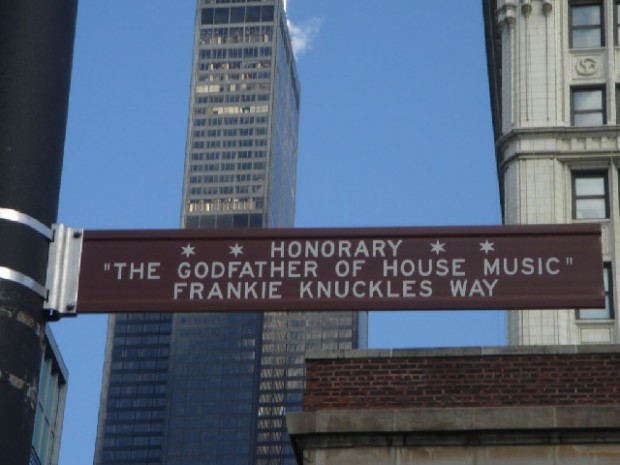
The early days of House Music in Chicago were dominated by enthusiastic young producers who processed what they heard being played by club DJs like Ron Hardy and Frankie Knuckles and radio DJs as the Hot Mix 5, a raw and highly functional take on the American Disco heritage and European electronic counterparts, its sound determined by limited means to afford musical equipment. There were many records released that had enough brilliant ideas to last to this day, but for its originators it might have been sufficient to have their tracks played by said DJs, and however addictive their rhythms and wild piano chords were, they also seemed not to aim too high in terms of traditional musicianship. Thus from very early on the music of Larry Heard stood out. He was a real musician, with credentials as a professional drummer and keyboard player, and he introduced a level of artistry to the scene that in comparison seemed to be underdeveloped until then. And from the start his music reflected his personality. It was deep, introvert, even melancholic. It did not contain the usual dancefloor imperatives, but it was still very danceable. But club functionality did not appear to be his top priority. Nevertheless all the records he released under different guises from the mid to late 80s became legendary classics, and many more records he released afterwards became legendary classics as well.
Consequently Larry Heard will forever remain one of the most revered artists in the history of House music, yet it always seemed as if he felt his career did not unfold as he hoped it would. He probably shared the same desire to become famous, just like the rest of the Windy City pioneers, but neither he nor his music were extrovert enough to fit the necessary schemes. And this both applied to his most noted alias Mr. Fingers, and Fingers Inc., the group he formed with Robert Owens and Ron Wilson. Mr. Fingers was reserved for his very own interpretations of the House groove, and he created one eternal blueprint after another in the process, impressively showing how deep and pure electronic music could be. Fingers Inc. on the other hand was clearly conveyed to work as a group, in the traditional sense of any other R&B group of those years, only with the sound of House instead of R&B. Just take a look at the pictures of the group on the sleeve, matching sweaters and confident poses, with female limbs wrapped around like an outtake from an Ohio Players artwork. The charts were to be climbed, the sooner and higher the better. But despite reassuring sales in the club scene they did not climb the charts as intended. It is significant that both the albums „Ammnesia“ by Mr. Fingers and „Another Side“ were released on the Jack Trax label from the UK, an imprint specializing on importing landmark Chicago House releases to the European market. Both albums combined tracks previously released on local Chicago House labels like Trax and DJ International with new material. Both albums were released in 1988, the year when a rising interest in the new dance sounds from across the pond turned into the Acid House movement that would change the UK and continental club scenes substantially. And both albums are not regarded as a quick compilation to cash in on a then current hype, they are regarded as peerless masterpieces. Albums that really work as albums, from start to finish, all killer no filler. They are still ultimate references that club music can work perfectly in the format, and whoever is failing is just not trying hard enough. So much for Larry Heard’s talents, you cannot really overestimate them. Read the rest of this entry »
Danny Tenaglia – World Of Plenty Tafuri – What Am I Gonna Do (About Your Love) (Silk On Steel Mix) Inner City – Whatcha Gonna Do With My Lovin’ (Knuckles/Morales Def Mix) Ray Simpson – Crazy Pictures (Classic Club Version) Gladys – Made Up My Mind (Classic Club Version) Detroit Spinners – Ghetto Child (7“ Boilerhouse Remix) Ryuichi Sakamoto – You Do Me (The Justin Strauss Remix) Innocence – Let’s Push It (Push It Mix) Quartz – It’s Too Late (Overnight Mix) Stereo MC’s – Two Horse Town Monie Love – It’s A Shame (My Sister) (Monie Dee Mix) Don-e – Love Makes The World Go Round (Morales Extended Club Mix) Lenny Williams – Gotta Lotta Luv (House Mix) The Pasadenas – Moving In The Right Direction (Classic Deep Mix) Jesus Loves You – Love’s Gonna Get You Down (Popcorn Mix) Paul Johnson – You’re No Good (Deep House Mix) Daryl Hall – Stop Loving Me, Stop Loving You (Heart To Heart Vocal Mix) Fine Young Cannibals – I’m Not The Man I Used To Be (Extended Version) The Todd Edwards Project – Get Carried Away (Out On The Town Mix) Eve Gallagher – Love Is A Master Of Disguise (Classic Club Mix) Alison Limerick – Make It On My Own (High Rise Mix) Clive Griffin – I’ll Be Waiting (Dance Mix) Nayobe – I Love The Way You Love Me (Nostalgic Mix) Swing Out Sister – Twilight World (Instrumental Dub) Swing Out Sister – Twilight World (12“ Remix) Jody Watley – I’m The One You Need (Extended Club Version) Motherland – Love Games (Dub) Motherland – Love Games (The Satoshi Tomiie Interpretation) Alexander O’Neal – What Is This Thing Called Love? (Dee Classic 12″ Mix) Chapter & The Verse – Stealth
Moral – Trees In November
Ajukaja & Andrevski – Mesilind
Walt J – Horns Of Plenty
KB Project – Feel It
Universo – Yebo
Lowtec – Man On Wire (Reconstruction)
K.A. Posse – Shake (Joe Smooth Mix)
Geena – Tone Loc
Mosey – Live A Little
Luca Lozano – DJ Fett Burger – Telegronn
PLO Man – Type Damascus
Shanti Celeste – Moods
Chaperone – All Your Emergencies
Boo Williams – Freaky
Donnie Tempo – Tazmanian Virus (Sims JFF Edit)
Harmonious Thelonious – Industrielle Muziek
Minor Science – Closing Acts
DJ Stingray 313 – Acetylcholine
KiNK – Vodolaz (Elektro Guzzi Version)
MD Jr. – Survival Of The Richest
Unspecified Enemies – Ms. 45
Merle – Mimi Likes 2 Dance
House Of Doors – Starcave
Superpanzer – Die Tollen, die nicht so Tollen, und die Häßlichen
Finn, what memories do you have of your first DJ set?
It was mostly playing records at school and private parties from the mid 80s on, playing a variety of Disco, Soul, Synthpop and Post Punk. I’d like to remember that as eclectic, but probably chaotic would be the more apt description. Actually my memories of my first forays into playing out in public are bit hazy by now. After all, that was nearly 30 years ago. What I vividly remember was a Soul allnighter in a basement club of my hometown of Kiel, in ’86 or ’87. Actually it was a whole Mod Weekender, with several events all across town. My friend Ralf Mehnert, who became a well respected Rare Soul collector and DJ, and me took over the Soul part of the proceedings, playing records for a crowd that consisted of mods and other hip folks, but predominatly drunk scooter boys. Somebody saw them standing outside, mistook them for skinheads, and alerted the most notorious local Turkish street gang. They arrived not much later, crashing the door and storming down the stairs, only to face quite a crowd of completely unimpressed heavy parka-clad folks. Ralf and me ducked away in the DJ booth and things got really messy. About 30 minutes later there was no intruder left and the party continued as if absolutely nothing had happened. There were numerous other similar experiences. Kiel was quite a tough city, probably still is.
Can you re-engineer what influence being a small town boy – born and raised in Kiel, in Northern Germany – had on your musical education?
I did not really feel limitations. There were record stores as Tutti Frutti or Blitz which were very well selected with electronic music of the 80s, Punk, and experimental stuff. And quite a number of second hand stores to choose from, where I mostly bought Soul, Disco and obscure 60s and 70s records. Some of those acquired bigger record collections from Danish libraries and sold each record for 2 Deutschmarks, regardless of format. I purchased the bulk of my Disco collection in those years, for example. You did not have to spend much, so you would explore what you would have otherwise not listened to. I had a lot of friends who were very interested in music, and there was a constant exchange of knowledge, good and bad finds. It was all very social. I made regular record shopping trips to Hamburg, too. There were plenty of excellent record shops there, for everything of interest to me. I always looked for dance music of any kind, and Hamburg had stores that were importing records since the Disco era. They had the contacts and the knowledge.
And as for the clubs?
I did not mind being in a smaller town either. There were quite a few. The DJs mostly did not mix much and played all over the board stylistically. There was a tendency to play music in topical blocks. A 30-minutes block of Disco, followed by a 30-minutes block of New Wave, then Hip Hop, then some Rock, then Soul, then slow songs, then everything all over again. Once a few tunes worked together and on the floor, the DJs tended to rely on the according selection and did not change it for what seemed to be years. That drove me mad, but in retrospect I could hear lots of different music in one single night, and that left a mark on me. You learn about the contexts of what you hear, and how they relate to each other. I still make use of that. I travelled a lot, and I have been to a great number of clubs in my life, but when I moved to Berlin I was already in my early 30s. I spent my formative years up North. I did not move because I had to get out either, I left because the job situation was difficult for me. If I would had found an interesting job at that time, I probably would have stayed. I still go back regularly, I have family and friends there, and I still miss the sea.
You were born into club life by the sets of Klaus Stockhausen at Front Club in Hamburg, when you were dancing the nights away at the age of 18. What made this experience so fundamentally alluring to you?
I started going to clubs in Kiel in the early 80s, 12 or 13 years old, then to Hamburg clubs only a few years later. Most clubs in Hamburg were not as different to Kiel as they maintained to be, but the people had arguably more style and the music was more specialized. You went to certain clubs for a certain kind of music. I had been to some gay clubs in Kiel before, but they seemed to be stuck with a soundtrack that had been tried and tested for years, classic Disco anthems and the occasional Schlager drama excursion, and the scene was not that open. You often felt like the stranger entering the saloon, and the crowd often was more made up by people with a common taste in music and fashion that just happened to be gay. A lot of 80s fops and some sugar daddies. It could be fun, but more often it was not. These people had to live with other prejudices and repressions than just getting beaten up for the style of the subculture you had chosen for yourself, like I did, and you did not belong.
And Front Club was different?
Absolutely. When a friend took me to the Front Club in early 1987 that was dramatically different. The crowd was predominantly gay, but if you were not, like me, nobody seemed to care. I was aware of the major role gay subculture played in the evolution of dance music, mostly by reading features about legendary Disco clubs in magazines, but they were about Bianca on that horse for instance, and not about what was booming from the speakers as she rode in, which was exactly what interested me most. Front was the first club where I could actually experience it, and even be a part of it. And Klaus Stockhausen was the first DJ I ever heard who did not only play records, he mixed them. Like no other I heard ever since. It was not that I did not know any of the music before, but he was transforming the records into something else. And the club itself was incredibly intense, I have never witnessed something like that again either. A dark, gritty basement filled to the brim with extravagant people who completely lost their minds on the floor. And my first visits were coincidentally a good timing, because it was the transitional period between the music played there from 83 on, and House. House was introduced there much earlier, but it still was not ruling the playlist. It was brilliant to hear Stockhausen play favourites I loved from the years before, and more often records I never heard, and then the added early Chicago House sounds that seemed to have swallowed decades of dance music history only to spit them out as this raw, primitive version of it. It fit the club perfectly, and soon I was heading over to Hamburg on weekends as much as I could, because I simply could not get enough of the experience. That lasted until around 1995, and then I took up a residency in Kiel for almost ten years, and it kept me well occupied. But just think of all the incredible music released between 1987 and 1995. It really were the blink and miss years of what we still hear today, and I could be witnessing all crucial developments right on the floor, played by the best DJs, and dancing to it in the best club with the best crowd. Good times.
When did you start collecting records? During those blink and miss years?
No, much earlier. The little money I had I spent on records since I was about 6 years old. My parents gave me a record player, and the Forever Elvis compilation, plus radio and cassette recorder and they were my favourite toys by then. Especially the radio was very important. I spent endless hours recording music from the radio, cursing presenters for talking too much over songs I liked. And the hit music played on the radio in the mid 70s was just great. Chic and Roxy Music were probably my favourite bands. And all those weird and wonderful Glam Rock acts. But luckily enough I had also a chance to catch the music from early on that was not deemed fit for airplay. I had an uncle who had the idea to buy record collections at judicial sales, and he often gave me the records he did not like. Thus I could become the proud owner of Can’s Monster Movie or the first Suicide album and several obscure Soul albums when most of my classmates were still just listening to the charts. I know this sounds terribly made up, but it is the truth. And at a very young age you tend to play your favourite records over and over and over, your relationship to music is very intimate and deep. Soon I felt quite confident in my taste, and I was spending more and more time and money on music. But I actually had not the faintest idea how much great music there really was out there to discover, and I had yet to meet the right people to share my passion for it. That changed as soon as I could sneak my way into clubs. Read the rest of this entry »




Recent Comments