You are a well respected music writer writing for publications like De:Bug, RA and your own blog (among others). Has music writing always been part of what you do, and what came first? The writing or the djing?
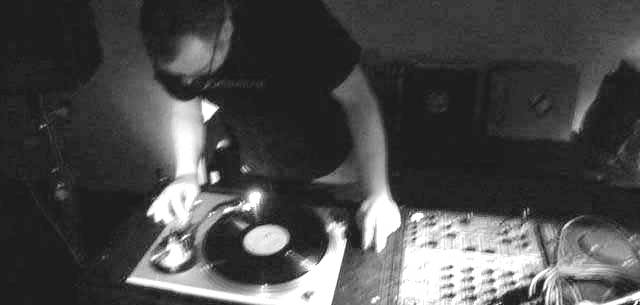
I write about music in public since the mid-90’s, and I started playing out in the late 80’s, so definitely DJing came first. My output as a writer has also been not as prolific as it turned out to be after I moved to Berlin in 2003. I knew Jan Joswig, the fashion editor at de:bug at that time, from former days in my hometown Kiel and he asked me to contribute. I started out writing reviews and then turned to features and especially interviews, some of which got quite some attention. So that eventually led to writing for other print and web publications too, like doing the “Playing Favourites” series for Resident Advisor, my “Rewind” series for sounds-like-me.com, Groove Magazine, and a lot of other media. The Website you’re referring to is not a blog in the sense that I write about everything that goes through my head, it is more like fragmentary online archive of my activities from the 90’s until now. Writings, Mixes, Gigs, the label, and a plethora of other things. It is not that I’m that vain to want everybody to know what I do and did, it is kind of a reminder for myself that others can follow if they like. Excuse the irregular updates at this point, but I slowed down all said activities a bit to have more time for my lovely wife and daughter, and I took up working at Hard Wax, too. Consider me well busy.
Can you please tell our readers what is D*ruffalo and who stands behind it?
I can’t possibly tell, at least not anymore. When D*ruffalo was unleashed 4 years ago, it was some sort of a media experiment initiated by a semi-anonymous collective of writers, producers and DJs based in several German cities, intended to be a platform to share love for what should be loved, free of any conventional restrictions. Soon some lack of love for what was deemed not as loveable showed up as well, but basically it was conceived to be the Fort Alamo of sincerity. Decidedly non-ironical, accidentally post-cool and fiercely anti-hype. At some point The D*ruffalo Hit Squad and the according Druffmix series was brought to life, to shine a light on music no light shined upon. But it totally spiralled out of control. I don’t know what it is right now, or if I am still a part of it even. But apparently D*ruffalo celebrates its sheer existence and the 50th Druffmix with a party at Berlin’s Soju Bar on February 11, and there are negotiations about a regular residency there. If the unpredictability and confusion of the D*ruffalo members allows. Which is probably unlikely, maybe. I can’t possibly tell.
You are running Macro Records together with Stefan Goldmann. How’s the process been running a label and what can we expect from Macro in 2011?
When we founded Macro we decided to only release music we find worth releasing, at the potential risk of longer stretches with no releases at all. But then the label took up so much momentum that we now have more releases lined up for this year than in the years before. March will see a new EP by the rather sensational Elektro Guzzi and Stefan’s magnificent “The Grand Hemiola” 2×12″, you can hear excerpts of both in the mix I recorded for you. We will follow that up in April with a live album by Elektro Guzzi and a compilation of the late works of the composer and conductor Friedrich Goldmann, Stefan’s father, who sadly and much too early passed away in 2009. We are also in the process of preparing several other projects for later this year, which are not yet ready to be unveiled, but well worth waiting for. We worked very hard to achieve a position in which we can do whatever we want, and as long as this strong support will stay with us, we will do just that. Expect the unexpected.
You’re known for your eclectic dj sets. What can you tell us about this set you prepared?
My sets, be it in a club or radio context, can be quite diverse, that’s true. But I don’t believe in eclecticism per se. Meaning, I don’t want to attract opposites just for the sake of it. If you neglect a certain coherence, structure and narrative you will end up sounding like a jukebox, however interesting it might be musically equipped. I like thinking of a concept when doing a mix, as subliminal or not it might be. With this one, I just intended to combine an experimental streak with a dancefloor functionality, while providing a glimpse of unreleased Macro material and tracks of artists I consistently admire, and tracks I still find as interesting as the day I first heard them. Which in the case of this playlist, was not too long ago. At any other time the set would probably have sounded differently, but this was what I then had in mind for this purpose and I hope it makes as much sense to the listeners as it made to me when I recorded it.
Stefan Goldmann – Mining The Vein / The Grand Hemiola Raime – This Foundry (Regis Version) Shackleton Vs. Kasai Allstars – Mukuba Special Theo Parrish Ft. IG Culture – Traffic Elektro Guzzi – Boom Room Margaret Dygas – Hidden (NSI Mix) Farben – Kursbuch 1&2 Son Of Sam – Nature Makes A Mistake (Âme Mix) Marco Bernardi – Klinsfrar Melode (Sprinkles Deeperama) WK7 – Higher Power (Hardcore PCK Mix) Pinch – Croydon House
A mix with some 90s house records I hold very dear.
Mr Fingers – On My Way (Pinky Blue Mix) Lovechild – Sweet Ambience (Deep Dub) Chez Damier & Stacey Pullen – Forever Monna Inner Soul feat. E. Scott – I’m In Need 4 U Sound Waves – I Wanna Feel The Music (Smooth Mix) Sensory Elements – Explain It Jazz-N-Groove – Do Ya (Marcs Lunch Pale Mix) Equation – I’ll Say A Prayer 4 U Debbie Gibson – One Step Ahead (Masters At Work Mix) Yohan Square – Love Of Life (Genesis Mix) Mark Rogers – Twilight For Some (Hurleys Twilight Mix) Subculture – The Voyage Joanna Law – Love Is Not Enough (Mix D’Ambience)
This is a mix for all you big-heads out there who think disco music is lower than the irrelevant musical gibberish and tired platitudes that you try to impress your parents with…
We’re The Druffalo Hit Squad, we’re much cleverer than you and this is Druffmix 49.
Nick Heyward – When It Started To Begin Blue Rondo A La Turk – Klactoveesedstein David Byrne – Big Business Family 5 – Traumvers Yello – Base For Alec Human League – The Sound Of The Crowd Die Krupps – Goldfinger Soft Cell – Bedsitter Orchestral Manoeuvres In The Dark – Enola Gay Spoons – Nova Heart Hilary – Kinetic Human League – Dance Like A Star Vicious Pink – 8:15 To Nowhere Heaven 17 – We Live So Fast Electric Light Orchestra – Yours Truly 2095 Yello – Alan Rankine – The World Begins To Look Her Age Wilson Pickett – Groove City Lipps Inc. – Choir Practice Cut Glass – Without Your Love Richie – Trying It On Peter Jacques Band – Fly With The Wind Dislocation Dance – Show Me Spandau Ballet – Only When You Leave Mari Wilson – Let’s Make This Last The Associates – Take Me To The Girl Comateens – The Late Mistake The Christians – Forgotten Town Suicide – Dream Baby Dream
Yes, almost ten years since I left England. The reason was not by my design. I was enjoying America so much that I overstayed my visa. If I was to leave, I would have not been allowed back for another five or ten years and I was planning on making my life there. And only a year and a half ago I got married and applied for my green card. And I now have the green card, and my work visa and my right to travel and re-enter the States. So here I am, back in the world. I recently completed a big tour of Japan and I’m on a major tour of Europe right now.
You got married and still it took such a while to get your green card?
Well, actually the process is a lot quicker now than it used to be. From the time I put my application in it was actually only four months until the card came through. Since 9/11 the background check is a little more stringent, but the whole process is now centralized, instead of the department in Washington, and the department in Detroit and so on. There’s one computer, and if you fit the criteria then it’s all good.
So you spent all those years of your self-imposed exile just playing in the States?
Yes, but on a regular basis. America is a big place. And I have a regular circuit. Starting on the Northeast coast, Detroit, Chicago, New York City, Philadelphia, Washington, Miami, then skipping over to the other side, San Diego, Los Angeles, San Francisco, Boulder and Seattle. And that’s not even including Hawaii. So that’s plenty of work, even if I do that once every couple of months.
But your main bases are Hawaii, Los Angeles and New York City?
Basically yes. My most regular gigs would be there.
Would you say that these are also the cities where your music fits best? Is there a better scene for what you play?
Everywhere I play people come to hear me play. I regularly play in Miami for the Winter Music Conference and Art Basel, that’s my two gigs a year mainly there. Towns like San Diego and San Francisco have a scene, too. Most of the places have a scene as such. It’s not the biggest scene, but with all the internet communication and stuff like that it’s small but healthy.
And since you are allowed to travel again, is it some kind of relief and you accept many gigs abroad?
Not really. It is nice to travel and just to have the freedom. I haven’t been around for ten years so it’s nice to pop out and go to Japan and Europe again. But I don’t plan to spend the next ten years on the road. There are a lot of opportunities, basically everywhere I ever played before plus twice as many places again.
How does it feel to get out again? Has the scene changed in the meantime?
I don’t think it has changed at all.
Is that disappointing?
No, that’s not disappointing at all. I always had a good time. There are certain focuses on particular kinds of music over the years, whether it’s Electroclash, or Minimal, or Drum ‘n’ Bass, but in general the dance music scene still goes bang bang bang between 110 and 130 bpm. And I don’t really see boundaries between the so-called genres. I play the music that I like, whether it’s a Techno record, or a Disco record, or whatever. I think more than the music has changed the people have changed. Kids that weren’t born when I was DJing in the mid 80’s are now in their mid 20’s, there’s a whole new generation of people who have come through as well as the survivors from the old school. The formula of a dance party is still very similar. I suppose communication via internet had an impact. Even though I have been away for ten years people know exactly what I have been doing. It’s not like I completely disappeared during that time. The networking has made sure that my influence via production or gossip has been maintained.
I think the internet helped to keep your status alive. All you did was thoroughly discussed on specialist websites and message boards. I guess this is quite different to how it was before.
Yeah. Scenes used to be localized, and now it’s globalized. Which is good and bad. If something fresh happens in a small area it doesn’t have time to develop, it is instantly global. Early Punk or Hip Hop had two to five years a hardcore scene as such. Whereas now, as soon as there’s a bright idea it’s everywhere in the world and everyone’s had a piece of it before it maybe manages to have a big foundation.
Nowadays it might also be easier to get influenced by another DJ, or even to imitate somebody. In pre-internet days you could maybe get your hands on some mixtape, but it was difficult. Maybe you read about DJs, but you never had the chance to hear them. And now you can download tons of sets from legendary DJs, and from legendary clubs, too.
Yeah. I think that’s good and bad, too. These days I don’t let people record my sets. I suffered from heavy bootlegging. And a lot of the time when I play it’s for that moment. Maybe you’re sitting in your car, listening to a set, but you have no idea of the atmosphere or the climate at the moment when the record was being played. The tape might sound bizarre or disjointed or strange and it might not particularly work in the car or the boutique or at home. But at the particular moment, that was the right thing to do. So I try and keep my sets for the people who were there and it’s for memory banks only.
So you think it gets watered down?
It’s a double-edged sword. Sometimes there’s a little bit too much access. Some of the mystery is gone. If you think of DJs like Ron Hardy, I’ve only see one small grainy photograph of him, and you wonder who this guy is and what his character is. If you want to find about me, just hit Wikipedia, DJ Harvey images, and you know what I look like, my style. But there is a little mystery to who or what I am and I quite enjoy that. Luckily the personal appearance still counts for something. Because they have had absolutely everything besides me physically. And here I am, in the flesh, I actually exist. I’m not just this digital entity. Read the rest of this entry »
In discussion with Justin Strauss on “Computer World” by Kraftwerk (1981).
Can you still remember the first time you ever heard Kraftwerk?
Yes. I think the first time I heard them I was 17 years old, in England, recording an album for Island Records with the band I was in at the time, Milk n Cookies. I heard the song “Autobahn” on the radio there and remember thinking how different and cool it sounded than anything else out there. I bought a copy of the 7″ while I was there.
What made you decide for “Computer World” out of the many legendary albums? Do you agree with many critics and fans that they were at there creative peak with this?
Although I love all their albums, “Computer World” for me was just the best. Perfect in every way. I totally agree that this was their “masterpiece”.
Rydims – Rydim#2 (Version) (Nu Groove) Mike Shannon Feat. Fadila – Under The Radar (Ricardo Villalobos Mix) (Cynosure) Soylent Green – Low Pt. 1 (Playhouse) The Prince Of Dance Music – E-3, E-6, Roll On (City Limits) Badawi – Dstry<All>Prfts (Shackleton Remix) (Cargo Records) Hertsi – Oodi Sähkölle (Sähkö) Da Sampla – The Rider (Moods & Grooves) Wax – 30003 B (Wax) DJ Duke – Escape From New York B2 (Power Music) Never On Sunday – Urban Rains (430 West) Laurent X – Drowning In A Sea Of House (House Nation) Keith Tucker – It’s A Mood (Seventh Sign) Dettmann – Vertigo (Vincent Kunth Remix) (Ostgut Ton) Nature Boy – The Major Enemy (Black Label) 4th Measure Men – The Need (Henry Street Dreams Mix) (Multiply) Foremost Poets – Reasons To Be Dismal? (Instrumental Version) (Not On Label) Buzzin Cuzzins Feat. Romanthony – Let Me Show You Love (Approach To Temple) (Azuli) Raudive – Sienna (Macro) Instra:mental – Let’s Talk (Naked Lunch)
FCL – Let’s Go Seven (We Play House) Ramadanman – Glut (Hemlock) Scuba – You Got Me (Hotflush) To Rococco Rot – Fridays (Shackleton’s West Green Rd Remix) (Domino) Monolake – Alaska (Substance Remix II) (Monolake / Imbalance Computer Music) Low Res – Amuck (Sublime) Oni Ayhun – OAR004A (Oni Ayhun) Julia Decay – Untoward (Scandinavia) Rhythim Is Rhythim – Kaos (Juice Bar Mix) (Transmat) DJ Bone – No Sleep (True To Da Roots) (Sect) Mr. G – Life (One Dark Late Saturday) (Moods & Grooves) The Oliverwho Factory – Rain 5th Wave (Madd Chaise Inc.) Moodymann – Analog:Live (KDJ) Grand High Priest – Mary Mary (We-Ze Records) Shake – Psychotic Tango (Frictional) Spencer Kincy – Don’t Stop (Cajual) The Closer – Strong Meets The Weak (KMS) Bim Marx – Stronger (Stilove4music)
The first one is by Rinder and Lewis – “Lust”, which is kind of a space disco prototype so to say. For 1977 it was kind of a landmark record I guess.
For 1977, yes. I suppose Rinder and Lewis were a very prolific production team in the 70s and 80s. They made an awful lot of records, a lot of albums. That’s probably one of their most moody tracks. A lot of their stuff has got a 1920s, big band, Charleston influence to it. But I like a lot of their stuff. But some of it is unusual in its arrangement. That one’s got a slightly more mystical vibe to it.
Would you say they tried to explore their field a bit further with this record? You mentioned that a few of the other productions had certain influences, like the latin stuff for example. But this one is really something different, almost science fiction.
Yes, but that’s quite different from the rest of the “Seven Deadly Sins” album. I reckon it wasn’t a track that was made to be a hit. It was probably considered an album track. But with that weird bit in the middle with the glockenspiel, it goes into a sort of devil bit about two thirds of the way through. Which is very out of character with the rest of the record. But what I think is interesting about that is that you don’t get those sort of unexpected bits in records now. I guess when musicians are making records, it’s very different to when DJs are making records. Now, when DJs make records they just tend to have the same stuff going throughout the track, it just loops round and round. Maybe there might be some changes, but there’s nothing drastic coming in really loud. A bad DJ produced record might just be a bit boring, whereas a bad record from the 70s might have a great verse and a really terrible chorus. Or you might have something really cheesy. A lot of records now are just rhythm tracks made by DJs for mixing and whatever, whereas then you might have records that have got loads in them, maybe too much. But the reason that they’re not great is maybe because they’ve got too much in them. They might have some great musical parts, but the vocals are crap. I think I’m digressing a little bit. A lot of Rinder and Lewis stuff – have you got that album “Discognosis”?
No, I know the THP Orchestra stuff which I found really good.
Yeah, and there’s El Coco and Le Pamplemousse. I like that track. It’s always very well orchestrated, they always had a bit of money to make the records. It wasn’t done on a shoestring budget, they must have sold pretty well. I think El Coco’s “Cocomotion” is one of my favourites by them as well. Obviously a lot of the stuff on AVI was produced by them, they were putting out a lot of music. They must have lived in the studio in 76, 77, 78, 79.
This is also a really good example for what you can do if you’re a good arranger – the arrangements they did are really complex and beautiful. Is that something you miss? You talked of modern rhythm tracks and functionality – I think it’s hard to pull off these days because you don’t have budgets for studio work…
Yeah of course. I suppose you have to think, this is now and that was then. Record sales were much higher, I suppose disco was like r’n’b was 5 years ago in terms of its worldwide popularity. So there was a lot more money, obviously there weren’t downloads or people copying CDs. I don’t know what the sales figures were like of something like Rinder and Lewis, but it probably sold half a million or something like that. It’s a completely different time, in terms of being able to get a string section in for your record. I’ve paid for string sections before, but to be honest with you what I’ve found is a string section with 30-40 people is so different to a string section with 7 or 8 people. I’ve only been able to afford 6 or 7 people. It isn’t really a string section! Nowadays, with CD-ROMs and whatever you can make something that sounds pretty good – not the same – but pretty good with just samples. To really make it sound a lot better, you need a 30-40 piece, big room orchestra. People at Salsoul and a lot of them classic disco records had that big proper string arrangement. Also, paying someone to do the arrangement isn’t cheap if you get someone good. Very difficult to do that now. So yeah, I do miss it. But there’s no point missing something, it’s like saying “Oh, I wish they were still making Starsky and Hutch”.
As long as a glimpse of an orchestra won’t do, it doesn’t make sense?
I think the only it could make sense is if George Michael decides to make a disco album, or someone like that. He could afford it. Or Beyonce. Some big star. But your average dance record – I suppose Jamiroquai had some live strings on some of his stuff. But then again, he was selling a lot of records.
Doobie Brothers – What A Fool Believes (Warner Bros. Inc., 1979)
“What a Fool Believes” by the Doobie Brothers, which is a merger of rock and disco.
There’s other tracks, like the Alessi Brothers “Ghostdancer”… I suppose that just shows how popular disco music must have been at the time when people like The Doobie Brothers and Carly Simon were actually making disco records. I suppose it’s the same as nowadays people making a record with a more r’n’b type beat. Or at the beginning of house music, there were lots of pop acts making house records. I was listening to a best of ABBA a few years ago. It started off sort of glam-rock, sort of sweet, like Gary Glitter, that sort of production. And by the late seventies their stuff had got pretty disco-ey. And by 82 it was folky. So I think the disco beat was just featuring on a lot of productions by acts who just wanted to make a contemporary sounding record. That’s probably why a lot of the American rock establishment hated disco so much. It wasn’t just that it was there: their favourite acts were making disco records! They hated the fact the Rolling Stones made disco records, it just wasn’t allowed.
But the thing is, that when the disco boom ended, a lot of the rock acts who made disco records acted like they never did! They deserted it pretty quickly.
Yeah, once it became uncool they pretended they never liked it, it wasn’t their idea and all that. I tried to once do a compilation album of that sort of stuff. But it’s too difficult to license it all. They’re all on major labels, they’re all big acts, and it’s very hard to license that stuff. In fact I’d go as far as to say it’s impossible: just too difficult and expensive.
Was it just because of budget reasons, or because the acts didn’t want to be reminded of what they did in that area?
I think often those big acts have to approve every compilation album license. A lot of the time, for the people who work in the compilation album license department, it’s easier for them to say no than to write to the management of Supertramp or Queen. And often, if they do see a title that has disco in it, they will say no. And a lot of them won’t license the Rolling Stones to a comp that’s got a projected sales figure of less than half a million. There’s so many reasons why it’s problematic. You could do it, but you’d have to leave off so many tracks, there would hardly be any point doing it. I did have a chat with a major label about doing it and that was one that owned quite a lot of them. But it’s just so difficult. They want to see a big marketing budget, they want to see you spend a hundred grand on television adverts. Otherwise they just go, why are we on this compilation album?
I think it’s a shame really, there were so many good disco records done by major artists…
Yeah. I like a lot of those things. I’m doing this compilation for BBE which is maybe a similar thing, just it’s not all well known acts. People like Fleetwood Mac, they did that track “Keep On Going”, those sort of things. I guess it’s blue-eyed rocky soul. Quite danceable… it’s not all disco, but it’s not really rock either. More black music based. I always think, if you look at the back of a rock album and it’s got someone playing bongos on it, it’s worth checking out. Read the rest of this entry »
Schon viel wurde über die bittersüße Emotionalität schwadroniert, die viele Technotracks aus Detroit verströmen. Jede versonnen stimmende Fläche im Verbund mit komplexen Rhythmen wurde dem fortschreitenden Verfall der Stadt angelastet, jeder Augenzeugenbericht von heimkehrenden Besuchern schien die Fernspekulation zu bestätigen. Eine ganze Produzentengeneration wurde so zum Synonym für den Degenerationsprozess ihrer urbanen Umwelt, und ihre Fähigkeiten diesen in Musik auszudrücken. Voll heftig da in Detroit, Downtown-Wüste, Komplettinsolvenz, Mad Max 4: Inner City Blues, wurde geschaudert, nur dort kann so eine Musik entstehen. James Pennington alias Suburban Night veröffentlichte allerdings schon mit seinen ersten Platten auf Transmat Töne die vermuten ließen, es sei alles noch viel schlimmer. Seine Welt ist zappenduster. Wenn die verzerrten Stimmen über den meilentief rumorenden Bass von „The Groove“ ihre Einwürfe machen, hat man das Gefühl man würde zwei Psychopathen belauschen, die mit einem Teleskop auf der Party im Hochhaus gegenüber Opfer ausspähen. „The Worlds“ handelte offenkundig von Welten, gegen die H.R. Gigers Visionen wie Urlaubspostkarten anmuten. „The Art Of Stalking“ klang wie ein Speer aus chromatischer Materie, der einem von unsichtbaren Gegnern so hart durch den Körper gejagt wird, dass es eine glatte Ein- und Austrittwunde gibt. Die Fantasie von James Pennington schien deutlich gestörter als die seiner Weggefährten, und er schien fest entschlossen, sie musikalisch direkt umzusetzen. Kaum nachvollziehbar, dass er einst Detroits Pop-Durchbruch „Big Fun“ mitzuverantworten hatte. Seine Eigenproduktionen waren weit von jeglichem Eskapismus entfernt, hier ging es mehr um unmittelbare Bedrohung, nächtlichen Einzelkampf und Hinterhalt. So erschien es nur konsequent, dass sich Pennington in der zweiten Welle von Detroit Techno der von industrieller Düsternis geschulten klanglichen Kriegsführung rund um Underground Resistance anschloss, und nicht den hoffnungschimmrigen Introspektiven der Belleville 3 plus Carl. Dort erschien seine Musik nicht mehr wie ein düsterer Querschläger, sondern vielmehr wie die Perfektion eines unheilvollen Aggregatzustandes, und die Einstands-EP „By Night“ wirkte fast wie ein erleichterter Befreiungsschlag, wenn es in dieser Musik so etwas wie Erleichterung geben würde. Gibt es aber nicht. „Echo Location“ klingt wirklich exakt wie Bruce Wayne Junior, der nach dem tiefen Sturz in die Höhle in ein Meer von Fledermausaugen starrt. „The Warning“ und „Nightvision“ bieten auch keinen Ausweg, eher tappt man noch tiefer in den lichtlosen Schlund. Der einzige Orientierungspunkt sind die strengen Rhythmen, die pure Funktion, der Rest sind nur noch flirrende, verwischte Klangwischer, die den Empfänger mit voller Absicht streifen, und man weiß schon, dass der finale Stoß demnächst kommen muss. Aber wann? WANN?
Suburban Knight – By Night EP (Underground Resistance, 1996)
Im Gespräch mit Didi Neidhart über “Non-Stop Erotic Cabaret” von Soft Cell (1981).
Es gibt sicherlich etliche Wege um auf die Musik von Soft Cell zu stoßen. Wie war es bei Dir?
“Tainted Love” kam ja im Sommer 1981 raus und hat mich, als ich es im Radio gehört habe, sofort fasziniert. Das stach irgendwie heraus. Ähnlich wie früher “I Feel Love” oder Kraftwerk. Das machte im Hit-Radio plötzlich eine ganz neue Welt auf. Zwar gab es schon Bands, die ähnlich agierten und klangen, aber die waren zumindest in Österreich nur in Spezialsendungen wie “Musicbox” zu hören. Aber Soft Cell konnte ich sogar vor dem Weg in die Schule beim Frühstück aus dem Radio hören. Das ist ja auch etwas anderes, als wenn du dir selber Musik auflegst. Solche Pop-Momente kannst du nicht selber initiieren. “Tainted Love” war dann auch die erste Single, die ich mir wirklich mit so einem nicht mehr ganz so schwammigen Pop-Bewusstsein gekauft habe. Das war ein regelrechter Akt. Sonst hab ich entweder auf die LPs gewartet oder mir die Sachen einfach vom Radio aufgenommen. Dann kam “Non-Stop Erotic Cabaret”. Allein der Titel zog mich an. Der hatte so was Verruchtes, aber auch so einen Gossenglamour, der gut zu meinen sonstigen Vorlieben (Throbbing Gristle, D.A.F., Velvet Underground, Prince, Suicide, The Stooges) passte. Ausschlaggebend war dann die “Sounds”-Kritik von Kid P., wo über “Vaudeville-Tingel-Tangel”, “grelle Schminke und grosse Gefühle”, “kleine Hollywood-Dramen”, “keine saubere Teeny-Fun-Musik” geschrieben wurde. Interessanterweise gab es die LP dann in dem einzigen Laden in Salzburg, der eine kleine Abteilung mit “Punk”/”New Wave” hatte, nicht. Also ging ich in ein klassisches Plattengeschäft, wo ich die LP dann auch gleich fand. Was ja auch toll war. Komische Platten in komischen Läden kaufen ist das eine, komische Platten in sozusagen “normalen” Läden kaufen ist schon was anderes. Das hat durchaus was leicht Subversives. Gerade weil es um eine dezidierte Pop-Platte ging, die ich nun quasi heimlich in einem anderen Laden kaufte. Etwa so wie wenn das Päckchen, das auf dem Cover Marc Almond aus seiner Lederjacke zieht, abgeholt werden würde.
Warum hast Du Dir “Non-Stop Erotic Cabaret” ausgesucht? Was macht das Album für Dich so besonders?
So pathetisch das jetzt auch klingen mag: Ich habe damit endgültig das Land Pop betreten. Und zwar im Hier und Jetzt. Die Wege dorthin waren schon angelegt worden, aber so aktuell Girl-Groups, Phil Spector, Glam, die Walker Brothers, Frank Sinatra und Dean Martin für mich damals auch waren, so sehr tönten sie dennoch aus einer Pop-Vergangenheit. Und bei Soft Cell kam einfach ganz viel zusammen. Vieles, was noch in einer Art wabbrigem Vorbewussten schlummerte, wurde nun klarer und konnte auch benannt werden. Aber es gab auch viel Neues zu entdecken. Sachen, die erst später wichtiger wurden wie Almonds Queerness oder die Connections zur Industrial-Szene. Auch wenn das 1981/82 nicht wirklich im Focus meiner Begeisterung war. Da war es das Opulente plus dem Elektronischen, die durchgängige Tanzbarkeit (die ich nicht erwartet hatte) und dieses Geheimnisvolle. Popmusik mit einer gewissen sublimen Gefährlichkeit. Eher Shangri-Las plus Velvet Underground. Die Platte hat sich durch Jahre hindurch immer wieder fast von selber retroaktiviert und wuchert immer noch über sich selbst hinaus. Auch wenn ich mal länger Abstinenz gehalten habe, hat sich dennoch was getan. Mit Soft Cell hab ich mich dann auch endgütig den großen Pop-Dramen und den in Musik gegossenen Tragödien hingegeben. Was nicht immer auf Verständnis stoß. Aber war mir auch immer Roy Orbison lieber als Nick Cave. Ich hatte durch und mit Soft Cell einen Schatz gefunden, eine Art Geheimnis entdeckt. Die Beschäftigung mit Pop nahm ernsthaftere Züge an. Zudem wollte ich ja auch irgendwie kapieren von was Leute wie Diederichsen bei “Sounds” schrieben, wenn es um so was wunderbar Faszinierendes wie auch hin und wieder Einschüchterndes wie “Pop-Diskurs” ging. Gerade weil Soft Cell überall in den Hitparaden waren und aus fast jedem Radio tönten, also auch vom Mainstream gehört wurden, empfand ich mein clandestines Popgeheimwissen in Sachen Soft Cell schon als Hipness. Weniger im Sinne einer elitären Haltung – ich freute mich ja mit anderen, und dachte auch, jetzt wird es was in Sachen Pop und Revolution, wenn auch nur musikalisch – als eines elitären Wissens. Vielleicht ist das ja auch das immer noch Wichtige an “Non-Stop Erotic Cabaret”: Eine Platte die genau zwischen Teenage und Adoleszenz, zwischen einfach als Fan reinfallen und beginnendem reflexiven Popdenken auf einen zugekommen ist. Mit der es aber auch nie ein Erwachsenwerden geben wird. Wo das Aufgekratzte, nach dem Uplifting, nach der Party zwar reduziert, aber nie ad acta gelegt wird. Zudem waren Soft Cell die einzigen, die das ABBA-T-Shirt von Throbbing Gristles Chris Carter ernstgenommen haben.
Dass ich eigene Lost Weekend-Erfahrungen in “Clubland” in Songs wie “Bedsitter” wieder fand, war aber auch super.




Recent Comments