Posted: May 30th, 2016 | Author: Finn | Filed under: Interviews English | Tags: Batucada, Electronic Beats, Jeff Mills, Rewind, Tyler Pope | No Comments »

Photo by Annette Kelm.
In discussion with Tyler Pope on “Batucada Capoeira” (1998).
So how did you come across „Batucada Capoeira“? What triggered your curiosity?
A friend and band mate of mine! I had bought this compilation when it came out in the late 90’s and I was introduced to it that way. At that stage we were always looking for stuff that was rhythmic, and raw, and had energy. Stuff that wasn’t punk rock that had the same energy and essence of punk, and I think that is in Batucada. There were a some other great reggae and latin compilations on Soul Jazz we liked, and so I’m pretty sure thats why he bought this one. We dubbed the vinyl onto cassette and listened to it a lot on our first tour of the states in ’98. It grew on me the more we listened to it on the long van rides during that tour, and I was eventually totally hooked.
What attracted you to a sound that is so predominantly rhythmic?
I’ve always been drawn to rhythmic music, my dad was a drummer and there was always a drum set up in the house so it started with that. As a youngster I was into Primus, Red Hot Chilli Peppers, and that whole funk rock thing. That music primed me for getting into soul and funk music and all other kinds of tribal rhythmic music. This Batucada compilation was probably the first stuff I really enjoyed that was only drums and thats why it’s special to me and why I chose it for this article.
The sound of a Bateria can be quite a complex wall of sound. What is the difference between that and percissive music from other countries, like Mbalax for example, or other African styles? Or are they even not that different?
There are different drums, instruments and rhythms in Bateria then in Mbalax and other African percussion music, and I guess that is to do with the European influence in Brazil. There are no snare drums in African drum music like Sabar or Mbalax, and the snare drum comes from Europe. Also I’ve never heard such a large group of drummers playing in such an organized way in African drumming. But the frantic energy of the drum music of both countries is certainly similar.
Not every track featured here is as frantic as the drum workouts usually associated with it. What do you prefer?
I like this compilation because it has some of more frantic workouts and mixes them up with the more minimal tracks. It makes for a more enjoyable listen from beginning to end in my opinion. Some of the other Batucada records that I have, that are just the big frantic drum workouts are fun to listen to for a track or so, but maybe not as a whole record
Was the compilation a first glimpse, and you investigated further from there? The tradition of Batucada and Capoeira in Brazil is rich and sure offers a lot to listen to.
I checked it out because it was on Soul Jazz, and at the time it came out other Tropicalia records were being reissued like Tom Ze, and Os Mutantes other real arty weird quality music, so I was wanting to hear more stuff from Brazil. I haven’t really gone too deep, or at least deep by my standards with Batucada actually, this comp never really gets old either so if I want to hear something like this I just listen to this record.
Capoeira is a form of martial arts developed by slaves. I always found music interesting that transfers otherwise potentially critical encounters between rival groups of people into a battle of dance moves, be it breaking, vogueing, or Brazil’s current Funk Balls. Yet the music of „Batucada Capoeira“ is comparably more dynamic than its counterparts. Are such aspects important for percussive music?
Yeah, I hadn’t thought about that but I also like music made for these types of encounters, or battles. I love a lot of the new Vogue/ballroom club music, and recently have been really digging some of the Jersey Club battle tracks. The records for dance battles are more beat driven, there is more focus on the rhythms, and of course they have to be super funky since they have to inspire the dancers. The tracks for battles also cut away at anything that wouldn’t be just for the purpose of the dancing. That focused rhythm track energy I really like. As far as the dynamic nature of this music it is because it’s actually people there playing the drums while the battles are happening, so the drummers are feeding of the energy of the battles and vice versa. Read the rest of this entry »
Posted: May 30th, 2016 | Author: Finn | Filed under: Gigs | Tags: Ben UFO, Leeds, Wire Club | No Comments »

Info
Posted: May 16th, 2016 | Author: Finn | Filed under: Interviews English | Tags: de:bug, Interview, Mark E, Prosumer, Radio, Stefan Goldmann, Wire Club | No Comments »

The next instalment of Acetate will once again exhibit selectors of world class calibre. David Kennedy aka Pearson Sound, who organises the night, errs towards the DJs who dedicate their time to collecting music, infrequently booking those who attempt to spin plates and produce music at the same time. The DJs’ heightened awareness of the vinyl record landscape seems to breed a uniquely rich atmosphere during the club night.
Alongside long time dubstep colleague, and one of the world’s most sought after selectors, Ben UFO, Kennedy has invited a bona fide head out to play in the Wire basement: music critic and Hard Wax staff member, Finn Johannsen. The German also runs Macro Recordings, Stefan Goldmann’s primary production outlet.
Finn is rarely seen by Brits out of his natural habitat of the Berlin record shop, and is normally only spotted in the by-line of an online electronic music article. So we thought we’d do a bit of investigative work and reverse roles. Here’s our interview with him:
What is the application like for a job at Hard Wax? How did you come to work there?
We get a lot of mails every week by people looking for a job at the store, but all current staff members were already regular customers or otherwise affiliated with Hard Wax before they started working there. Same with me. Six years ago I became father of a wonderful girl, and I realized that all the deadlines involved with freelance work did not work well with that. So I was thinking about adding some steadier work to my weekly schedule, and my wife suggested Hard Wax as an option. I tested ground and what I did not know at the time was that Prosumer was quitting the job, and they were looking for a replacement anyway. So I had a meeting with Michael Hain, the store manager, and Mark Ernestus, the owner, and started working there, all within a very short time.
It’s every young DJs dream to work in a record shop. Did you always know you’d work in one? What would you be doing if you weren’t there?
I worked in a second hand vinyl store when I was studying in the early 90s, but that was more to fund my own vinyl purchases. When I started DJing in the 80s I was not trying to get a job in a record shop, I only liked visiting them and it was that way for years. My focus at university was actually on film history, not music. But apart from a brief stint reviewing movies for De:bug magazine I never really did anything with that, nor did I really intend to. I also worked as an editor for art books a few years ago. But at some point I realized that it always fell back to activities connected to music, because it probably is what I know and do best. So I stuck with it. If I would not be there I would be doing something else, but it probably would have something to do with music as well.
What do you look for in a record when buying for Hard Wax?
Something new, or at least different. A personal signature. Ideas. Integrity. Attitude. When the record is referential I check if the references are used in a smart way, and if aspects are added that were not there before. I also take a good look at the proportion of value and money. I adjust my level of support for a release according to the level of how these criteria are met.
What led you to buy your first vinyl record? And what was it?
I started taping radio shows in the mid 70s, but I did not have enough pocket money to afford buying records then. But I already had a record player and I used to play records from my parents’ collection. When I was 9 years old, in 1978, I recorded Blondie’s Heart Of Glass and decided to buy it on 7“. When I entered the record store I just knew that I loved the song and her voice in particular, but I did not even know what she looked like. I was probably assuming that she had blonde hair, but not really that she looked that fabulous on the cover, and what she really was about. I probably learnt quite a few lessons about pop culture at once with that purchase, and soon I started spending nearly all the money I had on records.
We’ve just had record store day in the UK. Do you have any comment on it? Do you see it as a celebration or capitalisation of record buying culture?
It is the same in Germany, and I think it is the same all over the world. Which is why the recent negative implications of the event weigh in so heavily. Hard Wax decidedly never took part. We stated from early on that for us every day is a record store day, and that is basically it. But we feel the fallout from RSD as anybody else in the business nonetheless, especially the delays with the pressing plants, which affect our distribution as well, for example, and the releases we buy from other distributors. That has improved a bit lately, but it is still a tremendously hypocritical event, and that does not seem to improve. Nearly everybody’s trying to cash in now on a format that was willfully pronounced dead before, and nearly everything is blocked by back catalogue you can find around every corner, just in different layouts and for a much lesser price. Old wine in new skins. And the new grapes cannot be harvested because of it. It is totally absurd. There may have been some respectable thought implied with it once, but as soon as the major labels entered it predictably withered away into nothing. They want to gentrify vinyl into pricier artifacts instead, for customers that care more about the item itself than the music it contains. Read the rest of this entry »
Posted: May 9th, 2016 | Author: Finn | Filed under: Gigs | Tags: Copenhagen, Jolene, Terekke, Twin Cities | No Comments »

Info
Info
Posted: May 5th, 2016 | Author: Finn | Filed under: Macro | Tags: ://about blank, Berlin | No Comments »

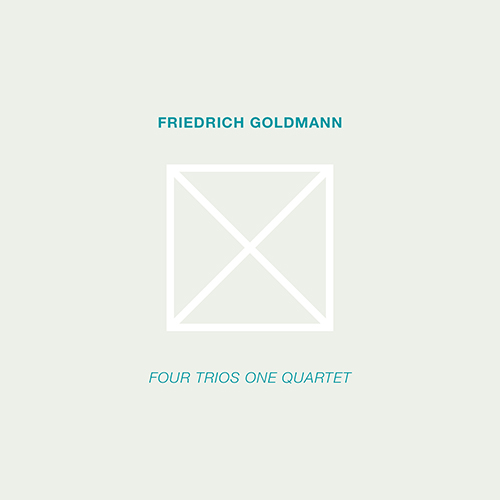
Posted: May 5th, 2016 | Author: Finn | Filed under: Macro | Tags: Friedrich Goldmann | No Comments »
Posted: May 3rd, 2016 | Author: Finn | Filed under: Interviews English | Tags: djrum, Electronic Beats, Rewind, Susumu Yokota | No Comments »

In discussion with djrum about “Grinning Cat” by Susumu Yokota (2001)
What was your first encounter with „Grinning Cat“?
I just saw the CD in a shop when it first came out. I hadn’t heard of Susumu Yokota at all, but I knew the Leaf label. I was just attracted by the exquisite cover design, and it had a sticker with some rave reviews. I took it to the counter to have a listen and was instantly captivated.
Although Susuma Yokota was a very productive artist, „Grinning Cat“ is acknowledged to be one of the best of his career. What makes it so special to you personally?
I haven’t even listened to all of Susumu Yokota’s releases. There are quite a few. To be honest I find his output to be quite hit and miss. There are a few of his albums that I only like one or two tracks from, and some that I just can’t get into at all. “Grinning Cat” is the only one that has no tracks I want to skip.
Is this best listened to as a whole, or are there highlights?
I tend to listen to it as a whole. Like I said, there’s nothing worth skipping. Everything flows really nicely from track to track. There are definitely highlights. For me one of them is the beginning of the first track so I often go to listen to that and end up listening to the whole thing.
It is interesting how many different musical directions Yokota achieves on one single album. Every single tracks seem to move in different directions as they proceed. How does he manage to make this still sound so coherent?
Yes, this is one the things I find most inspiring about this album. I think the coherence comes from the specific sound palette he works from. Most tracks centre around piano samples from French Romantic composers. Then there are a few from American Minimalist composers, and a few other sources such as jazz. But it’s a really narrow pool actually. I think this consistency allows him to structure his compositions in really exciting and surprising ways without sounding all over the place. The structures make the music very dream-like. Listening to “Fearful Dream” or “So Red” is like being led from scene to scene in a dream. There’s an over arching narrative, but it’s told through different scenes each with a distinct sound. Sometimes when you change scene in a dream it’s almost imperceivable: you can flow from one location to the next without even really noticing the change. Different locations and characters can overlap and merge. Other times the change can be quite abrupt. I’ve never heard anyone capture this as well as Yokota on “Grinning Cat”. You can hear something like it in film music sometimes, but it’s never so psychedelic. I think that the fluidity between different sections is helped by ensuring that the individual elements don’t blend too well. He separates sounds with a very unique use of stereo, and he is very loose with pulse, with different elements often going out of phase with each other. Read the rest of this entry »




Recent Comments