@ Macro Lab
Posted: August 8th, 2016 | Author: Finn | Filed under: Gigs, Macro | Tags: Berlin, Suicide Circus | No Comments »

In discussion with Anno Stamm on “Complexification” by T Power (1996)
I assume you were familiar with Drum & Bass artists before this record came out. How did you first encounter „Complexification“?
It was a vinyl that my older brother had bought. At that time I was not going to the record stores by myself, so my older brother was basically my record store. When I came home earlier from school, I would go through his record collection and then record the vinyls that I liked the most to a cassette with the Hi-Fi tower from my father. This was always very “James Bond” like, because touching my brothers vinyls and touching the Hi-Fi tower from my father were two major offenses, which would turn out really ugly if one of them would have caught me.
Why did you choose this particular track, the b-side to „Symbiosis“, and not another classic of that era, or even a different track by T Power, like his much better known „Mutant Jazz“ for example?
For me this song stands out in many ways and I think even for T Power this song is outstanding and unique. You are rather out of your mind when you produce such a song, or you are in an extremely clear state of mind. It is a song which breaks so many rules but still manages to be simply breathtakingly beautiful. That is a goal that I admire very much in making art.
Is Marc Royal aka T Power a producer you rate particularly high in Drum & Bass history?
I must admit that I reduce T Power pretty much to that one song. I like his general sense for sound and chords but I am not really an expert on his complete musical back catalogue.
„Complexification“ is not necessarily a typical Drum & Bass track. It is much slower, and it is working with Jazz leanings in the synth and bass sounds, while the beats and groove are hinting more to the sound West London’s Broken Beat scene. But does „Complexification“ transcend musical folder categorization, or does it even have to belong to a certain context?
I chose this track because for me it is a good example for “beyond genre”. This song is perfect in every way. It is idiosyncratic and lives in its own cosmos. There are no genres in that cosmos. Sometimes that is the problem with genres. You get into a routine because there are rules, schemes, patterns and templates you work in. You get lazy in terms of decision making. This song is not lazy at all. Every note is in its exact right place but it feels like it really started out with a tabula rasa thinking – everything can happen.
Do you like both, Drum & Bass and Broken Beats, and do you treat them differently, or do they come from the same origin?
In terms of “Drum & Bass” I started with the “Jungle” phase, because as you might know I am a big sucker for the drums, especially if there are played by the devil himself. That is why I really was into that fast, wild, raw and breaky material. Actually when it was called “Drum & Bass”, that whole thing was nearly over for me. Because all the wildness basically turned into one sterile
drum-loop… with saxophone samples. There was a big shift from the rhythmic energy to a generally more chilled background music approach. So, I think they may come from the same origin – but I would treat them very differently.
There are other fine examples where Jazz elements were integrated to the sound palette of Drum & Bass. Are you interested in Jazz, and how it can be worked into other music?
When there was the trend to just sample something smooth and jazzy over a fast drum loop, that was not very interesting for me. Sampling some “blue notes” doesn’t make you a “jazz cat”. For me and most of the people Jazz is about expressing yourself through playing an instrument, and also pushing the boundaries of that instrument. So, you have to have a plan if you want to achieve that purely with software. Squarepusher’s “Hard Normal Daddy” is a good example from that time, how an electronic version of Jazz may work. He brought the real instrument into the software world in a very smart and respectful way. But in terms of Jazz is about pushing boundaries of an instrument, then one must say that in that days there were a lot of other electronic composers who would
deserve it much more to be called “Jazz Cats”. Read the rest of this entry »

Junior Dan – Guided Missiles Leftist Dub
Alric Forbes – Warning Version
Horace Andy – Love Hangover
Disciples Ridim Section – Rastafari Dub
Freddie McGregor – Jah Can Count On I Version
Junior Dan – Bushmaster Workout
The Upsetters – Roots Train Number 2 Version
Sly & Robbie And The Revolutionaries – Heart Made Of Rock Dub
Augustus Pablo – King Tubby Meets The Rockers Uptown
Colourbox – Baby I Love You So
Augustus Pablo – Baby I Love You So
Mad Professor – Zion
Hugh Mundell – Going Places
Junior Dan – Midnight Ina El Salvador
Prince Jazzbo – Step Forward Youth Version
Sly & Robbie And The Revolutionaries – Escape Prisoners Dub
Cornell Campbell – Free Meal Ticket
Righteous Flame – Jah Jah Words
Mad Professor – Ankoko
Bongo Gene – Skyjack
Hugh Mundell – Red Gold & Green
The Mercenaries – Eight Against Rome Version
Rod Taylor – Badman Comes And Goes
The Hardy Boys – Chucky Dub
Junior Dan – A Dub Is Not A Dub
The Key – Over Come
Dennis Brown – Tribulation Dub
Leroy Smart – Mirror Mirror Version
Horace Andy – Musical Episode
Junior Dan – Sawpo Skank
Mad Professor – Bucket Brigade
Junior Murvin – Make It And Set It
The Wailers Band – Higher Field Marshall
Bobby Floyd – Sound Doctor
Prince Jammy – Saturn Bombardment
Junior Dan – KTW Dub
Brenda Ray – D-I-Z-Z-E-E
Linval Thompson – Lump Sum
Linval Thompson – Lump Sum Version
Annette Brissett – Jumping Up And Down
Dennis Brown – Home Sweet Home
Rupie Edwards All Stars – Bada Dub
Everton Dacres – Jah Jah Ah Come
Dr. Alimantado – By The River Of The Holy Nile The Doctor Tecnotronicifical Musical Study
Annette Brissett – Love Power
Aisha – Prophecy
Scion Sashay Success – Them Must Be Popsicle
Jah Batta – Argument
Lee Scratch Perry – Stop Stop Dub
Junior Reid – Mix Up
Fire House Crew – Version
Bullwackies All Stars – Disco Dub
Wayne Jarrett – Holy Mount Zion
Lee Scratch Perry – Undercover Dub
Annette Brissett – Forever Loving You
King Kong – I Nuh Cry When A Sound Boy Die
King Tubby & The Aggrovators – Jah Jah Jahova Version
Brenda Ray – Please Be Mine Tonight
The Observers – Natty Dread Christmas Part 2
Devon Irons – Ketch Vampire
I Roy – Set The Captives Free
Earth & Stone – Sweet Africa Version
Horace Martin – Bad Boys
Douglas Boothe – Holy Mt. Zion
Gregory Isaacs – Motherless Children Dub
Sly & Robbie & The Revolutionaries – Sensimelia Robbie Dub
Chaka Khan – I Know You, I Live You (Tony Humphries Mix)
Paul Simpson Feat. Adeva- Musical Freedom (Free At Last)
Paul Simpson Feat. Candi Staton – Music Freedom (You Got The Love Mix)
Chaka Khan – I’m Every Woman (Remix)
Turntable Orchestra – You’re Gonna Miss Me (N.Y. Pumpapella Mix)
Arnold Jarvis – Take Some Time (Club Mix)
Mr. Fingers – What About This Love (Dub Mix)
Mr. Fingers – What About This Love (Even Deeper Mix)
A Guy Called Gerald – Emotions Electric (Peel Session)
A.R. Kane – A Love From Outer Space
Dionne – Come Get My Lovin’ (Remix)
Liz Torres – Payback Is A Bitch (Club Mix)
ABC – The Real Thing (Frankie Knuckles Mix)
Paul Rutherford – Oh World (Universal Mix)
Frankie Knuckles Pres. Satoshi Tomiie – Tears (The Classic Remix Dub)
Frankie Knuckles Pres. Satoshi Tomiie – Tears (Def Remix)
Jesus Loves You – After The Love (10 Glorious Years Mix)
The Beatmasters – Make Me Feel
ABC – The Greatest Of All (May Day Mix)
Ten City – Suspicion (Extended Version)
Mark Rogers – Twilight For Some
Electribe 101 – Tell Me When The Fever Ended (Extended Vocal)
Jerry Edwards – I Am Somebody (Amaizin’ N.J. Mix)
Steve Silk Hurley Feat. Jamie Principle – Cold World
Da Posse – Searchin’ Hard
Kym Mazelle – Was That All It Was (Def Mix)
As soon as the House sound left the local underground and went to the international charts, the Major record labels began scouting its most prominent artists for remix duties. The main motivation was to lend some credibility to mainstream and commercial club music, the same as it was in the Disco era that led up to House music’s pioneering days. A lot of the prolific remixers, particularly those already active throughout the early to mid 80s, could extend their career well into the following era. But there were a lot of additions too, DJs that began in the Disco era and did not give up on dance music when the classic Disco era ended at the end of the 70s, and of course new talent that just found their into the business by supplying the platters that mattered on the floor. And as it happened with Disco, House formed the basis for reworks of Pop originals that managed to surpass the original versions, either in truthful versions that just updated the beats and grooves, or more adventurous flipside dubs that stamped the self-confidence of the studio newcomers all over their source material. Here are some outstanding examples for the interaction of overground and underground.
Jimmy Somerville – Comment Te Dire Adieu (Kevin Saunderson Remix) (London, 1989)

Kevin Saunderson was hot property after the chart success of his project Inner City, but the A&R department at London probably did not enlist him to show off his underground signature of granite beats and excavating basslines, turning Somerville’s charming rendition of the Serge Gainsbourg classic into a Detroit Techno banger of the variety of Saunderson’s aliases such as E-Dancer and Reese. It’s a stunning soundclash of both original version and remix though, and both sides remain in character, and both benefit from each other. As it should be.
De La Soul – A Roller Skating Jam Named “Saturdays” (6:00 AM Mix) (Tommy Boy, 1991)

Not long after Frankie Knuckles and David Morales formed Def Productions they became to 90s New York House what Gamble & Huff were to 70s Philadelphia Soul, and turned in remixes in a sleepless studio schedule, week in week out. What distinguished them from most of their peers was that they managed to maintain a supreme quality standard while at it, for years. Here David Morales reworks De La Soul coming back from the Daisy Age with their feelgood hit for the weekend, offering three superior deep jams that are all equally brilliant. Buy double copies and just zip on by (spinnin’ and winnin’).
The Sugarcubes – Hit (Sweet’N Low Mix) (One Little Indian, 1991)

Björk the icon of clubland was not inaugurated with „Debut“, but with the remix compilation „It’s-It“ by her former band The Sugarcubes. The remixes compiled were a diverse set from which the Tony Humphries versions of „Hit“ and „Leash Called Love“ stood out (well wait, Tommy D’s remix of „Birthday“ is mighty fine as well). The record company even called them „those absurd large Tony Humphries mixes“, and deservedly so. While „Leash Called Love“ is pumping and rolling towards David Morales territory, a spectacular anthem in its own right, „Hit“ has the more typical sound associated with the New Jersey don, with all the unashamedly artificial string pads and tinny beats he so loved to use around that time, and everything about it is completely irresistible. „This wasn’t supposed to happen“, she sang. But it was.
Debbie Gibson – One Step Ahead (Masters At Work Mix) (Atlantic, 1991)

Debbie Gibson preceded the all-american stardom of Britney Spears by a decade, but when she surfaced in the late 80s the only thing that she could stick in my mind was the rather remarkable song title „Electric Youth“. I suspect Masters At Work felt similarly, as they kept literally no elements of the original song in what became one of their most beloved remixes (although there are admittedly quite a few other contenders in their vast discography). This is one for the true school Deep House fraternity, keeping you locked with a simple but unmatched hypnotic chord, while all the other sounds and rhythms come and go, creating a perfect trip that seems to last much longer than its 5 minutes plus.
David Bowie – Real Cool World (Cool Dub Overture) (Warner Bros., 1992)

Credible dance remixes for the original Star Man are surprisingly scarce, and this is arguably the finest. Def Mix’s Satoshi Tomiie at the controls, thankfully not repeating the cardinal error of most rock stars trying to connect with nightlife: mounting generic guitars on a limp dance groundwork. Instead he opts for a rather skippy groove, but his trademark keyboards are arranged immersed enough to keep up the tension for sublime 13 minutes. And don’t you dare touch that intro!
Jamie J. Morgan – Why (Extended Club Mix) (Tabu, 1992)

The contributions of the Buffalo collective to late 80s and early 90s club culture are not to be underestimated (associate Neneh Cherry did not reinvent herself with „Buffalo Stance“ for nothing). Photographer and director Morgan was another core member, and also had a few ventures into pop music. Eric Kupper, the studio wizard responsible for countless New York club classics, turns the original into a silky floating groove, with just about the right amount of floor pressure to not disturb the beauty and sentiment. As always when Eric Kupper works with this very mood, it is untouchable. And again, don’t you dare to touch that intro.
Pet Shop Boys – Can You Forgive Her? (MK Remix) (EMI USA, 1993)

There are many great remixes of Pet Shop Boys songs, but if there is one grudge to hold against them it is that it could have been so many more. Few successful remixers employed for pop artists had a contrasting signature sound such as Detroit’s MK, who turned source material into something completely his own with perplexing regularity. And as expected he turns the boisterous original into a mean and dark swinging groover. There are a lot of speculations on how Marc Kinchen chooses the lyrical content for his trademark vocal loops, but lesser minds would probably have gone for the „she made you some kind of laughing stock, because dance to Disco and you don’t like Rock“ bit. Instead he opted to accompany the breakdown with „Pain. She demands my pain. She demands meet your pain. She demands my bicycle“. This cannot be random, this is pure genius.
Daniela Mercury – O Canto Da Cidade (Murk Boys Miami Mix) (Sony Latin, 1993)

I do not know what led the A&R department at Sony to choose the Murk Boys to remix one of the most popular songs in the oeuvre of one of Brazil’s most popular female singers, maybe somebody thought at least it has something to do with Latin music?! However intended, it was a bold move. As per usual, Miami’s finest ignore whatever anthemic qualities they could have used with the original parts they were given (apart from a puzzling vocal loop worthy of MK), and strip everything down to their tried and tested booming grooves and monolithic basslines. Compare the original to this mix to get a glimpse of how radical and nonchalant you could treat your employers and get away with it. The intro? Do not dare to touch it!
Deee-Lite – Try Me On (Plaid Remix) (Elektra, 1996)

Deee-Lite assembled a diverse array of remixers for their compilation „Sampladelic Relics & Dancefloor Oddities“, but it was Plaid’s mix that seemed to kick them off their holographic hoopty just before they actually disbanded. This is not playfully psychedelic, it is REALLY tripping. Try to imagine the three of them throwing their wonderful stage moves to this eerie low riding sub bass adventure, it is just not happening. But times had changed, and times were not day-glo anymore. But Deee-Lite went out with as much style as they entered.
Mama Cass – Make Your Own Kind Of Music (Yum Club Mix) (MCA Soundtracks, 1997)

Hot on the heels of the soundtrack to „Beautiful Thing“, which consisted almost entirely of songs sung by The Mamas & Papas’ Mama Cass, came this 12“. Louie „Balo“ Guzman was more renowned for the harder variety of the New York House sound of the 90s, but then again a lot of his own productions and remixes already displayed the healthy amount of eccentricity required for the task of transforming a 60s Pop standard into a 90s club anthem. The way he molded the song into a working club track structure is beyond virtuoso, and the added instrumentation even adds to the song’s beauty. You may think this is really tacky (and flutey), but think again. If played at the perfect moment, this record can change lives. I have seen it happen.

In discussion with Trusme on “Forevernevermore” by Moodymann (2000).
I doubt that „Forevernevermore“ was your first encounter with Moodymann. Did you eagerly await his third album, and how did it grab you?
100% I didn’t know who Kenny was till I found a copy of “Forevernevermore” in my friend’s record bag. He had left his records at my house and I was doing the usual noseying though the records when I found this CD. I was completely into Slum Village, MadLib and Jaydee collecting the samples from Jazz to Disco. When I first played this CD, everything just became clear in my mind. This is the sound I was looking for, from Hip Hop, House, Jazz, Soul and Disco all rolled into one. I became obsessed, wanting to understand the production techniques and went on to discover the whole world of Detroit right after this. Three years on, Moodymann was playing my first LP launch in a pub on Oldham street, home to where I had been buying his records for the past few years. KDJ and Theo were just No.1 at that time in Manchester and I couldn’t help but be influenced by the whole sound.
It seems that Moodymann matured up to the release „Forevernevermore“ in terms of the album format. „Silent Introduction“ felt like an anthology of 12“ material, even though it worked as an album. But with „Mahogany Brown“ he already aimed at a listening experience more true to the format. Would you say he topped this with „Forevernevermore“?
Yes, for sure. The whole LP worked as a cohesive hour of music yet there was something at every turn that was unique and compelling to me as a listener. I related to this LP in more ways than one, due to it’s almost Hip Hop nature with intros and outros connecting the tracks and glueing the whole piece together. There are so many seminal tracks on the LP that are still played out in the clubs today, yet they are tracks that remain LP cuts and for home listening only. This ideology is what I have embraced in all four LPs that I have produced over the last 8-9 years, with something for the dancefloor, something for the car and wherever else that one listens to LPs these days.
You told me that you wanted to talk about the CD version of „Forevernevermore“, which has lots of interludes and skits, and hidden tracks. Do they form an alliance with the music that almost works like a radio play? What is the special appeal of it?
When I think of an LP, I think of A Tribe Called Quest, Marvin Gaye or The Verve even. All these LPs are constructed to be a continuous piece of music, in which the listener is taken on a journey from the beginning to the end. With the CD format, there is extra playtime in which intros and outros can give a context to the background and making of the LP. On the “Forevernevermore” CD you are taken into the home of KDJ, as he sits playing with ideas on the piano with his child, to the studio discussions and even to listening to his local radio for inspiration. Hidden right at the end of the CD is a live recording of three hard-to-find cuts from the KDJ label, mixed together after 2 mins of silence. In many ways the CD provides the platform for further expression as an artist in the format of an LP.
I think the sound of „Forevernevermore“ was a step forward in terms of his distinctive sound. It was still dense and immersive, but also more refined. Do you think Moodymann’s sound evolved on „Forevernevermore“ in comparison to earlier works? And was it for the better?
This was for sure in an LP sense his best work. It is what most people say as their favourite work, when talking about Moodymann. He carved a sound out all for himself and also derived a unique long player format that until then was not seen in the dance scene. Most underground dance LPs were merely a collection of 12” tracks but this felt more like a well thought-out process, something like Daft Punk would execute. I believe Peacefrog Records also helped in this process and pushed KDJ, as they did all their artists to reach even further. In many ways, earlier LPs were a collection of his previous works but “Forevernevermore” was an LP made from beginning to end with a single LP idea and it feels very much that way.
Tracks like the Disco led „Don’t You Want My Love“ display a confidence to transcend mere club credentials for traditional songwriting, a path he followed ever since. Is there a side to Moodymann the producer you prefer to others, or is it not necessary to differentiate his persona as an artist?
The marriage between your typical MPC studio production and live instrumentation was what set out Kenny on his own. Working with local artists like the percussionist Andres, bass with Paul Randolph and keyboards by Amp Fiddler, on top of that raw production sound was just so unique. The juxtaposition of quantised groove and loose musicianship created a genre of its own and is still being replicated today. This LP was the beginning of that sound and Kenny is still using this formula very much in his productions today.
How do you rate the albums Moodymann released since „Forevernevermore“? Were they up to par with your expectations?
“Black Mahogani” is on par for me if not more refined than “Forevernevermore” but maybe it’s the rawness of the LP that better relates to me. With the following LPs I have enjoyed the productions but felt slightly less connection to the music I listen to and make today. Not that it’s not great music, but I started to feel that the tracks in the EP releases didn’t have that Peacefrog touch of which I’m such an admirer. The LP process began to evolve towards the creation of a new sound where he begins to sing and perform more as an artist and less in the background as a producer. Read the rest of this entry »

Ok, the ancient mixer Pearson Sound bought for his night was a bitch to handle, but I must admit it sounded fantastic. Ben UFO struggled less than me, but I told myself he just had more practice with it.
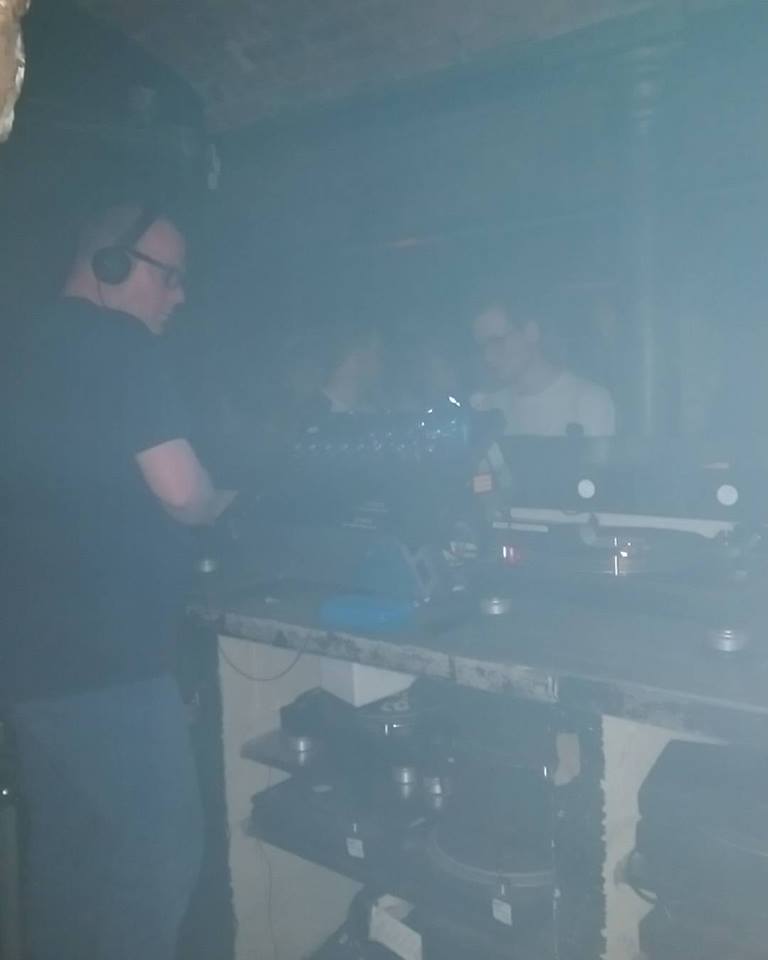
Photo by Tom Lawton.
The now defunct UK magazine The Face used to end each issue with a one-liner, but when I read the words “Vocals Matter” there sometime in the mid 90s, it deeply afflicted me. Was there really a need to point this out? In fact there was. A vocalist and a song were basic elements of House Music since its early days in the Mid 80s. Which was not really surprising, after all House was a direct continuation of what started in the mid 70s with Soul and then Disco, and instrumentals where the exception, and not the rule. Then Garage House already displayed its origins in its name, the combination of the music played in both New York’s Paradise Garage and Chicago’s Warehouse. But after its heyday in the first half of the 90s, Garage House’s popularity was gradually declining. The clubs got bigger, and the sounds followed suit. The songs, however, seemed to get weaker in the process, and eventually a good tune became the exception. It might be a bit simplistic to argue that it is much easier to produce a good track than a good song, but comparatively there are not many artists left even trying. I am publishing an ongoing chronological series of mixes consisting of personal Vocal House favourites from the past until the present, and I picked a few overlooked gems for this guide.
Dance Advisory Commission – Free Your Mind (Yesterday’s Mix) (12th Avenue Records 1991)

The sole release on this imprint operated by Ben “Cozmo D” Cenac. Produced by David Anthony, who revived this track for a release on Emotive the following year. But the original record has the better versions. Eternal self-liberation on the floor imperatives, carried by a subtle Hip House aftermath breakbeat, which is just effortlessly swinging.
Swing Out Sister – Notgonnachange (Mix Of Drama) (Fontana 1992)

The Def Mix productions cannot be overestimated in Garage House history. 1992 was probably the year that saw more Vocal led House releases than any other year, as the Majors employed an increasing number of club DJs and producers to sprinkle some nocturnal stardust and dancefloor credentials on their chart bound artists. And so you have the most consistent remixer of the genre, Frankie Knuckles, turning UK Blue-Eyed Soulsters into a showstopping symphony of baroque proportions. His way of arranging pianos and strings into lush elegance is really distinct. It is also totally timeless.
Darryl D’Bonneau – Say You’re Gonna Stay (New Generation 1992)

The original masterpiece, hidden on a mini-compilation by a label supposedly affiliated with New Generation, the home of most of the weird and wonderful Larry P. Rauson productions. The track had a second life on Jellybean in 1995, albeit in way less intense versions. The interaction of main and background vocals here is pure perfection, the vocal performance is anyway. The song is an eight minute plea for forgiveness that is beyond par. I would not believe anybody telling me that she actually did not forgive him after hearing this.
K. London Posse Featuring Dawn Tallman – Caught In Luv (Rhythm Mix Vocal) (K4B Records 1994)

From 1993 on Garage House was played to increasingly bigger crowds, and the sweet melodies of former years were now often replaced by a Gospel led urgency, and heavier sounds. Producers like Masters At Work, Mood II Swing or Louie “Balo” Guzman showed the way, and many producers followed. Including Kingsley O., who released a string of high quality records on his K4B label that paired Diva plus team delivery with considerably twisted dubs. Buying double copies to combine both to best effect became mandatory.
Loveland – Hope (Never Give Up) (Junior’s Factory Vocal) (Eastern Bloc Records 1994)

NYC’s Sound Factory was the temple of the new booming Garage House sound, and Junior Vasquez was its adamant high priest. His rules and requirements for his floor are exemplified by this remix, one of many he did in those years. On this occasion riding on the ever reliable Robin S template developed by Sweden’s Finest remix team Swemix/Stonebridge, but adding those tribal rhythms, those rave stabbing chords and particularly introducing that rollercoaster structure that was diminished to one or two drops in recent years. The vocals do not serve not much more purpose than barely holding it all together, but they are still needed.
Brothers’ Vibe Featuring Teddy McClennan – Can U Feel It (Vocal) (Jersey Underground 1996)

The Rodriguez brothers paying their dues to Larry Heard’s eternal classic of a very similar name. It may lack its puzzling blissful emotionality, but it manages to catch up as deep, dark and dubbed out companion and it kicks you mesmerizingly, with your eyes closed, into realms you were probably not yet ready to enter. And you do not even care if you ever get out again.
Urban Soul – What Do I Gotta Do (Eric Kupper Club Mix) (King Street Sounds 1997)

Roland Clark was an early voice of the New Jersey sound back to the very early 90s, his shattered falsetto perfectly accompanied by the dramatic melancholia of his productions. Eric Kupper, man of many a thousand beautiful moments in House Music history, expectedly manages to add further bittersweet intensity to the equation, and a direct route to wailing with the best of them. If you think that House most songs are superficial and one-dimensional, you might just listen to the wrong ones.
The Klub Family – When I Fall In Love (Main Vocal Mix) (Funky People 1998)

There cannot be enough praise for the contributions of Blaze to the canon of songs in House music. Few were as committed to the tradition of Soul within the genre, and few could update said tradition with a sound so distinctively their own. Thus they were an exception when House came into being and they remained an exception for the years to come. Sometime inbetween, they helped to pave the way to the more spiritual and conscious sound celebrated at NYC clubs such as The Shelter and Body & Soul, and then they ruled it. Never ever write them off.
Loftis #V Featuring Lafe – Dreamin’ (Joe Smooth Vocal Mix) (Loft Records 2002)

After a productive but rather short period on DJ International in the early 90s, Craig S. Loftis reappeared with this stunning record (the Blaze inspired “You Are All I Need” from one year later is also well worth tracking down). At that time Joe Smooth had vanished from my radar as well, but even if they had only done this one tune, I would be forever grateful. The way this track maintains a floating excellence over such a monolithic funked up groove is just incredible. And then comes the dub version, and you better watch out.
Big Moses – Deep Inside (Vocal) (Big Moe Records 2004)

Moise Laporte is best known for his sublime “Brighter Days” from 1996, but I cannot recommend this record enough either. I really despise a lot of “Soulful Garage” for its bland Pseudo-Jazz drenched noodlings but here all wrong musicianship temptations are kept in check for a well-balanced sophisticated groover straight for the Modern Soul floor. May the girls and boys keep on swinging, and may the faith be kept.

Recent Comments