Finn Johannsen – Hot Wax 031
Posted: August 3rd, 2015 | Author: Finn | Filed under: Macro | Tags: Berlin, Berlin Community Radio, Hot Wax, Stattbad | No Comments »Recorded live at Macro night, Stattbad, Berlin, April 24, 2015.

Recorded live at Macro night, Stattbad, Berlin, April 24, 2015.

Moral – Trees In November
Ajukaja & Andrevski – Mesilind
Walt J – Horns Of Plenty
KB Project – Feel It
Universo – Yebo
Lowtec – Man On Wire (Reconstruction)
K.A. Posse – Shake (Joe Smooth Mix)
Geena – Tone Loc
Mosey – Live A Little
Luca Lozano – DJ Fett Burger – Telegronn
PLO Man – Type Damascus
Shanti Celeste – Moods
Chaperone – All Your Emergencies
Boo Williams – Freaky
Donnie Tempo – Tazmanian Virus (Sims JFF Edit)
Harmonious Thelonious – Industrielle Muziek
Minor Science – Closing Acts
DJ Stingray 313 – Acetylcholine
KiNK – Vodolaz (Elektro Guzzi Version)
MD Jr. – Survival Of The Richest
Unspecified Enemies – Ms. 45
Merle – Mimi Likes 2 Dance
House Of Doors – Starcave
Superpanzer – Die Tollen, die nicht so Tollen, und die Häßlichen
Finn, what memories do you have of your first DJ set?
It was mostly playing records at school and private parties from the mid 80s on, playing a variety of Disco, Soul, Synthpop and Post Punk. I’d like to remember that as eclectic, but probably chaotic would be the more apt description. Actually my memories of my first forays into playing out in public are bit hazy by now. After all, that was nearly 30 years ago. What I vividly remember was a Soul allnighter in a basement club of my hometown of Kiel, in ’86 or ’87. Actually it was a whole Mod Weekender, with several events all across town. My friend Ralf Mehnert, who became a well respected Rare Soul collector and DJ, and me took over the Soul part of the proceedings, playing records for a crowd that consisted of mods and other hip folks, but predominatly drunk scooter boys. Somebody saw them standing outside, mistook them for skinheads, and alerted the most notorious local Turkish street gang. They arrived not much later, crashing the door and storming down the stairs, only to face quite a crowd of completely unimpressed heavy parka-clad folks. Ralf and me ducked away in the DJ booth and things got really messy. About 30 minutes later there was no intruder left and the party continued as if absolutely nothing had happened. There were numerous other similar experiences. Kiel was quite a tough city, probably still is.
Can you re-engineer what influence being a small town boy – born and raised in Kiel, in Northern Germany – had on your musical education?
I did not really feel limitations. There were record stores as Tutti Frutti or Blitz which were very well selected with electronic music of the 80s, Punk, and experimental stuff. And quite a number of second hand stores to choose from, where I mostly bought Soul, Disco and obscure 60s and 70s records. Some of those acquired bigger record collections from Danish libraries and sold each record for 2 Deutschmarks, regardless of format. I purchased the bulk of my Disco collection in those years, for example. You did not have to spend much, so you would explore what you would have otherwise not listened to. I had a lot of friends who were very interested in music, and there was a constant exchange of knowledge, good and bad finds. It was all very social. I made regular record shopping trips to Hamburg, too. There were plenty of excellent record shops there, for everything of interest to me. I always looked for dance music of any kind, and Hamburg had stores that were importing records since the Disco era. They had the contacts and the knowledge.
And as for the clubs?
I did not mind being in a smaller town either. There were quite a few. The DJs mostly did not mix much and played all over the board stylistically. There was a tendency to play music in topical blocks. A 30-minutes block of Disco, followed by a 30-minutes block of New Wave, then Hip Hop, then some Rock, then Soul, then slow songs, then everything all over again. Once a few tunes worked together and on the floor, the DJs tended to rely on the according selection and did not change it for what seemed to be years. That drove me mad, but in retrospect I could hear lots of different music in one single night, and that left a mark on me. You learn about the contexts of what you hear, and how they relate to each other. I still make use of that. I travelled a lot, and I have been to a great number of clubs in my life, but when I moved to Berlin I was already in my early 30s. I spent my formative years up North. I did not move because I had to get out either, I left because the job situation was difficult for me. If I would had found an interesting job at that time, I probably would have stayed. I still go back regularly, I have family and friends there, and I still miss the sea.
You were born into club life by the sets of Klaus Stockhausen at Front Club in Hamburg, when you were dancing the nights away at the age of 18. What made this experience so fundamentally alluring to you?
I started going to clubs in Kiel in the early 80s, 12 or 13 years old, then to Hamburg clubs only a few years later. Most clubs in Hamburg were not as different to Kiel as they maintained to be, but the people had arguably more style and the music was more specialized. You went to certain clubs for a certain kind of music. I had been to some gay clubs in Kiel before, but they seemed to be stuck with a soundtrack that had been tried and tested for years, classic Disco anthems and the occasional Schlager drama excursion, and the scene was not that open. You often felt like the stranger entering the saloon, and the crowd often was more made up by people with a common taste in music and fashion that just happened to be gay. A lot of 80s fops and some sugar daddies. It could be fun, but more often it was not. These people had to live with other prejudices and repressions than just getting beaten up for the style of the subculture you had chosen for yourself, like I did, and you did not belong.
And Front Club was different?
Absolutely. When a friend took me to the Front Club in early 1987 that was dramatically different. The crowd was predominantly gay, but if you were not, like me, nobody seemed to care. I was aware of the major role gay subculture played in the evolution of dance music, mostly by reading features about legendary Disco clubs in magazines, but they were about Bianca on that horse for instance, and not about what was booming from the speakers as she rode in, which was exactly what interested me most. Front was the first club where I could actually experience it, and even be a part of it. And Klaus Stockhausen was the first DJ I ever heard who did not only play records, he mixed them. Like no other I heard ever since. It was not that I did not know any of the music before, but he was transforming the records into something else. And the club itself was incredibly intense, I have never witnessed something like that again either. A dark, gritty basement filled to the brim with extravagant people who completely lost their minds on the floor. And my first visits were coincidentally a good timing, because it was the transitional period between the music played there from 83 on, and House. House was introduced there much earlier, but it still was not ruling the playlist. It was brilliant to hear Stockhausen play favourites I loved from the years before, and more often records I never heard, and then the added early Chicago House sounds that seemed to have swallowed decades of dance music history only to spit them out as this raw, primitive version of it. It fit the club perfectly, and soon I was heading over to Hamburg on weekends as much as I could, because I simply could not get enough of the experience. That lasted until around 1995, and then I took up a residency in Kiel for almost ten years, and it kept me well occupied. But just think of all the incredible music released between 1987 and 1995. It really were the blink and miss years of what we still hear today, and I could be witnessing all crucial developments right on the floor, played by the best DJs, and dancing to it in the best club with the best crowd. Good times.
When did you start collecting records? During those blink and miss years?
No, much earlier. The little money I had I spent on records since I was about 6 years old. My parents gave me a record player, and the Forever Elvis compilation, plus radio and cassette recorder and they were my favourite toys by then. Especially the radio was very important. I spent endless hours recording music from the radio, cursing presenters for talking too much over songs I liked. And the hit music played on the radio in the mid 70s was just great. Chic and Roxy Music were probably my favourite bands. And all those weird and wonderful Glam Rock acts. But luckily enough I had also a chance to catch the music from early on that was not deemed fit for airplay. I had an uncle who had the idea to buy record collections at judicial sales, and he often gave me the records he did not like. Thus I could become the proud owner of Can’s Monster Movie or the first Suicide album and several obscure Soul albums when most of my classmates were still just listening to the charts. I know this sounds terribly made up, but it is the truth. And at a very young age you tend to play your favourite records over and over and over, your relationship to music is very intimate and deep. Soon I felt quite confident in my taste, and I was spending more and more time and money on music. But I actually had not the faintest idea how much great music there really was out there to discover, and I had yet to meet the right people to share my passion for it. That changed as soon as I could sneak my way into clubs. Read the rest of this entry »
I played a set at this open air party on the hottest summer day in Berlin that year, in a wooden shack without ventilation. It was hardcore. But for the circumstances, quite a good set!
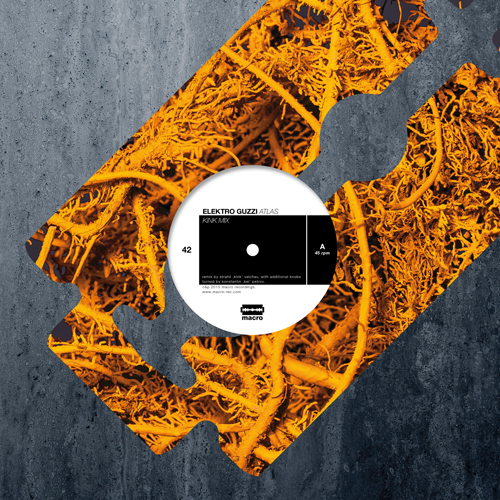
Macro M42 – KiNK vs. Elektro Guzzi – Atlas / Vodolaz Versions
In discussion with Flemming Dalum on “Mr. Game” by Klapto (1983).
Of all the options in that field, why did you choose „Mr. Game“ for this interview? Was it the record that had the most impact on you? And is it maybe genre-defining as well?
It was very hard for me to choose one single record for this interview. I have approximately 100 personal Italo top favourites which all did it for me back then, and now over 30 years later they still mean so much to me. I guess I chose „Mr. Game“ because it‘s really so Italo all the way. To me it contains all the classic Italo elements and I really thinks it captures the essence and pure vibe of Italo. At the same time I also think this record defines the genre very well. Personally I love the early sound of Italo the most, particularly the sound around 1983. Another record could have been Koto’s „Chinese Revenge“, which also blew me away back then. Pure synths all the way.
Did your instant love for Italo Disco connect with a taste in music you had before, like electronic Post Punk, Disco and later Synthpop?
Yes. I actually discovered synth music from UK around 1980. Artists like Depeche Mode, Yazoo, Human League, Soft Cell etc. I was simply very fascinated by the new sound universe of synths becoming a bigger part of dance music. I even bought some synths and played in a band for some years. Digging deeper into this synth music led me to discovering Italo, which had an even bolder and more spacey attitude. I was instantly totally blown away. It seems to me that they somehow tweaked the synths a bit more, maybe due to shorter production time and maybe less producer experience, I don’t know. But I think they came up with a very unique result. A sound and style never heard before, or even since. Later the Italo became more well produced, MIDI controlled and so on. Italo actually ended up too well produced and became more commercial. By then the magic was gone for me, around 1986.
There were Disco productions in Italy from the late 70’s on, but usually Italo Disco is associated with a sound that surfaced in the early 80’s. Why do you think it could be so unique and popular at the same time? Was it a novelty effect, or just good Pop merits?
I think the Italians where outstanding in capturing the vibe of the music trends in electronic dance music in the early 80s. They where clearly inspired by the UK scene and of course other musical subcultures around. But they added that charming unique Italian twist to it, which made it so very special. Actually I can hear if a track is Italian or not in a split second. Over 30 years of listening experience has had a huge impact on me. I’m sure other lifelong Italo freaks are also able to instantly tell if a track is from Italy or not.
In my youth in Northern Germany, Italo Disco was mostly cherished by people who would else rather listen to Hard Rock and charts music. The clubs it was being played at usually had a program that tried to cater to low and common denominators. It was certainly not hip. Was it the same in Denmark at that time?
Only few Italo records were played in the Danish clubs in the early 80s. US and UK music was clearly dominating, no doubt. But some clubs played the most commercial and popular Italo records like Gazebo’s „I Like Chopin“, Ryan Paris’ „Dolce Vita“, Fun Fun’s „Happy Station“, and Raff’s „Self Control“.
Instead of browsing local record shops for Italo Disco, you went straight to the source on trips to Italy, visiting distributors and labels. Which is quite similar to the efforts European Rare Soul collectors in the 70s made on US soil. Did you purchase the core of your collection that way, at that time?
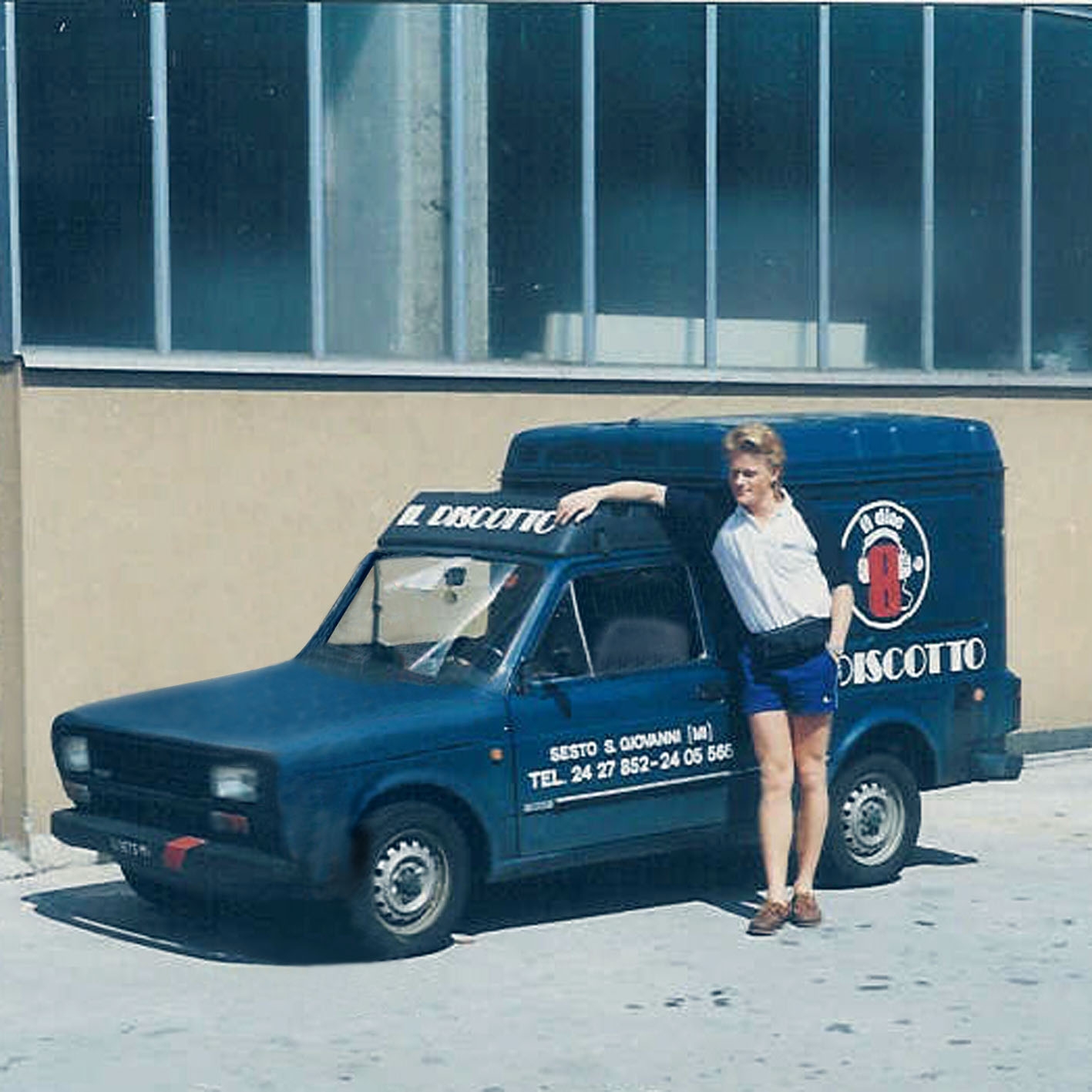
Yes, it was impossible to get all the Italo records here in Denmark with no internet back then, so I had to get them by travelling all the way to Italy. So mainly I got them from the famous distributors and labels like Il Discotto, Disco Magic, Non-Stop, and famous shops like Merak and Disco Service. I took eleven trips in the years from 1983 and 1986, and inbetween the trips I was in close contact with Il Discotto and Disco Magic and also a great record shop in Firenze, called Disco Mastelloni. Basically I managed to find all the records I wanted and got a 100 % complete collection back then. Read the rest of this entry »

It has been four years since the legendary German electronic music pioneer Conrad Schnitzler has passed away, and I am very sure that at this very moment a person, or more likely, several persons are wondering just where to start with the gargantuan archives he left behind. From the late 60s until his demise he pressed record more than others, and his vast officially released output is surpassed considerably by what has not been released as of yet.
Every music consumer nowadays can only struggle with the amount of music that is returning to attention, and then on top there are all the releases that never were before. Legions of thorough and not so thorough specialized labels handle this output, but they mostly deal with a manageable back catalogue. And then there is Conrad Schnitzler. In retrospect you can take a whole lot of what we are familiar today in terms of electronic music, trace it straight back to what he was doing decades ago, and inevitably put a proto tag on it. And he was doing LOTS of it in his studio, heaping up well deserved credentials in the process, from the very beginning until the very end, day in day out. So how do you approach such a legacy? You need time, for sure. You need dedication, definitely. You need expertise, of course. But you also need an idea how to comprehensibly legitimate all the effort. Probably only Schnitzler himself will remain the only person to ever have heard anything there is, but thankfully he was also helpful to others aiming to reach as far as they could. When m=minimal label head Jens Strüver was granted access to Schnitzler’s audio library in the early 00s he suggested the Con-Struct series, in which Schnitzler’s archive would be constructed into new compositions by other musicians, and Schnitzler agreed to it. The first installment was handled by Strüver and Christian Borngräber, followed by Kreidler’s Andreas Reihse after Schnitzler’s death.
It is important to note that the series is not meant to be a tribute to finished recordings by means of remixing. The history of electronic music is littered with unnecessary remix compilations. Don’t get me started. But of course there are rules to the exception, where the remix is as advanced as the landmark music it is remixing. On the top of my head I would like to mention LFO’s version of Yellow Magic Orchestra’s „La Femme Chinoise“. And the main reason I am thinking of this particular remix is that for me it is a fine example for the ideal combination of source material and the remixer’s own artistic signature. Both YMO and LFO have their merits, and with this pairing, they multiply (pun alert). More often than not reworks are disrespectful to the original, because they are too respectful, thus watering down the originality of what they are reworking, resulting in a mere convenience product. But as mentioned, free interpretations are not the main idea behind the Con-Struct series, let alone remixes, but Schnitzler sure would not have been content with just being flattered by other artists, however weighty his artistic persona.
Which directly leads me to the third Con-Struct album, curated and rearranged by none other than Kurt Dahlke, better known as Pyrolator and member of German electronic Post Punk miracle Der Plan. Though of a later generation than Schnitzler, for me Dahlke is another seminal pioneer of electronic music. He knew his Buchla and his numerous other synths and devices and what to do with it, and I am totally convinced that his impact should never be underestimated, and may later be con-structed itself. An inspired choice. In his own words, Dahlke wanted to „present a side of Conrad which I had always heard in his music but one which often goes unnoticed: a darker, technoid side. In my opinion, Conrad has always been one of the great pioneers of classic Berlin techno music.“ Well, upon hearing the album the proto can again be tagged, to techno this time. This may not be drone plus kick thunder usually associated with the city’s current according club soundtrack, it is more of the 90s kind, when a plethora of sounds permeated the scene, imported or locally grown, and folders were still closed. As that is what makes pioneering days so exciting, and so easy. Nothing is settled. It will be eventually, but not right now. Let’s explore every idea we have. Which makes this album so enthralling, as both Schnitzler and Dahlke supposedly went through such a phase several times throughout their career. So on the one hand you have Schnitzler’s lifelong love of musical adventure and his ability to anticipate represented with Dahlke’s selection, on the other hand you hear Dahlke’s musical preferences and signatures reflected. „I must admit, I could not resist the temptation to add one or two of my own ideas. The original tracks were so inspiring, I just had to.“, Dahlke measures his input. Frankly, I am more of a Dahlke than a Schnitzler scholar, but I sense understatement.
Electronic Beats Magazine Summer 2015

Second part of the remix service special.

Skatt – Walk The Night (Disconet)
September – The Lover In Me (Razormaid)
Sharon Brown – I Specialize In Love (Disconet)
Nathalie – My Love Won’t Let You Down (Razormaid)
Hazell Dean – They Say It’s Gonna Rain (Razormaid)
Brenda Taylor – My Heart’s Not In It (Disconet)
Janet Jackson – When I Think Of You (Disconet)
Stephanie Mills – Pilot Error (Hot Tracks)
Donna Garraffi – I’ve Got You Covered (Disconet)
Regina – Baby Love (Disconet)
Skyy – Show Me The Way (Disconet)
B. B. Band – All Night Long (Disconet)
Chas Jankel – Glad To Know You (Disconet)
The Human League – Fascination (Hot Tracks)
The B-52’s – Girl From Ipanema Goes To Greenland (Hot Tracks)
Tanz Waffen – Subversion (Razormaid)
David Bowie – Let’s Dance (Disconet)
Kid Creole – Caroline Was A Drop-Out (Razormaid)
Telex – Raised By Snakes (Razormaid)
New Order – Bizarre Love Triangle (Hot Tracks)
Depeche Mode – Strangelove (Razormaid)
Vivien Vee – Blue Disease (Razormaid)
Section 25 – Looking From A Hilltop (Razormaid)
Tantra – A Place Called Tarot (Disconet)
The Love Unlimited Orchestra – Welcome Aboard (Hot Tracks)

Recent Comments