Als Dein erstes Buch Loves Saves The Day erschien, gab es schon mehrere Bücher über die klassische Ära Disco-Musik der 70er in New York, aber es stach hervor. Was bewog Dich, es zu schreiben?
Disco von Albert Goldman erschien 1979, aber es handelte vornehmlich vom Club Studio 54. Es gab darin eine ziemlich rassistische Referenz über David Mancusos Club The Loft und flüchtige Erwähnungen eines weiteren DJ-Pioniers, Francis Grasso. Zudem schrieb Anthony Haden-Guest The Last Party, aber darin ging es auch hauptsächlich um das Studio 54 und deren Celebrity-Kultur. Beide hatten ein anderes Interesse an Nightlife-Kultur, und das hatte nichts mit DJs zu tun, und ich dachte, dass sie an der eigentlichen Dynamik vorbeigingen, die Partys so interessant macht.
Stimmt es, dass Loves Saves The Day ursprünglich als Einleitungskapitel eines Buches über House-Musik gedacht war?
Ja, das stimmt. Das Buch über House sollte in Chicago Mitte der 80er einsetzen und dann zum New York der späten 80er übergehen, und von dort zu den Anfängen der englischen Rave-Kultur. Ich bin 1967 geboren, für mich war Disco also Musik, die ich zu ihrem Gipfel 1977/78 als Kind gemocht hatte. Als ich wirklich anfing, mich für Musik zu interessieren ging ich aus und interessierte mich für House. Aber ich interviewte für das Projekt DJs wie Tony Humphries, Frankie Knuckles, oder David Morales, und sie alle erwähnten einen anderen DJ als großen Einfluss, und das war David Mancuso. Also traf ich mich mit ihm und er riet mir, nicht nur mit Disco anzufangen, sondern mit der Zeit davor, den frühen 70ern. Zuerst behagte mir die Idee nicht, aber als Journalist erkannte ich, dass da eine Story war. Und es ist auch wichtiger Teil von Nachforschungen, den Ursprüngen nachzuspüren, und ich sah mich immer zwischen dem Journalismus und dem akademischen Betrieb. Also vergrub ich mich in das Thema für die Einleitung, und 500 Seiten später war ich im Jahr 1979 angelangt, und beendete ein völlig anderes Buch. Ich erkannte sehr früh, dass die wichtigste Entwicklung in dieser Kultur stattfand, als die Kommunikation zwischen DJ und tanzendem Publikum einen völlig neuen Umgang mit der Musik einführte. Und es war auch Teil der Gegenkultur, eng mit den sozialen Kräften verbunden, die in den USA dieser Ära am Werk waren: die Schwulenbewegung, Bürger- und Frauenrechte, LSD-Experimente, und die Anti-Kriegsbewegung.
Hatten die Interviewten des Buches schon darauf gewartet, ihre Geschichte erzählen zu können?
Ja, denn bis dahin wurde ihre Geschichte nicht wirklich erzählt, auch wenn ihr kultureller Einfluss in den 70ern enorm war. Als ich nach dem ersten Interview mit David Mancuso nach Hause kam, hatte sich schnell herumgesprochen, dass man mir trauen konnte, und ich hatte einige Nachrichten von seinen Freunden auf dem Band, unter anderem vom DJ Steve D’Acquisto, der mich wiederum Francis Grasso vorstellte, und dann ging es von dort weiter. Das alles geschah ab 1997, bevor einige von ihnen mit Bill Brewster und Frank Broughton für ihr Buch Last Night A DJ Saved My Life sprachen. Als Mancuso und Grasso Anfang der 70er anfingen aufzulegen, gab es einen demografischen Wandel auf den Tanzflächen, und beide legten den Grundstein für das, was wir heute unter DJ-Kultur verstehen. Grasso war z. B. der Stamm-DJ des Sanctuary, das bis Ende der 60er eine heterosexuelle Diskothek war, und dann die erste, die Schwule einließ. In den 60ern musste der DJ ab und zu die Tanzfläche abwürgen, damit die Bar ihren Umsatz machen konnte. Aber dann wurde irgendwann so frenetisch getanzt, dass Grasso diese Intensität hochhalten wollte, und dafür erfand er die Technik des Mixens von zwei Platten. Die Herangehensweise von Mancuso war hingegen, als musikalischer Gastgeber einer Privatveranstaltung zu fungieren, in seinem eigenen Loft, ausgestattet mit einer hochwertigen Hifi-Anlage, und seine Gäste auf eine musikalische Reise zu schicken. Und seine erste Party fand am Valentinstag 1970 statt, unter dem Motto „Love Saves The Day“. Es führt eine direkte Linie vom frühen Loft zu anderen New Yorker Clubs wie der Paradise Garage, deren Besitzer Michael Brody und Stamm-DJ Larry Levan regelmäßige Gäste waren. Auch Robert Williams ging dorthin, was ihn dazu bewog, das Warehouse in Chicago zu eröffnen, in dem Frankie Knuckles als DJ die Grundfesten von House errichtete. Alle Wege führten zurück zum Loft, es war alles verbunden.
War es Dir ein Anliegen, die politischen Aspekte von Disco hervorzuheben?
Absolut. Die Reaktion gegen Disco fand ihren Höhepunkt in der Disco Demolition Night bei einem Baseball-Match im Comiskey Park-Stadion in Chicago am 12. Juli 1979. Ein lokaler Radio-DJ hatte dazu aufgefordert, Disco-Platten mitzubringen und jagte sie dann zwischen zwei Spielen in die Luft. Es war eine Gegenreaktion im Mittleren Westen. Ich würde argumentieren, dass die Wahl Donald Trumps zum US-Präsidenten dort begann. Es ist die gleiche Zusammensetzung und Grundstimmung einer Bevölkerungsgruppe, die sich sich ökonomisch abgehängt fühlte, und Disco-Kultur wurde zum Sündenbock für den Verfall der Industrie. Ich interessiere mich immer für die Korrelation zwischen einer Mikrokultur und der Makrokultur, in der sie erfahren wird. In diesem Buch ging es um mehr als nur Disco. Disco-Musik definiert als solche gab es erst ab 1974, es gab also schon vier Jahre davor, in denen all diese Entwicklungen stattfanden.
Hattest Du während des Schreibens den Musiker Arthur Russell schon als Schlüsselfigur ausgemacht, an dem sich die Verbindungen dieser Entwicklungen aufzeigen ließen? Er wurde dann ja der Mittelpunkt Deines nächsten Buches Hold On To Your Dreams.
Definitiv. Während der Gegenreaktion wurde es offensichtlich, dass sich die Disco-Szene, wie sie im Film Saturday Night Fever dargestellt wurde, weit von ihren Ursprüngen entfernt hatte. Sie explodierte zu einem Lebensstil, und selbst Disco DJs hatten es satt. Die Qualität der Musik hatte stark abgenommen und es war an der Zeit für etwas Neues. Steve D’Acquisto stand Arthur Russell sehr nahe und schlug mir vor, ein Buch über ihn zu schreiben. Mir wurde klar, dass ich nicht wie automatisiert Chronologie und Themen abarbeiten wollte. Mein Lektor war zuerst besorgt, dass sich nicht genug Leute für Russell interessieren würden, denn seine Musik wurde zwar noch gespielt und gehört, aber nach seinem Tod 1992 verschwand er als Person aus der öffentlichen Wahrnehmung. Aber 2003 schrieb David Toop einen langen Text über ihn in der Zeitschrift Wire, da zwei posthume Veröffentlichungen bevorstanden, und das Interesse lebte wieder auf und machte das Buch möglich. Natürlich war er ein interessante Person, aber ich hatte mich nie wirklich für die Gattung der Biografie interessiert. Ich interessiere mich für Szenen, die nach dem Mitwirkungsprinzip funktionieren. Arthur Russell hatte sich aber immer für Kollaborationen begeistern können, und die sozialen Erfahrungen, die durch Musik ermöglicht werden, und er war von sich aus offen für verschiedene Arten von Musik. Daher wurde er zu dieser Schlüsselfigur, die sich durch verschiedene Szenen von Downtown New York bewegte, wie etwa Orchestrale Musik, Punk, dann Disco und Hip Hop sowie Folk und Dub. Und er bewegte sich nicht der Reihe nach, und wechselte eine Szene durch eine andere aus, er machte es ohne Priorisierung und ohne hierarchisches Denken. Er wollte, dass die Szenen eine simultane Konversation haben, und er war sehr mobil. Read the rest of this entry »
We should probably start at the very beginning. What were your baby steps as a DJ, what led you to being a DJ in the first place?
I think in the first place was the love for music. And I can remember when I was really, really young, with a babysitter, and we’re talking about the days of 45s. The first record that I actually remember and I was spinning was „Spinning Wheel“ by Blood, Sweat & Tears.
Good choice.
You know my family was from Puerto Rico and there was no American music in my house.
It was mostly Latin music?
Only Latin music. And we’re talking about Merengue, Salsa. Folk music from Puerto Rico. And I didn’t like it. And it’s funny because today I appreciate Latin music. Since I became a producer, now I appreciate Latin music for the production, the instrumentation, the musicians, because Latin music is not machine-made, not at all. So the first 45 that was in my house was “Jungle Fever” by Chakachas. My parents had this fucking 45 that was this erotic fucking record. And we’re talking about these stereos that were like these big fucking wooden consoles with the big tuner for the radio and the thing with the record where you put some records in the thing and it dropped one at a time and when it ended the thing drops. It must’ve been when I was about six or seven there was an illegal social club. You know I was living in the ghetto. So there were illegal social clubs that were like a black room, with day-glo spray paint, fluorescent lights to make the paint glow and they had a jukebox. And they’d play the music back then. „Mr. Big Stuff, who do you think you are“. It was all about the O’Jays and that kind of music. And I liked that. I used to sneak downstairs and such.
So when was that?
It was like the late sixties. Because I was born in ’62 so by ’70 that makes I was 8 years old. So it was before that because then I moved. Anyway, so fast forward the first 45 that I liked was the O’Jays. The first 45 I actually bought. And I remember playing that record I a hundred times a day. Putting the bullshit speaker we had in the house outside the window, we lived on the first floor. I played the record to death.
So you played it to the whole neighborhood?
The whole neighborhood. The only record I had really. So then when I graduated elementary school, I used to be into dancing, like the Jackson 5 they had “Dancing Machine”, there were The Temptations and Gladys Knight & The Pips and I liked that music. So then when we got into Junior High School – when I was like 13 years old, I had a girlfriend and we went out when the first DJs came on in the neighborhood, which was like the black DJs. I saw the first two Technics set up and a mixer in someone’s house. I was like “Wow! That’s interesting.” I saw somebody doing this non-stop disco mix and I never knew what that was all about. So, I used to hang out with all my friends. I was a dancer, we used to do all this what we now call breakdancing. We would do battles. So, I had one turntable and my friend would say “David, we hangin’ at my place” and I would play some music for us. So I just was a kid that sat by the stereo with the records and put on the tunes, one at a time. Because back then that’s what it was, you’d play one tune at a time. If it ended, the people clapped and you’d play the next tune. And it was all songs.
How did you proceed from there?
I was one of those kids that used to go to the record store even though I had no money. Just to look at the records. To walk by a store that sold turntables and a mixer and be like “one day, one day…” And I’m not working so I can’t afford to buy anything. My first mixer was a Mic mixer. 1977 there was a blackout in New York and there was a lot of stealing so I came across a radio shack little Mic mixer that I set up to make it work with two turntables. You had to turn two knobs at the same time and it was like mixing braille because there was no cueing. My one turntable had pitch control, the other one had none. I was too young to go to clubs, so I never saw a proper DJ mixing. I only saw people outside, we would have block parties and people would be mixing. And I was one of those kids that was just standing there, watching. The first time I went to a club I was 15 years old, it was Starship Discovery One. It was on 42nd street in Times Square, and we got in. We shouldn’t have got in, but you know it was the end of the club, I was 15 and I got in. The DJ had three Technics, the original 1200s, and a Bozak mixer. The booth was a bubble, and I had my nose at the fucking bubble and I was just mesmerized. The first time I actually played on a real mixer I went to a house party at my friend’s brothers apartment. And in those days, most of the DJs who were really playing were gay DJs. “San Francisco” by the Village People was the big record. But I was into The Trammps, I was into James Brown, I was into Eddie Kendricks, Jimmy Castor Bunch, “The Mexican”, Sam Records and of course Donna Summer and all this kind of stuff. So I went to this house party and he was the DJ, the first proper mixer I saw – this was before I went to that club. And it was a black mixer, it had two faders and it had cueing. So I see the DJ there, he’s using headphones to cue. So my friend says “D, you wanna play some music?” and I’m like “Yeah, sure.” I grabbed the headphones, put them on and I hit the cueing, because I was watching the guy, and I’m hearing some music and and I was like “Oh shit…” When I played at that party, I’d still play how I know how to play, which was braille. Intro, outro. And it wasn’t about mixing. All the new bars at that time were advertising nonstop disco mixes.
It was even mentioned on the record sleeves.
Yes. And all that meant was that the music never stopped. Because before the music used to stop before the next record came in. So now it was continuous. That worked, so here came the name nonstop disco mix. And then at that time all these records started coming out. The disco 45 record. At my junior high school prom “Doctor Love” by First Choice was big. And I remember the guy playing it about four times. So my first 12″ of course was “Ten Percent” by Double Exposure, on Salsoul. Another record that I played to death out the window.
You were still doing that?
I was still doing that. I used to live to just play music. I loved it. I would leave in the morning to go to school because my parents would go to work. I would buy a bag of weed, buy a quart of beer and I would go home. And you know in the old days we had all those buildings where you could really play loud music and I had these stupid double 18 boxes in my fucking bedroom. Before I’d take a piss, I turned my system up. My mother used to be like “turn that music down, turn that music down, turn that music down!”
Did you begin to play out around that time?
Yes, and playing at parties in those days meant you carried your records. Because you didn’t play for two hours, you played the whole party. And the thing is, if you owned 5000 records, you took 5000 records to the party. And in those days we carried milk crates. So here I am carrying eight to ten milk crates to a party. Getting in a car, getting a cab, you have all your friends who would help you going there, but when you’re leaving there is nobody to help. And you had to take the stereo system with you. So you carry the sound system and you carried your records. You took everything. It wasn’t like going somewhere and you just bring your records and they have everything. You had to take everything. I did parties for 15 dollars, for 25 dollars and you had to chase people down for your money.
What kind of events were you doing?
I played in clubs, I did Sweet Sixteens, I did weddings, I did corporate events. I did anything. I also did parties in high school. I would advertise a party, we would bring the sound system to some kid’s house, the parents left to go to work, we’d bring the sound system fast, and I would advertise free beer and free joints. Even 50 people is a lot of people in somebody’s apartment. Imagine we’d take over the apartment and it’s like 10 in the morning and we’d be fucking banging it, banging it, banging it — and we’d get out by 3 in the afternoon before the person’s parents come home. God knows the mess, whatever the case, baby. And in those days the sound system was in the living room, the DJ booth in the bedroom. No monitors, it was just bang bang bang. As I started doing parties at an apartment I used to charge a dollar to get in, decorate the apartment, put up balloons, and it just started with friends. Obviously still free beers, free joints, the whole thing. And like I said, I just loved the music, it was just everything for me. I wanted to play every single day. Even when I didn’t have the equipment, I knew friends that bought decks and a mixer and a small sound system for their house and they weren’t DJs and they used to say “David, come to my house and play music for me.” And I would just die to play, it was just everything for me. Read the rest of this entry »
As soon as the House sound left the local underground and went to the international charts, the Major record labels began scouting its most prominent artists for remix duties. The main motivation was to lend some credibility to mainstream and commercial club music, the same as it was in the Disco era that led up to House music’s pioneering days. A lot of the prolific remixers, particularly those already active throughout the early to mid 80s, could extend their career well into the following era. But there were a lot of additions too, DJs that began in the Disco era and did not give up on dance music when the classic Disco era ended at the end of the 70s, and of course new talent that just found their into the business by supplying the platters that mattered on the floor. And as it happened with Disco, House formed the basis for reworks of Pop originals that managed to surpass the original versions, either in truthful versions that just updated the beats and grooves, or more adventurous flipside dubs that stamped the self-confidence of the studio newcomers all over their source material. Here are some outstanding examples for the interaction of overground and underground.
Jimmy Somerville – Comment Te Dire Adieu (Kevin Saunderson Remix) (London, 1989)
Kevin Saunderson was hot property after the chart success of his project Inner City, but the A&R department at London probably did not enlist him to show off his underground signature of granite beats and excavating basslines, turning Somerville’s charming rendition of the Serge Gainsbourg classic into a Detroit Techno banger of the variety of Saunderson’s aliases such as E-Dancer and Reese. It’s a stunning soundclash of both original version and remix though, and both sides remain in character, and both benefit from each other. As it should be.
De La Soul – A Roller Skating Jam Named “Saturdays” (6:00 AM Mix) (Tommy Boy, 1991)
Not long after Frankie Knuckles and David Morales formed Def Productions they became to 90s New York House what Gamble & Huff were to 70s Philadelphia Soul, and turned in remixes in a sleepless studio schedule, week in week out. What distinguished them from most of their peers was that they managed to maintain a supreme quality standard while at it, for years. Here David Morales reworks De La Soul coming back from the Daisy Age with their feelgood hit for the weekend, offering three superior deep jams that are all equally brilliant. Buy double copies and just zip on by (spinnin’ and winnin’).
The Sugarcubes – Hit (Sweet’N Low Mix) (One Little Indian, 1991)
Björk the icon of clubland was not inaugurated with „Debut“, but with the remix compilation „It’s-It“ by her former band The Sugarcubes. The remixes compiled were a diverse set from which the Tony Humphries versions of „Hit“ and „Leash Called Love“ stood out (well wait, Tommy D’s remix of „Birthday“ is mighty fine as well). The record company even called them „those absurd large Tony Humphries mixes“, and deservedly so. While „Leash Called Love“ is pumping and rolling towards David Morales territory, a spectacular anthem in its own right, „Hit“ has the more typical sound associated with the New Jersey don, with all the unashamedly artificial string pads and tinny beats he so loved to use around that time, and everything about it is completely irresistible. „This wasn’t supposed to happen“, she sang. But it was.
Debbie Gibson – One Step Ahead (Masters At Work Mix) (Atlantic, 1991)
Debbie Gibson preceded the all-american stardom of Britney Spears by a decade, but when she surfaced in the late 80s the only thing that she could stick in my mind was the rather remarkable song title „Electric Youth“. I suspect Masters At Work felt similarly, as they kept literally no elements of the original song in what became one of their most beloved remixes (although there are admittedly quite a few other contenders in their vast discography). This is one for the true school Deep House fraternity, keeping you locked with a simple but unmatched hypnotic chord, while all the other sounds and rhythms come and go, creating a perfect trip that seems to last much longer than its 5 minutes plus.
David Bowie – Real Cool World (Cool Dub Overture) (Warner Bros., 1992)
Credible dance remixes for the original Star Man are surprisingly scarce, and this is arguably the finest. Def Mix’s Satoshi Tomiie at the controls, thankfully not repeating the cardinal error of most rock stars trying to connect with nightlife: mounting generic guitars on a limp dance groundwork. Instead he opts for a rather skippy groove, but his trademark keyboards are arranged immersed enough to keep up the tension for sublime 13 minutes. And don’t you dare touch that intro!
Jamie J. Morgan – Why (Extended Club Mix) (Tabu, 1992)
The contributions of the Buffalo collective to late 80s and early 90s club culture are not to be underestimated (associate Neneh Cherry did not reinvent herself with „Buffalo Stance“ for nothing). Photographer and director Morgan was another core member, and also had a few ventures into pop music. Eric Kupper, the studio wizard responsible for countless New York club classics, turns the original into a silky floating groove, with just about the right amount of floor pressure to not disturb the beauty and sentiment. As always when Eric Kupper works with this very mood, it is untouchable. And again, don’t you dare to touch that intro.
Pet Shop Boys – Can You Forgive Her? (MK Remix) (EMI USA, 1993)
There are many great remixes of Pet Shop Boys songs, but if there is one grudge to hold against them it is that it could have been so many more. Few successful remixers employed for pop artists had a contrasting signature sound such as Detroit’s MK, who turned source material into something completely his own with perplexing regularity. And as expected he turns the boisterous original into a mean and dark swinging groover. There are a lot of speculations on how Marc Kinchen chooses the lyrical content for his trademark vocal loops, but lesser minds would probably have gone for the „she made you some kind of laughing stock, because dance to Disco and you don’t like Rock“ bit. Instead he opted to accompany the breakdown with „Pain. She demands my pain. She demands meet your pain. She demands my bicycle“. This cannot be random, this is pure genius.
Daniela Mercury – O Canto Da Cidade (Murk Boys Miami Mix) (Sony Latin, 1993)
I do not know what led the A&R department at Sony to choose the Murk Boys to remix one of the most popular songs in the oeuvre of one of Brazil’s most popular female singers, maybe somebody thought at least it has something to do with Latin music?! However intended, it was a bold move. As per usual, Miami’s finest ignore whatever anthemic qualities they could have used with the original parts they were given (apart from a puzzling vocal loop worthy of MK), and strip everything down to their tried and tested booming grooves and monolithic basslines. Compare the original to this mix to get a glimpse of how radical and nonchalant you could treat your employers and get away with it. The intro? Do not dare to touch it!
Deee-Lite – Try Me On (Plaid Remix) (Elektra, 1996)
Deee-Lite assembled a diverse array of remixers for their compilation „Sampladelic Relics & Dancefloor Oddities“, but it was Plaid’s mix that seemed to kick them off their holographic hoopty just before they actually disbanded. This is not playfully psychedelic, it is REALLY tripping. Try to imagine the three of them throwing their wonderful stage moves to this eerie low riding sub bass adventure, it is just not happening. But times had changed, and times were not day-glo anymore. But Deee-Lite went out with as much style as they entered.
Mama Cass – Make Your Own Kind Of Music (Yum Club Mix) (MCA Soundtracks, 1997)
Hot on the heels of the soundtrack to „Beautiful Thing“, which consisted almost entirely of songs sung by The Mamas & Papas’ Mama Cass, came this 12“. Louie „Balo“ Guzman was more renowned for the harder variety of the New York House sound of the 90s, but then again a lot of his own productions and remixes already displayed the healthy amount of eccentricity required for the task of transforming a 60s Pop standard into a 90s club anthem. The way he molded the song into a working club track structure is beyond virtuoso, and the added instrumentation even adds to the song’s beauty. You may think this is really tacky (and flutey), but think again. If played at the perfect moment, this record can change lives. I have seen it happen.
The now defunct UK magazine The Face used to end each issue with a one-liner, but when I read the words “Vocals Matter” there sometime in the mid 90s, it deeply afflicted me. Was there really a need to point this out? In fact there was. A vocalist and a song were basic elements of House Music since its early days in the Mid 80s. Which was not really surprising, after all House was a direct continuation of what started in the mid 70s with Soul and then Disco, and instrumentals where the exception, and not the rule. Then Garage House already displayed its origins in its name, the combination of the music played in both New York’s Paradise Garage and Chicago’s Warehouse. But after its heyday in the first half of the 90s, Garage House’s popularity was gradually declining. The clubs got bigger, and the sounds followed suit. The songs, however, seemed to get weaker in the process, and eventually a good tune became the exception. It might be a bit simplistic to argue that it is much easier to produce a good track than a good song, but comparatively there are not many artists left even trying. I am publishing an ongoing chronological series of mixes consisting of personal Vocal House favourites from the past until the present, and I picked a few overlooked gems for this guide.
Dance Advisory Commission – Free Your Mind (Yesterday’s Mix) (12th Avenue Records 1991)
The sole release on this imprint operated by Ben “Cozmo D” Cenac. Produced by David Anthony, who revived this track for a release on Emotive the following year. But the original record has the better versions. Eternal self-liberation on the floor imperatives, carried by a subtle Hip House aftermath breakbeat, which is just effortlessly swinging.
Swing Out Sister – Notgonnachange (Mix Of Drama) (Fontana 1992)
The Def Mix productions cannot be overestimated in Garage House history. 1992 was probably the year that saw more Vocal led House releases than any other year, as the Majors employed an increasing number of club DJs and producers to sprinkle some nocturnal stardust and dancefloor credentials on their chart bound artists. And so you have the most consistent remixer of the genre, Frankie Knuckles, turning UK Blue-Eyed Soulsters into a showstopping symphony of baroque proportions. His way of arranging pianos and strings into lush elegance is really distinct. It is also totally timeless.
Darryl D’Bonneau – Say You’re Gonna Stay (New Generation 1992)
The original masterpiece, hidden on a mini-compilation by a label supposedly affiliated with New Generation, the home of most of the weird and wonderful Larry P. Rauson productions. The track had a second life on Jellybean in 1995, albeit in way less intense versions. The interaction of main and background vocals here is pure perfection, the vocal performance is anyway. The song is an eight minute plea for forgiveness that is beyond par. I would not believe anybody telling me that she actually did not forgive him after hearing this.
K. London Posse Featuring Dawn Tallman – Caught In Luv (Rhythm Mix Vocal) (K4B Records 1994)
From 1993 on Garage House was played to increasingly bigger crowds, and the sweet melodies of former years were now often replaced by a Gospel led urgency, and heavier sounds. Producers like Masters At Work, Mood II Swing or Louie “Balo” Guzman showed the way, and many producers followed. Including Kingsley O., who released a string of high quality records on his K4B label that paired Diva plus team delivery with considerably twisted dubs. Buying double copies to combine both to best effect became mandatory.
Loveland – Hope (Never Give Up) (Junior’s Factory Vocal) (Eastern Bloc Records 1994)
NYC’s Sound Factory was the temple of the new booming Garage House sound, and Junior Vasquez was its adamant high priest. His rules and requirements for his floor are exemplified by this remix, one of many he did in those years. On this occasion riding on the ever reliable Robin S template developed by Sweden’s Finest remix team Swemix/Stonebridge, but adding those tribal rhythms, those rave stabbing chords and particularly introducing that rollercoaster structure that was diminished to one or two drops in recent years. The vocals do not serve not much more purpose than barely holding it all together, but they are still needed.
Brothers’ Vibe Featuring Teddy McClennan – Can U Feel It (Vocal) (Jersey Underground 1996)
The Rodriguez brothers paying their dues to Larry Heard’s eternal classic of a very similar name. It may lack its puzzling blissful emotionality, but it manages to catch up as deep, dark and dubbed out companion and it kicks you mesmerizingly, with your eyes closed, into realms you were probably not yet ready to enter. And you do not even care if you ever get out again.
Urban Soul – What Do I Gotta Do (Eric Kupper Club Mix) (King Street Sounds 1997)
Roland Clark was an early voice of the New Jersey sound back to the very early 90s, his shattered falsetto perfectly accompanied by the dramatic melancholia of his productions. Eric Kupper, man of many a thousand beautiful moments in House Music history, expectedly manages to add further bittersweet intensity to the equation, and a direct route to wailing with the best of them. If you think that House most songs are superficial and one-dimensional, you might just listen to the wrong ones.
The Klub Family – When I Fall In Love (Main Vocal Mix) (Funky People 1998)
There cannot be enough praise for the contributions of Blaze to the canon of songs in House music. Few were as committed to the tradition of Soul within the genre, and few could update said tradition with a sound so distinctively their own. Thus they were an exception when House came into being and they remained an exception for the years to come. Sometime inbetween, they helped to pave the way to the more spiritual and conscious sound celebrated at NYC clubs such as The Shelter and Body & Soul, and then they ruled it. Never ever write them off.
After a productive but rather short period on DJ International in the early 90s, Craig S. Loftis reappeared with this stunning record (the Blaze inspired “You Are All I Need” from one year later is also well worth tracking down). At that time Joe Smooth had vanished from my radar as well, but even if they had only done this one tune, I would be forever grateful. The way this track maintains a floating excellence over such a monolithic funked up groove is just incredible. And then comes the dub version, and you better watch out.
Big Moses – Deep Inside (Vocal) (Big Moe Records 2004)
Moise Laporte is best known for his sublime “Brighter Days” from 1996, but I cannot recommend this record enough either. I really despise a lot of “Soulful Garage” for its bland Pseudo-Jazz drenched noodlings but here all wrong musicianship temptations are kept in check for a well-balanced sophisticated groover straight for the Modern Soul floor. May the girls and boys keep on swinging, and may the faith be kept.
The early days of House Music in Chicago were dominated by enthusiastic young producers who processed what they heard being played by club DJs like Ron Hardy and Frankie Knuckles and radio DJs as the Hot Mix 5, a raw and highly functional take on the American Disco heritage and European electronic counterparts, its sound determined by limited means to afford musical equipment. There were many records released that had enough brilliant ideas to last to this day, but for its originators it might have been sufficient to have their tracks played by said DJs, and however addictive their rhythms and wild piano chords were, they also seemed not to aim too high in terms of traditional musicianship. Thus from very early on the music of Larry Heard stood out. He was a real musician, with credentials as a professional drummer and keyboard player, and he introduced a level of artistry to the scene that in comparison seemed to be underdeveloped until then. And from the start his music reflected his personality. It was deep, introvert, even melancholic. It did not contain the usual dancefloor imperatives, but it was still very danceable. But club functionality did not appear to be his top priority. Nevertheless all the records he released under different guises from the mid to late 80s became legendary classics, and many more records he released afterwards became legendary classics as well.
Consequently Larry Heard will forever remain one of the most revered artists in the history of House music, yet it always seemed as if he felt his career did not unfold as he hoped it would. He probably shared the same desire to become famous, just like the rest of the Windy City pioneers, but neither he nor his music were extrovert enough to fit the necessary schemes. And this both applied to his most noted alias Mr. Fingers, and Fingers Inc., the group he formed with Robert Owens and Ron Wilson. Mr. Fingers was reserved for his very own interpretations of the House groove, and he created one eternal blueprint after another in the process, impressively showing how deep and pure electronic music could be. Fingers Inc. on the other hand was clearly conveyed to work as a group, in the traditional sense of any other R&B group of those years, only with the sound of House instead of R&B. Just take a look at the pictures of the group on the sleeve, matching sweaters and confident poses, with female limbs wrapped around like an outtake from an Ohio Players artwork. The charts were to be climbed, the sooner and higher the better. But despite reassuring sales in the club scene they did not climb the charts as intended. It is significant that both the albums „Ammnesia“ by Mr. Fingers and „Another Side“ were released on the Jack Trax label from the UK, an imprint specializing on importing landmark Chicago House releases to the European market. Both albums combined tracks previously released on local Chicago House labels like Trax and DJ International with new material. Both albums were released in 1988, the year when a rising interest in the new dance sounds from across the pond turned into the Acid House movement that would change the UK and continental club scenes substantially. And both albums are not regarded as a quick compilation to cash in on a then current hype, they are regarded as peerless masterpieces. Albums that really work as albums, from start to finish, all killer no filler. They are still ultimate references that club music can work perfectly in the format, and whoever is failing is just not trying hard enough. So much for Larry Heard’s talents, you cannot really overestimate them. Read the rest of this entry »
Joanna Law – Love Is Not Enough (Mix D’Ambience) Dusty Springfield – Nothing Has Been Proved (Dance Mix) Dusty Springfield – Nothing Has Been Proved (Instrumental Version) 82 Carlene Davis – Dial My Number (Morales Club Mix) Nikki – Summer Breeze (Club Mix) Adeva – Beautiful Love (Instru-Mental) Adeva – Beautiful Love (Classic Club Mix) Carlton – Love And Pain (Drum & Bass Mix) Luther Vandross – The Rush (Morales 12″ Mix) The Cover Girls – Wishing On A Star (12“ Mix) The Chimes – Stronger Together (Red Zone Mix) Pet Shop Boys – How Can You Expect To Be Taken Seriously? (Mo Mo Remix) The Pasadenas – Reeling (Daytime Dance Mix) Soul Family Sensation – I Don’t Even Know If I Should Call You Marshall Jefferson (Piano) Soul Family Sensation – I Don’t Even Know If I Should Call You Marshall Jefferson (Symphony) Azizi – Don’t Say That It’s Over (The Classic Club Version) Banderas – This Is Your Life (Less Stress Mix) Mica Paris – Contribution (Peace Out Mix) Drizabone – Brightest Star (David Morales Classic Club Mix) Victoria Wilson-James – Through (Classic Club Mix) The Family Stand – Ghetto Heaven (Remix) Saint Etienne – Only Love Can Break Your Heart (Kenlou B-Boy Mix) Loose Ends – Hangin’ On A String (Frankie Knuckles Club Mix) The Sounds Of Blackness – Optimistic (12″ Never Say Die Mix) Swing Out Sister – Notgonnachange (Classic Club Mix) Alexander O’Neal – All True Man (Classic Club Mix) Richard Rogers – Can’t Stop Loving You (Morales Sleaze Mix) Frankie Knuckles – It’s Hard Sometime (D.M Red Zone) Frankie Knuckles – It’s Hard Sometime (F.K. Classic Club Mix) Rufus & Chaka Khan – Ain’t Nobody (Hallucinogenic Version)
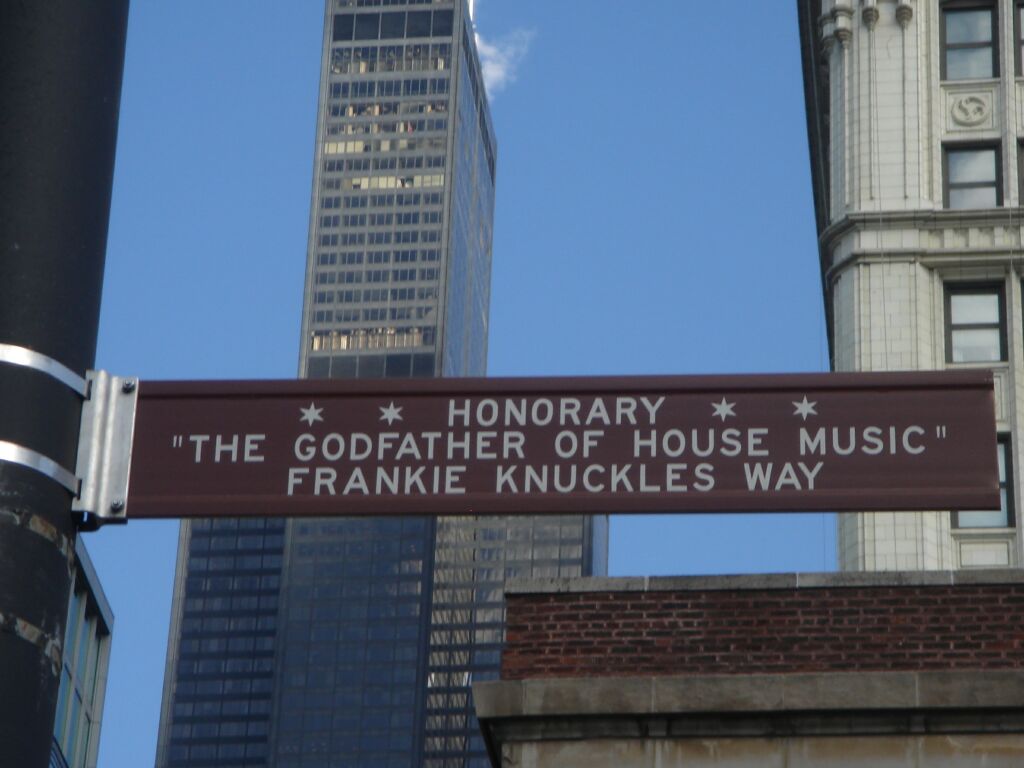
I was there the night Frankie Knuckles played at Hamburg’s Front Club in the early 90’s, the first time you could ever see the DJ in the booth there, which was usually entirely closed except for some really small peep through holes. He entered the booth, set up a small fan, a bottle of cognac, hung a towel around his neck, and proceeded to play. He played very gracefully, letting each record play from beginning to end, at a moderate pace, but perfectly sequenced and mixed. I remember the crowd taking a while to get used to this DJing style, as the sets by the Front residents where usually comparably more dynamic and going back and forth, but it really told me a lesson how to let the music shine when it needs to shine and I was deeply impressed. And I remember that I felt very happy to be able to hear and also see him doing it. Still am. R.I.P.”
Now a year has passed, and a lot of things have happened since his passing. I was sure that I would never forget how much he mattered to me with everything he did, but I was also accepting that it would occupy my mind less and less with time passing by. Except it didn’t. I kept pulling old records with his “Classic Club Mix” credentials from the shelf, humming TUNES, and not tracks, taking a bow at the elegance and SOUL of the Def Mix arrangements and constantly wondering why there is so little left in my environment of what he established. So I decided to do pay my dues and start an irregular series of Hot Wax shows that simply ask: “What would have Frankie done?” I could only guess, so forgive any inadequacies.
Mix I recorded for a Russian podcast. Which might explain the intro. Well, it did not help in the end.
Pet Shop Boys – My October Symphony DJ Sprinkles + Mark Fell – Say It Slowly (N.U.M. Mix) Robert Hood – Torque One DJ Qu – Times Like This King Felix – Spring 02 Schizolectric – Traveller Circuit Paranoid London feat. Paris Brightledge – Paris Dub 1 Cheap And Deep – Words, Breaths & Pauses (Jonsson/Alter Remix) Frak – Untitled (DJ Sotofett Remix) SVN Feat. Paleo – Track 1 Velvet Season & The Hearts Of Gold – The Special Place Theo Parrish – Black Mist Funkinevil – Night Heatsick – Benelux Innerspace Halflife – Wind Four Tet – Percussions Bookworms – Love Triangles Aardvarck – Nubian Joy Orbison, Pearson & Boddika – Faint Mark Fell – Side 3 Track 5 Stefan Goldmann – Rigid Chain Secret Mixes Vol. 14 – I’m Warning You Pépé Bradock – Katoucha? Trance Yo Lie – Cosa C’e Sotto? KiNK feat. Rachel Row – Hand Made (Main Mix) Soundstream – Disco Crash Da Sampla – Over Unfinished Business – Out Of My Hands (Love’s Taken Over) Dez-Andrés – Seasons So Long Lil Louis – Fable (Frankie Knuckles’ Directors Cut Classic Club Mix)
The typical club coordinates in Hamburg in the mid-1980s moved somewhere between mod culture and northern soul or post-punk and wave – in locations such as Kir – and disco preppydom at Trinity, Voilà and Stairways. The port of call was usually chosen by whether the evening plans focused on music and dancing, women or drinking. Some locations would satisfactorily cover all these needs, but in Hamburg it’s always been customary to frequent new locations as soon as an imbalance of these factors becomes too apparent. DJs usually didn’t do any mixing in those days and the music was often quite a wild potpourri of styles, so the nightlife crowd was used to only dancing to a couple of tracks and spending the rest of the night doing other things.
However, a little off the beaten track, near Berliner Tor, there was Front, a club Willi Prange opened in 1983. In 1984, Klaus Stockhausen from Cologne became the resident DJ and like his fellow DJs in others parts of town, he played a mixture of boogie, synthpop, electro, hi-energy and Italo. However, in the eyes of the rest of the city, Front soon had a special status. The main reason for that was probably that most of the guests were gay, that is if one can believe hearsay, who didn’t mind partying the weekend away so far-off from the usual Reeperbahn and Alster area haunts. On the other hand, what was perhaps even more deciding was Stockhausen, who was miles ahead of his colleagues in many ways. I first heard about his amazing DJ skills from one of my best friends, who was a few years older than me and had been frequenting Front since 1984. One evening he’d persuaded Stockhausen to sell him a set of live recordings on tape, for quite a lofty sum – well, the man certainly knew what he was worth.
When I heard the tapes for the first time, I was pretty stunned. I’d always had a weakness for all kinds of danceable music, but what you could do with it when you mix it was totally new to me then. I spotted certain parts of my record collection, but somehow it all sounded different, more energetic and more exciting. There were many instrumental versions, laced with sound effects, scratching and a cappella vocals. You could hear different records playing at the same time, sometimes for several minutes on end, or certain parts for just a few seconds. Most of the time I couldn’t even tell the tracks apart anymore, and I didn’t have a clue how he did it. Moreover, the choice of music was always both very stylish and adventurous. Must be mind-blowing to hear him perform live, I thought.
The nights at Front were already quite a steamy affair at that time, but things really took off at the end of 1985, when Tractor and later Rocco and Container Records started stocking the first house imports. In fact, I only really noticed house when “Jack Your Body” and “Love Can’t Turn Around” suddenly became hits in 1986, but I took an instant liking to it. It seemed like the perfect synthesis of all sorts of club styles, and yet it was also really basic and direct. A promising variation in the chronology of disco music, so to speak. And according to ear witnesses, house was monopolized as of day one at Front, even though there weren’t that many records you could buy, but whatever was available, you could hear it at Front. The European club landscape is admittedly too diverse and extensive to pinpoint where things were actually sparked off exactly, but if you take a look at the musical history books of other countries, Hamburg was in there damn early, without even making a big fuss about it. The regular weekend guests from England certainly seemed to have set out to the touristic wasteland on Heidenkampsweg with full intent to dance and were not there by chance.
The first time I was actually part of the bizarre queue that lined up in good time in front of the stairs leading down to the club was in early 1987. I was almost of age and a little tense. It seemed as if the cool guys around me could hardly wait to be let in by the grumpy moustached geezer who was in charge of the cellar door. The proud majority of the audience consisted of pretty boys in glamorous outfits and half-naked muscle-packed leather types, and there were plenty of them, later to be found on the dance floor, dancing and screaming their hearts out in delight. The club itself was anything but glamorous – “bare” would be putting it mildly. There was nothing on the walls apart from a few emergency exit signs on which the word “danger” blinked from time to time and intermittent slide projections of meaningless phrases like “I mean… is he…” or “…and suddenly…”. The dance floor was surrounded by low platforms with railings which – owing to the low ceiling – meant you were even closer to the nasty tweeter loudspeakers of the sound system that wasn’t exactly good, but it was very effective and, what’s more, very loud. The light-show merely consisted of different-coloured fluorescent tubes, sporadically lighting up the dark dance floor at incomprehensible intervals. And in contrast to other clubs in Hamburg at the time, it was very dark, not to mention the incredible fug of more or less naked bodies that was dripping from the ceiling or channelled back onto the street by the ventilation system, pouring out right next to the entrance as a thick cloud of steam, as if announcing to the outside world like the smoke at a papal conclave what levels of excess had been mutually reached that weekend.
Front was a place that you’d go to in order to dance, rather than to pose, although you could of course also do both if necessary, and wander from left to right, spellbound by the booming splendour. The atmosphere was extremely physical and highly sexed: the Front kids had designed their temple, paying reverence to hedonism with unconditional allegiance. In fact, nothing mattered as long as it was fun. If you left the dance floor, not that anyone would ever want to, the only distraction was a bar with a few benches, one floor down, whose drinks taps were tipped to the beat accompanied by the sounds of partying bar staff – often dressed in torero outfits. Other distractions included the notorious toilets, which were extraordinarily highly frequented and snubbed any notions of segregation of the sexes, as well as a pinball machine that never worked. The exuberance was deliberate, controlled from a DJ area which was very different to those in any other clubs in one respect: you couldn’t see the DJ. It was an elevated dark booth that you accessed through a door from the dance floor, and the DJ – whom you could only catch glimpses of – could look out through two tiny crenels. That had the effect that you concentrated on the music and sometimes it seemed as if it was coming from another world, although you were fully aware, of course, that the master of ceremonies responsible was something special, applauded with screams of delight on the dance floor. Clearly a renunciation of the elsewhere increasingly popular trend of hero-worshipping specific DJs – a trend that was ultimately the reason why Stockhausen laid down his headphones forever in 1991 to pursue an equally successful career as a fashion editor for well-known lifestyle magazines. I only found out many years later what he actually looked like, thanks to a series of photos in a city magazine, though it didn’t really matter anyway. The same went for his highly talented successor Boris Dlugosch, who became Stockhausen’s protégé as of 1986 and took over the baton after he left, directing the next era of the club just as stylishly – as did other DJs such as Michael Braune, Michi Lange, Sören Schnakenberg and Merve Japes. In time, more and more celebrities came, but were hardly taken any notice of.
These conditions didn’t change much in the years that followed. There were rituals like the quadraphonic test record that crackled away with the lights turned off, usually heralding in the final phase with a review of disco classics, though the Front’s sound system made even those sound like they’d been reborn in a ball of lightning. There were various wild and special events plus the annual birthday bash where, believe it or not, everything was turned one notch higher. Unforgotten is also the performance of an innocent busker who, on the outbreak of the first Gulf War, was engaged ad hoc on the high street and nervously played “Give Peace A Chance” on his guitar to an ecstatic audience.
In the developments of house music and all the various different styles emerging from it, Front served as a tough yardstick in the following years. First came the acid phase, which also conquered the rest of Hamburg in other new locations such as Opera House, Shag and Shangri-La, and the first wave of Detroit techno was welcomed with open arms. In those days, trips to clubs in other cities were often rather disappointing by comparison, and you soon looked forward to the next night out at home. In 1989 the New York hybrids of techno and house from Nu Groove and Strictly Rhythm followed, and the post-acid developments from Britain, such as Bleeps or Shut Up And Dance and 4hero, generally referred to as breakbeat techno back then, were also received to some acclaim. When techno started to increasingly define itself in terms of hardness as of ‘91, Front returned to its groove roots, leaving the speed-freaks to get on with it at locations like the first Unit. Overnight, garage and deep house were virtually mixed to new heights under the aegis of Dlugosch, without losing any of the easygoing dynamics on the dance floor: the delirious frenzy just happened to sound a little different now. Front embodied thrust and style and had brought its followers up on house to its best ability, which is why Hamburg never became much of a techno city compared to other metropolises. The club featured in Face, I-D and Tempo magazine as a world-class location and, with Dlugosch, was at least on a par with purely house and garage clubs in the USA and England, and was practically unrivalled on the continent for many years, which was underpinned by the fact that Front soon started to book big names from abroad. DJ Pierre slipped up on Wild Pitch and made up for it with acid meets garage; Mike Hitman Wilson botched up completely; Frankie Knuckles put a towel round his shoulders, placed a bottle of cognac and a desk fan in front of him and then set out to communicate just that; the Murk Boys were mutual love at first sight; and Derrick May didn’t want to stop.
But the first guests also offered insights into other scenes, which got more and more club-goers interested, and competition in Hamburg soared, generally using Front as the benchmark. The gay crowd felt increasingly more corned by prying eyes, and eventually the faces of the first generation gradually stopped coming and started going elsewhere. Not only the spirit of the pioneering age was waning but also the music began to lose its intensity. Even the 24-hour petrol station round the corner suddenly shut down. Nevertheless, like many others I felt privileged to have witnessed the emergence of house, happening live at such a special place that we all still carry in our hearts. At some point the show ran by itself and at other venues – as of ’94, I went there far less frequently, until I got a wake-up call in ‘97 when I suddenly heard about the farewell party. I preferred to remember it as it was in its heyday and decided not to go. Befitting for a truly legendary club, the deco was later auctioned like relics to the highest bidders. But I already had the perfect souvenir and it still adorns my door: the sign of the ladies’ toilets, mysteriously stuck to my T-shirt one Sunday afternoon when I woke up on the floor at a friend’s place still in my outfit from the night before. Those were the days. Klaus Stockhausen is still the best DJ I’ve ever heard and for me the club’s intensity is still unparalleled, minus a bit of sentimental glorification. It left a deep impression on me. Whenever I drive into Hamburg coming from Berlin, I always steal a glance at the Leder-Schüler building and hear music in my head. This used to be my playground.
Many thanks to Walter Fasshauer, Patrick Lazhar and Frank Ilgener.







Recent Comments