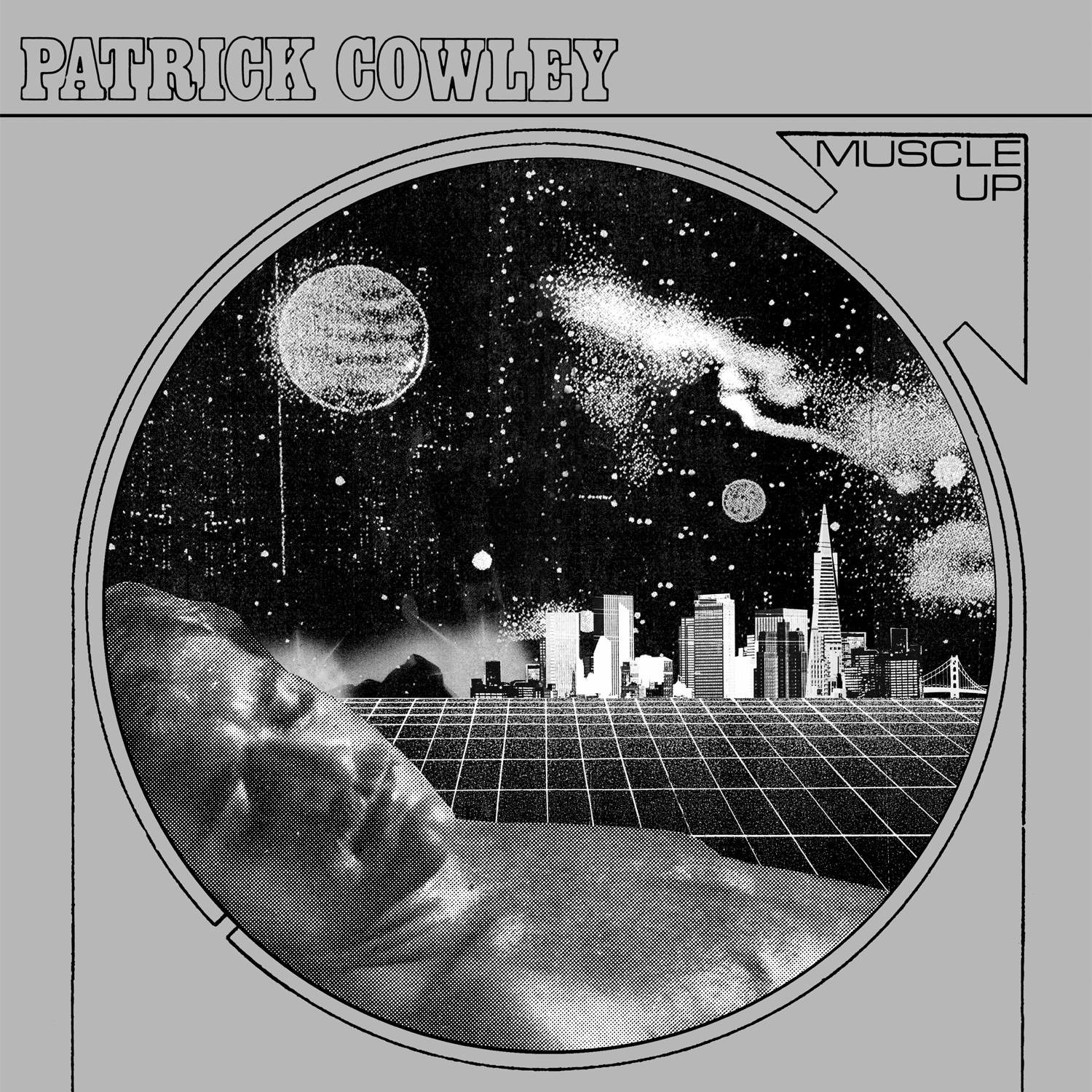
For many years it almost seemed as if Patrick Cowley appeared from nowhere, then achieved a stellar career in music in the brief period of only a few years, tragically cut short when he passed away due to AIDS, only 32 years old. There must be millions who danced or listened to his music, and he was most deservedly hailed as one of the most important artists in the history of club music ever since. Still, Patrick Cowley the person remained strangely unexplored. There were countless entries in books and websites specializing on Disco, yet they all used the same few photographs of him, and the same scarce biographical details. There were no interviews, no friends and collaborators were asked to tell stories. He dropped his musical vision, which was way ahead of its time, arguably still is, leaving only speculation as to what might have been, and where it actually came from.
Admittedly it was not that easy to find out when it actually happened, pre-internet, but when his fame as the synth wizard in the aftermath of the classic Disco era skyrocketed in the early 80s, he was also producing the first album by Indoor Life, the band of his friend Jorge Socarras. It was not music destined to shine under the glistening mirror balls of the hedonistic palaces of that time, it was dark and edgy. It was more Post Punk than Disco. Wait, I meant New Wave, nobody said Post Punk then. By all means it should have been proof enough that there was more to Patrick Cowley than the music he became famous for. Read the rest of this entry »
In discussion with Roual Galloway on “Garageland” by the Clash (1977)
So what was your first encounter with ‚Garageland‘? Listening to the radio as a teenager?
I got a copy of the first Clash album in 1979 from a record shop in Edinburgh called GI Records, aged 11. My dad had done some work for the owner and payment was made to him in vinyl. Which meant that my sisters and I all had three records each to choose from the stock. I can’t remember what my sisters chose, but the three I selected were The Ramones “It’s Alive,“ The Skids „Scared To Dance,“ and the self titled Clash album. At the time we lived in a Scottish newtown called Livingston. In later life you realise that all newtowns are built in three stages, which are in the following order of building houses, attracting people and offering jobs. We moved there in ‘78 in between stage 1 and stage 2. This meant that unemployment was high and the youth were left disenfranchised. Like most newtowns it was badly designed and architecturally awash with concrete grey. Punk seemed like a natural rebellion against the injustices imposed on the youth of Livingston and had a massive following there. A local punk band called On Parole used to cover it and I suppose it became ingrained in my consciousness from that. I saw them live for the first time in 1979. I’ve always liked the sentiments of the lyrics, of standing up against selling out and of doing things for yourself.
Have you ever heard something like it before, or was this your first experience with Punk?
I was aware of punk in 1977, but I was too busy kicking a football about and chasing girls at the time. One of the first records I bought in 1978 was „Denis“ by Blondie, unfortunately the other two were „The Smurf Song“ and the Official Scottish World Cup Song of 1978. I bought these whilst I was living in Nottinghamshire just before we moved to Livingston, Scotland. There was no escaping punk in Livingston.
I have to ask this question. Why The Clash, and not The Sex Pistols?
The Sex Pistols released one proper studio album in 1977 and then Rotten left. They were never the same after that, although the cash-in albums were hugely influential at the time of release. The Clash on the other hand released six studio albums in their existence. They matured with each album, apart from „Cut The Crap“. The one regret that I have is that I didn’t see them at the time. If I had to choose between the Pistols and the Clash it would have to be the Clash every day of the week.
„Garageland“ was published as last song of their debut album. Did you like the album as a whole, or is this their standout track?
The first album is filled with classic song after classic song. From the opening with „Janie Jones“ to „Garageland“ it’s all thrillers with no fillers. How can you not like an album that’s as strong as this! Read the rest of this entry »
The early days of House Music in Chicago were dominated by enthusiastic young producers who processed what they heard being played by club DJs like Ron Hardy and Frankie Knuckles and radio DJs as the Hot Mix 5, a raw and highly functional take on the American Disco heritage and European electronic counterparts, its sound determined by limited means to afford musical equipment. There were many records released that had enough brilliant ideas to last to this day, but for its originators it might have been sufficient to have their tracks played by said DJs, and however addictive their rhythms and wild piano chords were, they also seemed not to aim too high in terms of traditional musicianship. Thus from very early on the music of Larry Heard stood out. He was a real musician, with credentials as a professional drummer and keyboard player, and he introduced a level of artistry to the scene that in comparison seemed to be underdeveloped until then. And from the start his music reflected his personality. It was deep, introvert, even melancholic. It did not contain the usual dancefloor imperatives, but it was still very danceable. But club functionality did not appear to be his top priority. Nevertheless all the records he released under different guises from the mid to late 80s became legendary classics, and many more records he released afterwards became legendary classics as well.
Consequently Larry Heard will forever remain one of the most revered artists in the history of House music, yet it always seemed as if he felt his career did not unfold as he hoped it would. He probably shared the same desire to become famous, just like the rest of the Windy City pioneers, but neither he nor his music were extrovert enough to fit the necessary schemes. And this both applied to his most noted alias Mr. Fingers, and Fingers Inc., the group he formed with Robert Owens and Ron Wilson. Mr. Fingers was reserved for his very own interpretations of the House groove, and he created one eternal blueprint after another in the process, impressively showing how deep and pure electronic music could be. Fingers Inc. on the other hand was clearly conveyed to work as a group, in the traditional sense of any other R&B group of those years, only with the sound of House instead of R&B. Just take a look at the pictures of the group on the sleeve, matching sweaters and confident poses, with female limbs wrapped around like an outtake from an Ohio Players artwork. The charts were to be climbed, the sooner and higher the better. But despite reassuring sales in the club scene they did not climb the charts as intended. It is significant that both the albums „Ammnesia“ by Mr. Fingers and „Another Side“ were released on the Jack Trax label from the UK, an imprint specializing on importing landmark Chicago House releases to the European market. Both albums combined tracks previously released on local Chicago House labels like Trax and DJ International with new material. Both albums were released in 1988, the year when a rising interest in the new dance sounds from across the pond turned into the Acid House movement that would change the UK and continental club scenes substantially. And both albums are not regarded as a quick compilation to cash in on a then current hype, they are regarded as peerless masterpieces. Albums that really work as albums, from start to finish, all killer no filler. They are still ultimate references that club music can work perfectly in the format, and whoever is failing is just not trying hard enough. So much for Larry Heard’s talents, you cannot really overestimate them. Read the rest of this entry »
In discussion with L’estasi Dell’oro on “Passages” by Ravi Shankar and Philip Glass (1990).
Do you remember when you first got a hold of „Passages“?
I would have to say approximately 8 years ago. I believe that I first became aware of this album through familiarity with Ravi’s work, as opposed to the more likely channel of Philip’s. It was just the well-worn process of hearing a great musician’s work for the first time and then digging through as much of the rest of their discography as time allows.
What makes this album so important for you?
The simple answer is that this is the best collection of modern music that I’ve ever heard in my life so far. There’s other individual songs that I feel reach higher than any single piece from „Passages“, Jimi’s „1983, A Merman…“ for example, but taken as a whole, the variety and almost unwavering quality across the 55 minutes are very impressive to me.
Are you generally interested in either the Minimalism school Glass is a part of, and the heritage Ravi Shankar represents, or are there preferences?
Both traditions are of interest, for both similar and differing reasons. The Western minimalism side’s long form accuracy of performance is astounding. Of course many pieces utilize synthesizers or machines for part or all of the sound, but there are many examples of highly trained musicians playing these very fast and demanding arrangements in sizable groups with amazing accuracy. Hearing a quartet of woodwinds or vocalists arpeggiate 32nd notes for 20 minutes in synchronization is certainly impressive, especially when each player is playing in the pocket of another’s notes and one weak link could lose the all-important groove.
I feel that the general Hindustani music I’ve been able to discover, not too much beyond key names are readily available to foreigners like myself unfortunately, is an amazing marriage of musical rules and improvisations. Other cultures undoubtedly have similar structures, but the long form interplay between a sitar and tabla create a sound that appears loose and informal at first, but one where the performers are very highly trained and aware of their actions as a group. I’m certainly not deeply aware of the compositional rules of ragas & talas, etc. but familiar enough to appreciate what those musicians know themselves. Even in the related vocal styles of Nusrat Fateh Ali Khan and Pakistani performers, the communal aspect of group support for the soloist is wonderful.
In common, the two traditions place emphasis on extended songs beyond the popular format, which when done correctly, can leave a profound impact on the listener. Also, the aforementioned backing of smaller choral support often features drawn-out vocal melodies that really appeal to my ear, especially with the female voice. I’ve enjoyed working with a couple vocalists in this style, which can even sound great just floating over a groove alone without the usual emphasis on a soloist drawing the main focus. Read the rest of this entry »
In discussion with The Maghreban on “Spell Of Three by Jazz Hip Trio (1967)
How did you become aware of „Spell Of Three“? A chance encounter?
I went to a car boot sale in Bath early one Sunday morning with my Dad and my Brother. I was looking for records, there weren’t many private sellers but there was a man who had a record stall. Normally I wouldn’t buy from a record dealer at a car boot sale, but there weren’t many records around so I had a look. He had this LP out for £12 or something. It looked interesting, just looking at the sleeve. It was the English Pressing on Major Minor. I took a chance on it for £10, which is not normally something I would do on a record costing that much.
Why did you pick this song, and not the whole album „Jazz En Relief“? What makes „Spell Of Three“ so significant?
When we got back I listened to the LP and was transported by that track in particular. Other tracks were nice, but none really moved me like that one did. Just the depth of emotion it conveys, kind of hopeful and sombre at the same time, it gave me goose bumps.
Is the late 60s your favourite period of time for Jazz, and is this style a personal preference?
I guess it is, yes, although not just the late 60s. There is a particular type of Jazz tune that I like, and most of them are from that time. Or some were recorded later but are in the 60s style. Tubby Hayes “Sasa Hivi”, “Pedro’s Walk”, Cannonball Adderley Quintet Plus “New Delhi”, Alto Summit “Native Land”, Ray Bryant Trio “Cubano Chant”, those kind of tunes. Some are a little Eastern sounding.
Would you say that Jazz-hip Trio have a typically French take on playing Jazz or does origin not matter?
I think they do actually. There is something there that reminds me of some Claude Bolling, Jacques Louissier. Or maybe its because it is a small band and it was recorded at that time. Something in the sound of the ride cymbals.
Their music sure has a cinematic quality, as exemplified in a lot of Jazz-based scores for films of that era, and they even interpret the seminal French film composer Michel Legrand. Is this just a cliché or did this film and music in that aspect just work well together at that time?
There is definitely something cool there, something cinematic. I could see this tune in a French New Wave film. Anna Karina smoking a cigarette. If it’s a cliché it is one that I like. I think the combination did work very well. Read the rest of this entry »
In discussion with Flemming Dalum on “Mr. Game” by Klapto (1983).
Of all the options in that field, why did you choose „Mr. Game“ for this interview? Was it the record that had the most impact on you? And is it maybe genre-defining as well?
It was very hard for me to choose one single record for this interview. I have approximately 100 personal Italo top favourites which all did it for me back then, and now over 30 years later they still mean so much to me. I guess I chose „Mr. Game“ because it‘s really so Italo all the way. To me it contains all the classic Italo elements and I really thinks it captures the essence and pure vibe of Italo. At the same time I also think this record defines the genre very well. Personally I love the early sound of Italo the most, particularly the sound around 1983. Another record could have been Koto’s „Chinese Revenge“, which also blew me away back then. Pure synths all the way.
Did your instant love for Italo Disco connect with a taste in music you had before, like electronic Post Punk, Disco and later Synthpop?
Yes. I actually discovered synth music from UK around 1980. Artists like Depeche Mode, Yazoo, Human League, Soft Cell etc. I was simply very fascinated by the new sound universe of synths becoming a bigger part of dance music. I even bought some synths and played in a band for some years. Digging deeper into this synth music led me to discovering Italo, which had an even bolder and more spacey attitude. I was instantly totally blown away. It seems to me that they somehow tweaked the synths a bit more, maybe due to shorter production time and maybe less producer experience, I don’t know. But I think they came up with a very unique result. A sound and style never heard before, or even since. Later the Italo became more well produced, MIDI controlled and so on. Italo actually ended up too well produced and became more commercial. By then the magic was gone for me, around 1986.
There were Disco productions in Italy from the late 70’s on, but usually Italo Disco is associated with a sound that surfaced in the early 80’s. Why do you think it could be so unique and popular at the same time? Was it a novelty effect, or just good Pop merits?
I think the Italians where outstanding in capturing the vibe of the music trends in electronic dance music in the early 80s. They where clearly inspired by the UK scene and of course other musical subcultures around. But they added that charming unique Italian twist to it, which made it so very special. Actually I can hear if a track is Italian or not in a split second. Over 30 years of listening experience has had a huge impact on me. I’m sure other lifelong Italo freaks are also able to instantly tell if a track is from Italy or not.
In my youth in Northern Germany, Italo Disco was mostly cherished by people who would else rather listen to Hard Rock and charts music. The clubs it was being played at usually had a program that tried to cater to low and common denominators. It was certainly not hip. Was it the same in Denmark at that time?
Only few Italo records were played in the Danish clubs in the early 80s. US and UK music was clearly dominating, no doubt. But some clubs played the most commercial and popular Italo records like Gazebo’s „I Like Chopin“, Ryan Paris’ „Dolce Vita“, Fun Fun’s „Happy Station“, and Raff’s „Self Control“.
Instead of browsing local record shops for Italo Disco, you went straight to the source on trips to Italy, visiting distributors and labels. Which is quite similar to the efforts European Rare Soul collectors in the 70s made on US soil. Did you purchase the core of your collection that way, at that time?
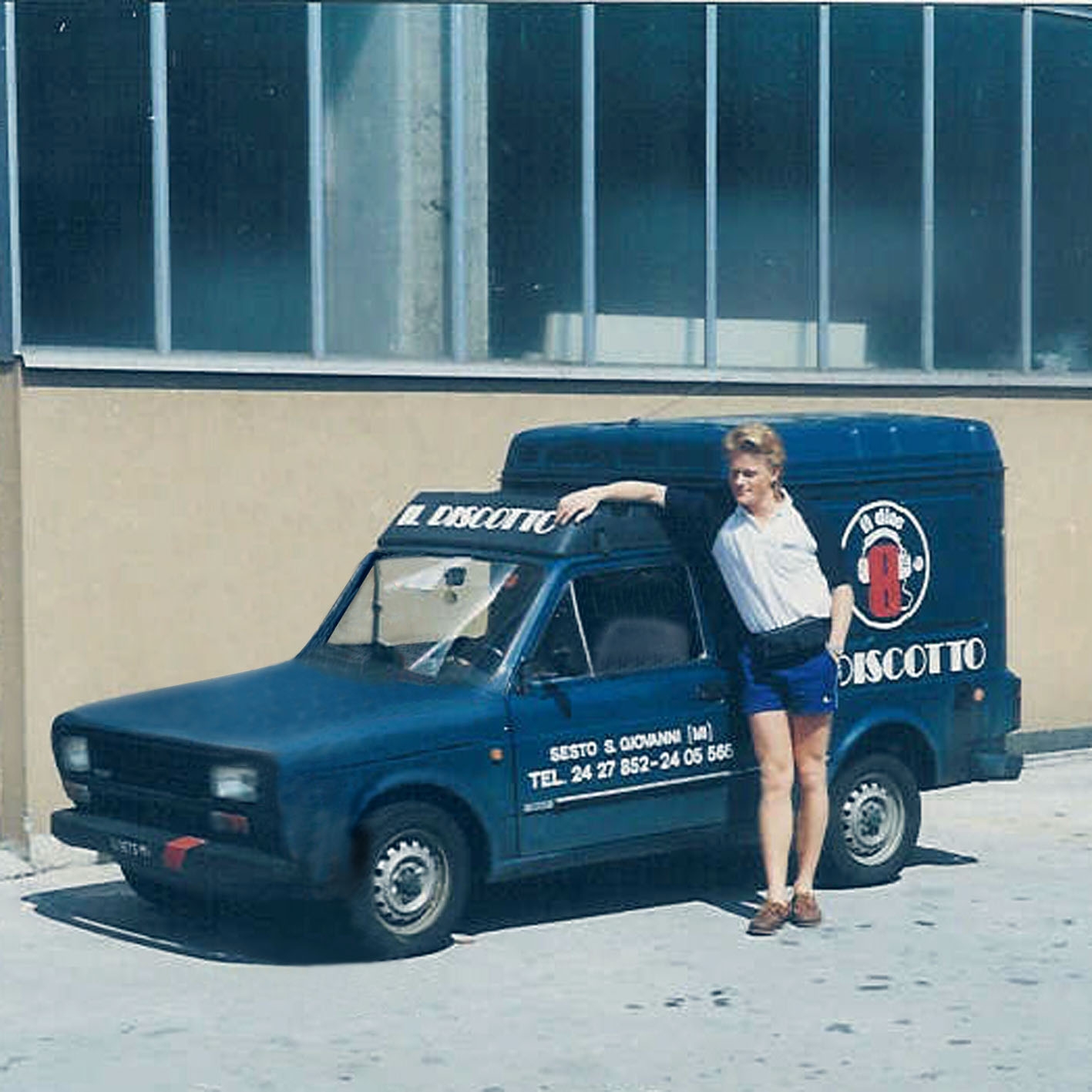
Yes, it was impossible to get all the Italo records here in Denmark with no internet back then, so Ihadto get them by travelling all the way to Italy. So mainly I got them from the famous distributors and labels like Il Discotto, Disco Magic, Non-Stop, and famous shops like Merak and Disco Service. I took eleven trips in the years from 1983 and 1986, and inbetween the trips I was in close contact with Il Discotto and Disco Magic and also a great record shop in Firenze, called Disco Mastelloni. Basically I managed to find all the records I wanted and got a 100 % complete collection back then. Read the rest of this entry »
It has been four years since the legendary German electronic music pioneer Conrad Schnitzler has passed away, and I am very sure that at this very moment a person, or more likely, several persons are wondering just where to start with the gargantuan archives he left behind. From the late 60s until his demise he pressed record more than others, and his vast officially released output is surpassed considerably by what has not been released as of yet.
Every music consumer nowadays can only struggle with the amount of music that is returning to attention, and then on top there are all the releases that never were before. Legions of thorough and not so thorough specialized labels handle this output, but they mostly deal with a manageable back catalogue. And then there is Conrad Schnitzler. In retrospect you can take a whole lot of what we are familiar today in terms of electronic music, trace it straight back to what he was doing decades ago, and inevitably put a proto tag on it. And he was doing LOTS of it in his studio, heaping up well deserved credentials in the process, from the very beginning until the very end, day in day out. So how do you approach such a legacy? You need time, for sure. You need dedication, definitely. You need expertise, of course. But you also need an idea how to comprehensibly legitimate all the effort. Probably only Schnitzler himself will remain the only person to ever have heard anything there is, but thankfully he was also helpful to others aiming to reach as far as they could. When m=minimal label head Jens Strüver was granted access to Schnitzler’s audio library in the early 00s he suggested the Con-Struct series, in which Schnitzler’s archive would be constructed into new compositions by other musicians, and Schnitzler agreed to it. The first installment was handled by Strüver and Christian Borngräber, followed by Kreidler’s Andreas Reihse after Schnitzler’s death.
It is important to note that the series is not meant to be a tribute to finished recordings by means of remixing. The history of electronic music is littered with unnecessary remix compilations. Don’t get me started. But of course there are rules to the exception, where the remix is as advanced as the landmark music it is remixing. On the top of my head I would like to mention LFO’s version of Yellow Magic Orchestra’s „La Femme Chinoise“. And the main reason I am thinking of this particular remix is that for me it is a fine example for the ideal combination of source material and the remixer’s own artistic signature. Both YMO and LFO have their merits, and with this pairing, they multiply (pun alert). More often than not reworks are disrespectful to the original, because they are too respectful, thus watering down the originality of what they are reworking, resulting in a mere convenience product. But as mentioned, free interpretations are not the main idea behind the Con-Struct series, let alone remixes, but Schnitzler sure would not have been content with just being flattered by other artists, however weighty his artistic persona.
Which directly leads me to the third Con-Struct album, curated and rearranged by none other than Kurt Dahlke, better known as Pyrolator and member of German electronic Post Punk miracle Der Plan. Though of a later generation than Schnitzler, for me Dahlke is another seminal pioneer of electronic music. He knew his Buchla and his numerous other synths and devices and what to do with it, and I am totally convinced that his impact should never be underestimated, and may later be con-structed itself. An inspired choice. In his own words, Dahlke wanted to „present a side of Conrad which I had always heard in his music but one which often goes unnoticed: a darker, technoid side. In my opinion, Conrad has always been one of the great pioneers of classic Berlin techno music.“ Well, upon hearing the album the proto can again be tagged, to techno this time. This may not be drone plus kick thunder usually associated with the city’s current according club soundtrack, it is more of the 90s kind, when a plethora of sounds permeated the scene, imported or locally grown, and folders were still closed. As that is what makes pioneering days so exciting, and so easy. Nothing is settled. It will be eventually, but not right now. Let’s explore every idea we have. Which makes this album so enthralling, as both Schnitzler and Dahlke supposedly went through such a phase several times throughout their career. So on the one hand you have Schnitzler’s lifelong love of musical adventure and his ability to anticipate represented with Dahlke’s selection, on the other hand you hear Dahlke’s musical preferences and signatures reflected. „I must admit, I could not resist the temptation to add one or two of my own ideas. The original tracks were so inspiring, I just had to.“, Dahlke measures his input. Frankly, I am more of a Dahlke than a Schnitzler scholar, but I sense understatement.
In discussion with Call Super on “My Answer” by Charley’s Vault (2000).
How did you come across „My Answer“? Was it in a record store, or in a club?
A club. The End in London.
Why does this record mean so much to you? Is this a time capsule of a certain kind? What is its appeal?
It very much is. Although it is of its time in certain ways I don’t really feel it has dated. It was a record that I heard quite a few times before I had any idea who it was. I was usually too shy to ask DJs back then and there were lots of tracks that you would hear and just know because you’d heard them before and maybe one day you’d actually turn it up in a store, or meet someone in the club who could tell you, or it got used on a mix. Which is how I found out what this one was.
The thing I love so much about it is it creates a mood that is perfect at any time of the night or morning. It has the exact balance of menace, tension, joy and release that the perfect DJ tool needs. The mixdown is really nicely done, the way it ebbs, flows and kicks at certain points. I have a distinction between what often gets called ‘tools’ which to my ear are usually just drum tracks with a stab or a pad or something and the really useful stuff which usually has a fair bit more going on and can always take you up, down, reset, roll out, maintain… anything that you ask of it. This is one of those tracks.
I guess most people stay true to their formative years in the clubs of their youth. What made The End so special?
It was a club that was very well designed. Loosely based upon The Tunnel in New York but with a crucial difference of placing the booth in the middle of the floor so the DJ was cocooned by the crowd, who were in turn were cocooned by the sound system. The fact that this set up existed in a tunnel created two opportunities. The first was that it was very easy to lose yourself at the back by the system without feeling any disconnection from the place. The second was that this architecture created a particular atmosphere that I think must have meant certain DJs would have fun in a way that more disconnected settings don’t encourage. Its obviously a truism to say that good DJs play to the setting they are in, whilst bad DJs do the same thing no matter where they are. Well, this was a space that I feel coaxed the best from people.
I went maybe twice a month on average for about two years, then less frequently for the next few years because I had relocated to Glasgow, but in that time almost every night held surprises at what had been played, or how it had been played. The video of Mills covers a little of that ground. You cannot understate the importance of having these experiences to draw on when you end up doing this for a living, your own constellation of places and people that inspired you. That’s what gives you your distinct voice and I feel massively grateful to have had that club incubating me. Read the rest of this entry »
I am an avid longtime collector of 70s/80s Japanese Synthpop music, and being based in Europe that always proved to be quite some task, particularly in the pre-internet shopping days. You had to start from scratch, mostly starting with Yellow Magic Orchestra and their affiliated labels like Yen, Monad or Alfa, and you studied the credits of every record and learnt about new artists, crosslinks and local scenes. But finding those records in some continental crates was a rare and lucky occasion, and then when internet offered more purchasing options, it appeared to be a rather pricey habit because of shipping costs and Japanese sellers who were perfectly aware that their items were considerably out of reach beyond their own soil. But it also became very apparent that their was way more to discover, and it was well worth trying. Still, the Japanese music scene was frustratingly hermetic. I had gathered a collection over the years, but regularly you came across sellers with pages and pages of offers, complete with listening clips, and you had to admit that you were not scratching the surface, you were not even near it. I could have bought the bulk of it if possible, it all sounded fantastic, but it was not possible, and as I tried to at least learn about the artists I read in the item descriptions via web search engines, information was very scarce. For a nation so obsessed with technological progress and cultural information, there was mysteriously little given away to the outside world, only a few hideously designed websites by American or European enthusiasts who lived in Japan and fell in love with what they heard. I was really glad they made the effort, but their discographies, as thorough as they were, offered not much beyond artists I already knew about, and sooner or later every such site disappeared from sight again, only to be replaced by, well, not much else. I’m perfectly convinced that a well researched book about Japanese music would sell profitable quantities, there must be more people like me, but it can only be written by a Japanese author.
And then it always fascinated me that it was well acknowledged that Japan contributed a lot to electronic music in said period of time, but once House came along in the mid to late 80’s, and Techno shortly after, there were so few notable Nippon producers reacting to it. And as the Chicago pioneers operated mainly on musical equipment built in Japan and later neglected for the international bargain market, it was even more curious that those sounds originated so far away from where they were originally developed. No matter how hard you tried, the Japanese equivalent to the early House music masters was nowhere to be found. But you had this feeling there just had to be someone.
Years later a good friend of mine, a serious Deep House completist collector, pointed out that there were some interesting releases by Japanese artists on Hisa Ishioka’s King Street Sounds, a New York based label established in 1993, which was inspired by the Paradise Garage experience. He investigated further and found Ishioka’s sub-label BPM Records, which from 1991 on showcased a small wealth of Japanese producers taking on the trademark mellow but crisp Big Apple Deep House style established on imprints like Nu Groove, Strictly Rhythm, Nervous and a plethora of smaller labels. The producer with the most credits was Soichi Terada, and he also seemed to have the most distinctive signature sound. It is known that Larry Levan toured Japan at the end of his career, and even shortly before is death, and there must have been some interaction with the local scene, as he remixed Terada’s gorgeous 1989 track „Sunshower“ two years later, as did fellow New York DJ legend Mark Kamins. So there he was at last, the House music master from Japan. He even had his own label, called Far East Recordings, and though it only had a small back catalogue the few sound bits I could track down had me locking target on every single one of them. Terada’s sound admittedly owed a lot to its US prototypes, the whole lush smoothness of it, but it also had a weirdly bouncing funk, and more importantly, it had all this charming humour to its melodies and arrangements, and this all-embracing both respectful and freeform use of Western influences interpreted with Japanese music traditions I so fell in love with the first time I ever heard YMO.
But the other parallel was that it was as hard to find as any other record I had in my Nippon wantslist, or even worse. At least the releases pre-House were pressed in suffcient runs, but these were only done in quantities of a few hundred. Enter this fine compilation, which although interest in Nippon House had increased over the years, appeared a bit out of the blue. It was put together by my friend Hunee, a DJ and music enthusiast with a fine tendency to dig that little deeper, and he managed to secure all the essential tracks by Soichi Terada and his frequent collaborator Shinichiro Yokota. And even when reissues of rare records are quite common these days, this is really something special. Now someone please do that complete collection of Koizumix Production tracks, and make me an even happier man.
Die Umschichtung der Formatprioritäten und die Klingelton-Krise der Musiksender haben eine fruchtbare Brache hinterlassen, in der sich das Medium Musik-Clip nun mehr und mehr als Special-Interest DVD wieder findet. Kreative Speerspitzen mit krediblem Backstock wie Jonze, Gondry, Cunningham und Konsorten setzen sich die Retrospektiven gleich selber, von Paradise Garage, Sheffield-Wave bis hin zu Genialem Dilettantismus bekommt jede einflussreiche Periode der Popgeschichte ihre Dokumentation. Da die Viacom-Familie seit geraumer Zeit sowieso eher jeden Quatsch außer Musikvideos sendet, bietet es sich natürlich an, Sendungen wie Electronic Beats als Slices fortzuführen oder wie hier eine ‚Selection Of Outstanding Electronic Music Videos’ zu kompilieren. Es stellt sich die Frage, ob elektronische Musikclips per se schon künstlerischen Renegatentum-Mehrwert innehaben weil man sie im Fernsehprogramm mit der Lupe suchen muss. Bestimmt das Nischendasein auch die Freiräume in der Konzeption und wie nutzt man das? Die Clips auf dieser DVD bieten recht vielfältiges Anschauungsmaterial, doch manchmal fragt man sich, warum die Regisseure jedem Glitch visuell entsprechen müssen oder ob die Bildsprache da eigentlich wirklich so advanced ist wie sie tut. Die vorhandenen Diskrepanzen zwischen Anspruch und Wirklichkeit werden zuweilen von den Infos im Booklet erst recht unterstrichen, wo man mit Superlativen und Referenzen von Eisenstein, Caspar David Friedrich bis Warhol eingebettet in einen großzügigen popkulturellen Kontext, nur so um sich schmeißt. Tatsächlich muten aber, wenn auch auf dem technisch neuesten Stand, einige Clips wie Coverversionen von Stephen R. Johnson oder Godley & Creme an, versetzt mit Mandelbrot-Flair (Bleip – Clicks), quietschbuntem Allerlei oder Stop And Go-Trickrobotern wie von Ata Tak (Bogdan Raczynski – Ahou Bouken). In narrativen Momenten orientiert man sich zuweilen an Dunkel-Tech-Paranoia vom Schlage eines Darren Aronofsky (Slam – Alien Radio). Wong Kar-Wai punktet souverän mit einer 1:1 Direktübertragung seiner Kinoarbeiten für DJ Shadow, das schöne Gebrüder Grimm meets Kompakt-Video vom Superpitcher ist enthalten, die Imbisstypen in Richard Anthonys Clip für Garniers rotgesichtigen Mann sind immer noch lustig und Designers Republic haben für Funkstörung einen formschönen Update von Sign Of The Times fabriziert, inklusive Nerd-Statistiken und schamloser Promotion, in grauer Vorzeit ja mal Sinn und Zweck des Mediums. Nun aber ist es Art, baby, in your face.







Recent Comments