You were thrown out of that posh private party in the suburbs earlier on. The beer was gone, so you nicked some fine spirits from the cabinet of the hostess’ parents and shared generously. You insulted most of the male guests, and flirted with most of the female guests (or was it the other way round?). They discovered the messages you left on the bathroom mirror and disapproved, even if it was the best poetry you had ever written. At least they could not rub it off that easily. But now the girls did not flirt back any longer (or was it the boys?). You could not afford them anyway. The music was terrible, but you could do nothing about it, as you lost your tape at the station where you got your booze for the way to the party. You walked there, activating every motion sensor in every villa along the street with silly dance moves, and deactivating every second lamp post with a kung fu kick. For contrast. Before walking there, you took the bus.
Now you ride the bus again, into the city. You glance cautiously at the mulleted proles with similar intentions. They are as drunk as you are, and they stare right back. They hate your hair, jacket, badges, and shoes. They hate the rest as well. They are always more than one, never on their own. You hate buses. One day you will be able to afford a cab. Actually you could already afford it, but you prefer to spend your money on getting drunk and the outfit they hate. But until the night you can afford all of it at the same time you already think about what will happen if you meet the same bunch tomorrow morning, waiting for the first bus. You will run again. Weekends mean running. Maybe you can run faster. You better try. But you will be not in time anyway, and there will be further trouble once you arrive, either torn and beaten up or not, but wasted either way.
There had been a fight already as you arrive. You see the blood and broken glass. You see the blood on the broken glass. You see a badge on the pavement, and tonight you are wearing the same one. You encounter witnesses. You laugh them off for exaggerating, even if you know they do not. You walk down the stairs to the club. It is never a club with a view. You always descend. You pass the soccer table (it’s those pros with the gloves again, waiting for victims) and head for the bar. You do not know as many people as you expected, and you wonder if this is good or bad. The DJ introduces the dark round. THE BLACK BOX. The black light. You think it is a bit much that not only the stains on your clothes glow in the dark but your drink does, too. It tastes like cheap liquorice. THE COUNT. You think it would be funny if the count would really be here, targeting future playmates among the Blixas and Siouxsies. You think it would also be funny if the dancers would have to throw their agony shapes accompanied by the meagre disco lights, while the imminent disco round would be hidden by heavy fog. But the punk round always come first. DOCTOR ANNABEL LIES. DOCTOR ANNABEL LIES. DOCTOR ANNABEL LIES. It’s either Buzzcocks next, or something for the scooter boys. But they are not that present tonight, so it means a shortcut to synths, and the floor is split between the heavy fog and the meagre disco lights division. IT’S THE ONLY WAY TO LIVE. In bars. In bars. Ha. You compare your own unimpressed look to others. You realize the button on your jacket’s pocket came off again and your cigarettes are gone. Your keys as well. You decide to postpone the consequences as long as possible. For the keys at least. You will have to wait until the lights come back up to fish for some cigarette money and you get one from the soccer table pros. You wonder if they have a theme song. HAND IN GLOVE. Oh, the irony. THE SUN SHINES OUT OF OUR BEHINDS. Sun. Ha. You are determined your next drink will be something fruity that does not glow in the dark, and you wonder if that is even possible. You get a warm beer instead. And some mean shot. You want results. You take a leak, you hear someone snorting bad speed. As if anything in here really requires chemical pace. You read the same tired jokes on the wall. You check your hair in the broken mirror, even if it is does not need checking. You read the same tired jokes written on there, too. Back in, another round. A lighter one. Quiffs and Marc O’Polo sweaters, predictably. You recognize that girl from the party hours before (or was it a boy?) FROM THE MOUNTAIN TOPS DOWN TO THE SUNNY STREET. Ha. A DIFFERENT DRUM IS PLAYING A DIFFERENT KIND OF BEAT. Ha Ha. You think the DJ could be smarter than anybody else in here. Except you, of course. Later you wake up next to a girl on that dirty sofa (or was it a boy?). You are not sure if anything happened. It does look a bit as if something happened. No, actually you just do not know. Not many people left, slow songs already. TAKE YOUR HANDS OFF ME. You watch the very recent couples, who ignore the instructions. You are too wasted to join in with whomever. WELL IT JUST WASN’T ME. Maybe half an hour left before exit into daylight, and then you will have to run. Oh well.
BUT…
This is not a true story.
Everything will be different.
We invite you to hear the BEST FUCKING MUSIC EVER.
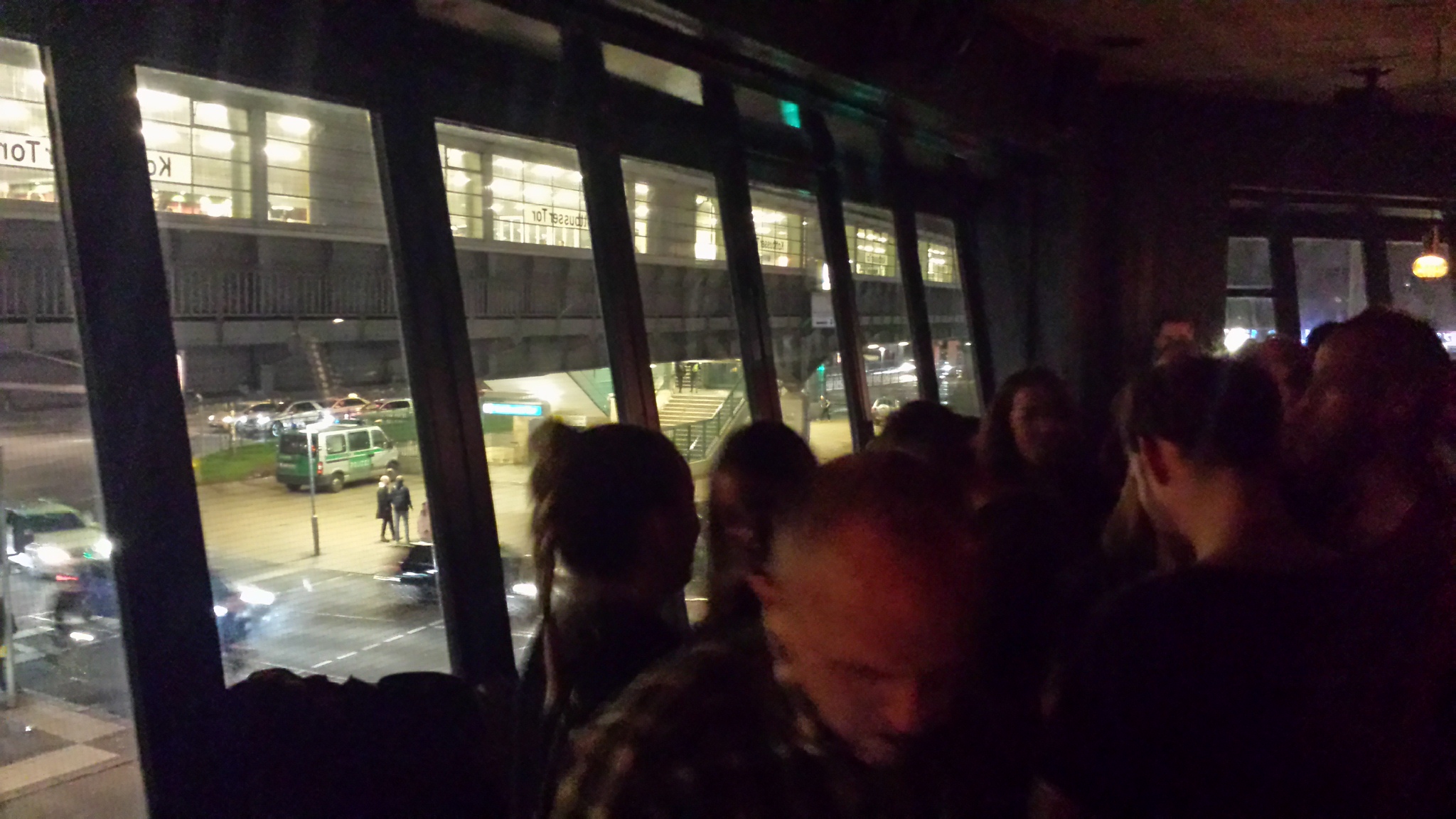
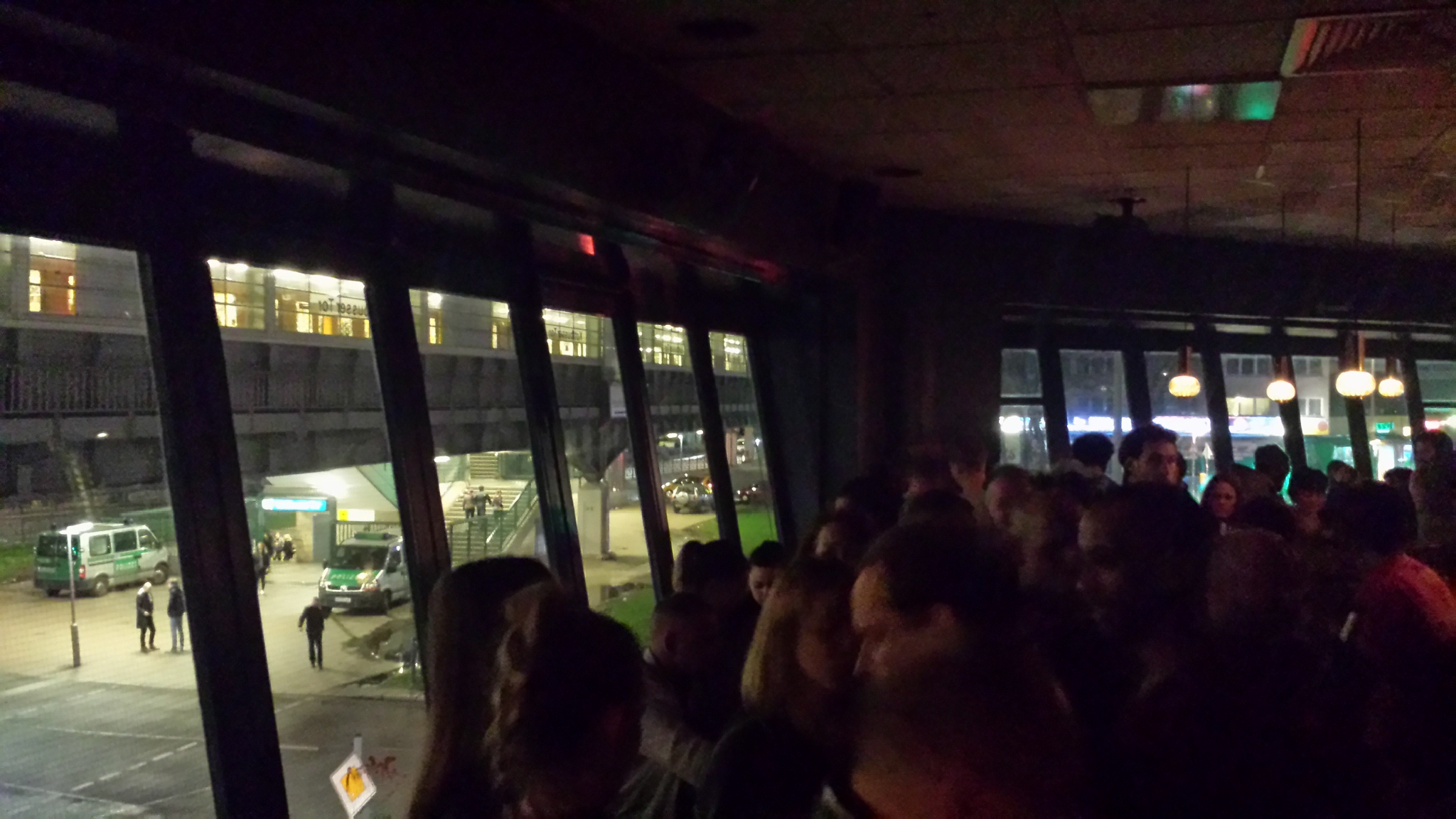
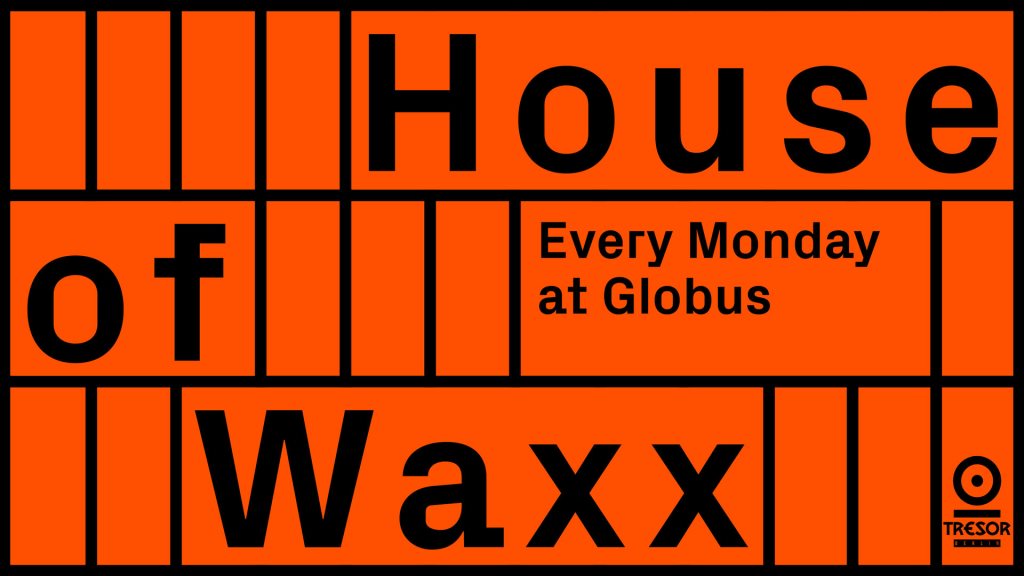
It was always a bit weird playing on that big Globus stage. I am not shy, but somehow it felt wrong. When I was asked to play for this, I instantly thought this would never work on a Monday night. How wrong I was. It was packed. Ah, the final years before everything went down.
1977 bin ich acht Jahre alt, und ein Virtuose der Pausen-Taste meines BASF-Kassettenrekorders. Ich nehme vornehmlich Disco und Glam Rock-Ausläufer aus dem Radio auf. Werner Veigel ist der Yacht Rock-Don von NDR 2. Dann sagt Wolf-Dieter Stubel in der Internationalen Hitparade beim gleichen Sender angesäuert „God Save The Queen“ von den Sex Pistols an. Ich bin nicht überzeugt, aber das Musikprogramm wird in den folgenden Jahren wesentlich interessanter.
1981 habe ich das Nachtprogramm vom NDR entdeckt. Innerhalb kurzer Zeit nehme ich unfassbare Konzerte von Palais Schaumburg, Deutsch-Amerikanische Freundschaft und The Wirtschaftswunder auf.
1985 hat das Format-Radio Einzug gehalten, und es läuft gefühlt nur noch Phil Collins.
1985 wird Paul Baskerville schon wieder einen Sendeplatz beim NDR los, und spielt zum Abschied ausschließlich fantastische Musik aus seiner Heimatstadt Manchester.
1988 tanze ich seit zwei Jahren zu House in Hamburger und Kieler Clubs. Zum ersten Mal im Radio höre ich die Musik aber in einer mehrstündigen Live-Übertragung aus dem Hannoveraner Club Checkers.
1989 höre ich auf einer langen Autofahrt durch Frankreich eine beeindruckende Sendung namens „Ecstasy Club“. Aus Müsique forevör! Kurze Zeit später in Palma, auch nur noch House in der Playlist. Deutschland? Fehlanzeige.
1991 fahre ich durch Niedersachsen und kann endlich mal wieder John Peel auf BFBS hören. Er spielt dreimal hintereinander „Gypsy Woman“. Beim zweiten Mal summe ich mit.
1993 bin ich in London und mache im Hotelzimmer das Radio an. Noch am gleichen Tag kaufe ich auf dem Portobello Market zahlreiche Kassetten-Mitschnitte von amerikanischen DJs auf Kiss FM und englischen Jungle DJs. Ich will auch Piratensender.
1994 ist meine Freundin als Au Pair in Rom und schickt mir Tape-Mitschnitte von überragenden House-Shows des Senders Radio Centro Suono. Ich bin froh, dass es ihr so gut geht.
1994 startet Boris Dlugosch aus dem Hamburger Clubs Front seine Mixshow auf dem Jugendsender N-Joy. Jahre zu spät für das regelmäßige Club-Erlebnis im Radio, aber trotzdem höchst willkommen.
1995 zu Besuch in Berlin, letzte Love Parade auf dem Kurfürstendamm. Vor ihren Club-Gigs spielen eine Menge DJs im Radio. Ich kriege bis heute nicht raus, von wem der „When Doves Cry“-Bootleg ist, den alle zu haben scheinen.
1997 habe ich auch dieses Internet, arbeite mich systematisch durch die historischen Radioaufnahmen der Mix-Sektion der Deep House Page und rücke Kontexte zurecht. Ich brauche alles von WBLS und WBMX und komme mir aus nationaler Perspektive jetzt erst recht betrogen vor.
1999 verbrenne ich eine Menge Geld, um mit meinem AOL-Einwähltarif in Echtzeit ohne Buffer-Aussetzer das Set von Derrick Carter bei der Beta Lounge auf Kassette aufzunehmen und hasse den Real Player mehr als die CDU.
2001 habe ich auch dieses Breitband-Internet. Jetzt brauche ich alle historischen Radioshows, die ich kriegen kann. Kurze später finde ich heraus was ein monatliches Datenvolumen ist. Fies.
2002 habe ich auch diese Breitband-Flatrate und höre regelmäßig das Cybernetic Broadcast System. Dass Italo Disco, die heimlich verehrte Prollmusik meiner frühen Jugend, einmal derart hip sein würde, hätte ich niemals gedacht. Die anderen Bestandteile des Programms freuen mich aber auch.
2004 rotiert auf dem CBS der Acid House-Mix „Smileyville“, den ich mit einem Freund angefertigt habe. Result.
2005 sammle ich immer noch ausgiebig historische Radioshows und Club-Mitschnitte über gängige Suchmaschinen, aber jetzt kommen auch noch Podcasts hinzu. Ich verweigere mich iTunes und lade umständlich einzeln herunter.
2007 frage ich mich, was Steinski wohl so treibt und entdecke seine Themen-Sendungen auf WMFU. Ich höre begeistert Radio, als wären es wieder die 80er. Ein Moderator, ein Thema, Musik zum Thema. Vielleicht geht doch alles etwas zu schnell.
2007 erzählt mir Eric Wahlforss von seinem Start Up zum Austausch unter Musikern und gibt mir einen Voucher. Auf Soundcloud entdecke ich allerdings auch bereits reichlich Fremdeigentum. Mir schwant juristisches Konfliktpotential.
2007 gründe ich mit Freunden das Webzine D*ruffalo und dessen DJ-Exekutive, die D*ruffalo Hit Squad. Wir initiieren die Druffmix-Serie und peitschen nacheinander alles durch, was uns jemals musikalisch begeistert hat.
2010 schaue ich mir Theo Parrish im Boiler Room an, vom Schreibtisch aus. Ich frage mich wie viel bequemer alles noch werden wird, bevor es alle langweilt.
2011 Entnervt von den allwöchentlichen Gig-File-Tauschbörsen entscheiden Stefan Goldmann und ich den DJ-Mailout unseres Labels Macro einzustellen und stattdessen nur noch Radioshows zu bemustern. Wir recherchieren bis in die entlegensten Winkel und sind erstaunt, was es alles gibt.
2013 beginne ich nach diversen Gastauftritten bei terrestrischen und virtuellen Radiosendern über die Jahre bei dem neu gegründeten Berlin Community Radio meine monatliche Sendung „Hot Wax“. Eigentlich will ich nur präsentieren, was ich mir an neuer Musik von Hard Wax mitnehme, aber dann peitsche ich nacheinander alles durch, was mich jemals musikalisch begeistert hat.
2014 sitze ich auf einem Podium zum Thema Radio und Clubkultur. Monika Dietl hat eine Tüte mit Kassetten dabei, und spielt umwerfende Highlights ihrer Sendungen aus den 90ern vor. Nur Musik zu spielen, wie man es zur Zeit meistens macht, ist eben doch oft nicht alles.
2015 beugt sich Soundcloud dem Druck der Majors bezüglich Copyright-Verletzungen und löscht im Zuge auch die Accounts der Internet-Radiosender NTS, Red Light und Berlin Community Radio. Es folgt ein Exodus zu Mixcloud und anderen Plattformen, mit erheblichem Verlust an Reichweite.
2015 stelle ich aus Zeitmangel schweren Herzens „Hot Wax“ ein, nach 35 Sendungen.
2016 stelle ich zufällig fest, dass ich hundert Mitschnitte von Froggy & The Soul Mafia archiviert habe, obwohl mir die von ihnen gespielte Musik oft zu jazzfunkig und raregroovig ist, um mir das öfter anzuhören. Es ist mir aber egal. Ich weiß noch, wie es 1977 war.
I loved a lot of David Bowie songs throughout my life. His landmark albums from the early 70s were still a staple of the radio shows I recorded to cassettes from the mid 70s on. Glam anthems, way ahead to my ears then what became of it in the charts around that time. Glam outfits that were equally way ahead. David Bowie was already somewhere else, of course, anticipating the Disco phenomenon I would soon so love, with Philly’s finest. Then following that up with the Berlin trilogy that would inspire legions to create something great, and look great while doing it, too. Then, when I ran around in 60s clothes in my early 80s coastal smalltown youth, I discovered that he already had been there in the best way imaginable, and his early Pye singles were exactly the attitude and sound I was looking for. He was the definite face. He made no mistakes. He even descended to the kids he created with „Ashes To Ashes“, and he blessed them, as they worshipped him. He was a terrific actor on screen as well, making good use of his ever magnetic charisma and sexually confusing identities there, too. Whatever he did, you watched him very closely, else you could have missed out on crucial developments.
When „Let’s Dance“ was announced as being produced by Nile Rodgers, another inerrable hero of mine, I had the highest expectations, but then could not help feeling let down. There were moments, but not enough of them. And in the period of the mid 80s shortly after, pop’s most successful stars could earn a fortune without even the slightest vision (let alone sound), and David Bowie simply became one of them. As soon as he was dancing in the street with Mick I was just embarrassed. Even his outfits were embarrassing. I was really surprised that this could happen. Enter the years of hit and miss. For every glimpse of his former cool self resurfacing, „Absolute Beginners“ or „Hallo Spaceboy“ for example, he took decisions that were unforgiveably below his par, think Tin Machine, among others. Given, you cannot be visionary forever, however visionary you once were. And David Bowie was more constantly visionary than anybody else, for a long time. But the visions at one point were had by others. Not surprisingly he displayed a clever instinct for picking the right ones to utilize for his purposes, but still they were attached. I did not mind, he was performing the elder statesmanship with grace, and as so many artists were still working ideas he already had before, there was nothing left to prove, only if he wanted to. So screw the stock bonds. I sincerely felt happy for him and his family. He deserved it. Then he kind of disappeared.
When he reappeared in 2013, it felt like out of the blue. „Where Are We Now?“ was the first song of his in years I listened to repeatedly. It was beautiful and it felt good to have him back. I was slightly surprised by its sadness, but I thought it was quite a statement to base its sentiment about the most lauded creative period of your career. It challenges comparisons, and I was sure he was still creatively ambitious enough to try and deal with them, no matter what he achieved before. „The Next Day“ was a good album, too. He did not try to reinvent himself, he looked back on what he invented. I visited the Bowie exhibition that was doing the same in Berlin, just in time before it closed, and I enjoyed it very much. It all came back, rather predictably. His stage outfits on display proved he was a small man, but he surely did not have a small mind.
I did not expect that he would follow that retrospective phase so soon, if at all. And I absolutely did not expect that he would follow it up with an album like „Blackstar“. As before, David Bowie chose to remain silent, relying on producer Tony Visconti to reveal the news of its release. I read his trusted cohort doing that in an interview while travelling. He spoke of references like Kendrick Lamar, Death Grips and Boards Of Canada, and that rock and roll was to be avoided. David Bowie recruited a potent jazz quartet from a New York bar for the recordings. It was all rather promising. When I got asked to write these lines I initially wished I could have listened to the entire album when he was still alive, as I was already overwhelmed to the point of numbness by the reactions to his sudden demise. But when I then listened to it, it became obvious very quickly that he was fully aware that he would have passed away once the public would be fully exposed to it. And that it is pivotal to picture the dying artist for the whole experience. The songs are brilliant. Complex and dense, or just stunning, indeed avoiding rock and roll stereotypes, even if the jazz only adds to the picture instead of dominating it. The mood is intense, but it is not entirely dark. Thinking of the motivation behind this album, David Bowie sounds astonishingly swinging, his beloved voice delivering clever lyrics ranging between the horror of his own decay and the feeling of arriving there content, at ease with himself, with truths simultaneously personal and universal. The video to „Lazarus“ is frightening to watch, but comically absurd as well. The last photographs of him taken show him in a sharp suit, lauging. The way he orchestrated his own requiem is incredible, exactly as he wanted to, and as only he could. Being David Bowie, setting lasting examples yet again. Superior, even in death.





Recent Comments