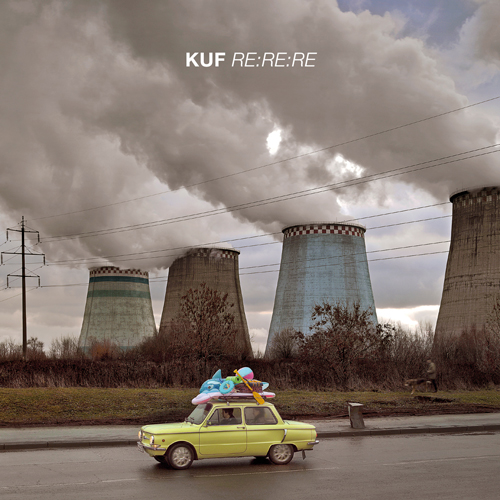
“The idea behind the Power House nights at Paloma was to react to trends that we felt neglected the vibe of the house nights we grew up with. We wanted to offer an alternative to what we call shoegaze house music, and we wanted to bring back the focus to the party. There is no strict musical old school policy, but the feeling is. Even if we do not try to reproduce experiences from the past too nostalgically and too authentically, we like to achieve a collective enthusiasm on the floor that in our opinion is sometimes missing nowadays. To achieve that we play a direct, pumping kind of house music that goes back and forth between anthems and obscure gems from our extensive vinyl collections. DJ Pete and me are the core personnel of the events, and when we team up we like to play topically, shining a light on certain sounds, styles and local scenes that we think should be represented more entirely. We play the records like we have heard them being played when they originally came out (and played by ourselves too) and we often accompany the sets with live beats programming by Pete on a 909, and a special effects unit. For these recordings the topic was acid house. Obviously.”
The
weekender is a very British thing, particularly combined with that
other very British subculture: northern soul. When the first National
Soul Weekender took place in Caister in 1979, some ways of
celebrating the rare soul music scoring the scene had already been
well established: sweaty all-nighters happened all over the country,
where dedicated dancers and collectors met and kept the fire burning.
And all-dayers came into being, allowing the people to indulge in
their passion in different places, with less strict licensing
obligations. The clues were all there. British people liked the idea
to escape their urban working lives to the seaside on weekends. And
the mod culture, always strongly related to soul music, followed
suit, partying (and sometimes fighting) on coastal promenades,
beaches and clubs, as immortalized by tabloid headlines, and a
certain rock concept album plus movie. The brilliant idea in Caister,
however, was to combine all-nighters and all-dayers, and given the
unreliability of the British weather, the concept was due for
success. If it rained, you just danced in a club, and other places.
If not, you had fun at sea, and then danced, day and night, the whole
weekend.
Across
the North Sea in Germany, it seemed like only matter of time that all
this would catch on. And indeed, when the British mod revival of the
late 1970s hit continental shores, it ran through open doors, and the
soul part established itself as a subculture as stubborn and ardent.
The German weekenders followed a different path though. Starting in
1990 in Berlin and then led by annual events in Nürnberg and later
Bamberg, Dresden, Leipzig, Bremen, München, Aachen and more, the
locations were in cities. Hamburg is located very near to the UK and
accordingly anglophile, and came fully equipped with a sizeable
harbour and airport, and so what happened in the UK arguably left a
quicker and bigger mark there than elsewhere in Germany. The city
also had a long tradition of dancing to soul music to rely on, and a
vital club culture, with a long string of cherished soul nights like
the Soul Allnighter at Kir, Shelter Club, For Dancers Only and more
recently The Soul Seven, Motte Allnighter, Cole Slaw Club, Cool Cat
Club and 45 Degrees, just to name a few. But, strangely enough, it
had no soul weekender.
In
2007 this changed, when Ralf Mehnert and Jan Drews Tarazi established
the Hamburg Soul Weekender, with Tolbert taking care of the all-dayer
part. As the three of them were longtime respected DJs and
collectors, the weekender had notable line-ups right from the start,
and every year a thousand international, national and local soul
enthusiasts gather in the storied venue Gruenspan in the seminal
Reeperbahn area, to dance and party to the finest 60s and 70s
northern soul,
modern soul, funk, r&b and other related trends within the scene
that were always spotted early on, and with a keen eye. The music has
been played by over 120 top of the league DJs from all over the globe
so far, and it was always spread across a long weekend of two
all-nighters, one all-dayer, a boat cruise through the harbour and an
after party.
This schedule surely gives leeway to play a whole lot of music, and this compilation can only offer a mere glimpse of all the tunes that got the loyal crowds moving, but it is a heartfelt thank-you to all the dancers who have attended so far, however often they return. And for those who have not witnessed the magic of the Hamburg Soul Weekender yet, please consider this an invitation.
There were several reasons for the popularity of minimal techno and
house in the late 90s and early 00s. For one, a lot of electronic
club music of the preceding years was quite boisterous. Its
ingredients and purpose was often not exactly subtle, satisfying
clubbers and listeners that emerged from the acid house and rave days
with direct signals and relentless dancefloor dynamics. And as soon
as a sound becomes too dominant in the club scene, there is a
reaction, and alternatives develop, and as it happened with the
minimal approach they might even take over what was happening before
and become dominant as well. And a freshly initiated influx of
dancers and listeners had also come with different musical
requirements. While the big room and big festival acts like Prodigy
and the Chemical Brothers converted a rock clientele to the dance
floor, a lot of people who earlier preferred less heavier independent
rock music fell in love with the early Detroit minimal techno
prototypes by Robert Hood , Jeff Mills, Richie Hawtin and Daniel
Bell, and its more dubbed out counterparts around the Berlin
conglomerate of Basic Channel and its affiliated labels, or Wolfgang
Voigt with his Profan and Studio 1 imprints in Cologne, or Force Inc.
and later Perlon in Frankfurt or Säkhö in Finland, or Peter Ford‘s
Ifach and Trelik labels. Furthermore the club scene itself went
through changes. Budget airlines stormed the market and made
travelling to parties affordable, new open air venues and festivals
entered the circuit but they had to make concessions to surrounding
areas and embraced a sound that was efficient without significantly
loud and low end sound systems. Also drugs like ketamine or GHB
became popular and their users liked a sound that was more reduced,
hypnotic and subtle. And soon enough minimal techno crossed over to
house as well, and was out to conquer.
Right
in the centre of these developments was the Frankfurt imprint
Playhouse founded by Ata and Heiko M/S/O, which began as the housier
end of parent label Ongaku Musik, along with its fellow sub label
Klang Elektronik. It put artists like Ricardo Villalobos on the map,
as well as Isolée or Roman Flügel with his Roman IV or Soylent
Green aliases, and they reinterpreted house music with a lot of
attention to details, abstraction, reduction and repetition. Peter
Kremaier aka Losoul was arguably the most defining artist in the
label‘s early stages, and his productions had a signature sound
that is still unique. He probably was inspired by the layering
experiments of DJ Pierre‘s wild pitch sound or the immersive deep
house of Ron Trent and Chez Damier, but his own tracks soon took off
into their own creative zone. Beginning with 1996‘s „Open Door“
the following 12“ releases „Mandu“, „Don Disco De Super
Bleep“, and „Synchro“ were masterclasses in dancefloor
mesmerism. Over beats more pumping than those of his label peers,
subliminal percussion and chopped chords, he worked with
deconstructed disco and funk loops and occasional vocal samples that
were so perfectly captivating that he could ride them over extended
tracks that gradually introduced element after element with logical
patience, resulting in trips you felt should never stop. But by the
end of the 90s the structure of his tracks became less strict, and he
also explored different sounds on dark, bass heavy tracks like
„Ex.or.zis.mus“ or „Brother In Love“, to fine effect. It
seemed what was still needed was an album to round up this artistic
phase of his, before he would potentially venture into something new,
or different.
When
said album „Belong“ was then released in 2000, it came as
surprise to many of his followers. The opener „Taste Not Waste“
is deceiving, as it is a brooding punchy excursion that would not
have been out of place on the preceding 12“s, but already the
following track „Late Play“ is a weird off-centre sounding sketch
in comparison, hinting at the fact that the artist would not give
away the chance to represent more of his repertoire than his
trademark club stylings. „Resisting Curare“ takes up on the
quirkiness, albeit speedier, while „Overland“ is an eccentric and
playful take on the ever reliable Billie Jean groove, coming across
like a cross between the original groove and „Kaw-Liga“ by The
Residents, with extra weirdness. Then things take another unexpected
turn with „Sunbeams And The Rain“, which in my humble opinion is
one of the most astonishingly beautiful and sublime tracks ever to
merge deep house and techno. Only slightly erratic, this majectic
masterpiece is followed by the chunky slow groover „Position“,
which dubs down the proceedings before the sparsely tripping yet
funky „Depth Control“, another demonstration how much you can
achieve with just a few thought-out, gripping elements. Next is „You
Can Do“, which contains the sunniest loop Kremeier produced up to
that point, a spiralling, almost balearic melody which does not let
go for most of the track, thus resulting in another track you can
completely lose yourself in, although it achieves that typically
intense Losoul sensation with an untypical joyful mood. The last
track „Trust“ is a warped and chopped hip hop version of Bill
Withers‘ „Use Me“ that would grace any tape of later L.A.
beatmakers, and it makes you wonder what whole other sounds the
artist might have left in the vaults.
Although
Losoul has continued to drop releases of consistent quality, I think
„Belong“ marks the end of a certain era, in which he acted as a
true solitaire, even among likeminded and similarly talented cohorts.
To me it seems that only shortly after the imaginative ideas of the
minimal techno and house of those years time soon were often forsaken
for a sound that was already looming, more eager to please, and less
interesting to listen and dance to, however exceptions might prove
the rule. But it is undeniable that here lies the foundation for
many backlashes and resurgences to come.
There was this moment in the 90s when the sound of house music changed, with lasting consequences. I would say it began in 1993. Of course technical progress in terms of production techniques and equipment played a role, but it was also very important that the music itself became more popular, and attracted bigger crowds, which led to bigger clubs, and a house sound that pumped crowds and clubs of that size sufficiently. In the following years the superclubs emerged with corresponding budgets, and they needed DJs that played accessible enough to please and unite as many people as possible. This created a divide between denonimators, as simultaneously a lot of DJs and producers defined quality in a different way, and played different styles, to smaller crowds, in smaller clubs. There were DJs and artists that lived in both worlds, or crossed over, and both worlds had different levels of credibility, and success. But increasingly the circuits frowned upon each other, and disrespect was mutual. The big room house music examined here was produced at a time when it had a really bad reputation, being accused of being commercial, devoid of original ideas, or milking once original ideas for far too long. Indeed the sound templates for the music in this playlist had been established years before, and it seemed as if they were only developed further if really necessary. Some of the big room artists were once renowned for different music, and many were quick to maintain that at some point they were selling out and adapting to lesser creative requirements to do so. And some smaller room artists were maybe just envious and could not produce a tune that sold as well, and just claimed they did no want to. And of course for a lot of people it does not matter what size the room has, they just go for music based on their individual preferences, and find that in different contexts. But meanwhile in the early 00s, big room house had its apex of booming beats, dramatic breakdowns and disco samples, and here are some prime examples of the sound.
Victor
Simonelli – Ease Into The Dance (Stellar, 2000)
Victor
Simonelli has many great moments in his back catalogue, and in my
opinion this on par with his most cherished productions. For me the
combination of the bodiless vocal sample and the pumping yet and
elegant deep groove is as immersive as Love Inc.’s “Life’s A
Gas”. I’m serious.
Lenny
Fontana & DJ Shorty – Chocolate Sensation (Original Force Mix)
(FFRR, 2000)
Johnny
Hammond’s early disco staple “Los Conquistadores Chocolates”
was sampled countless times, but not as sweeping as on this belter.
Extra props for the extended filter break which then erupts into
Loleatta Holloway on the top of her lungs. This track pushes all the
right buttons, and works although you can predict any move, only that
every move sounds even more striking than the one before. If you have
never been on a dancefloor exploding to this, you really missed out.
Groove
Assassins – Everything I Knew (Black Vinyl, 2000)
If
some of the orchestral disco maestros would have still been active in
the 90s their music could have sounded like this. Even if this is
just a reconstructed original from their heyday, with a heavily
beefed up groove. Nick Moss and Will Hague understood the craft of
their forebearers on this track, and they made it their own.
Rhythm
Section Feat. Donald O – Do You Know (Main Mix) (MAW Records, 2000)
Every
disco DJ should bring at least one Chic Organization production to
their party, and every disco loving house producer should sample at
least one as well. Henry Maldonado went for “My Forbidden Lover”
and then he turned it into a glorious garage opus, co-written and
performed by the great Donald O. This should have been much bigger
than it actually was, but it is never too late.
David
Bendeth – Feel The Real (Jazz-N-Groove Ultra Classic Mix) (Audio
Deluxe, 2000)
“Feel
The Real”was indeed an ultra classic, albeit on the jazz
funk/disco circuit of the 80s. By the time this was released
Jazz-N-Groove had perfected their slick but heavy groove template so
impressively that they basically could have applied it to any tune
they were given and come up trumps. Judging by their vast output,
some say they did just that.
LoveRush
– Luv 2 See Ya (Joey Negro’s Vocal Mix) (Azuli, 2000)
Joey
Negro always knew how euphoria works, and here he aimed straight to
the highest level of it. There is some sweet innocence about the
tune, but the pumping groove underneath and several breakdown dramas
tell you to work it. Hard.
Copyright
Presents One Track Mind – Where Would You Be? (Main Mix) (Soulfuric
Trax, 2000)
The
way D-Train’s “Music” is filtered up and down here is very
reminiscent of the finer moments of the French House phenomenon, but
the groove somehow is not. It is just too pushy and impatient, and
the vocal samples get a more generous treatment, verging on harmony.
All good decisions.
Johnny
D & Nicky P – Wild Kingdom (4th Floor Records, 2001)
Of
course big room productions could work well with deeper sounds, and
Johnny D and Nicky P aka Johnick knew how to achieve severe
dancefloor hypnotism anyway. As always when they are in charge, the
music has this strangely psychedelic notion, and „Wild Kingdom“
is another of their real gems to get lost in.
Sunshine
Anderson – Heard It All Before (E-Smoove House Filter Mix)
(Atlantic, 2001)
E-Smoove
was mostly not as smoove in the 00s as he had been before (but who in
this field actually was), but if you remix a sleek R&B hit, you
cannot fire on all cylinders. Still this has the right amount of
infectious funk and it does not divert any attention from the song.
If you think of the proximity to garage vocal harmonies there were,
rather surprisingly, not that many great remixes that managed to
aptly transfer R&B to a house context, but this one gave a lot of
the right clues.
Kraze
– The Party 2001 (Love City Club Remix 2) (Groovilicious, 2001)
It
reads so unimaginative, taking Todd Terry’s “Can You Party”
and the acapella from Kraze’s “The Party”, two early house
productions that were completely overused at that point, and turn
them into a fierce banger that pretends New York City’s big room
haven Sound Factory never closed. And actually the way the track
works all that is really not that inventive. But as it steamrolls you
on that floor, you will not care one bit.
UBP
Feat. Bobby Pruitt – We Are One (Jazz-N-Groove Hands Up Vocal)
(Soulfuric Recordings, 2001)
I
love how this mean little melody never lets up, totally regardless of
the fact that there is a funky booming bassline, a quite shouty soul
singer, a female choir, and several breakdowns, the whole big room
house gospel spectrum. This is a big show, but one detail steals it.
Genius.
DJ
Oji – We Lift Our Hands In The Sanctuary (Anniversary Vocal)
(Sancsoul Records, 2001)
The
original was one of the churchiest of the churchy house anthems, a
whole nocturnal service for those who need the club as a shelter and
a place for relief and rejoicing. 95 North remix it into a way more
urgent groove, but do not sacrifice any of the worship and righteous
spirit. Hands were lifted and love was alive, again.
The
original was a jazzy funked up groover that was hugely popular, but
Frankie Feliciano boldly opted for a complete rework, keeping the
keen message intact but underlying it with unsettling and swirling
sounds and beats that reference Pépé Bradock‘s „Deep Burnt“
and a lot of earlyTodd Terry productions.
Los
Jugaderos – What You Doing To This Girl? (Norman Jay’s Good Times
Re-Edit) (Junior Boy’s Own, 2003)
In
1996 Ashley Beedle and Phil Asher turned a marvellous 1979 disco gem
by Dazzle into a blinding and tripping house excursion. Seven years
later the original rare groove don Norman Jay gave it a remix, and
when I read about that then I was expecting it to sound truer to the
Dazzle original and Jay’s own legacy. But to my surprise his version
was way punchier, and to my joy he highlighted all the best bits even
more. Pure disco house bliss.
Hardsoul
Feat. Ron Carroll – Back Together (Classic Main Mix) (Soulfuric
Recordings, 2003)
Nothing
better than to conclude a fine time at the big room house club with a
big room soulful vocal house hymn. Even better when that tune is ever
so slightly less big roomy than what happened before, but still
easily keeps up the intensity and punch, just because it is a
wonderful piece of music that knows and serves its context. From here
you may start all over again or leave it behind, but both happily.
Recent Comments