@ Life And Death On The New York Dancefloor
Posted: December 5th, 2016 | Author: Finn | Filed under: Gigs | Tags: Hamburg, Tim Lawrence | No Comments »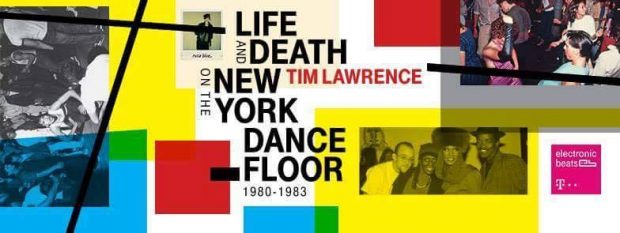

In discussion with Holger “Groover” Klein on “The Call Is Strong” by Carlton (1990).
What was your first encounter with „The Call Is Strong“?
Alongside Daddy Gee, Carlton was featured on “Any Love”, the very first Massive Attack single which was a cover of one of my favourite songs from Rufus & Chaka Khan. I was a huge Chaka Khan fan by the way, I went to quite a few concerts. The very first time I saw her, I even waited for her at the backstage entrance because I wanted to have an autograph. Want some trivia? In the 90s, she had been living in my hometown Mannheim for a few years. Back to Carlton, I was really impressed by his crystal clear falsetto. I think “Any Love” came out roughly about the same time as the first Smith & Mighty singles, so this was the starting point of the Bristol sound. I first heard about the Bristol sound when I read about it in i-D magazine or The Face. So I already knew about Carlton when his first album dropped. I bought it at the local WOM store where I used to work back then.
1990 was a very exciting year for club music. Why did you choose this album over others? Why was and is it so important for you?
After you approached me for “Rewind”, I thought that I would have a hard time choosing “that” record. But then I stumbled across a 12” of his song “Cool With Nature” which contains killer remixes by Bobby Konders. So I remembered how much this album meant to me. When I listened to it for the first time, it blew me away. Smith & Mighty did a fantastic production job. At that time, it was very state of the art incorporating elements of Dub, contemporary US R&B, classic Soul, Reggae, electronic sounds as I knew them from House music and even some Swingbeat bits. I fell in love with the ethereal and often spliffed out vibe of the album and Carlton’s songwriting.
How do you rate Carlton as a singer? Why do you think they chose him, and could the album have been as good with another singer?
Carlton’s voice struck me instantly. I think he is a truly underrated singer and it’s a pity that the album wasn’t successful. His voice is really unique, that must be why Smith & Mighty chose him. It was his album, not a Smith & Mighty project in the first place. When you listen to him you can clearly tell that he’s coming from a Reggae background. On “The Call Is Strong” he sounds like a Reggae vocalist singing some kind of otherworldly UK version of R&B.
The album is taking quite some detours. For example „Love And Pain“ could have been a 2 Tone ballad from years earlier, while „Do You Dream“ is right on par with breakbeat pioneers like Shut Up And Dance or 4 Hero. How does „The Call Is Strong“ work as an album? How pioneering was what Smith & Mighty did?
It was very pioneering! The sparse beats, their very English way of bringing together the Jamaican sound system culture and US Hip Hop without sounding like eager copycats. And of course, as they grew up in England, they must have been in touch with 2 Tone stuff as well when they were teenagers. You’re right, you can also trace down elements that became integral with the Breakbeat scene which was already emerging at a very early stage.
I first became aware of Smith & Mighty when they appeared with their Bacharach reworks „Walk On“ and „Anyone“ two years earlier, to which „The Call Is Strong“ sounds like a continuation. I thought they sounded like nobody else at that time. Suddenly Bristol was on the map, making a difference. But could anyone predict how big that difference would be?
You could clearly hear that Smith & Mighty and Massive Attack were making a difference when their first 12”s came out. It all sounded so new and fresh. But I really had no idea how big this Bristol thing would become. Also I had no idea how misinterpreted the whole thing would get when the term Trip Hop emerged.
There were groups emerging in the late 80s that were deeply rooted in sound system culture, but why were Massive Attack and the London equivalent Soul II Soul so much more successful than Smith & Mighty? Were they less traditional and closer to pop music’s proceedings? And why do you think didn’t Carlton manage to establish himself as an ongoing fixture?
Massive Attack and Soul II Soul had the big hit singles. But not by accident, both had good labels with a staff that knew how to work their releases. Smith & Mighty signed a major deal as well – with FFRR, at that time a subsidiary of London Records/PolyGram. The first big project was Carlton’s album, which didn’t prove to be as successful as expected. Then Smith & Mighty were kind of locked in this deal. Under their own name, they only released a four track EP on FFRR. I would say they missed the right moment due to this deal. It took them years to get out of it. Read the rest of this entry »

How come you did 3 mixes for our podcast series?
The original idea was to record mixes for my wife to listen to in the car on her way to work. She loves anything UK and bass & breakbeats related, but I have not made a mix for her before with the styles contained here. It was meant to be one longer mix at first, but then I found too many tracks in the shelves I just had to include. It was the same with a 90s Deep House retrospective I did for Modyfier early last year. I’m afraid I cannot portion myself anymore. And I hope it does not become a habit, it really messed up my weekly schedule.
Can you tell us something about the concept behind every mix?
The concept is really simple. Mix 1 starts with 80 BPM, Mix 3 ends with 150 BPM, halftime though. The pace gradually increases in between, and the mixes are more sequenced then mixed. Predominantly for listening purposes, but feel free to move if you want to move. The music is a diverse mix of Grime, Hip Hop, R&B, Dubstep and affiliated sounds. As mentioned, the reason I chose these sounds were mainly motivated by my wife’s preferences, but recently I was also getting really fed up with the current high level of pretentiousness in club music. Every day I hear House and Techno music and I see designs and read track titles or concepts that are desperately pretending something but there is actually not much going on beneath the surface. There is some longing for intellectual weight and diffuse deeper meanings, but there is a considerable discrepancy between creative intention and creative result, and a disappointing display of conservative ideas in the process. I think a lot of the music you can hear in these mixes is not afraid to use commercial elements and turn them into something that is innovative and more forward-looking than other club music styles that want to be advanced, but in fact just vary traditional formulas. You may argue that lot of the tracks I have chosen sound similar to each other as well, but I would like to think of the listening experience as a whole, and that for me presents a much appreciated alternative. I do not think it is better than other music I am more associated with as a DJ, but for me it helps to look elsewhere as soon as routine creeps in. I usually regain patience with the sounds I am normally occupied with if I do so. But apart from a regular change of perspective, I also cannot listen to 4/4 club music more than I do for all my work commitments. That is more than enough. I like to reserve my little leisure time for music I do not know as well.
You’ve been heavily influenced by Hamburg’s legendary club Front. Do you think that a club nowadays can have such massive impact on local and even nationwide music scenes like back in the days when dance music was born?
I don’t think so. At least not until you can present a sound that is new. In that aspect Front is a good example. It existed from 1983 to 1997. Just think of all the new club music styles that occurred in that period of time, and then compare that to the last few years. Apart from Grime and Dubstep most new music played in clubs now is a variation of the music that came into being in said period. I am very grateful that I belong to the generation that could witness that directly on the floor. Pioneering days are always easier. Of course the combination of extraordinary DJs, a dedicated crowd and a unique location and interior will always work, but I think that in recent years a lot of clubs did not become widely known for paving the way for crucial musical developments. They became widely known for good bookings that make a difference and for being an outstanding attraction as a club itself. Clubs and DJs can still inspire new ideas and even change lives, but I doubt this now happens on more than an individual scale. I welcome the next lasting musical revolution in club culture though, it is overdue.
Macro has always been a very versatile sounding label covering new and almost forgotten releases. Who does what at Macro?
Stefan Goldmann concentrates on the manufacturing, mastering and administrative side of the label, I concentrate on how we communicate what we do to the outside world and the digital and virtual part of our catalogue. But we both decide what we want to release and with what artwork. And we are in constant touch with each other about every aspect running a label requires. There is no other way, at least not for us.
What are the future plans for the label?
We are constantly looking for new talents that we feel can add something other to the canon. Thus we signed the band KUF, whose first single is out while you are reading this. They are also working on their debut album, due later this year. And then we always appreciate new material by artists we already worked with. Elektro Guzzi for example are also working on a new album, others to be confirmed will follow suit. There will be new material from Stefan as well, which will probably draw from recent commissioned works. And there will be another album with compositions by Stefan’s father, the late Friedrich Goldmann. For the rest of the future, we just try to keep going as long as we enjoy to keep going.
You’ve written for the highly acclaimed but now gone German print magazine De:Bug. Do you miss it? What do you think of today’s dance music journalism?
I actually do miss it, yes. De:Bug offered content that other German music magazines do not offer, or do not want to offer. Every defunct print magazine takes away something that is not necessarily replaced. Not by other magazines, and also not by web media. And there are not enough websites in Germany that reach a wider readership. I can remember a lot of people sneering at the demise of De:Bug, they felt a print magazine was outdated anyway. But every media outlet passing away also diminishes the reach you can have with what you do. And in times when it is quite a struggle to make a living from whatever profession within the music industry, this is a problem. Unfortunately this struggle also changed today’s music journalism. For the worse, in my opinion. There is more clickbait controversy than well researched discourse. Occasional thinkpieces are presented as something exceptional, when they should be the norm. I notice a worrying increase in factual mistakes when I read print or web media these days. There probably is not enough budget for sufficient editing, but even if the small budget only allows freelancers and interns and only a few journalists on a monthly payroll, thorough supervision should be a must. Otherwise you can hardly justify that people should still buy a print magazine for example. And too much online music journalism is just a newsfeed. I get a lot of PR mails on a daily basis, and a lot of them I will find on websites only shortly later, too often without any own words added. Music journalism should offer individual perspectives and opinions, based on individual research. Else there is not enough to learn from it. I think it is a bit sad that a lot of interesting debates about music happen on social media, and they are not even sparked by interesting features in other media. A good music journalist should try to lead the way, and not vice versa. And in any case the traffic obligations should not lead the way either.
Back then journalists were always one step ahead and everyone relied on their reviews. Now you can stream everything via Soundcloud or preview via the shop websites. From your record shop buyer perspective: are record reviews still relevant for you?
Not really. I mostly order releases for Hard Wax weeks in advance before the according reviews are published. Web is usually quicker than print, but still most reviews are connected to actual release dates. The rest of the texts sent my way want to sell their product, they are not reviews per definition. But I always choose to remain as neutral as possible. I listen to the music first, and then I may read the accompanying text about it. In my experience as a buyer it is very advisable to follow your own instincts. I register the opinions of distributors, labels and early adopters, particularly if I think they are reliable. But they do not really influence my decisions what to buy, and in what quantity. That is a different reality.
Lowtec told us that they were calling Hard Wax from their telephone booth back in the 90s and that one of the sellers previewed them the tracks via phone. When and where did you started buying music and how did that change over the time?
I bought my first records in the mid 70s, when I was about six years old. And then I never stopped. You only learnt about new music from friends, record stores, magazines, books and radio. Sometimes it took me quite a while to figure out certain tracks I liked in clubs, sometimes I never succeeded. The internet of course changed all that dramatically. You can learn about anything in a short time, and then you can purchase it a few clicks further. I also called up Hard Wax to buy records in the early 90s, holding up the newsletter leaflet with highlighted picks. That always felt a bit awkward, compared to just browsing through the crates of a well selected record store. But however convenient it is nowadays to gather knowledge about music and then acquire it, it is not necessarily more exciting to do so. The process almost completely neglected the element of surprise and there is a linear way to what you want. Still, whenever I find a record in a store I was not aware of before, it feels much more satisfying than finding music online. Store finds beat web finds, and I like surprises. And I do not want anything to fall into my hands, I do not want to feel lazy. And I will probably never value an audio file in the same way I value a record. I think you lose the respect for the music you are listening to if you do. But all that is a generational thing, even if a lot of people way younger than me are getting into vinyl. It is the privilege and imperative of youth to question the habits of the previous generations. I certainly did the same. But now I gladly act my age.
We’re always wondering how do you manage the flood of new releases as Hard Wax buyer?
You have to organize yourself cleverly and you have to know what you can ignore and when. And you have to develop ways to keep being interested. If you lose your curiosity, you have a problem. Personally, the minority of records that I find interesting outweighs the majority of records I do not find interesting.
Will there ever be a book about those famous one-liners?
We are aware of the cult status our comments have, but for us they are more a means to an end than anything else. But if someone rises to occasion, I hope it is highly recommendable to the point of being killer, and not just writer tool literature.
Finally, what do your children think about what you do?
I have a wonderful five year old daughter, and she knows exactly what I do. She likes to listen to music, either on her little cassette or CD players, or when I play records to her. She thinks I have too many records, but she also likes them. Especially since she brought some of her Kindergarten friends to my room and none of them had ever seen a record, or a turntable, and jaws dropped. She copes with me being away on weekends or working at night by thinking I am at least a little bit famous, and that what I do makes some people happy. She might even be a bit proud of me when she hears or sees me play on the web, or when she sees photos of me somewhere, or flyers and posters, or articles I wrote. But it is not too important for her and she does not want to do my job later on either, because she likes to sleep at night, and have her weekends off. Her favourite tracks are “Die Roboter” and “I Like To Move It”.
Finn Johannsen – Uncanny Valley Podcast 40.1 by Finn Johannsen on hearthis.at
D The Koreatown Oddity – Title Sequence
Jhené Aiko – To Love & Die
Kid A – BB Bleu (Original Demo)
Nosaj Thing – Let You
Mr. Mitch – Dru
S-Type – Lost Girls
Banks – F**k Em Only We Know
Lil Silva – Don’t You Love
Hudson Mohawke – Ryderz
Jam City – Crisis (Special Mix)
Cassie – About Time
Cid Rim – Red Ocean
Jhené Aiko – Lyin King
Morgan Zarate – SP
KUF – Odyssee
Dolor – Our Number
Cassie – Just One Nite
Hudson Mohawke – All Your Love
Mr. Mitch – Padded
NxxxxxS – Ice Cold Ocean
Shriekin – Red Beach (Strict Face’s Starfall Edition)
Silk Road Assassins – T
Morgan Zarate – Pusher Taker
KUF – Wildlife
Blood Orange – You’re Not Good Enough
Fhloston Paradigm – Chasing Rainbows
Carby – Speechless
Rosie Lowe – Right Thing
Gent Mason – Eden
Kuedo – Memory Rain
Throwing Shade – Mystic Places
Plata & Glot – Ghosted
Cooly G – He Said I Said
Snoop Dogg – Sensual Eruption (Instrumental)
Blood Orange – High Street
Tala – On My Own In Hua Hin
Kingdom – Goodies Remix
Hudson Mohawke – Indian Steps
LHF Vs The Ragga Twins – Street Wise
Dizzee Rascal – Strings Hoe (Wen Refix)
Kuedo – Whisper Fate
The Range – Two
Kuedo – Vectoral
Epoch – Windmill
I set up this archive of live recordings from Front club with the help of Boris Dlugosch and some former Front kids. This is quite a legacy to listen to, fill your boots.
Golem was a really nice basement club in Hamburg, which sadly closed down.

Recorded live at Woodwork, Golem, Hamburg, March 27, 2015.

Pic by Katja Ruge

I was there the night Frankie Knuckles played at Hamburg’s Front Club in the early 90’s, the first time you could ever see the DJ in the booth there, which was usually entirely closed except for some really small peep through holes. He entered the booth, set up a small fan, a bottle of cognac, hung a towel around his neck, and proceeded to play. He played very gracefully, letting each record play from beginning to end, at a moderate pace, but perfectly sequenced and mixed. I remember the crowd taking a while to get used to this DJing style, as the sets by the Front residents where usually comparably more dynamic and going back and forth, but it really told me a lesson how to let the music shine when it needs to shine and I was deeply impressed. And I remember that I felt very happy to be able to hear and also see him doing it. Still am. R.I.P.”
Now a year has passed, and a lot of things have happened since his passing. I was sure that I would never forget how much he mattered to me with everything he did, but I was also accepting that it would occupy my mind less and less with time passing by. Except it didn’t. I kept pulling old records with his “Classic Club Mix” credentials from the shelf, humming TUNES, and not tracks, taking a bow at the elegance and SOUL of the Def Mix arrangements and constantly wondering why there is so little left in my environment of what he established. So I decided to do pay my dues and start an irregular series of Hot Wax shows that simply ask: “What would have Frankie done?” I could only guess, so forgive any inadequacies.


I first heard this record played by Boris Dlugosch at Hamburg’s Front Club, sometime in the 90’s, where particularly “Illusion” became a cherished and trusted screaming anthem. It was a fairly obscure Jersey sound item, but not that hard to find. I actually got a hold of it in a bargain bin for just a few Deutschmarks, and since every time I played it out over the years people kept asking about it, I kept recommending it and every new owner was happy to find something so special for so little money. I was convinced it could stay this way forever and never checked back, but as I played “Organized” at Vancouver’s New Forms Festival this year (see Hot Wax 022, around the 1:50 mark) it was welcomed on the floor like an old friend, with people coming up to thank me for playing it out, and cheers all round. I told them the usual about it being a gem that is still out there for easy grabs, and then to my surprise got told that it was quite the opposite now. Well, it totally makes sense.
DJ Dove probably would have loved to sound as classy as the more successful protagonists of the New Jersey and New York House scene, but it is most likely that there was little money for equipment and studio and his label maybe had even less to spend. Thus you have a record bursting with great moments, and mastering and cut do their best to reduce it to a back door to back alley version of what was best intended, and still it is a wonderful example of what you can achieve as long you have ideas. Nowadays each week sees releases by up and coming producers who gather costly vintage equipment (or according presets) and muffle what they have on purpose, aiming for grit and that enigmatic authenticity, an air of mystery even. Still, if you think what you hear without the filters and hiss, there is not much left to stay in your memory but an aesthetic which has already crossed the gap to a cliché without much meaning. And the reason why a track like “Organized” is still ruling is hardly because it is raw, it is because it is a really good track. But there are plenty of forgotten releases from the past like this, raw because there was no other way, and there will be plenty of new releases longing for this punk deepness, and coming up with the necessary tunes to combine a certain attitude with, well, music. You will have trouble achieving longevity if you neglect the music for anything else. Here’s proof.


Recent Comments