Mix & Interview for Twin Cities
Posted: November 24th, 2016 | Author: Finn | Filed under: Interviews English | Tags: Berlin, Copenhagen, Interview, Twin Cities | No Comments »Vocal house mix for Twin Cities, Copenhagen. Now defunct.
Vocal house mix for Twin Cities, Copenhagen. Now defunct.

In discussion with Lerosa on “Electric Café” by Kraftwerk (1986).
There was „Computer World“, then the „Tour de France“ single, then a silence of several years. I was impatiently waiting for their next move, and it kept getting renamed and postponed. Then the first thing I heard at last was „Boing Boom Tschak“. I thought that was pure genius. I suppose you were already a fan before, too. How did you experience that comeback and what did you think of it?
My first encounter with Kraftwerk was when I was 14, the video for „”Musique Non Stop”“ premiered on MTV Italy, with its groundbreaking CGI it was unique at the time. The only similar music I might have had come across then was probably Art Of Noise’s „Close To The Edit“ and Herbie Hancock’s „Rock It“. I didn’t have access to a lot of music as I had no older clued-in sibling nor were my parents into music, perhaps bar my mom who loves her Charles Aznavour and Lucio Dalla, so to be honest I had no idea who these guys were but I was blown away. To me this was new music from a new band! Sometime later I made friends with a guy from Bolzano who told me to check out the „Breakdance“ movie to see Turbo do a routine to „Tour De France“, a freaky song with electric pulses that sounded like a bike chain. After a few months of looking for it I watched the movie, and heard that, too. A year later on holiday in Rimini I shoplifted „Autobahn“ and „Radio Activity“ and I loved both but also not understood them very well as they packed a lot of references to more experimental music I wasn’t quite well versed as a 16 year old. It wasn’t until much, much later that I finally heard „Computer World“. I don’t think I have heard the first two albums yet. I think for a lot of kids back then “Musique Non Stop” was their first meeting with Kraftwerk. Like a lot of people I was a bit disappointed with „Electric Café“ at first. I thought the A-Side was a wonderful statement, but the B-Side lacked the same consequence. I liked the sounds, but I was not that impressed with the tunes. But it has grown on me immensely, starting only shortly after.
Is this album perfectly flawed, a good example for an album that does not lose its impact due to shortcomings?
I think after getting the 12“ for “Musique Non Stop” and eventually finding the LP I too might have been not very enamoured with B-side with its cringey songs (in English, that’s the version I had). It was too much like the music on Italian commercial day time radio and I was being drawn to these new sounds, Hip Hop and early House, that were starting to seep in through the late night radio stations and occasional afternoon clubs we had in Italy for 14 to 17 year olds. I wanted to hear this new Rap music and these new weird electronic House beats, I had no time for the „Telephone Call“ etc. Nevertheless I was charmed by them as the melodies and arrangement were very catchy.I am not sure if I ever thought of it as flawed; it felt like a cohesive whole, just one where I failed to connect the dots, which is how I normally felt whenever I heard something new that really alienated me, say Peter Gabriel „IV“. I just always thought I didn’t know enough to understand it rather than thinking, „oh this is a bit shit“. I think it is insecurity that made me look at it with respect rather than try to judge it as an album. I don’t think I owned many albums back then at all.Whichever way it is, the B-side songs eventually have become the ones I play most often, especially „Telephone Call“, which I love very much. And likewise I love a lot strange pop albums like Peter Gabriel’s „IV“, or Frankie Goes To Hollywood’s debut album or indeed „Who’s Afraid Of The Art Of Noise“.
Ralf Hütter had a severe cycling accident that slowed the work on „Electric Café“ down considerably. Do you think the flaws of the album are there because they rushed proceedings to not lose more momentum?
Who knows. I’d like to think that this was delivered the way it is quite intentionally to showcase the connection between the new sounds and beats of the A-side and the more traditional songs on the B-side, all held together by the electronic sounds. I think I always looked at this record like that; as a sort bridge between the old and the new.
The working title of the album was „Techno Pop“, and they even renamed the album later on. But isn’t the B-Side more Techno Pop than the A-Side? Could’t they have made one album that was pop, and one that was pure rhythm?
Well, I am sure that back then I probably wished the same, I would have loved more of the A-side but in hindsight maybe that would have really made it too niche and austere an album to their ears, coming as they were from a mixed background of musicality and experimentation, I suppose they were trying to find a balance on one record rather than being too pragmatic and split it into two separate entities.
I once imagined that „Sex Object“ was actually a first glimpse of a whole other concept album that was neglected, just for the lack of a better explanation why it was included. Especially the lyrics seemed to clash with their usual man machine infatuation, they are very human. As are the lyrics of „The Telephone Call“. How human are Kraftwerk?
I think they are very human and that’s why they are so popular to this day. Their appeal goes way beyond the mere “electronic music” tag, it doesn’t rest on the laurels of introducing a lot of complex machinery to music. They articulated the new relationship between humans and the technological world with sounds that managed to be extremely human and extremely non-human. Quite the trick. Read the rest of this entry »

We should probably start at the very beginning. What were your baby steps as a DJ, what led you to being a DJ in the first place?
I think in the first place was the love for music. And I can remember when I was really, really young, with a babysitter, and we’re talking about the days of 45s. The first record that I actually remember and I was spinning was „Spinning Wheel“ by Blood, Sweat & Tears.
Good choice.
You know my family was from Puerto Rico and there was no American music in my house.
It was mostly Latin music?
Only Latin music. And we’re talking about Merengue, Salsa. Folk music from Puerto Rico. And I didn’t like it. And it’s funny because today I appreciate Latin music. Since I became a producer, now I appreciate Latin music for the production, the instrumentation, the musicians, because Latin music is not machine-made, not at all. So the first 45 that was in my house was “Jungle Fever” by Chakachas. My parents had this fucking 45 that was this erotic fucking record. And we’re talking about these stereos that were like these big fucking wooden consoles with the big tuner for the radio and the thing with the record where you put some records in the thing and it dropped one at a time and when it ended the thing drops. It must’ve been when I was about six or seven there was an illegal social club. You know I was living in the ghetto. So there were illegal social clubs that were like a black room, with day-glo spray paint, fluorescent lights to make the paint glow and they had a jukebox. And they’d play the music back then. „Mr. Big Stuff, who do you think you are“. It was all about the O’Jays and that kind of music. And I liked that. I used to sneak downstairs and such.
So when was that?
It was like the late sixties. Because I was born in ’62 so by ’70 that makes I was 8 years old. So it was before that because then I moved. Anyway, so fast forward the first 45 that I liked was the O’Jays. The first 45 I actually bought. And I remember playing that record I a hundred times a day. Putting the bullshit speaker we had in the house outside the window, we lived on the first floor. I played the record to death.
So you played it to the whole neighborhood?
The whole neighborhood. The only record I had really. So then when I graduated elementary school, I used to be into dancing, like the Jackson 5 they had “Dancing Machine”, there were The Temptations and Gladys Knight & The Pips and I liked that music. So then when we got into Junior High School – when I was like 13 years old, I had a girlfriend and we went out when the first DJs came on in the neighborhood, which was like the black DJs. I saw the first two Technics set up and a mixer in someone’s house. I was like “Wow! That’s interesting.” I saw somebody doing this non-stop disco mix and I never knew what that was all about. So, I used to hang out with all my friends. I was a dancer, we used to do all this what we now call breakdancing. We would do battles. So, I had one turntable and my friend would say “David, we hangin’ at my place” and I would play some music for us. So I just was a kid that sat by the stereo with the records and put on the tunes, one at a time. Because back then that’s what it was, you’d play one tune at a time. If it ended, the people clapped and you’d play the next tune. And it was all songs.
How did you proceed from there?
I was one of those kids that used to go to the record store even though I had no money. Just to look at the records. To walk by a store that sold turntables and a mixer and be like “one day, one day…” And I’m not working so I can’t afford to buy anything. My first mixer was a Mic mixer. 1977 there was a blackout in New York and there was a lot of stealing so I came across a radio shack little Mic mixer that I set up to make it work with two turntables. You had to turn two knobs at the same time and it was like mixing braille because there was no cueing. My one turntable had pitch control, the other one had none. I was too young to go to clubs, so I never saw a proper DJ mixing. I only saw people outside, we would have block parties and people would be mixing. And I was one of those kids that was just standing there, watching. The first time I went to a club I was 15 years old, it was Starship Discovery One. It was on 42nd street in Times Square, and we got in. We shouldn’t have got in, but you know it was the end of the club, I was 15 and I got in. The DJ had three Technics, the original 1200s, and a Bozak mixer. The booth was a bubble, and I had my nose at the fucking bubble and I was just mesmerized. The first time I actually played on a real mixer I went to a house party at my friend’s brothers apartment. And in those days, most of the DJs who were really playing were gay DJs. “San Francisco” by the Village People was the big record. But I was into The Trammps, I was into James Brown, I was into Eddie Kendricks, Jimmy Castor Bunch, “The Mexican”, Sam Records and of course Donna Summer and all this kind of stuff. So I went to this house party and he was the DJ, the first proper mixer I saw – this was before I went to that club. And it was a black mixer, it had two faders and it had cueing. So I see the DJ there, he’s using headphones to cue. So my friend says “D, you wanna play some music?” and I’m like “Yeah, sure.” I grabbed the headphones, put them on and I hit the cueing, because I was watching the guy, and I’m hearing some music and and I was like “Oh shit…” When I played at that party, I’d still play how I know how to play, which was braille. Intro, outro. And it wasn’t about mixing. All the new bars at that time were advertising nonstop disco mixes.
It was even mentioned on the record sleeves.
Yes. And all that meant was that the music never stopped. Because before the music used to stop before the next record came in. So now it was continuous. That worked, so here came the name nonstop disco mix. And then at that time all these records started coming out. The disco 45 record. At my junior high school prom “Doctor Love” by First Choice was big. And I remember the guy playing it about four times. So my first 12″ of course was “Ten Percent” by Double Exposure, on Salsoul. Another record that I played to death out the window.
You were still doing that?
I was still doing that. I used to live to just play music. I loved it. I would leave in the morning to go to school because my parents would go to work. I would buy a bag of weed, buy a quart of beer and I would go home. And you know in the old days we had all those buildings where you could really play loud music and I had these stupid double 18 boxes in my fucking bedroom. Before I’d take a piss, I turned my system up. My mother used to be like “turn that music down, turn that music down, turn that music down!”
Did you begin to play out around that time?
Yes, and playing at parties in those days meant you carried your records. Because you didn’t play for two hours, you played the whole party. And the thing is, if you owned 5000 records, you took 5000 records to the party. And in those days we carried milk crates. So here I am carrying eight to ten milk crates to a party. Getting in a car, getting a cab, you have all your friends who would help you going there, but when you’re leaving there is nobody to help. And you had to take the stereo system with you. So you carry the sound system and you carried your records. You took everything. It wasn’t like going somewhere and you just bring your records and they have everything. You had to take everything. I did parties for 15 dollars, for 25 dollars and you had to chase people down for your money.
What kind of events were you doing?
I played in clubs, I did Sweet Sixteens, I did weddings, I did corporate events. I did anything. I also did parties in high school. I would advertise a party, we would bring the sound system to some kid’s house, the parents left to go to work, we’d bring the sound system fast, and I would advertise free beer and free joints. Even 50 people is a lot of people in somebody’s apartment. Imagine we’d take over the apartment and it’s like 10 in the morning and we’d be fucking banging it, banging it, banging it — and we’d get out by 3 in the afternoon before the person’s parents come home. God knows the mess, whatever the case, baby. And in those days the sound system was in the living room, the DJ booth in the bedroom. No monitors, it was just bang bang bang. As I started doing parties at an apartment I used to charge a dollar to get in, decorate the apartment, put up balloons, and it just started with friends. Obviously still free beers, free joints, the whole thing. And like I said, I just loved the music, it was just everything for me. I wanted to play every single day. Even when I didn’t have the equipment, I knew friends that bought decks and a mixer and a small sound system for their house and they weren’t DJs and they used to say “David, come to my house and play music for me.” And I would just die to play, it was just everything for me. Read the rest of this entry »

The next instalment of Acetate will once again exhibit selectors of world class calibre. David Kennedy aka Pearson Sound, who organises the night, errs towards the DJs who dedicate their time to collecting music, infrequently booking those who attempt to spin plates and produce music at the same time. The DJs’ heightened awareness of the vinyl record landscape seems to breed a uniquely rich atmosphere during the club night.
Alongside long time dubstep colleague, and one of the world’s most sought after selectors, Ben UFO, Kennedy has invited a bona fide head out to play in the Wire basement: music critic and Hard Wax staff member, Finn Johannsen. The German also runs Macro Recordings, Stefan Goldmann’s primary production outlet.
Finn is rarely seen by Brits out of his natural habitat of the Berlin record shop, and is normally only spotted in the by-line of an online electronic music article. So we thought we’d do a bit of investigative work and reverse roles. Here’s our interview with him:
What is the application like for a job at Hard Wax? How did you come to work there?
We get a lot of mails every week by people looking for a job at the store, but all current staff members were already regular customers or otherwise affiliated with Hard Wax before they started working there. Same with me. Six years ago I became father of a wonderful girl, and I realized that all the deadlines involved with freelance work did not work well with that. So I was thinking about adding some steadier work to my weekly schedule, and my wife suggested Hard Wax as an option. I tested ground and what I did not know at the time was that Prosumer was quitting the job, and they were looking for a replacement anyway. So I had a meeting with Michael Hain, the store manager, and Mark Ernestus, the owner, and started working there, all within a very short time.
It’s every young DJs dream to work in a record shop. Did you always know you’d work in one? What would you be doing if you weren’t there?
I worked in a second hand vinyl store when I was studying in the early 90s, but that was more to fund my own vinyl purchases. When I started DJing in the 80s I was not trying to get a job in a record shop, I only liked visiting them and it was that way for years. My focus at university was actually on film history, not music. But apart from a brief stint reviewing movies for De:bug magazine I never really did anything with that, nor did I really intend to. I also worked as an editor for art books a few years ago. But at some point I realized that it always fell back to activities connected to music, because it probably is what I know and do best. So I stuck with it. If I would not be there I would be doing something else, but it probably would have something to do with music as well.
What do you look for in a record when buying for Hard Wax?
Something new, or at least different. A personal signature. Ideas. Integrity. Attitude. When the record is referential I check if the references are used in a smart way, and if aspects are added that were not there before. I also take a good look at the proportion of value and money. I adjust my level of support for a release according to the level of how these criteria are met.
What led you to buy your first vinyl record? And what was it?
I started taping radio shows in the mid 70s, but I did not have enough pocket money to afford buying records then. But I already had a record player and I used to play records from my parents’ collection. When I was 9 years old, in 1978, I recorded Blondie’s Heart Of Glass and decided to buy it on 7“. When I entered the record store I just knew that I loved the song and her voice in particular, but I did not even know what she looked like. I was probably assuming that she had blonde hair, but not really that she looked that fabulous on the cover, and what she really was about. I probably learnt quite a few lessons about pop culture at once with that purchase, and soon I started spending nearly all the money I had on records.
We’ve just had record store day in the UK. Do you have any comment on it? Do you see it as a celebration or capitalisation of record buying culture?
It is the same in Germany, and I think it is the same all over the world. Which is why the recent negative implications of the event weigh in so heavily. Hard Wax decidedly never took part. We stated from early on that for us every day is a record store day, and that is basically it. But we feel the fallout from RSD as anybody else in the business nonetheless, especially the delays with the pressing plants, which affect our distribution as well, for example, and the releases we buy from other distributors. That has improved a bit lately, but it is still a tremendously hypocritical event, and that does not seem to improve. Nearly everybody’s trying to cash in now on a format that was willfully pronounced dead before, and nearly everything is blocked by back catalogue you can find around every corner, just in different layouts and for a much lesser price. Old wine in new skins. And the new grapes cannot be harvested because of it. It is totally absurd. There may have been some respectable thought implied with it once, but as soon as the major labels entered it predictably withered away into nothing. They want to gentrify vinyl into pricier artifacts instead, for customers that care more about the item itself than the music it contains. Read the rest of this entry »

In discussion with Sassy J on “Songs In The Key Of Life” by Stevie Wonder (1976).
I found „Songs In The Key Of Life“ in the record collection of my mother in the 70s and secretly transferred it to my own after listening to it. How did the album find you?
I grew up listening, dancing and singing to this album as a little girl. It was one of the rather few soul records amongst my parents Jazz collection. I made my babysitter put it on. I was singing along the lyrics using my skipping rope as a mic. Oh well… That’s why I picked this record for this interview. I think next to all the Jazz at home “Songs In The Key Of Life” built the firm roots of musical tree of life.
Were interested your parents’ Jazz collection as well, or did the album offered an alternative to what you were used to hearing around the house?
The Jazz records that were playing and Jazz tunes my dad played on the piano was just the music that was mainly there. I remember being scared when Duke Ellington’s „Caravan“ would play, or that I loved to fall asleep to Sarah Vaughn’s voice. The funky clothing or jewelry and style of the musicians that stayed with us stuck with me. I also remember artists performing in our living room on house parties. So I was interested in those other aspects of Jazz at home. When I started getting into Hip-Hop later on, finding out about the samples & originals, I got more interested in their Jazz collection again – up to now. I am still pulling out things.
Some childhood memories are very formative and lasting. Was it important that you were introduced to the album at a young age?
I guess so. It reached out to the little girl in that living room. It triggered the attention of her ears and eventually made me choose it for this particular interview.
Why did you think the album had such on impact on you, and what kind of impact was that?
I liked it and I wanted to hear it over and over again, because it made me feel good. The sound, the groove, the melodies, the moods and of course his voice. Next to all the other music at home, this record surely made me fall in love with music. Music is the love of my life. I couldn’t live without it. That’s a hell of an impact!
I remember that even the format of the album was very special to my fledgling music enthusiast self. There was a lot of music spread over two discs, plus a bonus 7“ and a fat booklet. Even at a time when I did not spend too many thoughts on an album’s background that seemed extraordinary. Does the album justify this grand scope, could it not have been any other way?
Yes, the format added an extra attraction to it. I used to love to sit down, open it, take out the booklet and look at it while the record was playing out and out: the cover art, his signature and fingerprint, all the content of it. The older I got, the more I would discover. Singing along to the lyrics, finding out who was featured on there or who was listed in his thank you’s.
What are the highlights of „Songs In The Key Of Life“ for you? And is it mandatory to swallow it as a whole, or can you skip parts that do not hold up to others?
To me the highlight is the journey you go on, listening the whole record. The cover artwork and title reflect it: Mr. Wonder’s Songs In The Key Of Life. Genius. Timeless. So much to hear and discover. So rich.
Most critics heralded „Songs In The Key Of Life“ as a masterpiece ever since, fewer noted that it is patchy in parts. Not only in terms of songwriting, but also in terms of stylistic diversity. The latter I always found very unfair, as the diversity was always one of the aspects I found most fascinating about the album. Would you agree that this ambitious palette is a pro rather than a con?
I groove, feel, get inspired, sing, dance … to music. I don’t approach it that way. To me the record is genius. It is ONE. No drawers or palettes needed.
It is quite astonishing that Stevie Wonder was only 26 years old when he released „Songs In The Key Of Life“. Yet he signed to Motown when he was 11, and before he started work on the album he even considered quitting the music business for good. So he had a long career going on already. Does this inform the music contained on „Songs In The Key Of Life“? Is this a statement bursting out he could not deliver before? How much artistic freedom is needed for an epic like this?
It is a beautiful thing in life to learn, grow and get better and more experienced in all you do.
I think the beauty in this album lies in the journey he made up to then. On “Songs In The Key Of Life” you can hear his experience, all of his brilliance and essence. It feels so complete, strikingly timeless. A flower, fruit, expression of the genius he is. I believe delivering a record, an epic like this, you need to be yourself to the fullest and complete artistic freedom is needed – else it wouldn’t be that complete. Read the rest of this entry »
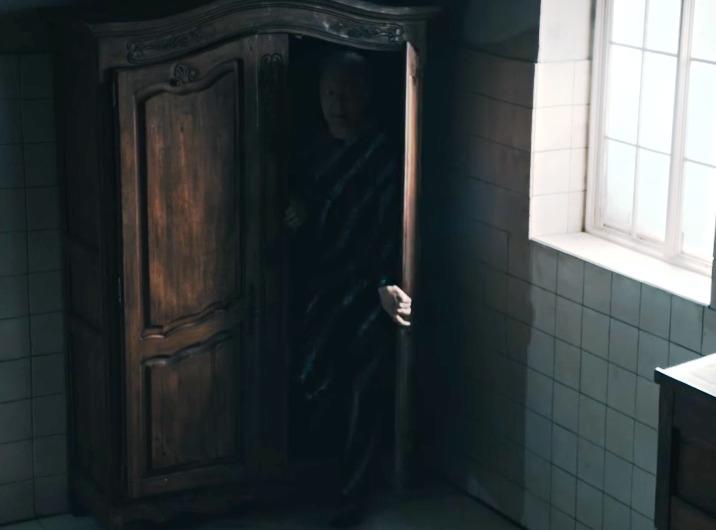
I loved a lot of David Bowie songs throughout my life. His landmark albums from the early 70s were still a staple of the radio shows I recorded to cassettes from the mid 70s on. Glam anthems, way ahead to my ears then what became of it in the charts around that time. Glam outfits that were equally way ahead. David Bowie was already somewhere else, of course, anticipating the Disco phenomenon I would soon so love, with Philly’s finest. Then following that up with the Berlin trilogy that would inspire legions to create something great, and look great while doing it, too. Then, when I ran around in 60s clothes in my early 80s coastal smalltown youth, I discovered that he already had been there in the best way imaginable, and his early Pye singles were exactly the attitude and sound I was looking for. He was the definite face. He made no mistakes. He even descended to the kids he created with „Ashes To Ashes“, and he blessed them, as they worshipped him. He was a terrific actor on screen as well, making good use of his ever magnetic charisma and sexually confusing identities there, too. Whatever he did, you watched him very closely, else you could have missed out on crucial developments.
When „Let’s Dance“ was announced as being produced by Nile Rodgers, another inerrable hero of mine, I had the highest expectations, but then could not help feeling let down. There were moments, but not enough of them. And in the period of the mid 80s shortly after, pop’s most successful stars could earn a fortune without even the slightest vision (let alone sound), and David Bowie simply became one of them. As soon as he was dancing in the street with Mick I was just embarrassed. Even his outfits were embarrassing. I was really surprised that this could happen. Enter the years of hit and miss. For every glimpse of his former cool self resurfacing, „Absolute Beginners“ or „Hallo Spaceboy“ for example, he took decisions that were unforgiveably below his par, think Tin Machine, among others. Given, you cannot be visionary forever, however visionary you once were. And David Bowie was more constantly visionary than anybody else, for a long time. But the visions at one point were had by others. Not surprisingly he displayed a clever instinct for picking the right ones to utilize for his purposes, but still they were attached. I did not mind, he was performing the elder statesmanship with grace, and as so many artists were still working ideas he already had before, there was nothing left to prove, only if he wanted to. So screw the stock bonds. I sincerely felt happy for him and his family. He deserved it. Then he kind of disappeared.
When he reappeared in 2013, it felt like out of the blue. „Where Are We Now?“ was the first song of his in years I listened to repeatedly. It was beautiful and it felt good to have him back. I was slightly surprised by its sadness, but I thought it was quite a statement to base its sentiment about the most lauded creative period of your career. It challenges comparisons, and I was sure he was still creatively ambitious enough to try and deal with them, no matter what he achieved before. „The Next Day“ was a good album, too. He did not try to reinvent himself, he looked back on what he invented. I visited the Bowie exhibition that was doing the same in Berlin, just in time before it closed, and I enjoyed it very much. It all came back, rather predictably. His stage outfits on display proved he was a small man, but he surely did not have a small mind.
I did not expect that he would follow that retrospective phase so soon, if at all. And I absolutely did not expect that he would follow it up with an album like „Blackstar“. As before, David Bowie chose to remain silent, relying on producer Tony Visconti to reveal the news of its release. I read his trusted cohort doing that in an interview while travelling. He spoke of references like Kendrick Lamar, Death Grips and Boards Of Canada, and that rock and roll was to be avoided. David Bowie recruited a potent jazz quartet from a New York bar for the recordings. It was all rather promising. When I got asked to write these lines I initially wished I could have listened to the entire album when he was still alive, as I was already overwhelmed to the point of numbness by the reactions to his sudden demise. But when I then listened to it, it became obvious very quickly that he was fully aware that he would have passed away once the public would be fully exposed to it. And that it is pivotal to picture the dying artist for the whole experience. The songs are brilliant. Complex and dense, or just stunning, indeed avoiding rock and roll stereotypes, even if the jazz only adds to the picture instead of dominating it. The mood is intense, but it is not entirely dark. Thinking of the motivation behind this album, David Bowie sounds astonishingly swinging, his beloved voice delivering clever lyrics ranging between the horror of his own decay and the feeling of arriving there content, at ease with himself, with truths simultaneously personal and universal. The video to „Lazarus“ is frightening to watch, but comically absurd as well. The last photographs of him taken show him in a sharp suit, lauging. The way he orchestrated his own requiem is incredible, exactly as he wanted to, and as only he could. Being David Bowie, setting lasting examples yet again. Superior, even in death.

In discussion with truly-madly on “Hats” by The Blue Nile (1989).
How did you come across this album for the first time?
In my early teens I was quite nerdily into hi-fi – it didn’t stop there to be honest – so there would always be a copy of „What Hi-Fi“ knocking about, covered in drooled saliva at the valve amp page. The magazine had a small music review section – I don’t recall usually paying much attention to this but for some reason I read the entry for „Hats“. I don’t remember what it said but something in it must have appealed to my inner angst – nor did that stop there either – at that time. Surely the word ‘melancholy’ was used. So I bought it blindly (the cassette). At that time I was listening to bits of everything, early House, Synth Pop, Indie, and I was buying vinyl but had this odd mental divide that meant I would buy albums on cassette and singles on 12”. And actually I only finally bought „Hats“ on vinyl fairly recently – random find at Rough Trade Portobello in London.
Why did you choose „Hats“ for this interview? What are its special credentials for you?
It would probably be too difficult to choose a House or Techno album, which might be the natural thing to do, and this was the first that came to mind otherwise. I still think it’s quite obscure in a way, despite being part of the mainstream, and seemingly more popular than I realised.
My first encounter with The Blue Nile was probably hearing „Tinseltown In The Rain“ on the radio, from their first album „A Walk Across The Rooftops“, released in 1983. Do you like that as well?
I like all their stuff but don’t remember anything pre-“Hats“. I now know Tinseltown was some kind of hit but don’t directly recall it from the radio, etc. But occasionally I’ll hear it, in a cab or something, and think there is more to it than simply having listened to it from the album, that maybe I did hear it around the time it came out. That first album, and „Hats“, they are the best ones for me.
For me it is a topic worthy of thorough academic research how the electronic music of the Synthpop era and beyond is so often pared with very charismatic lead voices. Is this only for contrast, or is there more to it?
Erm, is it too late to change my album? Read the rest of this entry »

In discussion with DJ Fett Burger on “Homework” by Daft Punk (1996).
How did „”Homework”“ found its way to your years? Was it by coincidence, or did you seek it out on some recommendation?
It was totally by a coincidence. I think it was back in the fall or winter of 1996 or something, I can’t really remember. My brother and me were listening to the radio one evening in the kitchen. Back then, we always listened to the radio when we were eating or hanging out, usually making drawings. In Norway around the time it was a channel called NRK P3. It’s still around, and it was one of the main National broadcasting channels. There were three of them. NRK P1 the original, NRK P2 mostly for culture, and NRK P3 for the younger generation. This station was aiming for a younger audience – but in a very different way than today. They used to have a broad selection of different programs. My favorite was the programs in the morning and afternoon because they had a lot of intelligent humor and also sometimes pushed things a bit further in terms of what was socially acceptable, at least back then. In the evenings, six days a week, they had different shows dedicated to music belonging to a certain scene or niche. Tuesday, Wednesday and Thursday it was Roxrevyen, which later became Karlsens Kabin, and Hal 9000. Karlsens Kabin mainly covered indie music, but also electronic music. Hal 9000 with Harald Are Lund was a broad selection of rock, electronic and experimental music with a very open minded approach. A lot of older things got played as well. Friday, it was National Rap Show with Tommy Tee, Hip Hop concentration mostly on early nineties East Coast Hip Hop. And then, Saturday, it was DJ Dust with Funk and Disco, DJ Strangefruit with his eclectic selections, and later in the evening DJ Abstract with mostly House and Techno. On Sunday it was Chill Out with DJ Friendly in the morning and Ambolt on Sunday evening, which was dedicated to Metal and harder Rock. Overall, NPK P3 had a pretty broad selection of music from different scenes. It provided a great musical education for when you are young and from a small Norwegian town. These programs were so dedicated to their scene, they always played a lot of demos or unreleased music. Karlsens Kabin and Hal 9000 played some of our oldest music, even things only made on CD-R, so it was a very supportive scene on the radio back then. You can just imagine how crazy it was for us back then being played on national radio!
OK, now back to the question. First time I heard something from Daft Punk was through Karlsens Kabin or Roxrevyen as it was called then. It was a mid-week evening, and suddenly “Around The World” was on the radio. This was before it was a big hit, and before people knew what Daft Punk was. It was probably a radio promo that was played or something like that.
It just blew my mind at the time. Back then it was so cool, different, even strange. Right after they played the song, they said the name and title of the song. And one second later I forgot it all, except the song. But a few months later, Daft Punk was everywhere with “Da Funk” and “Around The World” on MTV all day long.
Do you like the album as a whole, or are there personal highlights, or even tracks you do not like as much?
I like the album as a whole. Before when it was new, you could hear the hits everywhere, so I was pretty familiar with them. I remember when my brother and I got the album. It was an interesting listening experience, since most of the tracks were actually not hits or mainstream material. For instance, “Rollin’ & Scratchin’, “High Fidelity”, “Rock’n Roll”, “Indo Silver Club”, “Alive” or the intro “Wdpk837 Fm.” But, since everything was on the album, it just became associated with something mainstream.
Now it’s a classic of course, but back then, it was the combination of making something catchy, a bit more demanding, and for a scene. In this case, obviously House and Techno. You can hardly say that something is demanding or edgy on the album anymore, because of its place in music history. I think there still are some tracks that are edgy. Back then, for a 15-year-old kid without any experience, this was a big and new thing. Just imagine what influence this had. I remember even in the beginning, I didn’t like “Rollin’ & Scratchin.’ However, it changed after I gained more of an understanding for where the song and its influences came from.
For me, the whole album is a personal highlight. There are different vibes to the tracks and your mood shifts. Some songs are more uplifting, some more mellow, and some noisy or slow. But everything is a favorite of mine in different ways. They all have different elements of influences for me in terms of musical education. The whole album is a favorite of mine. Everything, from how the sound is mixed, the way Daft Punk samples, the artwork aesthetic, the music videos and Daft Punk’s anonymity at the time. It’s a whole package, and I embraced it all. I loved it all and still do! Read the rest of this entry »

In discussion with Aiden d’Araujo on “Rhythm Zone Vol. 1” (1989).
You chose the cassette compilation “Rhythm Zone Vol. 1“. A format that in the 80s was probably still more common for discovering new music than its according CD counterparts. Were you taping radio at a young age, and was this your first foray into purchasing what already had caught your interest?
Yeah taping radio shows was a ritual when I was a kid – got that off my Mum who would tape mixes religiously. In the early nineties around ’92/’93 we had a studio in the loft with loads of gear like Junos and Rolands. The two guys who had the studio (you may have heard one of them under his Deadly Avenger alias who released the ‘Deep Red’ LP and now scores Hollywood films) lodged with us and I remember like it was just yesterday all the trippy, ambient electronica comin’ outta the studio – I would say reminiscent of acts like the Future Sound Of London. No doubt this influenced my Mum and she amassed a series of tapes that had early electronic auteurs on then such as Pete Namlook, Move D and Biosphere (she’s still got ’em!) whose nocturnal opus ‘Novelty Waves’ never fails to transport me straight to my childhood – you remember that iconic Levi’s advert featuring the steam train with that track on it right? Anyway, all these deep as the ocean odysseys would be the soundtrack to when I went to sleep. Warp’s ‘Artificial Intellgience’ comp was another fave, and I’d always be messin’ around with the FM dial to try scope out some more otherworldly obscurities…
Another interesting development was one of my Mum’s mates who when not spraying murals (he was and still is a revered graffitti artist who very kindly sprayed the House Hunting mural for me) would host shows on Birmingham-based pirate radio station Mix FM which he would sometimes transmit from our attic. This would be my introduction to Hip Hop – whether the Britcore of Gunshot and London Posse, West Coast flavour of Snoop Dogg and Souls Of Mischief or the politically-charged Public Enemy and ghetto rap of Biggie and Wu-Tang. GZA’s ‘Liquid Swords’ and Souls Of Mischief’s ’93 Til Infinity’ always on rotation must have proper wore those tapes out on my Walkman. As well as Hip Hop on Mix FM there would be some Soul, Funk, Disco, Electro and House – which when you’re 8 years old listening to all this was a pure mind trip…
So I didn’t really need to buy tapes as there were so many avenues where I was exposed to it. Another influence was my Dad who was split from my Mum so I would stay at his on weekends 10 mile up the road in Leicester. He was in a band that covered a lot of Rock and Blues classics who were a bit of a hit in the mid-nineties with loads of bookings all over The Midlands. Anyway Leicester has a big Afro-Caribbean community and every year hosts the Leicester carnival (second only to Notting Hill in size and scope) with Aba-Shanti representing so Dub and Reggae was also the sound of my Dad’s household – he loves all the Rhythm & Sound albums I’ve got him!
Did you try several compilations and this was the one you liked best, or was this the only one at first, and by coincidence it was also the best choice to get introduced to the US import dance music styles it showcased?
This was the first I bought and I remember clocking the naff early 90s trippy artwork complete with the tag line “A galaxy of imports for under a fiver”. It was a quid so had to be copped – I thought it may be like the deep trips on my Mum’s armada of ambient tapes. It was pure coincidence that the first one I got was the best introduction to Chicago House, Detroit Techno and New York Garage. Not long after I bought ‘The Rave Gener8tor II’ tape where again the cover art enticed me and had some choice cuts on it like the Underground Resistance remix of ‘The Colour Of Love’ by The Reese Project and some Murk flavour via Liberty City’s ‘Some Lovin’. There were only a few decent tracks on this one though as was on a more hardcore tip which I weren’t feelin’ as much. Always went back to ‘Rhythm Zone Vol. 1’. Read the rest of this entry »
Recent Comments